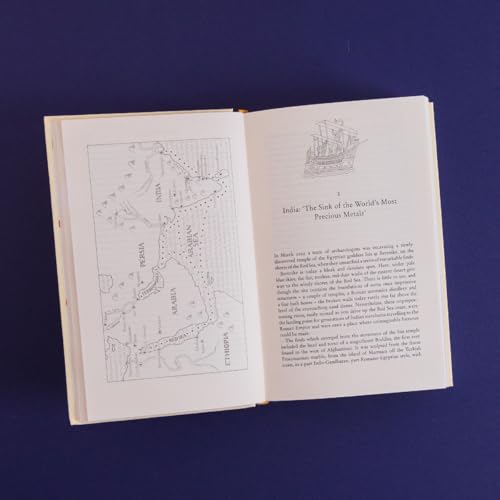
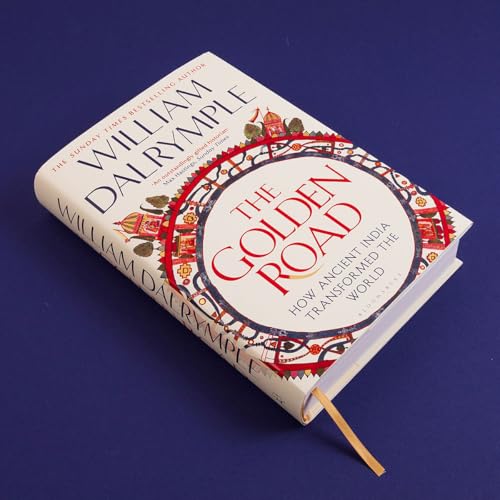
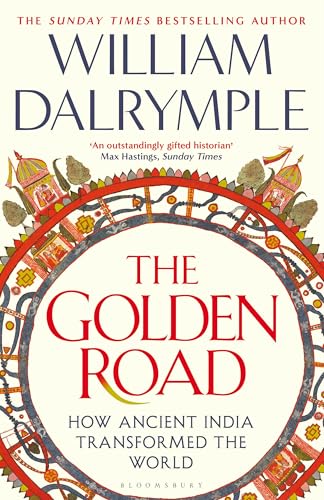

desertcart.in - Buy The Golden Road : How Ancient India Transformed the World book online at best prices in India on desertcart.in. Read The Golden Road : How Ancient India Transformed the World book reviews & author details and more at desertcart.in. Free delivery on qualified orders. Review: Dalrymple at his best - This book is yet another classical tome from William Dalrymple. In his inimitable style, with depth of knowledge, gripping narration and a unique ability to hold us glued to the book with magnetic charm, he takes us on a voyage to distant lands, once dominated by Indian culture and commerce. The book sets out to dispel the myth of the celebrated ‘Silk Road’. The road that was at best a figment of imagination, and even a piece of propaganda for proving Chinese superiority and thereby advancing its foreign policy was first invented as late as 1877, by a Prussian geographer, Baron Von Richthofen, says the author. Not a single ancient record, either Chinese or western, refers to its existence, and was completely unknown in ancient and medieval times. Richthofen was charged with dreaming up a route for a railway linking Berlin with Beijing with a view to establishing German colonies and infrastructure projects in the region. That the real route that was paved not in silk, but literally in gold, lay not in the rugged lands in the interior, but in the waters of the Indian Ocean, with India as the anchor, connecting Red Sea in the West to China in the East, is the fascinating story that unfolds in the rest of the book. ‘The Golden Road aims to highlight India’s often forgotten position as a crucial economic fulcrum, and civilisational engine, at the heart of the ancient and early medieval worlds and as one of the main motors of global trade and cultural transmission in early world history, fully on par with and equal to China’ (page 8) is an apt summary of this book. There are three main factors that were significant to make this happen. The perfect predictability and seasonality of the monsoons in the Indian Ocean helped ships to sail effortlessly from India to the East and West. This created a strong ship building industry and expertise, that enabled commerce that was several times faster, cheaper and safer than inland trade. Spices like pepper was the most sought-after commodity in the Roman Empire, which was happily paid in gold. The decline of the Roman empire led to Indians looking eastward, particularly to ‘Suvarnabhumi’, countries comprising Thailand, Java, Sumatra, Cambodia and China. The evidence of such trade worth in billions of dollars in current value, is amply demonstrated from the rich archaeological evidence as unearthed from a string of locations on the entire route. The main thrust to the cultural integration of these regions, under Indian influence begins with the advent of Buddhism in the 6 the century BCE, and thereafter the efforts of emperor Ashoka in the third century CE, to send missionaries to distant lands and spread the message of the Buddha. Buddhism appeared as a middle path between Hinduism and Jainism, the way of moderation between the extremes of self-torture and self-indulgence, between worldliness and asceticism. While Buddhism occupies center stage in the spread of Indian thought, through establishment of monasteries and royal patronage, Hinduism once again emerges as a dominant faith in the later part of the book, since 7 CE. The travels and detailed biography of the Chinese monk Xuanzang from 629 CE, to the greatest Buddhist monastery and university of Nalanda is perhaps the pinnacle of this book, which acts as a foundation of Buddhist influence on China and a historian’s delight. The book also covers the role of South Indian kings, notably from the era of Mahendra Varman Pallava (571 to 630 CE), the port city of Mamallapuram, the historic sites at Kanchipuram and the resurgence of puranic Hinduism led by poet saint Appar and the rich Tamil literature. It all started when a British hunting party led by Captain Smith accidentally discovered the Ajanta caves, while following the pug marks of an elusive tiger. The mesmerizing find was a priceless jewel in the annals of Indian history. The young officer got out his hunting knife and inscribed the words: ‘JOHN SMITH, 28 CAVALRY, 28 APRIL 1819’. Dalrymple takes over from Capt Smith ! Unputdownable, Dalrymple at his best. Review: A must-read book (at least for Indians) - There is something new to learn on almost every page, and some of the facts are truly eye opening, even for those who have read a bit about Indian history. While there is a pro-India bias throughout most of the book, there is no ideological bias and all facts seem to be well-researched and supported. And an outstanding job in presenting India's journey from early times to recent. Excellently written, if any complaint, it is that the book ended too soon.


| Best Sellers Rank | #766 in Books ( See Top 100 in Books ) #3 in Ancient History (Books) #4 in Indian History (Books) #6 in Asian History (Books) |
| Customer Reviews | 4.7 4.7 out of 5 stars (1,605) |
| Dimensions | 15.32 x 3.12 x 23.42 cm |
| Generic Name | Book |
| Hardcover | 608 pages |
| ISBN-10 | 140886441X |
| ISBN-13 | 978-1408864418 |
| Importer | Bloomsbury Publishing |
| Item Weight | 450 g |
| Language | English |
| Net Quantity | 1 Count |
| Packer | Bloomsbury Publishing |
| Publisher | Bloomsbury Publishing (5 September 2024); Bloomsbury Publishing |
| Reading age | Customer suggested age: 14 years and up |
B**Y
Dalrymple at his best
This book is yet another classical tome from William Dalrymple. In his inimitable style, with depth of knowledge, gripping narration and a unique ability to hold us glued to the book with magnetic charm, he takes us on a voyage to distant lands, once dominated by Indian culture and commerce. The book sets out to dispel the myth of the celebrated ‘Silk Road’. The road that was at best a figment of imagination, and even a piece of propaganda for proving Chinese superiority and thereby advancing its foreign policy was first invented as late as 1877, by a Prussian geographer, Baron Von Richthofen, says the author. Not a single ancient record, either Chinese or western, refers to its existence, and was completely unknown in ancient and medieval times. Richthofen was charged with dreaming up a route for a railway linking Berlin with Beijing with a view to establishing German colonies and infrastructure projects in the region. That the real route that was paved not in silk, but literally in gold, lay not in the rugged lands in the interior, but in the waters of the Indian Ocean, with India as the anchor, connecting Red Sea in the West to China in the East, is the fascinating story that unfolds in the rest of the book. ‘The Golden Road aims to highlight India’s often forgotten position as a crucial economic fulcrum, and civilisational engine, at the heart of the ancient and early medieval worlds and as one of the main motors of global trade and cultural transmission in early world history, fully on par with and equal to China’ (page 8) is an apt summary of this book. There are three main factors that were significant to make this happen. The perfect predictability and seasonality of the monsoons in the Indian Ocean helped ships to sail effortlessly from India to the East and West. This created a strong ship building industry and expertise, that enabled commerce that was several times faster, cheaper and safer than inland trade. Spices like pepper was the most sought-after commodity in the Roman Empire, which was happily paid in gold. The decline of the Roman empire led to Indians looking eastward, particularly to ‘Suvarnabhumi’, countries comprising Thailand, Java, Sumatra, Cambodia and China. The evidence of such trade worth in billions of dollars in current value, is amply demonstrated from the rich archaeological evidence as unearthed from a string of locations on the entire route. The main thrust to the cultural integration of these regions, under Indian influence begins with the advent of Buddhism in the 6 the century BCE, and thereafter the efforts of emperor Ashoka in the third century CE, to send missionaries to distant lands and spread the message of the Buddha. Buddhism appeared as a middle path between Hinduism and Jainism, the way of moderation between the extremes of self-torture and self-indulgence, between worldliness and asceticism. While Buddhism occupies center stage in the spread of Indian thought, through establishment of monasteries and royal patronage, Hinduism once again emerges as a dominant faith in the later part of the book, since 7 CE. The travels and detailed biography of the Chinese monk Xuanzang from 629 CE, to the greatest Buddhist monastery and university of Nalanda is perhaps the pinnacle of this book, which acts as a foundation of Buddhist influence on China and a historian’s delight. The book also covers the role of South Indian kings, notably from the era of Mahendra Varman Pallava (571 to 630 CE), the port city of Mamallapuram, the historic sites at Kanchipuram and the resurgence of puranic Hinduism led by poet saint Appar and the rich Tamil literature. It all started when a British hunting party led by Captain Smith accidentally discovered the Ajanta caves, while following the pug marks of an elusive tiger. The mesmerizing find was a priceless jewel in the annals of Indian history. The young officer got out his hunting knife and inscribed the words: ‘JOHN SMITH, 28 CAVALRY, 28 APRIL 1819’. Dalrymple takes over from Capt Smith ! Unputdownable, Dalrymple at his best.
A**C
A must-read book (at least for Indians)
There is something new to learn on almost every page, and some of the facts are truly eye opening, even for those who have read a bit about Indian history. While there is a pro-India bias throughout most of the book, there is no ideological bias and all facts seem to be well-researched and supported. And an outstanding job in presenting India's journey from early times to recent. Excellently written, if any complaint, it is that the book ended too soon.
V**N
People Interested in history can enjoy this book.
The golden road 1 I read the book. It is a well-researched book (but I am not a historian) written in a balanced way albeit with a few imbalances as seen by me. The book has 480 pages. The history is in 300 pages. All the remaining pages are for giving the detailed references, the sources from where a particular data / information was taken. People interested in History can enjoy this book. 2 Even though the author lives in Delhi he seems to use the word ‘Hindu’, where I feel use of the word ‘Indian’ will be more appropriate, in a few places and vice versa 3 Similarly, ‘Indian’ ‘India’ words are used in many places where majority of the examples are from Tamil Nadu and Kerala, a few from Andhra and Gujarat. 4 The book is about how India influenced the world once and its history. It is not about the history of India. The book seems to overemphasize the contribution by Sanskrit and brahmins rather than any other language or community. 5 India was never under a single ruler and under a single culture. Ancient India was rarely even partially united in ancient times. When Xuanzang visited India – he describes it as made up of more than seventy nations. 6 Starting with Buddha, it explains how the Buddhism transformed the India, central Asia, China, Japan, Korea and South east Asia. Both the then Hindu religion, Buddhism were influenced by the Greek ideas and knowledge. Buddhism viewed all equally and favoured the growth of knowledge by discussion, logic and experimenting. Many books on many topics were written by Buddhist monks in many languages including Sanskrit. Indian Trade with Arabs, Persians are elaborately talked in the context of spread of religious and other knowledge. Except a few, almost all the examples are from Tamil Nadu, Kerala and Andhra. 7 During the Gupta dynasty Vedic gods from the heaven were brought down to earth and forms were given to them. Religious rituals like puja, offerings to god were invented so that people get the favour of gods. This was done as the elaborate vedic fire rituals and mass sacrifice of animals to the gods in heaven were not accepted by many people. Sanskrit literatures like Ramayana, Mahabharata were written during this period. 8 Later, Hinduism and then Islam were spread from India to South east Asia. Around 1100 CE Hinduism was widespread in South east asia. Even though South east asia adopted Hinduism, it did not adopt the caste hierarchy, vegetarianism, and subjugation of women. (Spread mostly by Pallavarkal and by Chozharkal) 9 It is sad to note that even though a lot of stone inscriptions are there in Tamil, he hardly mentions a few. When he talks about Indian connections, he talks about the religious connections not any other cultural and trade connections in detail, comparitively. 10 The following are known to Indians (only to the scholars) well before the Europeans around 500-600 CE A) The numerals – decimal system and zero (our invention) B) The earth rotates on its axis C) Double entry accounting system D) Calculation of solar year correct to seven decimals E) The earth is a sphere F) Astronomy, Geometry, Arithmetic, Algebra etc G) The structure of learning centres (colleges and universities) in west Asia and in Spain were derived from the Buddhist monasteries H) The Chess (our invention) I) The relativeness of motion 11 All this knowledge went to Europe in the following way India – Afghanistan-Persia – Bagdhad - Spain (Muslim) – Spain (Christian) - Rest of the Europe. 12 The above is acknowledged by Fibonacci himself in his book. 13 Even though Hinduism prevents people travelling overseas, many brahmins had travelled to China, Java, Sumatra, Cambodia and were royal priests etc. This fact is available from Chinese books. 14 Indian scientific knowledge attained peak at 600 CE. After wards the contribution was not there. 15 Muslims were living with other religious people in a peaceful manner from 700 CE in India. They came here for trade and a few got settled here. 16 Turks invasion around 1000-1200 CE – they captured India and established their dynasty. The Sanskrit lost the elite status it enjoyed. They have destroyed many temples and built mosques. After the initial enmity, both the parties reconciled and lived together. 17 Later due to the invasion of mangols in central asia and the plunder and murder by Genghis khan, tens of thousands of Persians migrated to India as refugees and settled in India. Slowly the Persian became the official language of India. 18 Genghis khan wanted to invade and loot India. But at Multan, he sighted a rhino. This was a bad omen for him. So, he turned west. India escaped from his invasion. 19 Many moguls and Hindu kings respected all the religions and supported them. 20 Page 329-330 … During the days of Nehruvian rule in the 1950s and early 1960s, Indian school textbooks and most academic histories were written by left-leaning, Congress-supporting figures. These historians tended to underplay the violence and iconoclasm that came with the Turkish invasions, partially in the interests of what they saw as ‘nation building’ following the terrible inter-religious violence that had taken place during partition. Today, under the current right-wing BJP government, the reverse is true and the destruction of Hindu temples is almost all that many in India seem to know of the complex but fascinating medieval period of Indo-Islamic history. ……………………………………………………………………………………………………. …………………………………………………………………………………………………………… 21 The book concludes like this History shows that India has always been at its most creative and influential when it is at its most connected, plural, hybrid, open and receptive to new ideas from its neighbours, when it represents the cohabitation, not a clash, of civilisations. Its greatest gift lies in its ability to absorb outside ideas and influences and take them forward in dramatic, creative, unorthodox and innovative ways, performing repeated feats of self-transformation and reincarnation. There lies much of the source of its strength. For a thousand years, India’s ideas spread with its traders along the Golden Road and transformed the world, creating around itself an Indosphere, a cultural zone that spread over political borders – comparable to the Hellenised world fashioned by Alexander the Great, except that India’s was spread not by the sword but by the sheer power of its ideas. Within this area Indian culture and civilisation transformed everything they touched. This poses a question, unthinkable in 1947 at independence from Britain: could they do so again? 22 This is my take - Irrespective of place, time dynasty, a person does all sorts of atrocities to establish his / her rule. Once established and his competitors and enemies are murdered, he seeks peace and rule of the law in the country so that he can rule peacefully. Moreover, he wants to be known as a kind and generous person. May be some sort of guilt existing because of the atrocities he did to become the king. Hence, they start supporting religion or religions. 23 In all the books of Indian history and related topics (so far, I studied) the contribution from the south India, particularly Tamil Nadu is not explored / left out to the required extent. India means, for many, it starts above Vinthiya.
K**L
Vastly illuminating and deeply researched - A must read!
William Dalrymple has done it again. Like all the previous tomes he has written on significant parts of the British empire, this one takes on a far bigger canvas and illuminates the ‘Indosphere’ across Asia as he calls it. I could not put it down and felt there was so much new aspects of India’s cultural and economic influence being unearthed in every chapter. The tons and tons of references included in the back points to the meticulous research that has gone into this endeavour. William brings his vast familiarity with Indian culture and historical knowledge base of Buddhism and Hinduism to weave this epic story together that is bound to influence our thinking on India’s contribution to human progress and history for years to come. From the heart, thank you William for writing this book!
T**N
William Dalrymple’s The Golden Road is a masterful exploration of India’s profound and far-reaching influence on the world over a millennium and a half. This book is a testament to Dalrymple’s lifelong scholarship and his ability to weave together history, culture, and storytelling into a compelling narrative. It’s a must-read for anyone interested in understanding how ancient India shaped the world we live in today. A Vast Empire of Ideas Dalrymple meticulously details how India, for over 1,500 years, was not just a cultural powerhouse but also a confident exporter of its civilisation. From art and religion to technology and mathematics, Indian ideas traveled far and wide along what Dalrymple aptly terms the “Golden Road” – a network of trade and cultural exchange that stretched from the Red Sea to the Pacific. The book highlights India’s contributions to global civilisation, such as the creation of the numeral system (including the revolutionary concept of zero), the spread of Buddhism across Asia, and the architectural marvels like Angkor Wat, the largest Hindu temple in the world. Dalrymple also delves into lesser-known but equally significant influences, such as Indian astronomy, music, dance, and mythology, which left an indelible mark on the ancient world. A Global Perspective on India’s Legacy What sets The Golden Road apart is its global perspective. Dalrymple doesn’t just focus on India in isolation; he situates it at the heart of ancient Eurasia, showing how Indian ideas interacted with and transformed other cultures. For instance, he explores how Indian trade helped fund the Roman Empire and how Indian religious and philosophical ideas shaped the spiritual landscape of China and Southeast Asia. Dalrymple’s writing is both scholarly and accessible, making complex historical processes easy to understand. His vivid descriptions and engaging storytelling bring the past to life, making the reader feel as though they are traveling along the Golden Road themselves. A Few Practical Considerations While the content of the book is exceptional, I did find myself returning the hardback edition in favor of the Kindle version, which was £10 cheaper, and the paperback, which was £12 cheaper. For a book of this length and depth, the digital or paperback formats are more practical and economical, especially for readers who prefer a more portable option. Final Thoughts The Golden Road is a brilliant and enlightening read that sheds light on India’s often-overlooked role as a global influencer in ancient times. William Dalrymple’s passion for the subject shines through on every page, and his ability to connect the dots between India’s past and the modern world is nothing short of remarkable. Whether you’re a history enthusiast, a lover of Indian culture, or simply curious about how ancient civilisations shaped our world, this book is an invaluable addition to your library. Just be sure to opt for the Kindle or paperback edition to save a few pounds without compromising on the richness of the content. Highly recommended!
A**R
Excelente!!
V**N
A very interesting book, well thought out and well written.
D**M
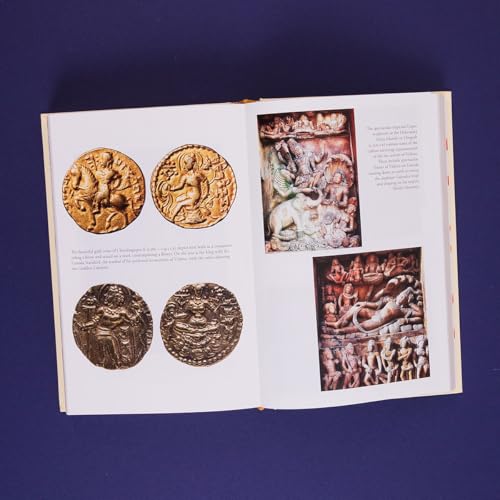
Before I comment on this magisterial work, a protest to the publisher: I cannot imagine a worse binding for this book. The exterior is heavy card stock—and even with an embossed finish, feels cheep—hardly fitting for a book titled The Golden Road! The binding is so tight that it is almost impossible not to break as you seek to open the pages to read this magnificent work and review the carefully chosen images (three sections worth). It reeks of cost cutting and is simply a disgrace by the publisher. Dalrymple deserves better. Shame on you Bloomsbury. Now to the book: The content and writing is simply magnificent. Dalrymple truly has a profound capacity to communicate in writing (and orally, as in his podcast with Anita Anand, “Empire”). The Golden Road reads like a coffee time discussion and, at times, like a novel. History has rarely been so engaging and enjoyable! I recognize my praise is effusive. But Dalrymple is truly a master. I learned so much from each and every chapter: How Octavian’s victory over Marc Antony and Cleopatra opened the door for profound trade between India and Rome—so much trade that some Roman leaders became concerned at the scope of the wealth making its way to India. How Indian concepts like “zero” profoundly influenced western thought and philosophy. How the “Indosphere” emerged initially at sea, following monsoon winds to the west (Africa) and east (SE Asia and China); then, how it expanded across land under the reign of Ashoka in the fourth century BCE. How the great library of Nalanda rivaled Alexandria in terms of both size and influence. How Buddhism, born and developed in the subcontinent became dominant across Central Asia and especially China, transforming a whole society while back in the subcontinent it diminished under the growing influence of Hinduism. How Hinduism amazingly spread to SE Asia at the same time Islam swept across Asia into the subcontinent, and led to the world wonder Hindu temple, Angkor Wat, in what was, and is now, a predominantly Buddhist society. There are so many gems in this work! Ultimately, the invitation is to rediscover India and her rich history—to stop overlooking the profound role India played (plays!) in this world. I couldn’t recommend The Golden Road any more highly.
D**D
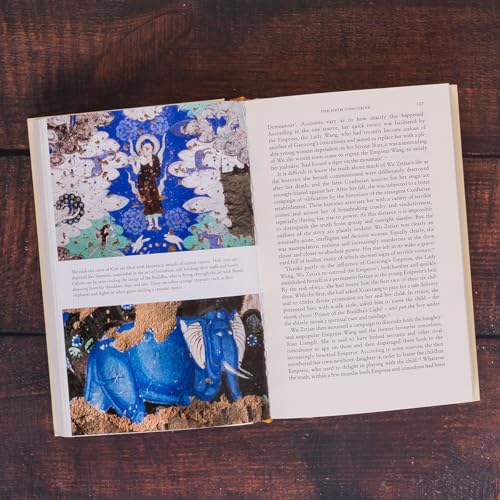
This book is an incredibly detailed history of the influence of India, essentially as a cultural and economic center, of the passage of intellectual and engineering achievements with associated material goods, created within the engines of each edge, of flowing back and forth between the geographical and cultural boundaries of europe and Eastern asia to the reaches of Japan. It's thorough referencing is overwhelmingly impressive. It is a scholar's book, but in many parts quite readable as it extracts from many sources the day-to-day picture of the evolutions of critical events over many centuries. For example, note the story of the time of the arising of the first female emperor of China. Such a personally human story of people captured in the restricted binding in and of their time and place. Revealed are the connections and confluences of the Roman Empire ( more broadly Europe), China with the infusion of the cultures, religions and intellectual achievements into the birth of the nations of IndoChina from their constituent, isolated geographically separated entities .
Trustpilot
2 months ago
5 days ago