
DOWNLOAD THE APP


Customer Services
Copyright © 2025 Desertcart Holdings Limited
DOWNLOAD THE APP



🚨 Elevate your security game with Skylink’s deluxe long-range alert system!
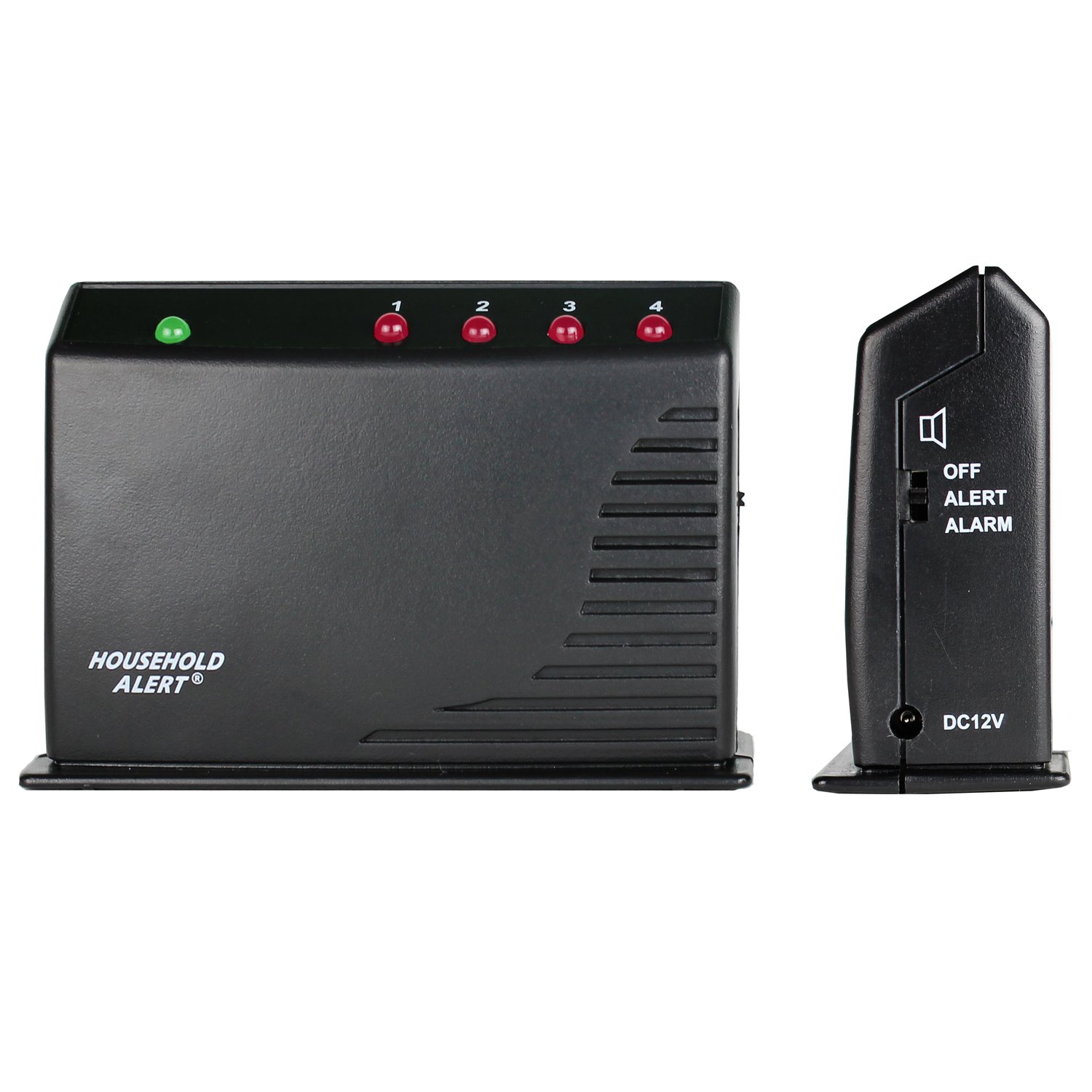
The Skylink HA-300 is a deluxe indoor/outdoor motion security system featuring an 800-foot alert range, 40-foot motion detection, and a powerful 95dB siren. It supports up to 16 programmable sensors across 4 zones, powered by AA batteries for sensors and a corded receiver, ensuring versatile, reliable protection for home or business environments.


| Brand | SKYLINK |
| Color | Black |
| Power Source | Corded Electric, Battery Powered |
| Maximum Range | 40 Feet |
| Mounting Type | Wall Mount |
| Battery Description | AAA |
| Battery Life | 4320 Hours |
| Number of Batteries | 2 AA batteries required. |
| Manufacturer | Skylink |
| Global Trade Identification Number | 00623459201134 |
| UPC | 623459201134 785577209888 |
| Part Number | HA-300 |
| Item Weight | 14.4 ounces |
| Product Dimensions | 7 x 5 x 1.5 inches |
| Item model number | HA-300 |
| Batteries | 2 AA batteries required. |
| Is Discontinued By Manufacturer | No |
| Style | Deluxe Motion Alert Kit |
| Material | Plastic |
| Item Package Quantity | 1 |
| Batteries Included? | No |
| Batteries Required? | Yes |
| Description Pile | AAA |
| Warranty Description | 1-year warranty on issues caused by faulty parts or workmanship |
B**.
Good Range, Some Problems, Faulty Receiver Replaced
I bought a combo receiver and PIR transmitter (Skylink HA-434RTL Long Range Motion Alert Kit ) along with three extra PIR transmitters (Skylink HA-434TL Long Range Motion Sensor). Setup was easy and without problems.Range seems to be about as advertised as I have two set about 450 to 500 feet away, and two more set about 500 to 600 feet away. They are all transmitting through multiple trees (mostly alder) and two are going through a wooden barn to reach the house.They seem to sense motion most of the time although one that is monitoring a gravel road has missed a car occasionally (set about 15 feet away from the road). Two have given several false alerts but I believe they are due to one facing the sun and another having leaves moved by the wind with sun on them. They might all have been sent set on high sensitivity, but I only remember checking one of them, and I left it on high.As mentioned previously by another reviewer, the wire antenna on the receiver is really irritating as it is too thin to stand on its own and constantly flops down on the window sill. I could tape or tack it up, but that's rather lame and again very irritating when you want to move it.It comes with a green LED that indicates power and ready, along with four red LEDs that blink when it gets a sensor alert. The problem is that you never know which sensor is alerting without looking at the LEDs because there is only one tone. That's not a problem if you are standing in front of it, but it requires you to walk over to it every time it goes off. You might be able to see which LED it is from across a room if there is enough light to make out the other LEDs to determine the position of the one that is flashing. My house is all wood (floors, walls, ceiling) so it is not bright and I am limited to about 10 feet to be able to see which one is alarming. Then positioning the receiver is a problem because it must be within line of sight (not on a window sill behind a curtain or a chair back, etc). In my case I have already been up and down twenty times to check the receiver over two days, and am getting pretty tired of dealing with it.UPDATE:I thought I had updated this review earlier ... sorry ... I got a replacement receiver that worked correctly. Not only did the LEDs blink when activated, but the audible alarm indicated which sensor was activated. Sensor one has a single beep with a pause and then repeats. Sensor two has two beeps with a pause and repeats. Three & four have the same grouping of beeps before repeating, so it is easy to tell from the audible alarm which was activated.But the biggest problem is a faulty receiver. The second LED started blinking and would not reset without cycling power (as another reviewer mentioned) within an hour or so of setting it up. I am now on day three and the number four LED shows the same behavior and errors every couple of hours. Again, I cannot stop the LED blinking without resetting power. I have not yet determined if the zone alarm has actually cycled to start the LED blinking or if it is random (it is blinking now and I did not hear an alarm while I was writing this review).UPDATE:The sensors will cause the receiver to blink continuously when they are out of range or the battery goes too low. In the case of the faulty receiver, it would do this even with new batteries and placed within a few feet of the receiver. With the new receiver this only happens when out of range or dead batteries. Note that heavy rain and moisture in the trees through which the signal travels may occasionally cause this alarm as well. Unplug and reconnect the receiver to turn it off.These (more) inexpensive sensors were an attempt to replace some Dakota Alert sensors. The much more expensive Dakota sensors are VERY good for the first 6 months to a year then they all have died (I've gone through eight of them, PIRs and buried car detectors, sent several back under warrantee and still ended up with the same problems with all of them). I bought a cheap (relatively) buried car sensor from a local feed store for $79 and it just keeps going and going and going (over two years now) ... but it is a single sensor only so not easily upgradable.UPDATE:I have been using five of the Skylink sensors for the past four months or so. All have been out in the unprotected constant rain (Oregon Coast weather). One has since died (pipe on which it was mounted fell over and it was trodden into the grass and dirt and not retrieved for over a month), the rest are functioning fine. All have had moisture work its way inside. All have had small spider nests made inside :). But with four out of five still working through the winter, they are still a great buy. Something as simple as a used cardboard milk carton would keep them from getting moisture inside and make them even more robust.Bob
J**R
Very satisfied so far
Got it with an extra sensor due to comments about some units failing, because the sensor price was cheap, and because the base has extra channels. All the parts indicated China-made (some reviews said better luck if source was Mexico or other-than-China). Still, everything worked well, so far. I like the compact cigarette-sized base station. The options are good. The base station can be muted, turned off, set to just beep, or alarm. The beep setting alarms for about 10 secs, with a distinct pattern, and each setting lights a different LED. The alarm is almost as loud as a smoke alarm and doesn't time out. A mute button works for all the settings. The base is AC powered and has to be linked to each detector, but once set you can unplug the unit without losing the settings. Same for the detectors.The detectors use a 9v battery. A lithium version may reduce problems as well as last longer. The base unit alerts you to low battery power - nice. A button inside the battery compartment is used to link or re-link the detector to the base. Next to it is tiny jumper that can be moved between a low and high sensitivity setting. A paper-clip device is included I think to pull off the jumper, but fingers worked fine and I appreciate the option. I used the low setting.At first I wanted a sensor for a new gate to tell us when the dog wanted in, but the noise he made jumping against it was a better battery-free solution. And, I was going to try attaching a sensor to the back of our mail box that's almost 300' from the house, but we take mid-day naps (old retired people, you know) and didn't want to be disturbed, plus extra walks back and forth are good exercise. So, we finally put both sensors in a cross-fire pattern in front of the garage in a blind spot to let us know when vehicles arrive. Mounted them on treated stakes a couple feet off the ground next to bushes so they're not an eyesore. They don't face the sun and neither look into open space where passing cars or animals can appear. Two units are overkill and they both seem to work, but these things can be quirky and once they prove out or we need one elsewhere, one can be easily moved. Distances between detectors and base are about 60 and 75' through two walls, one of brick and one of modern wallboard.The instructions were short, concise, easy to understand and included a web site. Mounting screws were included and a ball joint for each detector and work properly. I did not see a mention about the paperclip device, but didn't need it.I tested the detector twice using a MP3 player set in record mode to capture results. With the mailbox idea I would have tried a set of cordless phones with one at the detector while I moved the detector about and triggered it to see if the signal was reaching home. The detector is easily disassembled to reduce size and provide a flat face for external mounting on a metal mail box. (I assume it could be mounted inside a plastic mailbox that won't block the antenna. The ant. is an inch-long copper coil at the top of the detector.)2 Months later: 9V batteries kept giving low battery signals (March weather - cold), so replaced them with lithium version and that cured most of the alarms, but still getting a periodic blinking low battery indication. Deactivated one sensor because new plant growth blocked it and found large ants nest inside. The only access appears to be a 1/4" slot in bottom, so you might want to caulk that as ants could cover the sensor and stop operation. Lastly, the receiver kept working after its switch was placed in off position! Just have to unplug it... Guess I'll contact the mfgr, but the one sensor is still working OK.More later, if problems develop. (Feb 2014)
Trustpilot
1 month ago
1 day ago