

Desert Online General Trading LLC
Warehouse # 7, 4th Street, Umm Ramool, Dubai, 30183, Dubai
Desert Online General Trading LLC
Warehouse # 7, 4th Street, Umm Ramool, Dubai, 30183, Dubai
Full description not available
J**E
What Was Lost Has Been Found
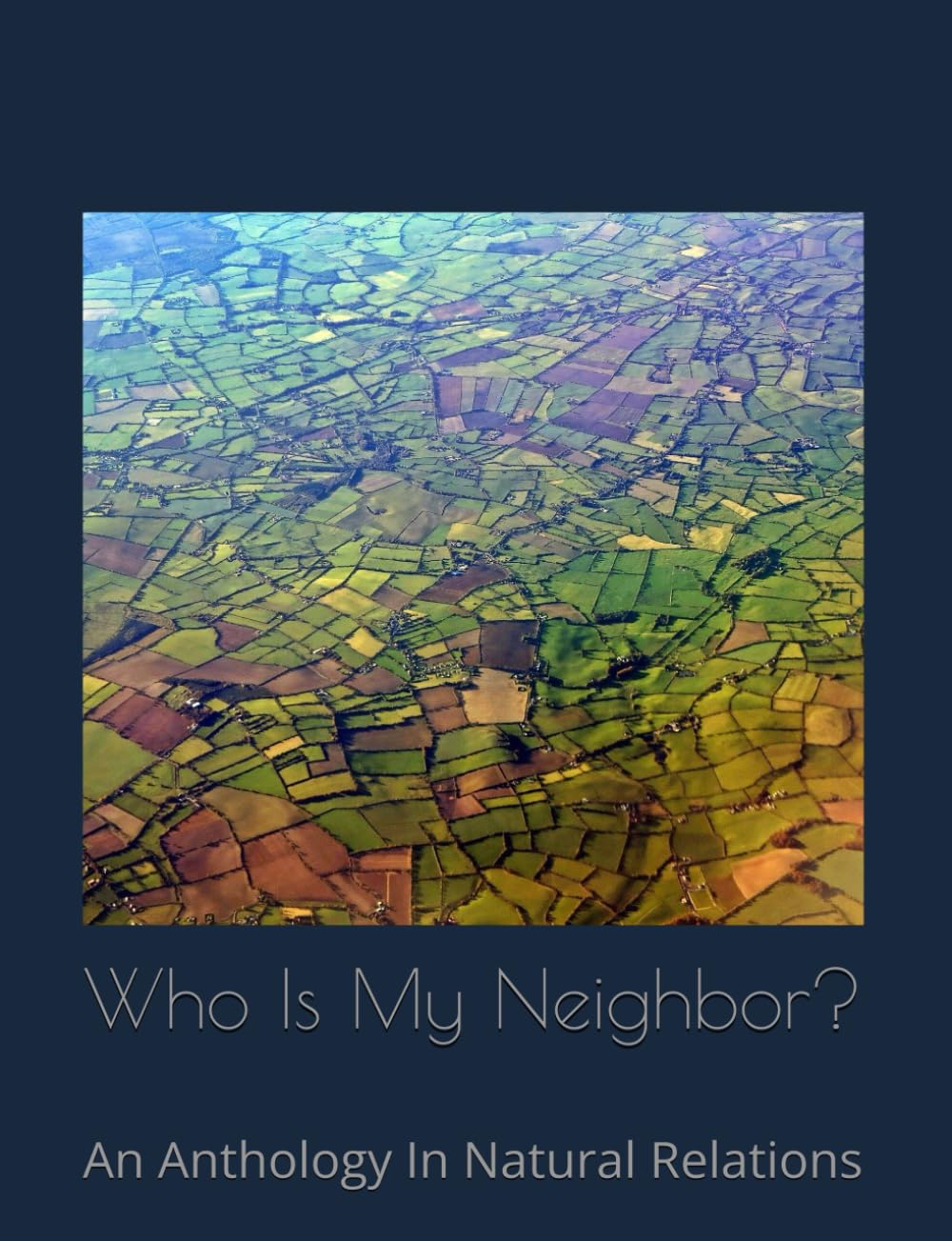
What was once a common feeling in the minds of most people has fallen under hard times, at least in the West. Natural affections, though the bane of Neo-Babelists, ties together the good, the true, and the beautiful.It encompasses the affections we have for our folk and our people, our patch of woods, and all the sights and smells that make us “at home.”Who is My Neighbor is an anthology that deserves a special place on the family bookshelf. Let go of the lies of atomized individualism, let the past teach us to love our people and love our place once more.
J**A
Love your people, love your place
Great work. We live in a time of racial egalitarianism, and the authors did some heavy lifting to call us back to the orthodoxy of our church fathers. We have a people and a place, and we should live in light of that today.
M**R
Comprehensive
A thorough and comprehensive anthology examining an important subset of issues. If you tire of seeing intellectuals and scribblers (including pastors and religious academics) wailing about the evils of the family, nation and other natural and organic institutions that make civic and political life possible, get this book. Hear your ancestors speak and be reminded that you are not alone.
R**H
Excellent read!
Great book!
P**T
Invaluable Reference
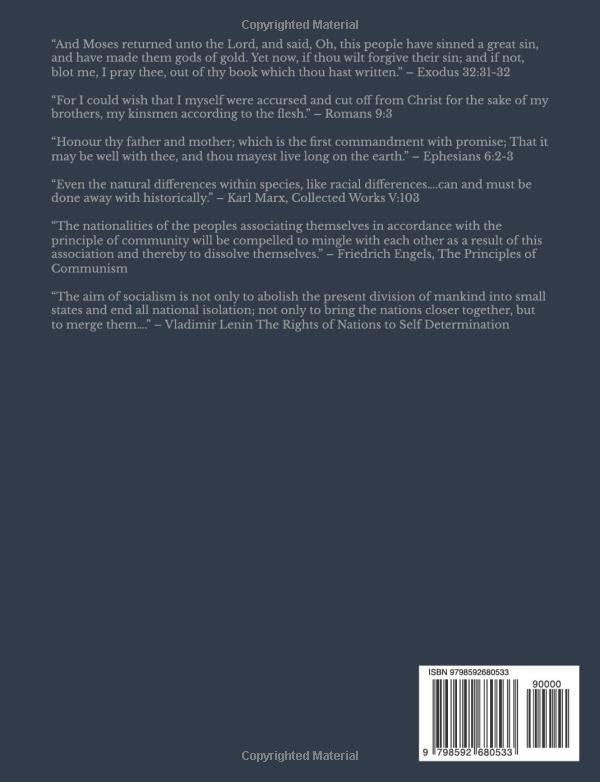
The headmaster of a classical Christian school has teamed up with a statistician to collect and sort thousands of quotations pertaining to human relationships from myriad religious, political, and historic figures. The result is an invaluable reference for patriots with an intellectual bent, which shows how nationality, neighborhood, and kinship reflect natural law. The book’s historical quotes and references demonstrate that many of the sentiments now stigmatized as unthinkably “nativist” or “racist” have been taken for granted in every civilization, from classical China to ancient Israel to medieval France.We discover, for example, Cicero cautioning the resident alien “under no condition to meddle in the politics of a country not his own.” Aristotle warns that “the reception of strangers in colonies, either at the time of their foundation or afterwards, has generally produced revolution.”Achord and Dow have also compiled Christian sources from St. Augustine to John Calvin on the subject of man’s ties through kinship, as well as the thoughts of America’s Founding Fathers. His invocation of equality notwithstanding, Thomas Jefferson feared that “the importation of foreigners” would “warp and bias” America, rendering it “a heterogeneous, incoherent, distracted mass,” and so make it “more turbulent, less happy, less strong.” On this question of multiculturalism, at least, the sage of Monticello and his nemesis, Alexander Hamilton, could agree. “The influx of foreigners must, therefore, tend to produce a heterogeneous compound,” Hamilton said, “to change and corrupt the national spirit; to complicate and confound public opinion; to introduce foreign propensities.” George Washington counseled his countrymen “to steer clear of permanent alliances with any portion of the foreign world” and to have “as little political connection as possible” with other nations.Perhaps the most bitterly amusing and ironic quotes come from 20th century Democrats, who assured critics the Immigration Act of 1965 would “not upset the ethnic mix of our society,” as Senator Edward Kennedy soothingly put it. Nowadays it is forbidden to observe how wrong (or dishonest) Kennedy was, much less to frankly discuss the implications of our society’s ongoing ethnic transformation. It is to be hoped that through works like Who Is My Neighbor? at least a few people attain some idea of what the much-abused word community actually means.
J**S
Natural Relations for Contemporary Reflection
With the rise of classical western liberalism, we have seen a shift away from what was once a traditional honor system with its value placed on family, society, and nation. Now we see a radical egalitarianism permeating the systems of society and government to the detriment of those great conditions that once sustained Western civilization. As we fracture and bend away from the norms that once caused us to flourish and the moral standards that aided in its maintenance, it is helpful to see a revival of interest in natural law, the family, and nationhood that is carefully considered. With the contributions to inter-related subjects, Achord and Dow provide us with a massive resource that will serve those interested in re-discovering the resources from the riches of Western Civilization. Organized according to time period, religion, and various denominational perspectives, Achord and Dow provide us with the largest collection of writings from the vast set of wisdom in our heritage. These are intended to foster additional reflection and re-deployment in contemporary research.
P**L
What is natural and good?
This book is an anthology or collection of a wide variety of texts that create a picture of what is normative and good in human relations, based on an idea by CS Lewis in 'The Abolition of Man' in which he argued that there are things that all humans throughout history have universally known to be good or true. Things like courage and love for family.It's a great collection because it provides an anchor to reality, in contrast with the zeitgeist of modernity where we are increasingly being pushed to adopt alien and unnatural modes of thinking and behavior as normative.
Trustpilot
2 weeks ago
2 weeks ago
1 month ago
1 week ago