

Desert Online General Trading LLC
Dubai, United Arab Emirates
Desert Online General Trading LLC
Dubai, United Arab Emirates


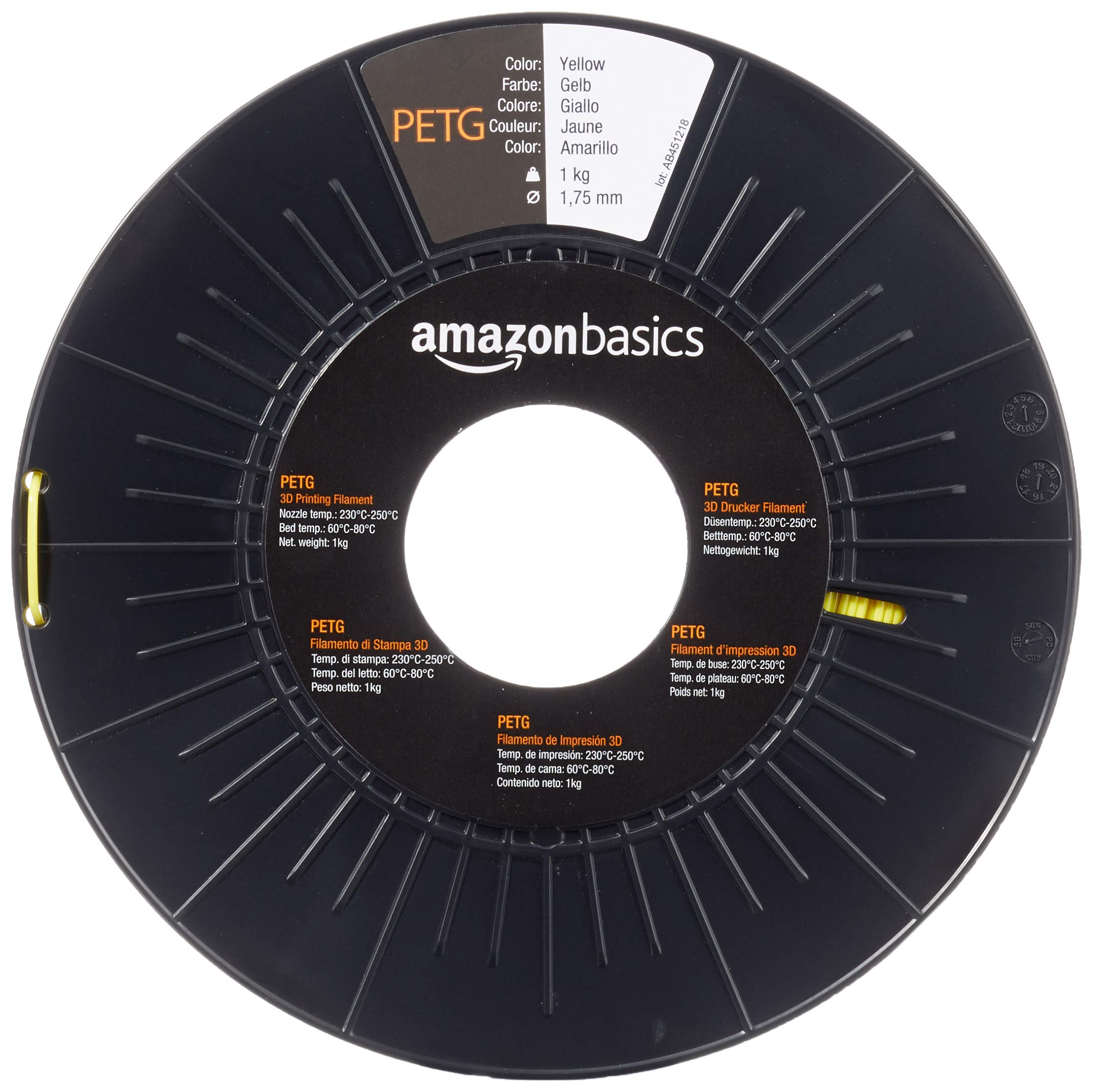


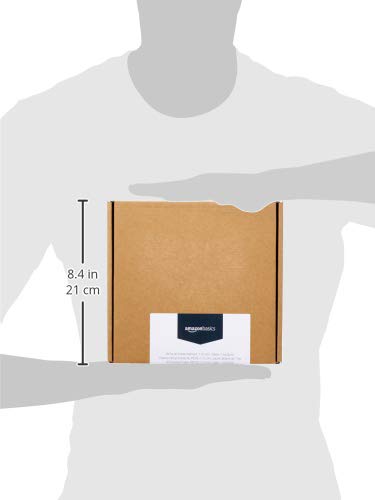
🖨️ Print Bold, Print Bright — Make Your Ideas Pop!
Amazon Basics PETG 3D Printer Filament offers a 1.75mm diameter yellow spool designed for broad 3D printer compatibility. Made from durable PETG, it combines ease of use with strong, glossy prints without needing a heated bed. Its jam-resistant design and 1-year warranty make it a reliable choice for professionals seeking vibrant, hassle-free 3D printing.


M**.
Great adhesion! Great consistency! Great material!
-Context-To give you a an idea of me and my printer I've have had an Anet A8 printer (a low end printer with a variety of upgrades I've designed and installed) for a couple years now. It has a heated bed and can print ABS, although it's been a pain. I've printed dozens of designs I've created myself. and dozens of designs created by others. I've also used high end 3D printers (Prusa, makerbot, objet, Form labs, ultimaker) and materials (Nylon X, Tough PLA, ABS, Ceramics, Various liquid resins) at my work for the past 7 years. On my printer I've struggled to get PLA to adhere well to itself (de-lamination issues) after the print is complete. To counter this issue I've cranked up my nozzle temp and set settings such as filament retraction and nozzle priming to try and prevent oozing. The result has been decently adhered prints that are stringing and not not as repeatable as I'd like. I've used PLA and ABS from a variety of sources with very similar results. This PETG is different.-PETG-I printed this material at the bottom of its temp window to try and prevent oozing issues. I quickly found that this material adheres much better than any PLA I've ever used on my printer. This material is also much less brittle than PLA. Some of my PLA test prints will fracture with low force and will typically fail at a print layer. My experience so far with PETG is it is less rigid so it will flex slightly rather than cracking and will not necessarily fail at a print layer. I was very pleasantly surprised that at the temp I chose adhesion was great and oozing was very minimal. With this material my prints look very similar to prints on a higher end printer. I'm very pleased with this material and do not plan on buying any more PLA or ABS.As a side note, this material holds up exceptionally well to UV degradation and is fairly good against chemical attacks.-Images-This is a cap I designed and printed with this material. It's rough dimensions are ø1.260" x 0.584". I didn't clean these prints up before taking the photos, although some of the hairs may have gotten knocked off while measuring.-Print Settings-I printed this cap with a nozzle temp of 220°C and a bed temp of 55°C. I had to turn off all my re-priming nozzle settings that I typically use on PLA because I didn't get oozing with this material. I did not try other bed or nozzle temps because these temps worked so well on my first try.
C**N
Quite pleased with my results so far.
I am new to 3d printing, so I might find out I'm 100% wrong, but so far this seems like good stuff. Once I worked out a lot of my own mistakes early on, I have gotten pretty solid performance with it. I still have some failed prints, but expect that's more me trying new firmware and settings and needing to dial settings in a bit more.**update**Been using for about a year now. I have ran through the entire 5 pack, half of a roll of grey, and most of a roll of orange. It is definitely a little stringy, but that is too be expected.
N**Y
Great inexpensive translucent filament! May need drying.
I print a lot in PETG. In fact, it has been the only thing my Ender 3 prints with for almost a year now. I'm printing with my second roll of this currently. It prints and looks great. You have to take some care though. This is not PLA. PETG is more hygroscopic and stringy than PLA.#TLDR; Save yourself a lot of time and dry it before printing. Then print from a dry box if you are in a humid area.This filament seems to be more hygroscopic than even some other brands of PETG, before printing. That could explain some of the other reviews here mentioning that it bubbled, was stringy, or didn't print properly. Halfway through my first roll, I noticed that quality had gone down quite a bit in the prints; the surface finish wasn't as nice, it got more stringy, sometimes there would be under-extrusion, etc. Then the bed adhesion issues started. Once I dried the filament and stuck the roll in a dry box (cost me <$15 to make and it holds 3x 1kg rolls) it went back to the nice quality my first prints displayed.In terms of slicer settings on an Ender 3, you can mostly just use PLA settings with some changes to retraction, temp, bed/nozzle height (less squish), and speed (tuned for PETG). If you have a hot-end with a higher flow rate, you can probably leave the speed alone. As mentioned previously, as long as the filament is dry, it prints very nicely. For the translucent qualities, the fewer walls you print with the more translucent the end print will be. In vase mode, if your slicer supports that, this filament is quite translucent. If you increase the number of walls and line width, it turns into a deep blue color.
O**R
Works just like expensive brands
Printed OK with a Creality Ender 3 with a modified all-metal hotend. Used a hotend temperature of 240C and bed temperature of 70C. Printing speed of 50mm/s and retraction distance of 4mm.Compared to PLA, PETG is softer and deforms more readily, however, it is a lot more durable and less brittle than PLA.
V**A
Best orange PETG so far
In the photo with the extruder gear, the washed out orange gear is Overture, the circle is Amazon Basics. Also there is a photo of three different spools of orange PETG. This Amazon Basics spool is on top, Hatchbox in the middle, with Overture on the bottom. It's hard to judge color in photos, but in person you can see the difference a mile away.The Amazon is a deeper saturated orange color, similar to Prusament. The other two are less colorful, not nearly as deep orange color, and clearly don't match the Prusament orange.This filament prints great on my Prusa MK3S. I use 230 degrees for the first layer, with a 85 degree bed. The rest of the layers are printed at 240 and 90 degrees.I use a PEI textured bed. Prints stick great when printing, and then pop off on their own when they cool. Wonderful.This Amazon Basics has the deepest orange color and was also cheapest of the three. I am very happy.
Trustpilot
1 month ago
2 weeks ago