Some deliveries may take a little longer than usual due to regional shipping conditions.
DOWNLOAD THE APP


Customer Services
Copyright © 2025 Desertcart Holdings Limited
DOWNLOAD THE APP

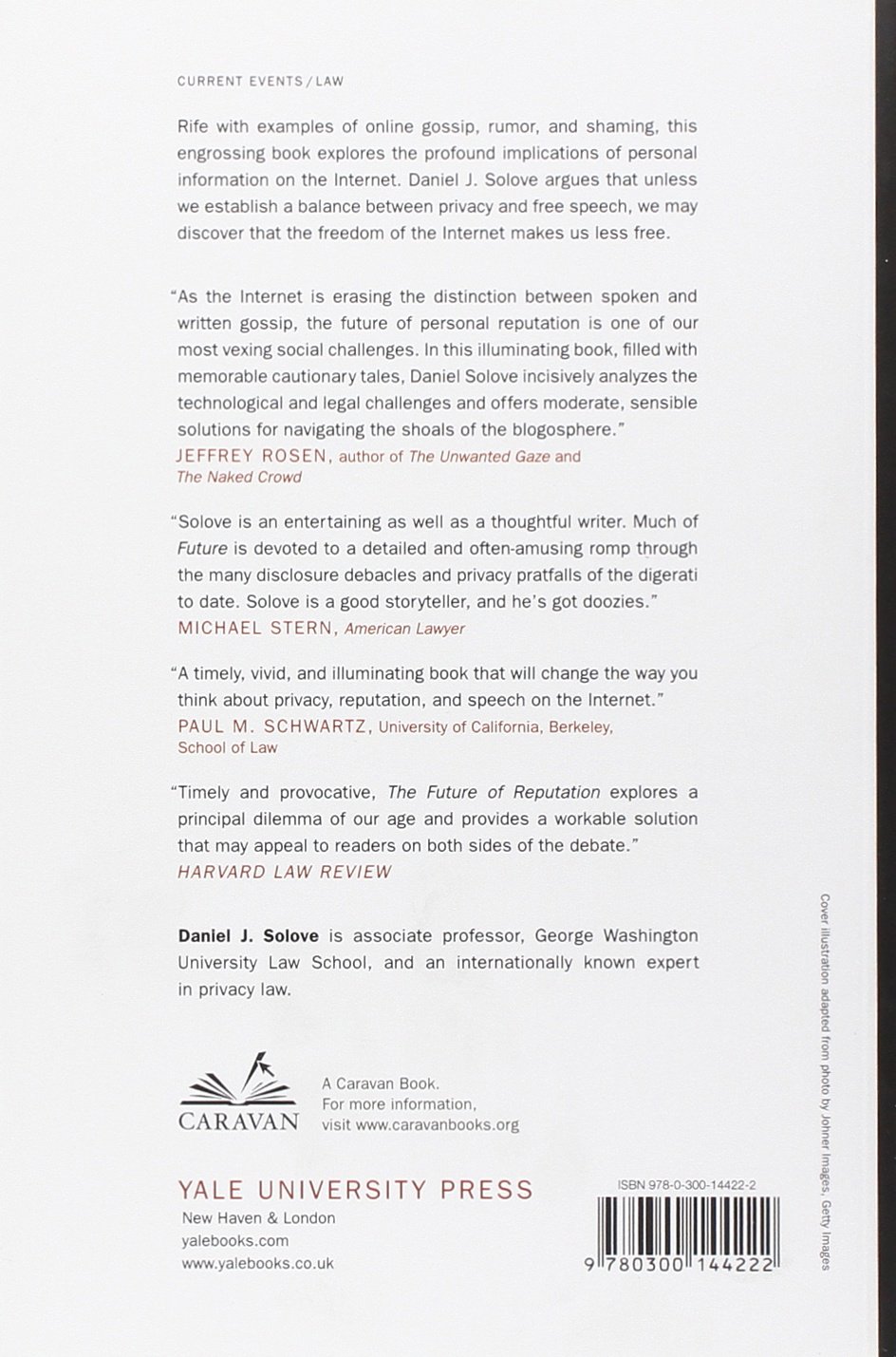
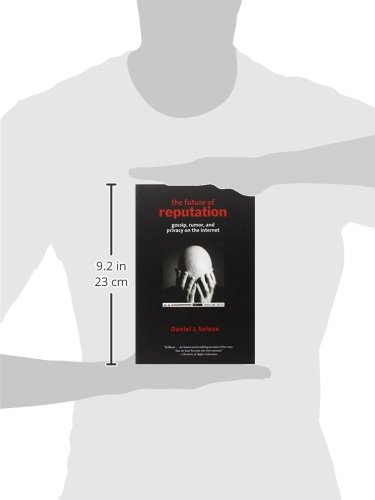
Full description not available
D**N
Engrossing, Important Book About Our Lives and Reputations in the Internet Age
Once I started The Future of Reputation, I could not put it down. The book brings alive how online gossip, social networking sites, and blogs increasingly define who we are and how were are perceived in today's Information Age. The stories it tells are, at once, laugh-out-loud funny and terrifying. We see the lives of others distorted by vengeful ex-lovers and mocked by teachers. Online commentators shine light on bad behavior to shame people. Our reputations are out of our control.What I loved about this book is that it asks us to rethink assumptions about how we define ourselves in an age where search engines tell our story to future employers and old high-school classmates. The book helped me appreciate that online shaming plays a new and perhaps important role in shaping behavior but also has serious costs. It offers thoughtful suggestions for what we can do about these problems without sacrificing so much of what is liberating about our online interactions. This is a must read for anyone who is interested in living a full and informed life in the Internet age.
A**R
A Good Book on the Overall Issue of Reputation Management
At first I was expecting more from this book, but as I read and gave consideration to what Solove was putting forth I realized this is a book that gives one a solid foundation from which to start with their reputation management.I would highly recommend purchasing this book, especially in light of the flakes out their who will attempt to defraud you of meals, services, or any other goods or services by posting bad reviews if you do not give them freebies.Ron FenneyHuntington Beach, CA
K**.
easy to read
Originally have this in my native language, but the translation was bad. However, this book(english original version) by solove has very good point on the privacy problems on the internet
C**C
Lots of examples of privacy violations and cyber shaming. ...
Lots of examples of privacy violations and cyber shaming. But it’s a bit outdated, nothing is newer than 2007 or 2008 and some people today have not heard of the social media sites discussed in here.
M**O
Very engaging material!
A required bit of reading for a class, the book is actually quite engrossing in how computers and society intermix..
R**F
Thought provoking
Solove's book doesn't provide answers, rather it provides situations that help you ask the right questions.As an extra bonus it is extremely well written and an enjoyable read.
A**R
Five Stars
Ok
P**Y
The Future of Reputation (LocalPlan Perspective)
I've become a huge advocate of the role that "social media" can play in creating participatory environments within communities and local governments, however I've rarely taken a step back to look at the privacy implications of the rapidly emerging "Gov 2.0". Technology advocates (such as myself) tend to push a system where people dump their ideas, feelings, and misgivings about their communities into an online environment, but is there ever a moment where we stop and think about how we might be asking people to incrementally give up their privacy? Each piece of information, each opinion, each comment allows potential onlookers to gain more insight into our private lives. In The Future of Reputation author Daniel Solove takes a broad look at privacy on the internet and the consequences of what can happen when information intended toward one audience ends up in the wrong hands. (more after the jump)The internet takes more information than we could ever hope to process and dumps it at our feet. In the midst of this information rich society, it seems that there are a greater number of people that consider their own knowledge on a subject to have reached a level suitable to critique the opinions of others. In fact with many Web 2.0 technologies, the open dissection and criticism of ideas is not only possible but in many ways highly encouraged. We freely post comments on blogs, we share information on Twitter with our own insightful twist, we quip about articles sarcastically on Facebook, and in so many other ways we no longer allow a fear of our own lack of knowledge to hold back our opinion. Solove explores the ways in which these information exchanges, criticisms, and comments function and how they diverge from our methods of communicating outside the internet.The Future of Reputation dives into the many psychologies present on the internet and how they can allow us more freedom to express ourselves while at the same time creating a stronger responsibility to protect the reputations, agency, and autonomies of our fellow humans. Perhaps the most striking example that Solove presents of our new found responsibilities is the YouTube video of the "Star Wars Kid". Many of us passed the video along to friends and enjoyed a good laugh at his expense without ever pausing to think about the psychological impact wrought on the Star Wars Kid by being mocked by millions of people via the internet. Solove guides the reader through a variety of other internet related mishaps and illuminates the darkside of the internet's wide open frontier.It forced me to examine the ways in which we are asking people to expose themselves and the lack of protections that we have in place for the reputations of those who want to be outspoken in our community. What are the repercussions for those individuals that we ask to make their opinions known about a particular topic? Is there anyway to protect them from any acts of retribution carried out by an employer that might not agree? Are there any true guarantees to privacy in our electronic era where all of our demographic information (and perhaps much more revealing personal information) is only a click away? While the law is still fuzzy with regards to privacy via the interent, Solove lays out the ethical and moral imperatives of how we communicate. The book examines what information we are publicizing about ourselves and shows how it could be used against us. Most importantly, Solove makes the reader stop and consider their own actions from the perspective of the people they are talking about.
Trustpilot
2 weeks ago
3 weeks ago