🔥 Cook Like a Pro, Anywhere You Go!
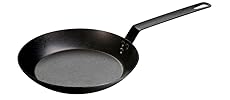
The Lodge 10-inch Pre-Seasoned Carbon Steel Skillet is a lightweight, durable, and versatile pan designed for professional-quality cooking on any heat source—from stovetop to campfire. Crafted from 12-gauge carbon steel and pre-seasoned with natural vegetable oil, it offers a naturally non-stick surface that improves with use. Oven safe up to 500°F, PFOA/PTFE free, and proudly made in the USA, this skillet delivers even heat retention and quick temperature response, making it the ultimate tool for millennial chefs who demand performance, sustainability, and style.


| ASIN | B005U93RYC |
| Additional Features | Made without PFOA or PTFE |
| Best Sellers Rank | #10,959 in Kitchen & Dining ( See Top 100 in Kitchen & Dining ) #88 in Skillets |
| Brand Name | Lodge |
| Capacity | 2 Quarts |
| Color | Black |
| Compatible Devices | Electric Coil, Gas, Smooth Surface Induction, Smooth Surface Non Induction |
| Customer Reviews | 4.1 out of 5 stars 7,681 Reviews |
| Global Trade Identification Number | 00075536551104, 30075536551105 |
| Handle Material | Carbon Steel |
| Has Nonstick Coating | No |
| Included Components | skillet |
| Is Oven Safe | Yes |
| Is the item dishwasher safe? | No |
| Item Height | 3.31 inches |
| Item Type Name | Skillet |
| Item Weight | 3.1 Pounds |
| Manufacturer | Lodge Manufacturing Company |
| Manufacturer Warranty Description | Lifetime limited manufacturer's warranty |
| Material Type | Carbon Steel |
| Maximum Temperature | 500 Degrees Fahrenheit |
| Model Name | CRS10PLT |
| Product Care Instructions | Hand Wash Only, Oven Safe |
| Recommended Uses For Product | Use in the oven, on the stove, on the grill, or over a campfire |
| Specific Uses For Product | Gas stovetops, electric stovetops, induction stovetops, outdoor grills, open fire, oven, campfire |
| UPC | 075536551104 |
| Unit Count | 1.0 Count |
D**E
Best pan I have ever owned
This is the best frying pan I have ever owned, period. My wife was very skeptical when I ordered this, but she is now in love w/this pan as well. It is so easy to season, to use and maintain, and we now have zero concerns about non-stick chemicals and the environment. This pan just works as we expect every time. We've tried various non-stick types, including ceramic, and they all provided inconsistent results, were easy to damage, can release dangerous fumes/chemicals if you overheat them, etc. In contrast, this little pan that could (I have the 10") is so reliable and flexible, you can use any cooking tool you want with it w/out worrying about scratching it, takes high heat w/out any issues and won't release chemicals, and clean-up is quick and simple. One reason I love this pan - just today I started up our gas cook top to make an easy-over egg and got distracted by my dogs and a phone call...a few minutes later I smelled something and noticed smoke billowing off the pan. If it was one of my non-stick pans I would panic about dangerous fumes, about ruining the non-stick finish, decreasing the pan's useful life, etc. In this case, no worries! I simply turned off the burner, waited a few minutes for the pan to cool a bit, put in a little canola oil and wiped the pan interior w/a folded paper towel (careful not to burn myself). A moment later I fired up the burner again and cooked my egg w/out incident or concern! Carbon steel victory! Clean-up is usually wipe it down w/a paper towel and some canola oil. If it needs a little more, we scrape it a bit w/one of the Lodge pan scrapers for sale here on Amazon (or you could use a stiff spatula), wipe the scraped bits out, add a little canola oil and wipe with a paper towel to finish. You can also use some salt to provide some grist to help with clean up if you want to, but we've only done that once, and only had to put the pan in the sink once to clean it up w/some hot water. This pan is more consistently non-stick than our ceramic pans have been - eggs, a great test of a pan, don't stick. I slide our spatula under them and they release and flip without issue. My wife has even made fried rice in the pan w/out problems! The only thing we avoid is high-acid foods (tomato sauce, dishes with high lemon content, etc.) as we have read that that can cause a metallic tang to the food. We do cook food that we season w/lemon juice or have tomatoes in them, but I wouldn't try lemon chicken in it, maybe. So far we've never tasted anything but the food we cook, it's been perfect. The pan puts the best "crust" on anything you want it to, and carmelizes onions way better than any non-stick I've ever used. It's light enough to "toss" (where you tilt the pan up in the front and shake backwards/forwards to make the food slide to the back jump up and back into the pan), but is heavier than an average non-stick pan, with a nice heft which we actually prefer, now that we have this pan. It's much lighter than a cast-iron pan. Obviously, I just can't say enough about how much we love this pan. Get one, understand and enjoy the use/maintenance differences, and you won't regret it.
F**Y
Food Tastes Better Cooked In This Pan!
Having only had non-stick and stainless steel pots and pans it took some time to learn the best way to cook with carbon steel and cast iron pans but I love them now. I got rid of all our non-stick cookware even though they were expensive top brands and non-PFOA. Some were scratched and I read scratched non-stick pans are unhealthy to use. It seems like the non-stick pans keep evolving to some other chemically made coating because the previous one turned out to be toxic. Now I cook only with carbon steel, cast iron and high quality stainless steel. I use stainless steel for boiling soups, pasta and acidic food like marinara sauce but carbon steel and cast iron for pretty much everything else. Using the care and cooking information from Lodge on their site has helped immensely and we keep noticing that what I cook just tastes better! I love that you can heat the carbon steel pan and seer the outsides of foods without drying out the interiors. You can scrape whatever sticks and use stainless steel utensils without worrying about damaging the pan. It took a while to develop a non-stick quality that is possible in carbon steel cooking with oil seasoning. We have a whole food plant based diet (except for the occasional eggs our pet hen gifts us) and the vegetables taste amazing! The WFPBD gurus often recommend don’t cook with oil but I personally would rather take my chances with oil than non-PFOA coatings. Also, carbon steel and cast iron is better for the environment. I don’t know how to keep my discarded non-PFOA pans that are damaged out of a land fill! I also got a cast iron cleaning kit on Amazon that has a mesh metal tool that helps scrape off anything that sticks. I had given up on a small cast iron pan I bought years ago when it rusted after I washed it and it sat in my cabinet unused. I read the directions again on how to care for it and now it is one of my favorite pans. The rust cleans up and you just season it again. I wanted to try carbon steel after reading it was lighter weight than cast iron and French chefs prefer it. The care is pretty much the same for both carbon steel and cast iron but carbon steel is lighter weight. One benefit of cast iron that carbon steel doesn’t have is that I can build up muscles just lifting it. LOL. This pan is a good size for many recipes and has become one of my go to favorites.
J**E
Better than Cast Iron
This is a decent pan. I LOVE black/blue steel pans and griddles. Best natural nonstick cookware you can get. Even if your housemate(s) or significant other messes it up, you can bring it right back to mint with a little effort (very little effort, but a few hours of time). That being said, there are better pans out there if you're willing to pay a bit more. To clarify, here are my quibbles with this pan. First, the surface is textured and rough. Not as bad as a lot of new cast iron pans out there. But I also have a Matfer Bourgeat 12 5/8" fry pan and I have a black/blue steel griddle. So I know how smooth the surface can and should be. The plus of a smooth surface is that after a short seasoning, eggs float on the pan as if on air. It took MUCH longer to get the surface of this Lodge pan to perform similarly. On the other hand, I've read that the seasoning on a smooth surface is more easily damaged. Not sure if that's the case. But given how easy it is to reseason a smooth surface, this has not been an issue for me. I have had to preseason the surface of this lodge pan after our au pair messed it up ... twice. The Lodge is much more of a pain to reseason given the time/number of seasoning sessions needed. Second, I really dislike rivets inside the cooking area of a pan. They are a pain to clean. These are a bit easier, given that they season like all other parts of the pan. But residue still builds up and is difficult to get out. There are other steel fry pans, like Matfer Bourgeat, where the handles are welded to the main body for a riverless design. I MUCH prefer this. In sum, if you're on a tight budget or if every once of decreased weight is important, look no further. But if you can spend $15 to $30 more (depending on size), then go with something like Matfer Bourgeat with a smooth surface and no rivets. It will still be significantly lighter than cast iron, though the Matfer Bourgeat are a bit thicker, and thus heavier, than the Lodge carbon steel pans.
P**E
Great pan when treated right...
These are great. I have two of them. Tips: buy the handle, this gets hot! The handle slips off too easily, but you'll notice that the slot is curved to fit the handle, so install it upside down & it'll stay tight, you won't lose your grip. Someone else complained that it's not smooth & the surface is rough (one person took it to his shop & polished it!). Don't do that. That rough surface is there so your seasoning can grip it. The more you use it and the seasining builds up, it will become mirror smooth. Polish it, and you'll be wiping your seasoning away with every cleaning because the seasoning has nothing to grip. Be patient with it. I do love my cast iron, but for many things, it heats too slowly & retains heat too long. Carbon steel is quicker to respond to temperature changes. When I take this pan off heat, I don't have to transfer delicate foods, like eqq dishes, to cooler containers or plates to avoid overcooking. Historical fact: Miracle Teflon, when introduced to cookware, was problematic because it was so slick it wouldn't stick to the pans. The solution was to make the pans rough & pitted so the Teflon had something to hold on to.
M**A
A truly non-stick pan - if you take the seasoning process to the next level
I have in recent years become more and more obsessed with carbon (black) steel pans. I wanted to get away from Teflon and other synthetic non-stick surfaces, with their questionable health effects, but cast iron just makes for a terminally heavy pan, especially in the larger sizes. Carbon steel seemed like the answer, but I have run into some trouble getting them to be truly non-stick. The secret to a truly non-stick carbon steel pan is two part: (a) start with a pan made by the right manufacturer, and (b) prepare to invest some time in the seasoning process. Pans made by some manufacturers just never seem to become non-stick, no matter how long you work on curing them; and there is no carbon-steel pan on earth that is non-stick right out of the box. These Lodge pans - I now have two - are relatively inexpensive (considering how much you can spend on fancy French versions), solid and well-made. Really folks, they are just as good as - if not better than - the fancy French ones you find at Williams-Sonoma. They come "pre-seasoned", but they aren't even close to fully-non-stick straight from the box. But with a little patience and care, you can get them to be perfect. Read on: (1) Preheat your oven to 200 degrees. Wash the pan thoroughly with dish-soap and a brush. And this should be the LAST TIME soap ever touches the pan. (2) Dry the pan thoroughly with a paper or cloth towel, then let sit in the oven for 15-20 minutes. (3) Using an old oven mitt (careful: it's gonna get a little oily) remove the heated pan from the oven to a heat- and oil-proof surface. Then turn the oven heat up to 500 degrees. Yes, you read that right, as HOT as that oven will go. (4) Working quickly while the pan is still hot, squirt about three-quarters of a tablespoon of oil into the pan (the far-and-away best is Flaxseed oil, canola is semi-OK but flaxseed is noticeably better; DO NOT use olive oil), and, using a clean paper towel, rub the oil all over the inside of the pan, then the outside and bottom, and finally the handle. Cover every square millimeter of the pan! Let sit on a rack or another oil-proof surface for 5 minutes. If at any time you see any fibers from the paper towel coming off onto the pan, STOP, get a new paper towel and wipe the fibers off completely! (5) Then - and this is REALLY important! - get another clean paper towel and WIPE OFF ALL THE EXCESS OIL. You want just the thinnest possible coat of it left in the pan. Too much oil and you will be scrubbing gooey crud off your precious pan with steel wool later and starting all over! (6) Then put the pan into the 500-degree oven for TWO FULL HOURS. Set a timer. Don't worry if the oven isn't fully at 500 degrees when you put the pan in, it will get there soon enough. There may be some light smoking after a bit, but that's normal. But if it starts smoking too much, you put too much oil on, which you absolutely should NOT do!! (7) After 2 hours, turn off the oven but DO NOT open the oven, DO NOT TOUCH THE PAN. Let it sit ANOTHER two hours as the oven slowly cools. (8) After two hours cooling, the pan will still be warm, use that oven mitt. You will notice a very thin black layer on the steel now, baked onto the steel. This is the base layer of your "cure" or seasoning. Immediately wipe on a new layer of oil, this time canola, NOT flax (doesn't really taste good!). Again, you DO NOT want too thick a layer of new oil: just enough to add a solid sheen to the surface of the pan. (9) The first time you use the pan, add a liberal layer of cooking oil in the bottom of the pan first. The pan may not pass the "fried egg test" the first time; if it doesn't, scrape off any cooked-on bits left afterwards with a soft (plastic) spatula, and oil the pan again before you put it way. It may take 2 or 3, or 4 or maybe more tries before the pan becomes fully non-stick, but HAVE PATIENCE. It will get there eventually. And once you have your pan in that perfect non-stick zone: (a) NEVER use any kind of soap or you many have to do the whole process over again, and (b) ALWAYS wipe a thin layer of oil onto the pan (both sides!) before you put it away. With proper care, the pan will never rust and last longer than you will..!
B**R
Not bad, could be be better.
All on all, not a bad pan and it will work for you as a way to get into carbon steel cooking but it did take about 8-10 seasonings with avacado oil to get a workably "smooth" surface. And that's the thing here; that surface is like it was modeled off the surface of the moon. I'd really like to hear from lodge as to why on God's green Earth they decided to go with such a rough material. But after SEVERAL seasonings, it did well with proper pre-heating and a bit of oil before cooking. You know, the basics. I recently stripped it down and sanded off the more overt roughness (there is still a lot of pitting but they'll fill in with seasonings) and so far that has been a great improvement but I shouldn't have to do that work It is also fairly thin so while it is light, it does get a bit soft when heated up enough to try and stove-top season so be a mindful of that. And because it is so thin, HEAT IT SLOWLY to ensure it doesn't warp!
R**0
Love the pan!
I've been using it for a week or so- I looked at reviews and complaints, and was careful to season it. I wiped it with oil and heated it til the smoking pretty much stopped and let cool, 3-4 times. I use a little oil when cooking anything but I did that with nonstick pans already so nothing different. I was skeptical but whaddya know, the eggs didn't stick! Potatoes didn't stick either-the biggest difference I see from past pans- I've used nonstock, ceramic, cast iron and stainless steel- is that the pan heats up quickly, I don't need to use as much heat to get it hot either. It cooks faster, sears better, and cleans up like cast iron. It's not as heavy as the cast iron but heavier than steel. People who show pix of a lot of ugly gunk in it didn't season it or use it correctly. One note, I was annoyed there were chips on the edge when I got it and decided to ignore them. But as I used the pan, the seasoning covered up the chips again and they're gone! Bottom line is, if you aren't the type to take care of pans or take time to season it now and then, go with non stick easy peasy. If you don't want to cook with chemical coatings, but want a nonstick surface your stainless can't give you without the weight of cast iron, this is your pan! I paid a lot more for my Made In pan that lasted a few years, thus will last a lifetime- and get the silicone handle cover, you definitely need it.
M**7
Equivalent to my French pans with a little work at half the cost
This pan takes a tiny bit more work than french cookware, but at half the cost it is worth the effort. Out of the box, this pan does not look like it's in the same class as my 3 rivet handle french skillets. And frankly, if you try to use the rough factory seasoning it would take months to eventually become equivalent, if ever. But since my high cost french pans needed the wax coating burned off with subsequent seasoning by me, I don't think it's fair to ding Lodge for needing to burn off the factory coating with subsequent re-seasoning by me. It's six of one and half dozen of the other. However, the Lodge factory metal finish is not smooth like my french pans (this is a feature to make the factory seasoning fogging process work) which means I *DID* do a little work with sandpaper and steel wool to smooth down the rough surface after I had burned off the factory seasoning in a self cleaning oven. Once I was down to smooth metal, the process was virtually identical to my french pans. (I understand why there is a factory seasoning; because Lodge is appealing to only the U.S. market. Few European households are going to buy a Lodge pan. And in the U.S. artificial convenience is an important selling point. After all, most Americans call the bag of stuff that comes out a drive through window food.) Once you're down to metal and ready to season, do it exactly like you would do a french steel pan or a cast iron pan. There are plenty of videos on YouTube. Pick your favorite and go to town. If you like the results, good enough. Once it is properly seasoned this pan is absolutely equivalent to my European steel cookware. Eggs slide right out. Pancakes are awesome. Onions caramelize great. And don't forget its half the cost. The handle on this 10 in pan is canted up about 15 degrees, about the same angle as a Matfer Bourgeat pan, which is a vast improvement over the horizontal handle of the Lodge CRS12 that I bought several years ago. I find this handle is excellent. It doesn't get hot while making breakfast, but realize it does get hot in the oven. The pan's metal is 12 gauge steel, so it is about the same thickness as a de Buyer Mineral B 9.5" omelet pan. And the handle is riveted to the pan like de Buyer's Mineral B line rather than spot welded like Matfer. So I expect this pan will end up easily outlasting my grandchildren, much like a cast iron one. But without the weight of cast iron. ——— Five month update: This has become my go to breakfast pan. Eggs slide around easy. It’s now every bit as smooth as my expensive French pans. A little shallower sides and slightly bigger flat bottom than my similar De Buyer Mineral B, so morning omelets are easier than with the De Buyer. It goes in the oven safely for frittatas. Cleans and seasons exactly like cast iron or French steel, no difference (come on, iron molecules are iron molecules the world over), and it’s noticeably lighter than cast iron - so it heats and cools faster than cast iron. Note that it doesn't heat and cool like a copper pan because it’s not copper - that’s a completely different animal. But the heat retention and distribution is exactly equivalent to my French steel pans. Makes an awesome grilled cheese sandwich, too. Overall this pan is worth ever cent I paid and the effort I put into seasoning it right. Try to take it away from me and I’ll use it to beat you. If you want an iron cook surface and not the weight of cast iron, then this is the ticket.
Trustpilot
5 days ago
1 month ago