
DOWNLOAD THE APP



Desert Online General Trading LLC
Warehouse # 7, 4th Street, Umm Ramool, Dubai, 30183, Dubai
DOWNLOAD THE APP
Desert Online General Trading LLC
Warehouse # 7, 4th Street, Umm Ramool, Dubai, 30183, Dubai
Full description not available
F**S
What if a Book Were Organized Like a Tasting Menu?
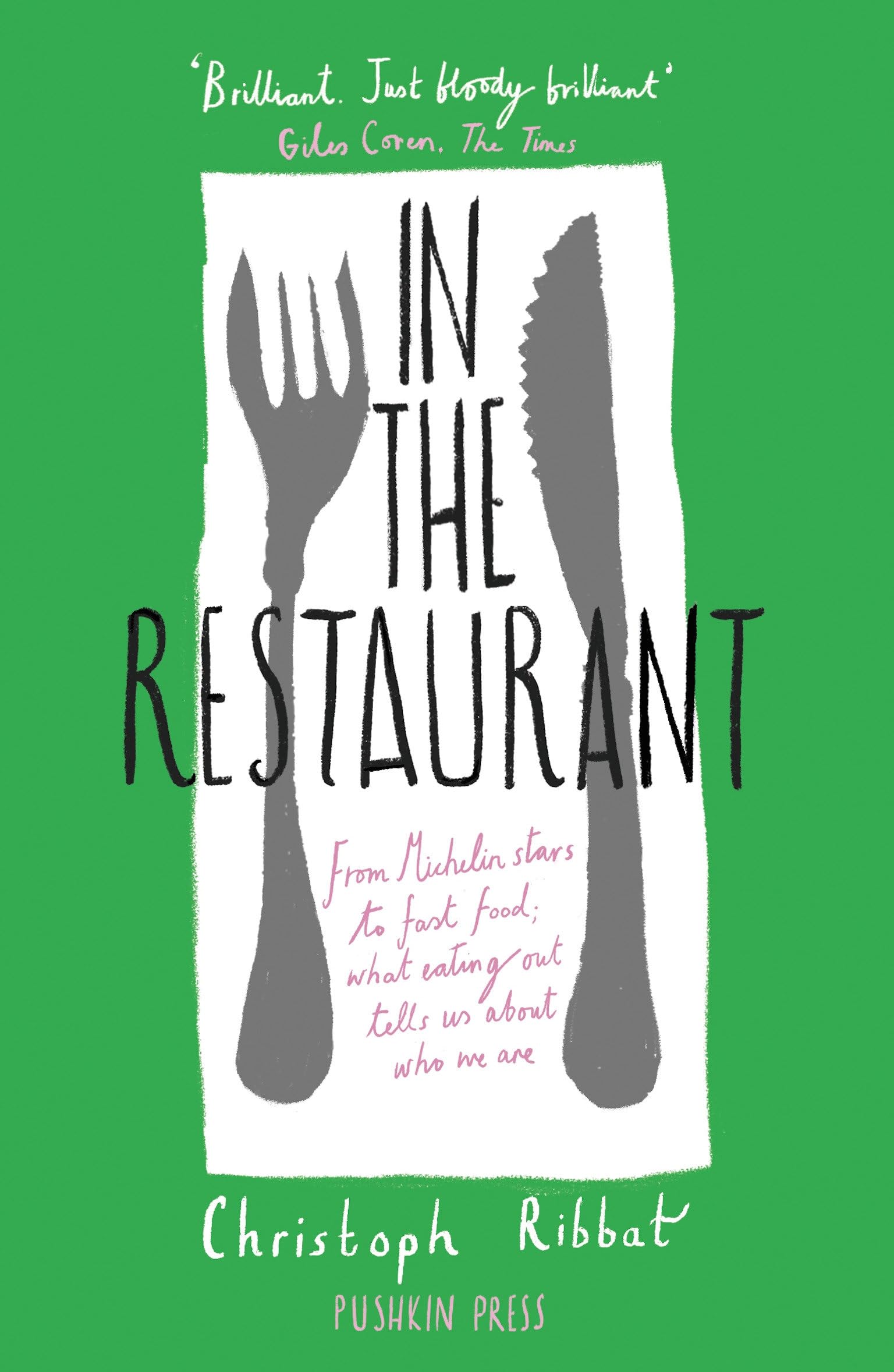
It's difficult to describe In the Restaurant, but it is a breeze to read. I loved it! It's as if author Christoph Ribbat took notes on every book he's read about the restaurant experience, and distilled them into one short, pithy book. He looks at restaurants from a historical point of view, from a labor aspect, in terms of social experience, zeroing in on owner, chef, wait staff, and diner at different times. He discusses the experiences and writings of George Orwell, Jacques Pepin, Barbara Ehrenreich, and Marilyn Hagerty (writer of Grand Forks, North Dakota restaurant reviews). He considers the automat, Craig Claiborne's $4,000 dinner, the McDonald's system of standardization, and Alice Waters' early failures and successes. The narrative moves back and forth, as different threads intertwine with each other -- sort of the way story lines take turns in a TV drama or sitcom. This gives it a choppy texture, but actually works well to keep things moving. Try it!
A**E
Purchased as a gift - not what was expected
Very short smippets of fairly current experiences from gourmet chefs, waiters and maitre'ds. Not as in-depth a presentation as wished and not spread over time as wished. An easy read, but a disappointment.
T**S
Save your money.
Very...silly. Avoid.
J**Z
Some interesting facts, but not worth reading in my opinion
This book starts out well..the first chapter is easily the best. After that, it bogs down terribly and the next two chapters are almost boring. It also suffers from poor editing.The reader does learn about what it must've been like to be a waitress in Chicago in the early 1900's, the origin of White Castle hamburgers, the first German pizzeria (March, 1952) and about the chef who invented Peach Melba.A small section of the book talks about the Woolworth's kitchen counter where racial segregation took place in 1960 and ultimately where the civil rights movement gained momentum.For some reason, the author all of a sudden includes four letter words towards the end of the book, but by then my interest was totally lost.Interesting facts about the history of restaurants, but just not very interesting for me anyway.
J**N
Know what you're getting, and enjoy it.
What we have here is a large tasting menu of fascinating snippets concerning the history (mainly) and some sociology etc of restaurants and the whole idea of eating out and of creating meals to serve to strangers.I found it highly entertaining, with much mental stimulation (don't want to say "food for thought" because that would be a dumb pun or maybe just a dead metaphor).If you want a book with a single thesis and a couple of through lines, this isn't it. If you want some unusual and interesting information about restaurant phenomenon presented in snippets, here's your book. Is it crucial reading? No. But it still has plenty to offer the prepared mind.
J**U
it felt like by trying to cover so much
The author's decision to have the book broken up into so many small pieces (many of which were connected but also divided by other sections) that covered everything from the "British Restaurants" of WWII to McDonalds frankly made this a confusing read for me. I knew that I was receiving a lot of bits and pieces of interesting information about the recent history of restaurants, but I didn't understand the overall point of the fragmented format, or what the underlying focus was supposed to be here. Was this about restaurants' changing roles in society? Was this about restaurants as a place of both egalitarianism and class conflict? Was this a history that wanted to concentrate on being told through the lens of a chosen array of struggling writers and undercover scholars who worked in the restaurant at various points in their lives?When I reached the final part of the book, the message I (think) that I received was that yes, this was about all of those, and more. But as I finished "In the Restaurant", I did not do so with a sense of conclusion, or honestly even satisfaction. The reading experience was so jumpy and so broad (not to mention oddly over-concentrated on restaurants in a European and American context), that even with a final wrap-up section, it felt like by trying to cover so much, the book didn't really cover anything.
I**E
Many, many tiny biographies
Focuses on the people who have been involved in the history of the modern restaurant, up to the present. Presented in short snippets of information; generally about half a page to a few pages each. Covers a variety of topics in a rather scattershot method, rather than a more cohesive look. It’s more like “society in a platter of hors d'oeuvre ” than “society in 4 courses.” I don’t think that’s either good or bad, but it is a notable part of reading this book. If you are looking to be satisfied with lots of trivia strung together by a general idea than an in-depth analysis, this is your book.Personally, I didn’t mind the hors d'oeuvre style of writing, but I was a bit disappointed in just what was covered. In The Restaurant is less sociology and more history / biography, which is not what I expected, given the subtitle and the description. So many mini biographies of people I didn’t find interesting or significant just wasn’t what I wanted. I just don’t need a one page bio of a waiter in Worcestershire, for example. Certainly some of the mini bios are more significant and interesting, but not enough of them.But that’s JustMe.
F**M
Recommend you pass this one by. Sorry
Did not care for this one at all. Not much here of interest after the first chapter. When it lost interest for me I just started skimming the book. I really feel that I did give it a fair chance. I feel it is my responsibility as a reviewer to do that. There is just nothing here to capture me.
Trustpilot
1 day ago
2 months ago