🛴 Glide through recovery in style and speed — because your mobility deserves an upgrade!
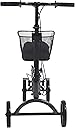
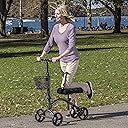
The Drive Medical DV8 Aluminum Steerable Knee Walker is a premium crutch alternative designed for foot injury recovery. Featuring large 8-inch casters for smooth indoor and outdoor use, a sturdy dual steel frame supporting up to 300 lbs, and tool-free height adjustments for personalized comfort, it offers superior maneuverability and stability. Its foldable steering column and channeled leg pad combine convenience with ergonomic support, making it the go-to mobility solution for active professionals seeking both function and style during recovery.


| ASIN | B003VMAKVS |
| Age Range (Description) | Adult |
| Age Range Description | Adult |
| Brand | Drive Medical |
| Brand Name | Drive Medical |
| Color | Silver Vein |
| Customer Reviews | 4.4 out of 5 stars 2,763 Reviews |
| Global Trade Identification Number | 00822383183589, 05055876012225, 05060266849794, 50822383183584 |
| Is Foldable | Yes |
| Item Weight | 22.7 Pounds |
| Manufacturer | Drive Medical |
| Manufacturer Part Number | 790 |
| Material | Aluminum |
| Material Type | Aluminum |
| Maximum Height | 97 Centimeters |
| Maximum Height Recommendation | 74 Inches |
| Minimum Height | 33 Inches |
| Minimum Height Recommendation | 33 Inches |
| Model Number | 790 |
| UPC | 727908142006 822383125596 811032486577 767644235631 822383183589 639767652469 610696367358 086011247214 073551828676 |
| Unit Count | 1 Count |
| Walker Type | Two-Wheeled Walker |
| Warranty Description | lifetime on brake cable limited lifetime in rest |
| Weight Capacity Maximum | 300 Pounds |
M**N
Drive Medical 790 and 796 steerable knee walker models, comparison & review -
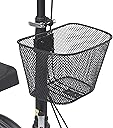
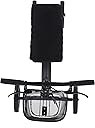
I bought both the Drive Medical 790 & 796 (used in lieu of crutches during fractured foot-bone recovery). This is kind of a lengthy review, but hopefully others will find it useful, since even the manufacturer's website didn't provide enough details to answer some of the questions that came to mind as I was trying to compare models & features. Some assembly insights are added in a response commentary. From reviewing many of the negative reviews, it appears that there are far too many users who tried one of these and suffered additional injuries because they fell off while using it. So, towards hopefully not having others suffering from even further injuries using ANY steerable knee walker - perhaps a good criteria whether any of these might be for you is, if, before your injury, would you be able to hop on any two-wheeled bicycle, and ride it down the road, street, or sidewalk? In not, think pretty carefully whether one of these is your ideal option, because using one employs much of the same skillset - visual awareness and processing of what you're rolling over, good balance, awareness of, & managing your center of gravity, hand and upper body strength, and just generally being aware, careful, and employing common sense. The way almost all these are designed, they get inherently less stable the more the wheels are turned, because the axle turns with the wheels - you make a turn too fast, have the wheels turned and lean to the wrong side, don't lock the brakes AND keep the wheels pointed straight ahead getting on/off it, hit an obstacle or ramp ledge while moving too fast or not paying attention, let the speed get away from you on a downslope, lean too far forward and risk flipping over the front bars or straight down on your face, etc - it's less stable and your risk of tumbling off the thing increases. There are a couple of these that have a fixed front axle, and ONLY the front wheels turn. If managing the personal balancing with one of these models isn't your bag, the ones that have fixed axles/steerable wheels are more stable and perhaps a better choice (at last look, they are also more expensive, presumably due to more complexity). However, much of the bike-riding/usage skillset still applies for those with a fixed front axle. Think about it, the triangulated support points of any of these, necessitated by having to have clearance for the leg you're scooting with, means some inherent instability, which at least is helped by having two rear wheels instead of just one - the only way these could be more stable would be rear wheels placed as wide as the fronts, and to clear your stride, they then would have to be so long they would be completely impractical to maneuver in a house, never mind too heavy and cumbersome for vehicle stowage or, pretty much any convenient usage. These work great for LOTS of people, as evidenced by many reviews, but they are definitely NOT for everyone. There are some further caveats in the rest of the review, but that covers perhaps the main stuff - if you can't handle the balance of bicycling, or riding a bike in general, this particular design of walking aid may not be for you. On to the positives - Main point - for outdoor use and collapsing the steering column for stowage in a vehicle, the 790 is by FAR the better choice compared to the 796. The handles on the 790's steering column are wider than the 796, which means you have better leverage for steering control, and thus, better steering control. The 796 does come with a small basket, which is handy, but the Schwinn quick-release wire basket, although a separate purchase, is bigger, and not too hard to attach. The 790's release catch to fold down the steering column is much easier to use vs. the 796. The catch release on the 790 can be a one-handed maneuver, although you'll probably use the other hand to keep the steering column from just falling down once the catch is released. You slide up a spring button to release the flip lever, which has a tab that catches the latch-bolt as you pull down the flip lever. The 796 catch release is a push-button, but the push button is so small you can't use your finger, you have to use something like the eraser-end of a pencil to be able to push it in far enough to release the catch and fold it down, obviously a nuisance to try to do in the haste-of-the-moment of stowing it into your vehicle. Between that and the shorter steering handles, I think the 796 is better suited to indoor use. To be fair, I saw one comment that just pulling down on the 796 steering column worked and you don't need to press the button - that didn't seem obvious to me, but I'll try it and see if it works and either revise or add a comment later. The only negative I found to the latching on the 790 is the latch-bolt is spring loaded, and occasionally, the tab on the flip-lever release could push past it, meaning you have to pull down the latch-bolt by hand (quicker), or flip the lever up and down trying to get it to re-catch. You can most easily release the catch by pulling the steering column towards the catch mechanism, which ensures it's flush to the bottom section of the steering shaft and not putting any pressure against the latch bolt, leaving the latch-bolt free to pivot down without resistance. Turning Radius: The 790 has a good-bit tighter turning radius than the 796, as you can turn the steering column/wheels further side-to-side. This is handy everywhere, although especially inside within tighter quarters. The downside to this is it can be easier to get off balance with the 790 - you have to be careful not to crank the steering all the way to the side of your good leg and lean over your elevated leg the other way, you can go right over. A little cautious forethought and you can avoid spilling yourself. The 796 is more tip-proof in that regard since you can't turn the steering as far - in that sense the 796 might be a better choice for a senior 70's-80's+. The 790 does not have a knee pad slightly offset to one side, the 796 does have an offset knee pad. For the 796, you want to make sure the knee pad is offset towards the 'scoot' leg, which also makes it more tip-proof (since it moves your center of gravity more off of the center-line of the scooter). Interestingly, even though made by the same company, the seat columns are different diameters and thus not interchangeable (I tried, wouldn't swap). The other advantage of an offset seat is your 'scooting' foot is over a little further and less prone to rake against the rear wheel. I didn't really have a problem with that with the 790, although it's advisable to wear some sort of foot gear scooting around indoors rather than just socks or barefoot, lest you rake a bare ankle or foot against the rear wheels. I saw some reviews of people running over their own feet and breaking their toes - so, yes, possible, but be careful and you can avoid doing that - also another reason why not to scoot around in bare feet or sandals. The wheels spin very freely on the 790, you can really get moving on this thing outdoors, and if you hit a pavement/surface irregularity at speed, that could make you go down, so it's a good idea not to get too carried away with zipping along, advisable to keep rolling at walking speed. I opted to lift the front slightly over sidewalk gaps & wheelchair ramps rather than trust the front wheels not to catch and force an unwanted sudden turn. It got some usage on city streets, here they have these dimpled 'traction pads' (for lack of a better description) on the sloped part of the sidewalk ramps; the dimples are large enough and high enough that they are difficult to traverse over with a knee walker, the dimples have the handlebars wanting to twist out of your hands - no way to roll over those things quickly or easily. The 796 wheels also turn freely enough, the 796 steering column seemed to have more resistance than the 790, although that could be attributed to having less turning leverage with the shorter handlebars. Brakes/Braking: The 790 has a bicycle-style brake handle on each handlebar for each rear brake, and there is a separate brake on both rear wheels. The 796 has a single brake handle which actuates brakes on both rear wheels. The 790 has serrated metal pieces that press against the rear wheels for braking; the 796 uses bicycle-style rubber brake pads that press against the rear wheels. Both models, you can lock the brakes on, and pulling the brake handle releases the spring-loaded brake lock. If it isn't obvious, releasing the brakes allows the rear wheels to roll freely; if the brakes are unlocked but still tight against the rear wheels, obviously they're out of adjustment - the provided instructions explained how to adjust the brakes, up to a point. Because of the serrated metal 'pads' and handles for each rear brake, the 790 has more stopping power for the brakes - having two hands braking obviously you can apply more braking force than being able to only use one hand, as on the 796; that, plus the rubber brake pads of the 796, although a replaceable wear item, can't bite against the rear wheels as much as the metal counterparts on the 790. If the rear wheels of the 796 get wet, it would be the same loss of stopping grip as a bicycle in the rain. The serrated metal of the 790, that's not much of an issue, except it can be easier to just lock up one or both of the rear wheels (thus back to keeping rolling speed within reason). In the couple months usage, I didn't discern enough usable wear on the rear wheels to be a problem - seems like it would take a long time for the metal pads of the 790's brakes to wear the wheels to the point of needing replacements. The 790 brake cables did stretch some (similar to bikes) over the couple months usage, but not enough that I couldn't re-adjust within the range of the turning adjusters - further stretching would require pulling the cable tighter through the bolt clamps (again, similar to bicycles). The knee pads on both models were well-cushioned and fine, just different designs. The 796 has the offset knee pad, the 790 doesn't, the 796 has two large square pads with somewhat more cushioning, the 790 is a molded single piece of cushioned foam, no problem for me with comfort/use of either. Many reviews have users complaining of discomfort with the 790 knee pad, or it splitting or tearing - I didn't have that happen, and rarely did I keep my knee on it for any great length of time. Even if out shopping or whatever, if I was stopped for awhile, straightening the good leg to stand up a bit would vary and relieve tension and pressure. If you can't take some pressure off the knee on the knee pad by standing up straight with your good leg, I'd say you probably have the knee pad adjusted too high. Some reviews have complaints of skin abrasion/discomfort - I'd say it's probably not a good idea to have your knee on the pads bare-skinned, except possibly for just a few minutes usage at a time indoors. Heading out all afternoon in shorts, probably not a good idea, that could necessitate some sort of additional padding or cushioning. Also, if for whatever reason you have to lean heavily on the knee pad a lot, that could make it uncomfortable. If you have bad knees, bad knee arthritis, or other complications, obviously having to place a lot of body weight on the knee can make for a problem. For me though, it was fine, no problems for either. Using the 790 more regularly, I found the adjusting/locking knob for the knee-pad post would occasionally loosen and require re-tightening, no big deal really, just something to check every so often. Don't know how I did it, but accidentally knocked off the small retaining circlip on the underside of one of the 790's brake locking buttons - must have knocked it against something, although maneuvering it in & out of my truck was more of a hasty rather than careful procedure. Not a flaw, I suspect most would not have this happen. The 796 is tools-free assembly, the 790 involves some simple assembly of the steering column with a provided allen wrench - the biggest challenge for the 790 is getting the handlebars parallel with the front wheels. If you push the front wheels against a straight wall, you'll have more visual reference for parallel alignment. Both come in a good-sized box that's easy enough to open, I think the 796 box had industrial staples at the seams, & the 790 was seam-glued. I think both were taped shut. I found I could use the 790 to navigate my 6 outside deck stairs (which also have a railing) - the steps up to the deck (& house door) were more than deep enough for both rear wheels to rest solidly on the steps pushed against the next step, and with the handlebars turned at full lock away from the steps (towards me), the one front wheel was more center-line, and with the brakes locked, made for a stable platform I could place my knee on, and then step up a step, although I then had to lift the walker and reposition it on the the next step up with one arm while holding the railing with the other for balance - the makers would never suggest doing that due to the risks on the stairs, but if you have the strength for it, I found it manageable enough with no problem, going up or down, although up was easier because one side of the steps was railing, the other, house. Sure beat scootching up a few outside steps in bad weather one at a time on my butt. My indoor stairs are nowhere near deep enough, and, too many steps besides; also too risky & too slow. Needing to be upstairs made keeping a 2nd on walker on the upper floor a logical choice. Trying to haul the scooter up & down solo all the time, too much hassle. In any case, using it to navigate stairs is only recommended if the stairs are deep enough to rest both back wheels, AND, it's just a few stairs - that, plus turning it completely and pushing the other front wheel against the step, is the only way it's stable to make a secure maneuver. Don't even try it if your not sure about it, as the risk of a fall and further injury while trying to heal isn't worth it. The 790 gets 5 stars, I'd say giving it an offset knee-pad would about make it perfect, but it's perfectly fine as-is. The 796 gets 3 stars due to lack-of-ease with the release catch for folding down the steering column, shorter handlebars, single handbrake handle, and the nuisance with the greater turning radius.
G**N
Great Product
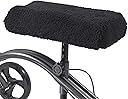
Let me begin by saying that this tool is not for everyone. A person needs a good sense of balance and common sense to operate the walker safely and efficiently. Age and overall health will certainly play a factor. That said, the Drive Medical 790 Steerable Knee Walker was a God send for me to retain mobility while recovering from a severe ankle injury. I started with a traditional walker and as I needed to be eight weeks nonweight bearing on the injured leg, I had to "hop" to get around. The situation proved extremely tiring and frustrating. I had heard of knee walkers but knew nothing about them, and thus the research began. There are several brands on the market and all seem fairly comparable. The only company that offered a "one up" was Rolleraid, which uses front swiveling wheels for much tighter turns. However, the cost was almost four times as much as Amazon so that was a no brainer for me. Be cautious of renting a knee walker. First, equipment quality may be an issue and depending on the length of time you will need the walker, it might actually cost more to rent than to own. I figure I will do the right thing by donating to the American Legion or VFW when my time is finished. Sort of my medical "Pay it Forward." So here are my tips, pros and cons for you to consider: PROS: Light weight Easily assembled and adjusted Collapsible for transporting Stable Strong brakes and brake locking system Contoured bench supports knee and shin comfortably Endorsed by my hospital CONS: Making turns is tricky in tight spaces TIPS: Buy a knee pad cover. Remember, you'll be spending a lot of time on the walker and want to be comfortable. I ordered the one on Amazon and even though it's made by a different company it still fit. Purchase a basket. I didn't get one and now wish that I had made the investment. I'm constantly moving my "stuff" and a basket would have made it so much easier. SLOW DOWN! Every time you try a new surface your conditions change -- especially outside. I live in a northern state with plenty of snow and ice to spare. Every bump, crack, hill, etc. bears scrutiny. The same may be said for indoor surfaces. Moving among carpet, tile surfaces, rugs and threshold strips changes your momentum. It's better to take your time and stay safe. Lock the Breaks! Lock the Breaks! I can't stress this enough. Lock them when mounting and dismounting the device. Lock them when you're reaching or bending for something. Lock them when you're parked to perform other functions (e.g., brushing your teeth). Why risk falling and reinjuring your foot/ankle or some other part of your body? Practice your turns. I suggest doing this at home or wherever you are recuperating prior to going out in public. Overall, the knee walker was a great investment for me. It's more versatile than a traditional walker and less cumbersome than a wheelchair. None of us wants an injury to curtail our mobility, but it's nice to know if you need it there is a product out there to help you.
E**S
before you order and expanded setup instructions
I was scheduled for surgery to repair a torn tendon in my foot, which meant that for a few weeks after the surgery I wouldn’t be able to put any weight on my foot. I did some research and discovered a number of mobility aids that could help me to remain somewhat mobile during recovery. I borrowed a set of standard crutches, and ordered a combination crutch-knee walker, but found that due to balance issues, neither was appropriate for me. As an alternative, I decided to give a Steerable Knee Walker a try. After calling Drive medical to make sure that there was no difference between the 790 and the DV8 790 model (advertised separately on Amazon), They assured me that they were identical items and I ordered the Drive Medical 790 Steerable Knee Walker. When it was delivered I was excited at the prospect of regaining my mobility and, with the help of my wife, we began the simple process of assembly and adjustment. Assembly took less than 10 minutes. Adjustment even less. Within minutes I was zipping my 70+ year old body around the house and dreaming of being able to resume a somewhat normal routine during convalescence. After using this Steerable Knee Walker for the past few days, I’d recommend it highly. Sturdy, well made, and easier than the crutches or the combination crutch and knee walker devices that I tried. I still keep a traditional walker handy for maneuvering in and around our bathroom, but other than that, the Steerable Knee Walker is a 10 for me. That said, there are a few things that I learned during the assembly process that might prove helpful. CAVEAT: Although it was not included with my walker, you MUST have a 6.0 mm (metric) Allen wrench (also called a Hex wrench or an Allen or Hex key) to tighten the handle bar post to the frame. If you don’t have one, order it now so you won’t be frustrated when your knee walker arrives. They’re available on Amazon for only a few dollars. The instructions are complete enough, but there’s 1 step that could benefit from a bit more explanation: When attaching the knee rest to the frame, you’ll find that the silver threaded adjustment nut must be temporarily removed from the frame tube in order to fit the knee rest into the frame tube. The silver adjustment nut is a press fit, so removing it is easily accomplished. A) Unscrew the bolt almost completely from the frame tube, and then, holding the knob, wiggle the bolt up and down until the silver nut comes free of the frame tube. B) After inserting the knee rest into the frame tube, it’s easier to line up the holes if you turn the scooter on it’s side, left side up. C) Screw the silver threaded adjustment nut almost all the way on to the bolt and then after you’ve lined up the appropriate holes in both the frame and the frame tube, insert the bolt into the un-threaded hole in the frame tube and screw it in to the captive threaded nut on the other side of the frame. As a guide, I’m 5' 9" with a 29" inseam, and the second hole from the top was perfect for me. D) Hand tighten the bolt until the silver adjustment nut is drawn into the hole in the frame tube and the bolt is snug. If the rear wheels don't spin freely with the brakes disengaged, adjust the brakes according to the instructions provided. Happy scootering.. Jerry from Florida
K**E
FANTASTIC
God bless the person that designed this Drive 790 knee walker. I was on crutches for 3 weeks before I heard about the knee walker. This is a GREAT product. It is light weight & easy fold down handle makes it easy to load & unload from vehicle. Wheels are smooth, & simple to wipe down after being out, although I haven't needed to after 5 weeks of use. The Drive 790 gave me my life back! With the side groove I can now cook & wash dishes. I can carry a cup of coffee or a plate of food. The Drive 790 has given me easy access to the bathtub, by locking the Easy lock brakes for getting on & off. The knee cushion is soft & very comfortable. Both the seat , and the handle bars Can be adjusted for height. So light that in a tight spot you can easily stand on good leg and turn entire unit. Very compact and easily fits through doorways. I am 5 ft 2 & Weigh 105 lbs., and have no problem with this by myself. There were only 2 problems - which I knew of before I ordered by reading other reviews. The first was The brakes-- right out of the box the brakes were too tight & squealed as the wheels turned. My Husband took it to a motorcycle shop ( we didn't know of a bike shop near us) & they fixed it . The other problem is the steering screw comes loose about every week & needs to be tightened. So you must ALWAYS carry the alanwrench with you, as the steering column will come up & you lose all ability to steer. A better steering holder could be invented, but I'm not complaining, This is a GREAT product! No one who needs crutches should ever be without the Drive knee walker 790!!! 10/9/13 As I am now in week 9 of my recovery & need to use my foot but not put too much weight on it, I again use the knee walker! I put my Good leg on the walker and use my bad foot to push. This way I am getting the exercise I need as well as getting my bad foot flat on the ground without the fear of falling or the pain from the weight, & still able to move around so much quicker than with a walker or cane. In the house I use it backwards as a walker to help me from the kitchen & bathroom, even giving my kitten a ride as if on a stroller. Still have trouble getting it up the ramps with my bad foot but know that when I exercise it this way I am safe & am gaining strength in it everyday. What a wonderful product. Kudos Drive 790!!!!
B**K
great device!
Just got this knee walker yesterday and really like it! It rolls quite nicely and the pad is quite soft on the knee. I am a little nervous about how my knee will hold up under long term use, but my goodness, this beats crutches hands down! Do be careful though, it rolls very easily but is not extremely stable at higher speeds (the instructions specifically say NOT to go faster than a walk, but that's just no fun!). It also works well to sit on the seat and scoot around with my one good foot, resting my broken one on the axle of the front wheels. We live/work in a VERY big building so its a long walk from area to area. This knee walker is a huge assistance. Just a couple of kicks and I can travel the whole length of our building. The only reason I didn't give 5 stars is because it has a bit of a wobble to it - not sure if there's a slight defect in one of the wheels just on the one I have or if they are all like that, but despite the wobble, it still rolls remarkably well. Also, would have liked to have seen better wheels on it. These are hard rubbery wheels that do give adequate traction on smooth surfaces, but I think rough surfaces will ruin them. I did get the sunlite mesh bottom basket and am super glad I did as you CANNOT drive this with 1 hand. DO NOT ATTEMPT IT! Also, use extreme care when going over bumps and cracks as it would be extremely easy to tip if you hit one wheel at a higher speed.
T**Y
AWESOME AWESOME AWESOME
I broke a bone in my foot about 6 weeks ago, and I limped around on crutches for about three weeks before deciding I had had enough of it and was going to look into a knee scooter. I'm a guy, in my 30s, and I have to say that the idea of getting a granny scooter like you usually see when you look online was really depressing. I mean, do you really want to have an old black scooter with a basket in front of you when you're scooting around the office, etc? No way. I got this scooter and it was a breeze to set up. You just have to tighten one screw with the tool they provide, and you're ready to go. Let me tell you, this has changed my life during recovery. I went from going about .3 mph on crutches to a blazing 5mph on this scooter. The people in my office love it, and if I use it to get around town (the mall, etc) I have AT LEAST four people that stop me to talk about it and compliment me on it daily. Amazing. The paint has some nice detail that you can't really see on the Amazon pictures, but it's sort of a black and grey speckle. You can go pretty fast on it, and it has proven invaluable to go get copies, go to a meeting, go to the mall, or pretty much go anywhere. I did a lot of research online and there is one other walker that is super cool, but it's like $500. From what I can tell, this is basically just as good at around half the price. Very VERY well worth it. Also, if you compare to the junk you're going to find at a "Medical Supply" or rental shop down the street, this is light years better. The people in my doctor's office (podiatrist) have told me several times it is the coolest and most advanced walker they have seen, and they see a ton of them daily. They were also shocked at the price, considering that most of the ones they know of (in the crazily inflated medical products market) are at least double the cost and are the typical granny style. Let me make this suggestion to you: You are not going to win any coolest person awards while your foot is broken no matter what, however, this scooter will drastically improve your quality of life and is cheaper and better than 90% of what you will find online and 100% of what is in that retail/rental store across town. Just buy this thing and be done with it. You can thank Amazon later. Oh, and just to comment on what some people have said about it being dangerous. This thing is meant to be used with both hands at all times. If you hit a bump with one wheel and you're not paying attention, it WILL turn with that wheel. I've never had a problem in the slightest and never feel like I've been close to falling, but if you have expectations that it's going to send an airbag to gently cushion you as you chat on your cell phone with one hand and fall with the other... well, it's just not going to do that. It's a fantastic scooter, but it's not going to save you from falling off of it if you're not paying attention. None of them will do that.
R**L
Improved my life in every way
I want to offer a college student's perspective on this product, because it seems like a lot of reviews are by working professionals. At my baseline, I was on crutches, basically unable to do anything without help, couldn't carry anything except in a backpack, and was perpetually exhausted from using the crutches. With the knee walker (and I'll insert here that you MUST get the basket with it, because it exponentially increases its helpfulness), I became infinitely more self-sufficient. I could go to classes (as long as they were decently nearby), pick up deliveries, do laundry, work in the kitchen, and generally function pretty near 100%. It took me a while to get over the feeling that I looked sort of silly, but all my friends thought it was awesome and/or adorable, and I ran into a few other people who'd used them to great effect, so my community was generally supportive. I have a couple pieces of advice for driving on uneven surfaces. Several people suggested staying home while recovering, or talked about how helpful it was in their indoor office space, but as a college student, leaving my house was entirely unavoidable. I genuinely believe that you do not need the "outdoor" walker, unless you maybe work in a forest. My school is on a hill, with terrible streets and sidewalks (made worse by the horrid NE winter), and minimal accessibility, but I'm still getting around quite successfully. Rocks and little pieces of bark can be a hassle, so it's important to keep an eye out for them, but the most important thing is cracks and bumps. It helps to step down with your good leg just before the crack, so you can take your weight off the walker a bit, and help lift it over the crack. If you get stuck on cobblestones or brick, slow down, and let the handle wobble. If you try and hold too tight, you're liable to loosen the handle-to-wheels link (which, incidentally, is a good reason to keep the hex wrench with you). You'll keep going generally straight, even if it's a little uncomfortable, and the walker will function well. Also, don't be afraid to ride the breaks a little when going downhill. It's slightly terrifying, but you'll get used to it. Overall, this is a supremely comfortable, usable, and helpful tool, which I wholeheartedly recommend to anyone who will listen. It's pretty lightweight, easy to put together, yet surprisingly sturdy (I weigh about 290, and never felt wobbly or wary of whether it would hold my weight). This knee walker not only made my broken leg bearable, it made my outlook better, improved my mood, and basically allowed me to function as a normal human being, in spite of my injury.
H**K
Review: Steerable Knee Walker
I recently purchased this product, a steerable knee walker from Drive Medical and wanted to share my thoughts and story. My executive summary is that it is an excellent product, well engineered and very useful for anyone who cannot put pressure on a foot. It is as close to a perfect solution as I have found. My wife had bunion surgery some weeks ago. As you may or may not know, bunion surgery is very painful, a long recovery process and one during which you cannot put any weight or pressure on your affected foot. After the surgery, the internal bone structure of the foot is held together by pins and staples and the slightest pressue can dislodge them from the bone before they healed (my wife already had have her foot opened back up to remove and replace a staple that was dislodged). During this time, the only locomotion which is possible is either on crutches or hopping with a walker. Neither is a suitable solution (crutches in particular are like medieval torture devices) and I went looking for a better solution. I found this knee walker when someone I knew was using it when he broke his foot. Interestingly, I rented one from a medical supply store for $150 a month. When I asked how much it was to buy, I was told $675. A week after I rented it, I found the same product on Amazon for $133. If you are considering using the product, my suggestion is to buy it. When you are done, pass it on to someone else who will use it. That is what I intend to do with it. It is height adjustable and the pad comes up to your knee, essentially becoming your shin bone and foot. Its comfortable, easy to use and well engineered. It will not be breaking easily and the wheels are heavy duty enough that neither rain nor snow deterred them. They also move well enough on carpet and lawn. About the only negative is that the handlebars are held tightly by a single bolt, a hex bolt that has worked its way loose twice. Not a big deal, it tightens right up with a hex wrench, but a little annoying if you don't happen to have one on you. .
P**G
Excellent mobility
Following a broken ankle this product gave me back my mobility, and was far superior to relying on crutches or a walker. It is very sturdy and stable, allowing the user to stand and still have use of arms to do things like cooking, dishes etc. Narrow enough to go through doors and around items, it also allows you to go backwards. You can move very quickly using the scooter and it was comfortable to use. Amazon delivered it quickly and it was easy to put together using one Allen key. It folds down for easy transport and was fully adjustable for height etc. Highly recommend this product to save the pain of using crutches, or as a supplement to crutches. You will absolutely love this product and never regret the purchase.
P**T
Instant mobility guaranteed.
I have recently had an ankle fusion and have been non weight bearing for the last 4 weeks with another 2 weeks to wait for a cast to be fitted. I really struggled on crutches. Having scoured the Internet , this device is recommended in the U.S as an alternative to crutches following ankle surgery. Not well publicised in the U.K. The knee walker was assembled in 10 minutes and has given me total freedom on a ground floor level. I can carry hot drinks and manoeuvre safely around the house. The walker folds easily to fit into the boot for outside use. The walker is good for outside use however be careful on pavements . Great for supermarkets or concreted areas. I can visit my local area with confidence however as stated please be careful re complacency . On smooth ares one can glide along with little effort. Comments have been made about using the walker on rough terrain and loose clippings. Do not even consider such a venture especially having such surgery. A big bonus is the locking brakes. Allows you to alight and return to the walker safely using the device as a support. It also means that you can cook and undertake so many functions that you cannot do with crutches. This has made my period of incapacity so much tolerable inside and outside the house. Well built and good value for money. I considered hiring such a device however for a month+ it was worth purchasing.
S**I
Estable, seguro y versátil.
Estoy encantada con la compra. Gracias al andador mi madre ha podido moverse con facilidad y salir a la calle a pesar de su lesión en el pie. Para ella el uso de muletas resultaba imposible por la falta de fuerza en las extremidades. Es muy estable y resistente, y vale para casi cualquier edad, ya que hemos visto que los niños también lo pueden usar.
H**0
Große Hilfe
Eine große Hilfe im Alltag ist dieser Knierollater im Alltag. Habe mir die Achillessehne gerissen, nun 10 Wochen keine Belastung, mit Hilfe des Rollator kein Rollstuhl und beinahe keine Krücken mehr notwendig. Leicht, auch im Auto, zu transportieren. In Österreich noch völlig unbekannt. Miete, nach Nachfrage im Ö Sanitätshandel, über deutsche Erzeugerfirma, ca 1000€. 183€ Kaufpreis! Nach Abschluss des Leidensweg es kann man das Gerät einer SOZIALINSTITUTION SPENDEN. Alles in allem, ein super und hilfreiches Gerät!
B**.
Excellent produit
Excellent pour mon problème - j'ai été opérée du pied et ne peut le poser par terre pendant 6 à 8 semaine. Impossible d'utiliser des béquilles sans risques car mes bras ne sont pas assez musclés. Ce déambulateur est idéal pour ma situation.
Trustpilot
2 days ago
2 weeks ago