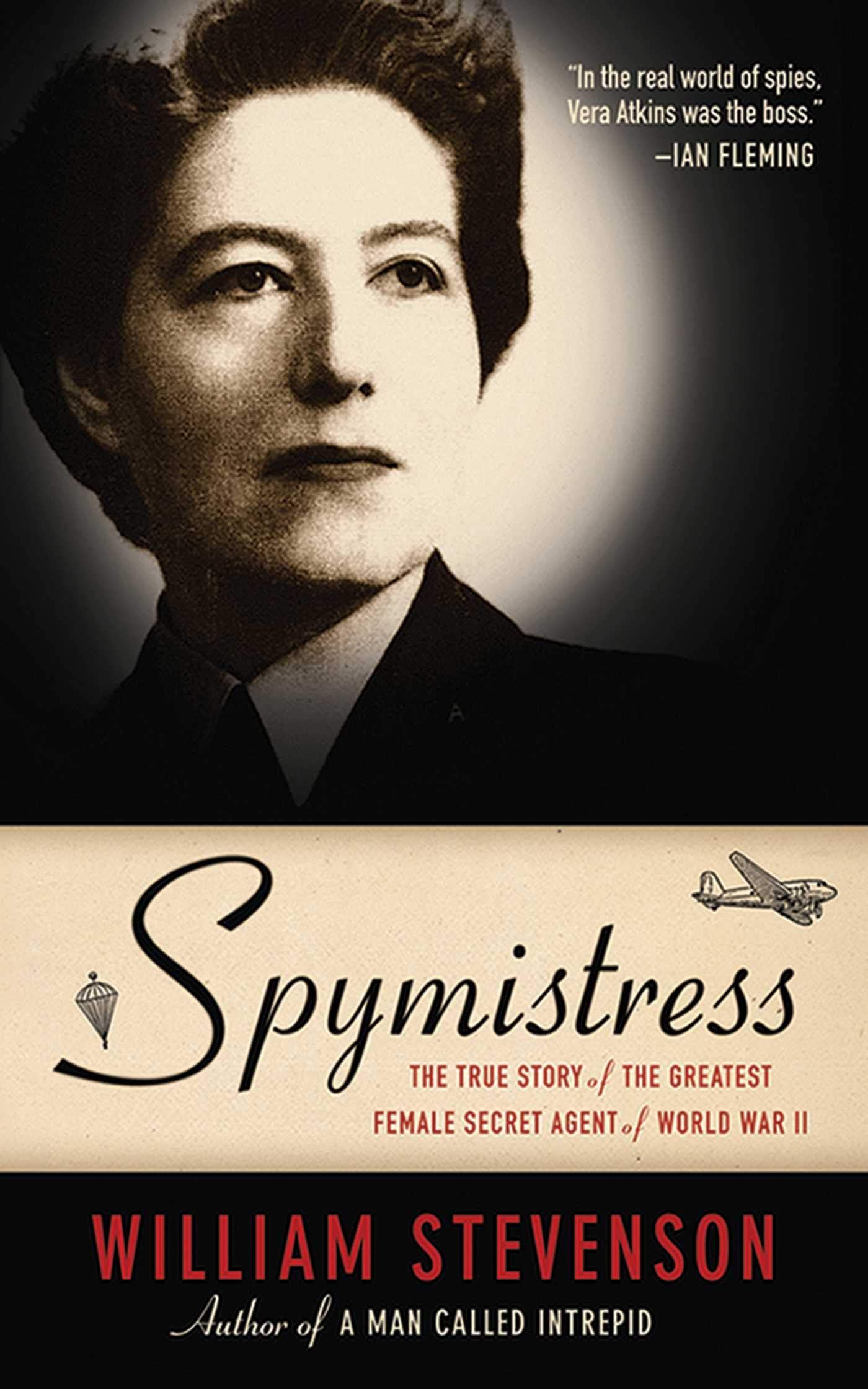
Spymistress: The True Story of the Greatest Female Secret Agent of World War II
Product ID: 9035022
Desertcart purchases this item on your behalf and handles shipping, customs, and support to USA.
New York Times Bestseller! By the author of A Man Called Intrepid . The story of Vera Atkins, legendary spy and holder of the Legion of Honor She was stunning. She was ruthless. She was brilliant and had a will of iron. Born Vera Maria Rosenberg in Bucharest, she became Vera Atkins. William Stephenson, the spymaster who would later be known as “Intrepid”, recruited her when she was twenty-three. Vera spent most of the 1930s running too many dangerous espionage missions to count. When World War II began in 1939, her many skills made her one of the leaders of the Special Operations Executive (SOE), a covert intelligence agency formed by, and reporting to, Winston Churchill. She trained and recruited hundreds of agents, including dozens of women. Their job was to seamlessly penetrate deep behind the enemy lines. As General Dwight D. Eisenhower said, the fantastic exploits and extraordinary courage of the SOE agents and the French Resistance fighters “shortened the war by many months.” They are celebrated, as they should be. But Vera Atkins’s central role was hidden until after she died; Author William Stevenson promised to wait and publish her story posthumously. Now, Vera Atkins can be celebrated and known for the hero she was: the woman whose beauty, intelligence, and unwavering dedication proved key in turning the tide of World War II. Review: A book that will fill you with admiration and dread - Excellent. This book displays, better than most of the dozens I have read, the complexity and importance of information, espionage, counter-espionage, spreading false information and other deceptions. This deadly game of matching wits with the enemy in a war that will decide the fate of the world is as disturbing as it is fascinating. More disturbing are the horrors of war- torture of agents, retribution against collaborators- is sickening and shows a side of Western civilization we prefer to pretend never existed. The impact of underground activities like sabotage cannot be understated s to their importance. For example, a thousand trains were disrupted trying to carry German troops to Normandy to push the allies back into the sea. Germany might well have prevailed had these fighters made it to the fragile beachheads. I have always admired the England for its tenacity and fighting spirit that led the world against Nazi Germany. However, when reading of the personal ambition, palace intrigue, politics and anti-Jewish prejudices, one wonders how a single battle was won by the British. The book also brings to light the many crucial contributions of other European nations, especially the Polish. The description of Polish pilots training British pilots new, modern tactics to fight the Luftwaffe is enlightening. When you finally close this book you will be filled with admiration for Vera Rosenberg, amazed by her resolve, strength and intellect and grieved by the crushing weight of the burdens she bore. Equally, or at least in my experience, you will fear the horrors of war, and fear more the consequences of weakness and appeasement that set the stage for war. Review: Zard review of "Spymistress" - I enjoyed this book even though it was a tough read. It was like reading Churchill's books on WWII. You simply cannot try to remember all of the names and dates. You read to catch the flow of events. Churchill's books take you inside WWII at the top level. Spymistress takes you in at the bottom level and an invisible one at that. Vera was a brave, fascinating and determined women. The books starts with post WWI and takes you through the 30's and 40's and then events that happened after the was that tie the story up into an end. You meet the brave in this book. They are unknown or forgotten or cannot be talked about because of security. And if they were captured they were lucky if they were sent to a prison camp but not a Dachau type of camp. Mostly they were tortured and then killed or shipped off to be killed. Sometime Vera's (The Spymistress) worst enemies were the people she was fighting for, the British and the French. You would think they were the mortal enemies and not Germany. What a lonely job. This is the third type of war story. You have the famous story tellers like Winston Churchill and then you have the stores told by the combat fighters (army, navy, air force, etc.) and then you have the spies. They cannot even tell their story. Vera's story was not told until after her death based on her request. This is another view of WWII and there is no glory here. Just a lot of brave people.
| Best Sellers Rank | #78,512 in Books ( See Top 100 in Books ) #37 in Espionage True Accounts #69 in Historical British Biographies #79 in Military Strategy History (Books) |
| Customer Reviews | 4.2 out of 5 stars 2,995 Reviews |
J**S
A book that will fill you with admiration and dread
Excellent. This book displays, better than most of the dozens I have read, the complexity and importance of information, espionage, counter-espionage, spreading false information and other deceptions. This deadly game of matching wits with the enemy in a war that will decide the fate of the world is as disturbing as it is fascinating. More disturbing are the horrors of war- torture of agents, retribution against collaborators- is sickening and shows a side of Western civilization we prefer to pretend never existed. The impact of underground activities like sabotage cannot be understated s to their importance. For example, a thousand trains were disrupted trying to carry German troops to Normandy to push the allies back into the sea. Germany might well have prevailed had these fighters made it to the fragile beachheads. I have always admired the England for its tenacity and fighting spirit that led the world against Nazi Germany. However, when reading of the personal ambition, palace intrigue, politics and anti-Jewish prejudices, one wonders how a single battle was won by the British. The book also brings to light the many crucial contributions of other European nations, especially the Polish. The description of Polish pilots training British pilots new, modern tactics to fight the Luftwaffe is enlightening. When you finally close this book you will be filled with admiration for Vera Rosenberg, amazed by her resolve, strength and intellect and grieved by the crushing weight of the burdens she bore. Equally, or at least in my experience, you will fear the horrors of war, and fear more the consequences of weakness and appeasement that set the stage for war.
M**L
Zard review of "Spymistress"
I enjoyed this book even though it was a tough read. It was like reading Churchill's books on WWII. You simply cannot try to remember all of the names and dates. You read to catch the flow of events. Churchill's books take you inside WWII at the top level. Spymistress takes you in at the bottom level and an invisible one at that. Vera was a brave, fascinating and determined women. The books starts with post WWI and takes you through the 30's and 40's and then events that happened after the was that tie the story up into an end. You meet the brave in this book. They are unknown or forgotten or cannot be talked about because of security. And if they were captured they were lucky if they were sent to a prison camp but not a Dachau type of camp. Mostly they were tortured and then killed or shipped off to be killed. Sometime Vera's (The Spymistress) worst enemies were the people she was fighting for, the British and the French. You would think they were the mortal enemies and not Germany. What a lonely job. This is the third type of war story. You have the famous story tellers like Winston Churchill and then you have the stores told by the combat fighters (army, navy, air force, etc.) and then you have the spies. They cannot even tell their story. Vera's story was not told until after her death based on her request. This is another view of WWII and there is no glory here. Just a lot of brave people.
S**1
Absolutely Stunning!
I found this book in a thrift s hop for 50 cents. I didn't have time to read it so I gave it to my uncle, who is a 26 year U,S. Marine veteran with lots of recon experience. He liked it so well that he read it twice. He said it was one of the most personal discipussions of espionage that he ever read. Finally, I has time to read it for myself and was shocked. I have read extensively about World War 2, but there are so many things revealed in this book that I had never read before. This book is a must read for anyone interested in WW2. Plus, there are references available in the notes in the Notes to this book so more information should be available for those interested. It is sad that apparently the British government decided to destroy much of the SOE records. The U.S. is probably not much better. Anyway, I highly recommend this book for t he WW2 history enthusiast. One of the most shocking tidbits that both my uncle and I recognized was statistically how much more efficient the spy network and the resistance were in hampering and/or destroying Nazi resources than the Allied military. No wonder the military - industrial complex wants to keep espionage a secret; otherwise they would be fired by the taxpayers! I hope those who pickup this book enjoy it as much as my uncle and I did. In fact, I may read this book a second time as well. Btw, pay attention to who wrote this book. He was the one they called, "Intrepid".
E**E
Too detailed for a popular read, too little detail for an academic treatise
Elaborately detailed accounting of Vera Atkins, the very English sounding but actually Romanian-Jewish refugee who oversaw British black ops and dirty work in the occupied countries of Europe during WWII. Referred to as "close work" it is an accounting of the nasty stuff the Brits and Americans did in France and elsewhere-- murder, sabotage, train wrecking, armed confrontations, etc. It is felt that some of the work, such as the sabotage of the French railroads prior to D-day, were of great value. The book also lays out, again in excruciating detail, the snobbery, anti-Semitic hatred, and English upper crust detachment of the old boy spy services. If we are to believe this book (and I am inclined to do so) the anti-Semitic behavior of the Brits and Americans may well have cost hundreds of thousands of Jewish lives. It's a story worth telling, and needs to be told, about individual bravery, institutional cowardice, and a truly unusual woman. But oh, the telling! Excruciating in detail, losing the forest for the trees, almost a day by day, blow by blow accounting of infighting and botched operations, with the occasional stellar success. Reads much more as a work of research than an approachable history. Three stars because I had hoped for a more fun read. Four stars if I were reading it as a formal work of history, because from that standpoint it doesn't go quite far enough.
D**E
A true story that reads like a novel.
Well written and researched, Vera Atkins was truly a heroine during WW II in France. She was daring, intelligent, intuitive and devoted those years to the Resistance rather than her personal life. It was startling to read the familiar names of the many authors, actors and others who volunteered to help the Resistance during those times. There were times when the stupidity of both the French and the British could have resulted in failure and many more of her people captured and killed, but she had made good contacts and she was able to do what needed to be done. I would recommend this book to anyone who wants to know more about WWII and occupied France.
J**E
Excellent expose of classified WWII history key to winning the war.
A great history book, written like a novel that outlines the success of intelligendce gathering and guerrilla operations against the Nazies in WWII directed by Vera Atkins, and documented and written by William Stevenson (a man called Intrepid). Unknown to the British politicians, she was Jewish and she documented the anti-Semitism of the British and American politicians at the time. Her biggest supporters were Churchill, Stevenson, and Wild Bill Donavan, founder of the OSI. She worked with the Armericans, Poles, French Intellicence agencies and provided necessary equipment and intelligence to the underground in France to include the Polish underground that made D-Day a success instead of a failure. The information she gathered also confirmed there were Russian moles in British intelligence. The gurilla actions of many of her operatives in France delayed German reserves from getting to the landing forces at Normandy on time and caused the derailment of 1005 German troop trains taking troops to the Normandy front. Things not covered in most American and British WWII history. She also shows that Patten was right. There were a group of anti-Nazi German generals who would have led the regular German Army with the western Allies against Stalin whom they knew was planning to take over Eastern Europe and had designs of attacking the Allies. Excelllent expose of history that has been obsucred by overclassification.
A**R
A brilliant, riveting book of a master spy
Brilliant book of a master spy. Riveting
P**S
A Woman's way to fight a war
I had an aunt who was among Vera Atkins 'girls' who parachuted into Vichy France and became unlikely, and often unsuspected spies. Atkins tells her own story, kept secret until her death in 2000. Most readers know of the German background of Britain's royalty at the time, and their reluctance to believe a deal couldn't be made with Hitler. This book also reveals the extent of American reluctance to back Britain and enter the war. But Atkins ignored class and gender and trained some of the most successful spies of the time, who helped both FDR and Churchill defeat the greatest war machine of the century.
M**E
A Great Read
A lot of facts as expected but this book also told so well of the sacrifices made by volunteers during wartime. The war was won on so many fronts by so many people.
A**N
Fascinating, surprising, well written
An unbelievable true story of an unknown heroine. So many things to discover about the real history of the resistance in WW2. Much more complex and nuanced than what we think we know.
M**E
Inspiring!
What an incredible read. Almost, but not quite unputdownable, for which I was thankful. So many brave women and men performing mind bogglingly dangerous tasks. Some of the attitudes of others towards a determined, intelligent woman are inexplicable, real old boys club at work. It is a highly recommended read for those interested in the clandestine, daring, brave efforts of the few to save the many. Thank God this woman was there to direct operations of the SIS. One of the best WWll biographies/stories I have read, and I have read many.
C**S
Interesting and readable biography
Well worth a read, though the writing style may put some off. Don't let it, this boon is fascinating and deserves a wider audience, if for no other reason than it highlights the bravery of unsung heroes and heroines.
J**G
Great read!
Dedicated historians of the subject matter hate this book, and it is with good reason. Doing just a little research reveals that the author has been called out several times for playing fast and loose with the truth on other projects. Having said all that - I still think this is a great book! It highlights some very important details about the weird treatment of the Jews by supposedly friendly governments during the war. A lot of that has been glossed over today, and likely forms the basis for why so many war records remain classified. Checking up on the names and events mentioned in the book shows they are factual. The dialogue and personal colouring provided by the author, although dubiously footnoted - do help bring the history alive in the same way W.E.B. Griffin stories do. Alternatively, given Stevenson's previous treatment of Jewish storytelling (Entebbe) and his focus on the Jewish angle in this book - one must wonder if maybe he DID have someone who was close to the events described whispering in his ear - likely someone from the Jewish community who was close to the events described. If that was so, it remains unknown why he felt the need to write it in the form he did. Stylistically, there is an annoying change in the writers voice from the passive to include himself as "me" in chapter 26, and again in the last few pages of the book. All in all - I highly recommend this book! Despite its questionable historic pedigree, it is a great read about a remarkable woman working for a spy agency under incredible circumstances.
Trustpilot
2 weeks ago
2 months ago