⚡ Clamp, Check, Conquer — The Ultimate Multimeter for the Modern Pro
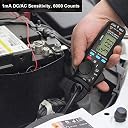
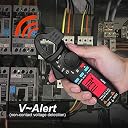
The BSIDE ACM91 is a professional-grade digital clamp meter featuring 1mA sensitivity for AC/DC current, true RMS 6000 counts auto-ranging, and a wide temperature measurement range from -20°C to 500°C. Its dual-line display allows simultaneous readings, while the V-Alert non-contact voltage detection enhances safety. Compact and portable with a back clip design, it supports comprehensive electrical diagnostics including capacitance, frequency, resistance, and low impedance voltage, making it an indispensable tool for both home and professional use.
| ASIN | B07G84XDWH |
| Best Sellers Rank | #171,154 in Tools & Home Improvement ( See Top 100 in Tools & Home Improvement ) #259 in Multi Testers |
| Brand | BSIDE |
| Brand Name | BSIDE |
| Color | Black |
| Customer Reviews | 4.2 out of 5 stars 400 Reviews |
| Item Dimensions | 2.64 x 1.42 x 7.05 inches |
| Item Weight | 138 Grams |
| Item dimensions L x W x H | 2.64 x 1.42 x 7.05 inches |
| Manufacturer | Bside |
| Measurement Type | Multimeter |
| Minimum Operating Voltage | 300 Volts |
| Model | BSIDE ACM91 |
| Power Source | Battery Powered |
| Specification Met | Iec 61010 |
| Style | AC/DC Clamp Meter |
| Style Name | AC/DC Clamp Meter |
| Upper Temperature Rating | 500 Degrees Celsius |
J**N
It works when it works (update)
I originally bought this meter in July 2020. It worked fine until late October 2020, then just refused to come on. To their credit the manufacturer promptly sent me a replacement, even though this was beyond the normal return period. Needless to say, I was impressed. Unfortunately, the "new" meter does not read at all. As shown in the attached photo, a "cheapo" multimeter reads the battery voltage at 12 VDC while the ACM91 does not read at all. It did not read AC current, either. This cannot be ascribed to user error since I successfully used to first for three months. Too bad, because I really like this meter. Update: After reading my post, I heard from the manufacturer. They suggested re-inserting the probes because they were "not easy to insert." I followed their suggestion and inserted until I felt a firm "click." That solved the problem. I am glad about the meter but I am overwhelmed about the responsiveness of the seller. They were terrific.
S**Q
Great clamp meter with 1mA DC resolution at great price
This is a very decent clamp meter for the handyman and hobbyist. Its accuracy exceeds my expectations for such a low cost meter. This cheap meter doesn't replace a pro grade meter such as a Fluke, but for casual use around the home, does it really matter if a reading is 11.4 V vs. 11.3 V? What I like about this meter is its 1 mA resolution for DC amp readings using the clamp. For comparison, I also have an Extech 380942 clamp meter that I bought for $400 around 17 years ago. The Extech still retails for $400. The $400 Extech has higher accuracy specs than the $50 BSIDE ACM91, but the differences are slight. I spot checked several DC and AC current readings using the clamp at low currents (for example, around 25 mA DC, 130 mA DC, 330 mA DC, and 160 mA AC). The clamp-based readings between the Extech 380942 and the ACM91 essentially matched, differing by no more than 1 or 2 mA. The ACM91 was stable at low DC amp readings using the clamp and drifted a lot less than the Extech. Some caveman reviewers sounded like they never bothered to read the user manual and then blamed operator error on the meter. Some of them didn't plug in the test leads properly. One reviewer didn't understand that clamp readings only work with one phase (i.e. one wire) at a time. One operating detail that should be obvious is that the clamp only works when the test leads are removed. If the test leads are still plugged in, the clamp will give no reading. The most important thing about the DC clamp amp meters is they use a Hall effect sensor to detect DC currents. The manual specifically instructs the user to press and hold the zero button for 2 seconds to zero out the reading before taking a DC amp reading with the clamp. Some users didn't zero the meter and got wildly wrong DC amp readings and then blamed the wild readings on the meter. I'll add one further detail not mentioned in the manual to help give better DC amp accuracy when using the clamp. Once you've zeroed out the DC meter, hold the meter in the same orientation when taking readings. Don't tilt it, twist it, or rotate it. Otherwise, changing the orientation of the meter can give false readings due to different magnetic flux through the clamp from the earth's magnetic field when the meter is oriented differently after it's been zeroed. A main drawback is the meter screen is very hard to read. It has a curved protective lens and it's almost impossible to avert reflected light due to the curvature of the lens. A flat surface would have worked much better to minimize reflections.
M**N
Worked well for small inductive current measurements
I needed to measure inductive current of <= 10ma and this device provided the expected current measurement. I have no idea of the accuracy but it did measure what I was expecting so hope it is accurate at these small values indicated. The only downside noticed in use is the backlight turns itself automatically afetrt a very short time period and I wish it would stay lit until I turned it off. I would purchase again.
K**R
Easiest Way to Check for Parasitic Draw
We use this inductive ammeter routinely in the auto shop to check for parasitic drain. It can read low current and allows us to check for excessive draw without disconnecting the battery to insert a multimeter in series. It is considered an acceptable method, works well for us, and saves time.
P**E
accuracy seems off....
Heard this one had good DC read in smaller scale, but it's +/- 75% around 100-200mAmp clamp draw - will basically tell if you something is drawing a current or not....or it appearance....Voltage measure. But, since the clamp is inaccurate why get another voltage meter is the question? Not sure if it's too sensitive or not just doesn't work ???? Who knows!!!
B**R
I love this little thing
Perfect for diagnosing battery drain. I read one review that said this was not accurate but I found it more than accurate to diagnose a draw. Just make sure you orient the meter and zero it before connecting the the negative cable. I have a known led light that draws 98mv and this meter sees it correctly. Plus it is great for around the house with its ability to identify a hot circuit and tell you which wire is hot and which is neutral. Love the small size, it is easy to travel with. Overall very satisfied.
N**L
Seems to be a good meter
I bought this for the low-current DC clamp-on amp meter aspect - and it seems to work well. Got to remember to zero it out first. Used it to diagnose the alternator on a car, to confirm my suspicion it was faulty. Worked well for me.
N**L
Junk
Purchased to measure low DC currents and temperature. Meter is extremely sensitive to orientation and location and needs to be zeroed as close as possible to the point of measurement. I expected this, but did not expect that readings of the exact same current taken at the excat same spot a second or two apart could vary by 200mA. Temperature measurement using the supplied thermocouple simply doesn’t work. A 75F room temperature can read anything from OVF to 800+F. Don’t know if the problem is the meter or the probe. DC voltage measurements are ok although a few % off from my reference Fluke meter. Bottom line is that it was absolutely useless for the reasons that I purchased it.
Trustpilot
2 months ago
1 week ago