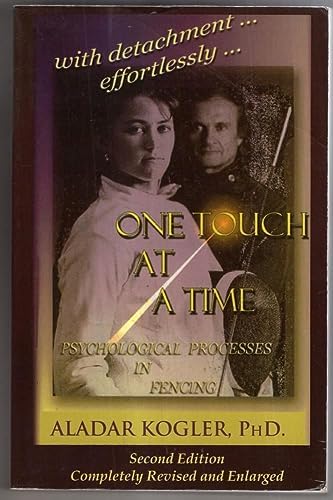


One Touch At A Time: Psychological Aspects Of Fencing
Product ID: 62928926
One Touch At A Time: Psychological Aspects Of Fencing : Kogler, Aladar: desertcart.co.uk: Books Review: Five Stars - An excellent book that I have been able to use with great effect to improve my own competitive performance! Review: Pages missing! - This is a fantastic book. I can definitely recommend it to any fencer. However, page 55 jumps to page 60. Four pages of important instruction are missing. A problem with the edition maybe, rather than the seller or authors fault. Very disappointing.
| Customer reviews | 4.4 4.4 out of 5 stars (20) |
| Dimensions | 13.97 x 1.93 x 21.59 cm |
| ISBN-10 | 0965946878 |
| ISBN-13 | 978-0965946872 |
| Item weight | 386 g |
| Language | English |
| Print length | 334 pages |
| Publication date | 1 Jan. 2004 |
| Publisher | SKA SwordPlay Books |
M**T
Five Stars
An excellent book that I have been able to use with great effect to improve my own competitive performance!
L**G
Pages missing!
This is a fantastic book. I can definitely recommend it to any fencer. However, page 55 jumps to page 60. Four pages of important instruction are missing. A problem with the edition maybe, rather than the seller or authors fault. Very disappointing.
M**R
Fencing on the right side of the brain
One Touch at a Time is an alternative psychological take to fencing, esoterically picking from neurophysiology, eastern philosophy, and fencing experience. A friend of mine used this book to substantially transform (and improve) his approach to competition fencing. Personally, I got a lot out of the sections about using the right brain, but not much from the eastern philosophy. The general advice on fencing is absolutely find, but not substantially different from what you would find elsewhere. If you are struggling to overcome psychological issues in fencing, then this book is worth looking at. On the other hand, if your problems are mainly about stamina, technique or tactics, then this doesn't offer the magic bullet which will overcome those with psychology. Worth looking at, but not necessarily living by.
C**N
This ``Fencing`` book was purchased for my son who loves the ``sport``...this book being unable to be found in Australia but through ``Amazon`` was located and purchased for his birthday present,which become a ``highlight`` on his birthday as the author of the book is one of his ``heroes`` in the sport he just loves....receiving this book made the best birthday present for my son and made me so happy that I was able to purchase it so easy through ``Amazon``.
R**R
This book has good psychological information for all sports participants, especially fencing. As someone who started fencing at age 60, and as someone who was never that great at sports, this book continues to help me deal with negative/self-defeating feelings, and helps me to keep a positive outlook. I am still reading this book, but have already put it to use dealing with my own self-imposed stress during fencing bouts. I feel my goals are now more realistic, and I enjoy the training more than ever. My only negative comment is that I found some of the information repeatative or more detailed that I needed "to get the point". I recommend this book for anyone who has stress/anxiety issues when dealing with sport competition situations, and who wants to maximize their learning ability.
B**E
Very useful for me, a beginner/intermediate fencer. I felt the skills outlined in the book can be used in every facet of your life. Very philosophical, I found the book putting to words what I already had been touching on in my bouts. Making them conscious allowed me to notice and use many mental tricks to my advantage right off the bat. Buy it.
J**E
The Pros: This book has a lot of good theory behind what makes a good fencer, looking at the mental aspects of a fencer rather than the physical. This is definitely more of an abstract-theory type book than a drills-y book. I'm a long-time fencer and coach and found the information useful and refreshing. He reminds the reader the core concepts of character and courage and willpower that makes a good fencer great. He also outlines some good practices that fencers can do to improve themselves, such as meditation, yoga, and hypnosis. The Cons: This book is INCREDIBLY repetitive. I think he could have put all of this information into a book half its size. It's also a very rough copy; the lack of punctuation and consistency in formatting is annoying and pulls me away from the theory.
M**H
My son's fencing coach recommended this book. It's worth reading and has alot of information not found in other fencing boooks
Trustpilot
3 weeks ago
3 weeks ago