
Desertcart purchases this item on your behalf and handles shipping, customs, and support to USA.
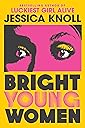
From the author of the New York Times bestseller and #1 Netflix movie Luckiest Girl Alive comes Jessica Knoll's extraordinary novel inspired by the real-life sorority targeted by America's first celebrity serial killer in his final murderous spree. January 1978. A serial killer has terrorized women across the Pacific Northwest, but his existence couldn’t be further from the minds of the young women at the top sorority on Florida State University’s campus in Tallahassee. Tonight is a night of promise, excitement, and desire, but Pamela Schumacher, president of the sorority, makes the unpopular decision to stay home, a decision that unwittingly saves her life. Startled awake at 3 a.m. by a strange sound, she makes the fateful decision to investigate. What she finds behind the door is a scene of implausible violence—two of her sisters dead; two others, maimed. Over the next few days, Pamela is thrust into a terrifying mystery inspired by the crime that’s captivated public interest for more than four decades. On the other side of the country, Tina Cannon has found peace in Seattle after years of hardship. A chance encounter brings twenty-five-year-old Ruth Wachowsky into her life, a young woman with painful secrets of her own, and the two form an instant connection. When Ruth goes missing from Lake Sammamish State Park in broad daylight, surrounded by thousands of beachgoers on a beautiful summer day, Tina devotes herself to finding out what happened to her. When she hears about the tragedy in Tallahassee, she knows it’s the man the papers refer to as the All-American Sex Killer. Determined to make him answer for what he did to Ruth, she travels to Florida on a collision course with Pamela, and one last impending tragedy. Review: Must read - Great story line . Must read Review: Amazing book! - Great quality and packaging
| Best Sellers Rank | #238,192 in Books ( See Top 100 in Books ) #1,412 in Science Fiction Crime & Mystery #2,436 in Mysteries (Books) #2,651 in Thrillers and Suspense |
| Customer Reviews | 4.1 out of 5 stars 18,076 Reviews |
I**E
Must read
Great story line . Must read
V**A
Amazing book!
Great quality and packaging
R**A
Uma nova abordagem para uma velha história
Ted Bundy já foi tratado como um homem inteligente, bonito, charmoso. Este livro o trata como ele merece: um monstro repulsivo. Seu nome nunca é citado. As heroÃnas do livro são as sobreviventes- como deve ser em toda história de monstros. Um grande livro.
L**Y
Women in Crime
The '70s have been coined the decade of serial killers. In 1978, a man escapes prison and descends on a Floridian sorority house with deadly results. Key witness and chapter president Pam Schumacher is permanently altered. Across the county, Tina Cannon is convinced the murders result from the All-American Sex Killer who claimed the life of her missing best friend. When Tina makes her way to Florida, she joins forces with Pam to get justice for those they love. Review: We will go in reverse order and begin with my complaints, of which there is only one. My sole complaint is that some metaphors and comparisons are a little off-putting. Describing the grown murderer as a "booger-eater" feels strange. While that may have been the point - to emasculate The Defendant, there are other odd comparisons. My complaint is undoubtedly tiny, insignificant, and doesn't affect my rating; it was weird enough to notice. Now, let's move on to what I enjoyed in the novel. Much like Luckiest Girl Alive, Knoll writes with a break-neck pace. The novel opens with The Defendent's attack on the sorority house, and that chapter is intense. You feel like you are Pamela, traipsing through the house, setting her friends' pain and death, and identifying the perpetrator. When I read the opening chapter, I held my breath and ran through the house with Pam. Knoll's writing pace is exceptional; the book never lulls or feels inconsequential. Every chapter is thoroughly thought-out and fits into the overall novel perfectly. As readers, we are aligned with Pam and Tina and feel their emotions as if they were our own. I believe Knoll's writing style sets her apart from other writers. She takes a genuine crime case and gives it the proper care and handling it deserves. According to Psychology Today, society is obsessed with serial killers because it helps us identify potential threats. If we know and understand the motivations of some killers, we are more likely to look for and actively avoid these potentially dangerous situations. While such an assertion is valid, with the obsession comes a forgetting of the victims, those who were taken without thought or concern. Herein lies Knoll's belief. We give so much thought and attention to the killers that their victims are tossed to the wayside. There are countless documentaries, movies, and books about serial killers, but not enough about their victims. Knoll draws the line here. While the book refers to Ted Bundy, and there is an author's note at the beginning that says as much, his name is never mentioned in the book. He is consistently referred to as The Defendant. Pam argues that people always make him more than he is, a serial rapist and killer. However, so much attention was given to his law school experience during the trials, even though he never graduated. Women align themselves with his story because he is a good-looking man. Still, according to Pam, he is only handsome because it's unusual for someone relatively attractive to commit such heinous acts. She argues that there is not much difference between him and any other man on the street. Knoll focuses on the victims and survivors rather than giving credence to his failed degree. She makes them human, something many true crime series do not do. She never names Bundy; instead, she devotes her time to getting to know the victims. As an outspoken survivor of sexual assault, Knoll handles the women's case with respect and honor. In her previously published essay, she writes about the gang rape she was subjected to and how people believed it to be her fault. In a tragic and triggering moment in the book, a character is raped, and she rationalizes and minimizes the experience by explaining that, in the grand scheme of life, being raped isn't so bad because so many women experience the same thing, yet they live on. While reading her inner thoughts, readers are struck by her shockingly disturbing rationalization, but this is precisely what happens with survivors. So many of us do not come forward because we fear what others will say about our stories. We fear that we will be blamed for the assault on OUR bodies. We minimize what happened to us because, unfortunately, it has become the norm. With a sexual assault occurring every 68 seconds, it becomes a regular part of life. As a survivor, I felt seen and recognized in the novel, which is Knoll's goal. Knoll takes her violent and life-altering experience and provides other survivors with safety and recognition; she takes back her story and becomes its author. I thoroughly enjoyed my time reading Knoll's third novel. Similar to Luckiest Girl Alive, Bright Young Women is fast-paced and vital. If you like thrillers or true crime, you will enjoy the book. I give Knoll's novel five out of five stars and highly recommend it.
C**N
Sin interes, aburrido.
Una novela del montón. Aburrida.
L**Y
Fascinating Differing Perspective
A tremendous read. This is set around the sorority house murders in Florida perpetrated by the infamous Ted Bundy. To her credit, the author refused to mention his name once the whole way through. I have read a LOT about this case and I found it interesting that sometimes she uses real names, then doesn't. An interesting conception. Usually it's one way or the other......this aside, it was very well written and offered up what occurred from the viewpoint of one of the girls in the house that night. And I saw in the acknowledgements that one of them was thanked so it came right from the horse's mouth, so to speak. The final chapters were extremely harrowing, from the point of view of knowing what happened to Ruth. Very sad indeed. I did get a little confused here and there as we jump around in timelines but also Pamela and Ruth are both pseudonyms. I think, from a personal preference, I'd have been a little less baffled if she HAD used real names the whole way through. In all fairness, all the characters with fictional names HAVE been named throughout the ensuing decades. However, she clearly has her reasons not to have done. I read a book last year about the Speck killings in Chicago and this is reminiscent of that, though it could well have been written before that one was. Both are very good indeed. I was aware his time in the house wasn't hours and hours but hadn't taken on board that the damage he did was really only in the space of around 20 minutes !! He had truly lost his mind altogether by then. I had also always "remembered" that the attack down the road happened first, but according to this he went on after this attack to the other victim's place !! I liked there was some levity in the girls' thoughts and actions post-crime.....as in true-life there would have been, I'm sure. People need to find humour in dreadful events at times or they'd fall to pieces. No doubt there was plenty of that, too, to go round. Loved this little passage she wrote, "Nobody had ever treated me like I was the silver ball of mercury in the thermometer's glass chamber." I googled a "see you soon" that was referred to but Google was no help......clearly an American idiom of old they consider we'd all understand ! She also described Bundy as an incel, which I wouldn't as he WAS legitimately getting laid most of the time as I recall. There were hardly any mistakes, either. She did commence proceedings using a LOT of hyphens but that dropped off as I read, and at one point she wrote compounded and not impounded then least where I'd have written worst to make better sense, and I also spotted a few missed question marks. Nothing sufficient to mar this terrific tale, though. I'll definitely be reading other books she's written, too.
P**E
Tribute to the victims.
The premise of Bright Young Women was to reduce Ted Bundy to a dismissive The Defendant, describing him as poorly-educated, a loser, a blunderer as opposed to the bright young women whose lives he extinguished, and the futures he destroyed. Each page is weighted with contempt for Bundy, and for those men whose guilt and misogyny contributed to the myth of the superior intellect and whizz-kid of Law that is associated with Bundy. The author does a fine job of showing that myth for what it is is, a bluff, a cloak that various cops and judges draped on Bundy's shoulders in order to exonerate themselves for letting him escape twice and staying free to kill and maim young women for so long. The book tells the story from the point of view of his victims, freeing them from the anonymity of black and whites school photos and we find out who they were, their dreams, their specifics. A very good book, humane and beautifully written.
Trustpilot
3 days ago
1 month ago