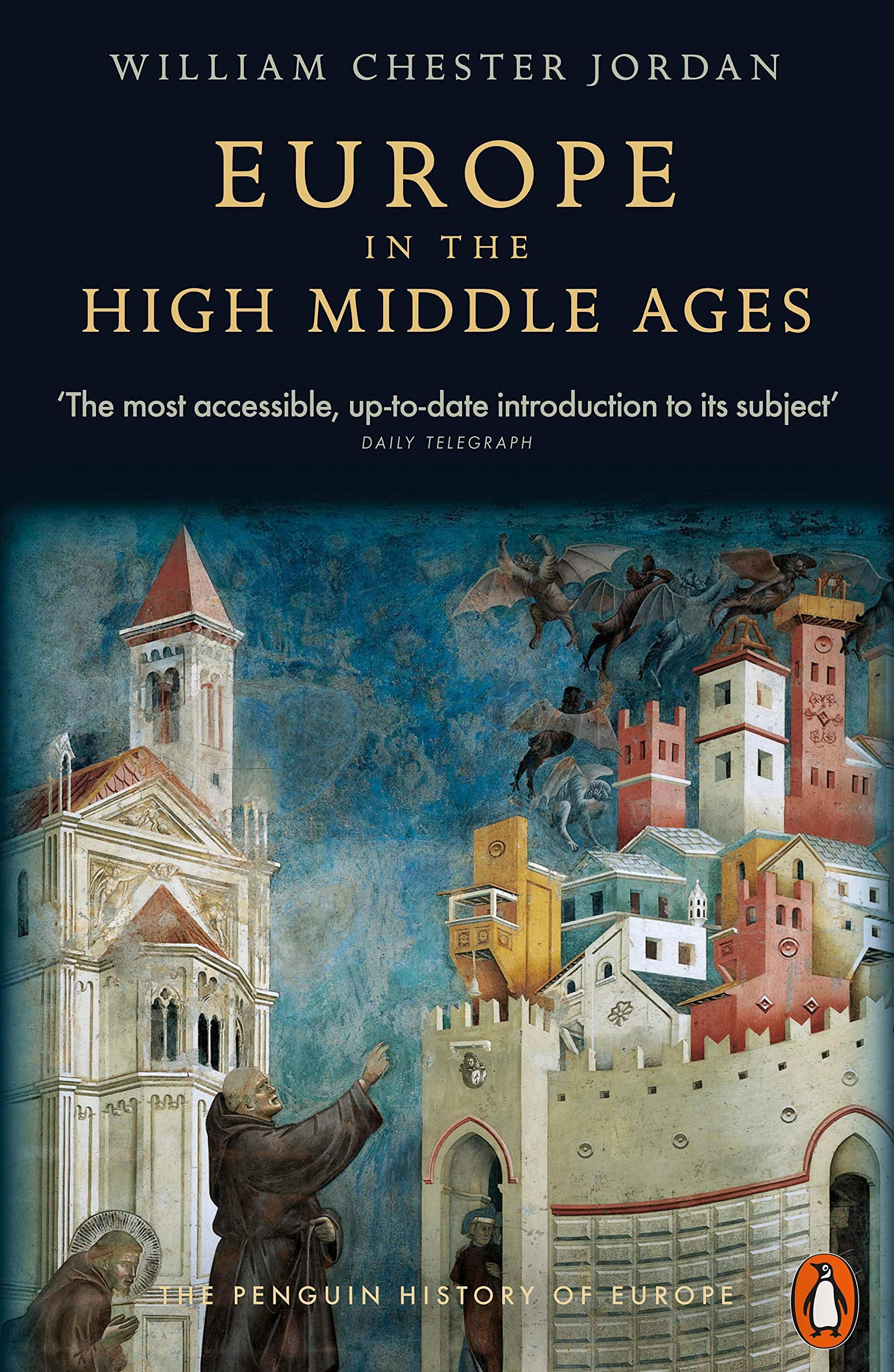
Europe in the High Middle Ages (The Penguin History of Europe)
Product ID: 5511399
Desertcart purchases this item on your behalf and handles shipping, customs, and support to USA.
From the Crusades to the plague, this account brings to life the key moments of the High Middle Ages. It was an age of hope and possibility, of accomplishment and expansion. Europe's High Middle Ages spanned the Crusades, the building of Chartres Cathedral, Dante's Inferno, and Thomas Aquinas. Buoyant, confident, creative, the era seemed to be flowering into a true renaissance—until the disastrous fourteenth century rained catastrophe in the form of plagues, famine, and war. In Europe in the High Middle Ages , William Chester Jordan paints a vivid, teeming landscape that captures this lost age in all its glory and complexity. Here are the great popes who revived the power of the Church against the secular princes; the writers and thinkers who paved the way for the Renaissance; the warriors who stemmed the Islamic tide in Spain and surged into Palestine; and the humbler estates, those who found new hope and prosperity until the long night of the 1300s. Part of the Penguin History of Europe series, edited by David Cannadine. "The Penguin History of Europe series... is one of contemporary publishing's great projects."— New Statesman Review: My favorite so far - Brilliant, especially compared to the second book in the series. I wish Jordan would write more general history like this. The third book in the series was withdrawn (because of the only review of it which said that it was horrible?). If only Jordan would re-write that history. I've read similar, shorter histories of this time period, and it's a joy to learn how things really happened instead of just learning that they did happen. He really brought the time alive for me. Review: Good But Not Enough - Europe in the High Middle Ages by William Chaster Jordan is the third book in the series The Penguin History of Europe. The High Middle Ages is the name given to the period of medieval history from 1000 to 1350. During these years, European civilization reached heights not seen in the West since the fall of the Roman Empire. The political situation in Europe stabilized somewhat, trade increased, cities grew, universities were established and learning flourished. The nations of Europe ceased to be helpless victims of foreign invasion and, through the Crusades even began to project power outside the continent. Although the nations of Europe began to take their modern shape during the high middle ages, political power was extremely decentralized, especially in France, more than in the period immediately before and afterwards. The Papacy became more prominent on the international stage and powerful Popes could even challenge kings and emperors for influence. It all ended in the middle fourteenth century with a change in climate that caused a decade of famine. Then the horrors of the Black Death struck Europe in 1349. No institution in Europe survived unscathed, and the optimism and vitality of the High Middle Ages was gone. When Europe began to recover from these disasters, it was no longer the Middle Ages, but the Renaissance, and the West was moving in a new direction. William Chester Jordan brings this fascinating period of history to life in his book. Like the other books in The Penguin History of Europe, The High Middle Ages focuses less on a detailed chronology of events and more on a general overview of cultural and historic developments, especially including the political development of the emerging nation states of Europe and their relationship with the Papacy. There is also a lot of information on the intellectual trends of the High Middle Ages as well as a good account of how it all seemed to fall apart in the fourteenth century. Unfortunately, the author breaks of the story in 1350, just as the Black Death is ravaging Europe, leading to a kind of cliffhanger effect. Still, I can recommend Europe in the High Middle Ages for anyone who wants to learn more about that fascinating period of history.
| Best Sellers Rank | #156,890 in Books ( See Top 100 in Books ) #351 in History of Christianity (Books) #489 in Christian Church History (Books) #646 in European History (Books) |
| Customer Reviews | 4.3 out of 5 stars 258 Reviews |
J**X
My favorite so far
Brilliant, especially compared to the second book in the series. I wish Jordan would write more general history like this. The third book in the series was withdrawn (because of the only review of it which said that it was horrible?). If only Jordan would re-write that history. I've read similar, shorter histories of this time period, and it's a joy to learn how things really happened instead of just learning that they did happen. He really brought the time alive for me.
D**N
Good But Not Enough
Europe in the High Middle Ages by William Chaster Jordan is the third book in the series The Penguin History of Europe. The High Middle Ages is the name given to the period of medieval history from 1000 to 1350. During these years, European civilization reached heights not seen in the West since the fall of the Roman Empire. The political situation in Europe stabilized somewhat, trade increased, cities grew, universities were established and learning flourished. The nations of Europe ceased to be helpless victims of foreign invasion and, through the Crusades even began to project power outside the continent. Although the nations of Europe began to take their modern shape during the high middle ages, political power was extremely decentralized, especially in France, more than in the period immediately before and afterwards. The Papacy became more prominent on the international stage and powerful Popes could even challenge kings and emperors for influence. It all ended in the middle fourteenth century with a change in climate that caused a decade of famine. Then the horrors of the Black Death struck Europe in 1349. No institution in Europe survived unscathed, and the optimism and vitality of the High Middle Ages was gone. When Europe began to recover from these disasters, it was no longer the Middle Ages, but the Renaissance, and the West was moving in a new direction. William Chester Jordan brings this fascinating period of history to life in his book. Like the other books in The Penguin History of Europe, The High Middle Ages focuses less on a detailed chronology of events and more on a general overview of cultural and historic developments, especially including the political development of the emerging nation states of Europe and their relationship with the Papacy. There is also a lot of information on the intellectual trends of the High Middle Ages as well as a good account of how it all seemed to fall apart in the fourteenth century. Unfortunately, the author breaks of the story in 1350, just as the Black Death is ravaging Europe, leading to a kind of cliffhanger effect. Still, I can recommend Europe in the High Middle Ages for anyone who wants to learn more about that fascinating period of history.
R**E
2017
This addition to the Penguin series is good. A general survey of this time period and gives a grounding for readers interested in this subject.
Z**I
very good experience
very good experience
J**B
Decent Survey
This is a decent introductory survey of the period, but does not quite live up to the other two books already published in the Penguin History of Europe series, Inheritance of Rome (400-1000) and Pursuit of Glory (~1650-1815). Perhaps it is unfair to compare "High Middle Ages" to the other two stellar works, and this remains an adequate book which I enjoyed reading. But there might be better surveys of the period out there.
K**R
Though read; very illuminating
On the one hand, reading this book left me with awe many times. It turns out that much of our society today has roots in the high middle ages: Common Law, Universities, Roman Catholic vs Orthopedic church, etc. Many of the processes mentioned in the book were fascinating: The investiture controversy, the crusades, one hundred years war... However, it was a difficult read. Sometimes it throws at you a bunch of occurrences, like "this guy killed that guy then those guys killed this other guy" and so on for whole pages... Makes it difficult to read. Therefore gave ot four stars.
J**N
Good book on European history.
A great overview of the period.
A**R
Five Stars
great value
R**R
Recommended by Redcaer
A splendid account of this dramatic period. The book takes the reader country by country, and investigates major developments like the plague and commerce. It is a very readable account and would serve to give any student a very good overview of Europe in the middle medieval period. despertaferres.wordpress.com
H**R
Good but though to understand
Nice book for the European history........
M**S
Concise, clear and interesting.
This excellent book is a model of its kind: clear, well structured, interesting and easy to follow. What is a complex and multi stranded period of history, here becomes easy to follow and understand. Yet the book is also sophisticated in its analysis and never bland. Really, a model of how to write well and in a scholarly yet engaging manner.
V**E
Un po' freddino, ma bene esposto
Il volume si occupa con una continuità lineare degli eventi che hanno caratterizzato quel periodo noto come l’Alto Medioevo, che vide la nascita di scuole di pensiero, di innovazioni politiche, l’avvio delle Crociate, e di tragici cambiamenti che avrebbero rimodellato l’Europa nei secoli a venire. L’autore presta molta attenzione altresì ad occuparsi in modo selettivo delle singole zone politiche interessate, senza fare orrende mescolanze tra date e località. I particolari non mancano, il tutto è bene esposto ed equilibrato. Peccato manchi solo un po’ di…empatia con il lettore. E’ un libro a tratti freddino.
S**E
Recommended
A good introduction to the High Middle Ages. Readable and easy to grasp. Jordan omits footnotes (only references at the end), which provides for a more continuous reading experience. He gives you the central events and broad patterns/tendencies throughout Europe up until the plague. Without getting too detailed.
Trustpilot
2 weeks ago
1 week ago