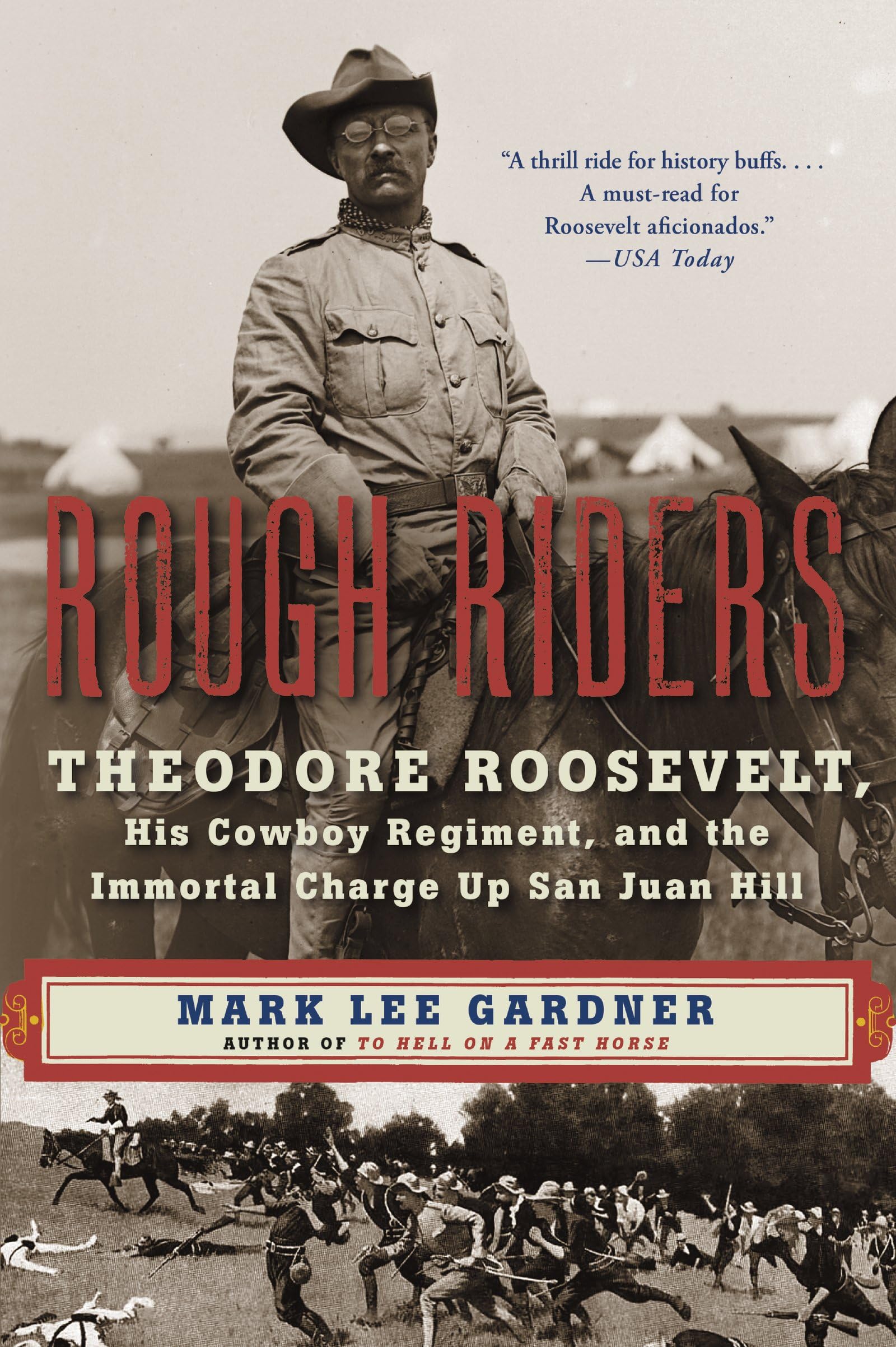
Rough Riders: Theodore Roosevelt, His Cowboy Regiment, and the Immortal Charge Up San Juan Hill
Product ID: 53186355
Desertcart purchases this item on your behalf and handles shipping, customs, and support to USA.
The award-winning, new definitive history of Teddy Roosevelt and the Rough Riders "Thrilling. ... A CLASSIC." — True West WINNER: Army Historical Foundation Distinguished Writing Award; New Mexico-Arizona Book Award; and Colorado Book Award The now-legendary Rough Riders were a volunteer regiment recruited in 1898 to help drive the Spaniards out of Cuba. Drawn from America’s southwestern territories and led by the irrepressible Theodore Roosevelt, these men included not only cowboys and other Westerners, but also several Ivy Leaguers and clubmen, many of them friends of “TR.” Roosevelt and his men quickly came to symbolize American ruggedness, daring, and individualism. He led them to victory in the famed Battle of San Juan Hill, which made TR a national hero and cemented the Rough Riders’ iconic place in history. Now Mark Lee Gardner synthesizes previously unknown primary accounts—private letters, diaries, and period newspaper reports from public and private archives across the country—to breathe fresh life into the Rough Riders and pay tribute to their daring feats and indomitable leader. Review: Give 'Em Hell Teddy - I bet a lot of readers out there are in the position I was when I started this book: knowing more or less that Roosevelt and his Rough Riders charged up San Juan Hill and it was a big deal during the Spanish American War and afterwards. I admit it, that was pretty much what I knew. So I was happy to see that Mark Gardner (whose "To Hell on a Fast Horse" and "Shot All To Hell" are thoroughly researched, well written and very enjoyable) had a new book out on this very topic. It lines up straight with his others: well researched and written, and an enjoyable and instructive read. The Spanish American War is barely a blip on many American History screens, but it has its place in the story--the first defeat of a vested European power by the upstart United States, the cutting edge of the Monroe Doctrine. I had supposed it was not much of a war, and I guess you could add things up and say that it wasn't, but it had some battles that provided as much action and danger as anyone could want. Roosevelt and his Rough Riders, a fascinating mix of cowboys and rich boys, all got into the spirit of the thing and were willing to "ride to the sound of the guns." All they had to do was be recruited and vetted and trained and collected and transported to Tampa, and equipped and then shipped to Cuba. Roosevelt and Leonard Wood, both of whom went on to big things, got the men together and all the way to Tampa and then saw that there was an excellent possibility that they would not get to Cuba and in on a fight that probably was not going to last all that long. A little finagling and a few shenanigans, and the Rough Riders (only about 2/3 of the entire contingent were cleared to go in) were loaded up on a ship and sent south. Once there, they were sent into action and completed their military education under fire. So there were a lot of long odds and happenstance and all that to get them into the fight. Once there, they fought with elan and courage. Roosevelt led them from the front, daring the Spanish to hit him while they hit things and people all around him, and at one point was ready to advance them on his own command, thus overriding the dilatory General Shafter, back in a tent in the rear. One wonders how his post-bellum political career might have fared had he been court-martialed. Well, probably well: Americans loved him and his spirit, and an advance was exactly what conditions demanded. As it was, he and his men (those who survived) came back covered in glory and media acclaim. It is a hell of a story. Maybe the most amazing thing in this long list of long shots and near-misses, is Roosevelt himself. He spent his own money on his men when the Army did not equip them properly, he stayed with the men in the field, sleeping and eating just like them, he led from the front. After the hostilities, when the Army dragged its feet in returning the volunteers to America, Roosevelt wrote and published a letter chastising the Army for dragging its feet, leaving these men underfed in Cuba as the disease season approached. It caused a huge controversy but got them home. There is much to admire in this story. Turn from the Big Picture and think of just this one thing: Roosevelt was politically ambitious. He knew that his actions, if admirable, would help his political fortunes. Read this book and see how he thought, what he did, how much he sacrificed, how well he comported himself, how genuinely and deeply he cared for those under his command. This was only 115 years ago. Looking around at today's crop of homo politicus, you will not believe that the political animal could have devolved that far that fast. Review: TR's Crowded Hour - This book gives a good account of the Rough Riders, the Spanish American War's most famous outfit and the unit led up Kettle and San Juan Hill by Teddy Roosevelt. Roosevelt dominates the story as he did the regiment. The conception, lobbying for, recruitment, training, transport, combat and discharge of the famous "cowboy regiment" are well covered in this highly readable book. A score of more of Rough Riders are introduced in the story which gives a good flavor of the type and kind of men who eagerly sought out this experience. The author does a nice job of changing the focus constantly to individual soldiers to illustrate the story as it moves along. Though not as dense as some histories, the book has a nice narrative style and is easy to read. Bully for you, Mr. Gardner, you have brighten a Dee-Lightful book!
| Best Sellers Rank | #612,426 in Books ( See Top 100 in Books ) #52 in Military Regiment History #112 in History of Cuba (Books) #354 in Historical Latin America Biographies |
| Customer Reviews | 4.4 out of 5 stars 644 Reviews |
B**E
Give 'Em Hell Teddy
I bet a lot of readers out there are in the position I was when I started this book: knowing more or less that Roosevelt and his Rough Riders charged up San Juan Hill and it was a big deal during the Spanish American War and afterwards. I admit it, that was pretty much what I knew. So I was happy to see that Mark Gardner (whose "To Hell on a Fast Horse" and "Shot All To Hell" are thoroughly researched, well written and very enjoyable) had a new book out on this very topic. It lines up straight with his others: well researched and written, and an enjoyable and instructive read. The Spanish American War is barely a blip on many American History screens, but it has its place in the story--the first defeat of a vested European power by the upstart United States, the cutting edge of the Monroe Doctrine. I had supposed it was not much of a war, and I guess you could add things up and say that it wasn't, but it had some battles that provided as much action and danger as anyone could want. Roosevelt and his Rough Riders, a fascinating mix of cowboys and rich boys, all got into the spirit of the thing and were willing to "ride to the sound of the guns." All they had to do was be recruited and vetted and trained and collected and transported to Tampa, and equipped and then shipped to Cuba. Roosevelt and Leonard Wood, both of whom went on to big things, got the men together and all the way to Tampa and then saw that there was an excellent possibility that they would not get to Cuba and in on a fight that probably was not going to last all that long. A little finagling and a few shenanigans, and the Rough Riders (only about 2/3 of the entire contingent were cleared to go in) were loaded up on a ship and sent south. Once there, they were sent into action and completed their military education under fire. So there were a lot of long odds and happenstance and all that to get them into the fight. Once there, they fought with elan and courage. Roosevelt led them from the front, daring the Spanish to hit him while they hit things and people all around him, and at one point was ready to advance them on his own command, thus overriding the dilatory General Shafter, back in a tent in the rear. One wonders how his post-bellum political career might have fared had he been court-martialed. Well, probably well: Americans loved him and his spirit, and an advance was exactly what conditions demanded. As it was, he and his men (those who survived) came back covered in glory and media acclaim. It is a hell of a story. Maybe the most amazing thing in this long list of long shots and near-misses, is Roosevelt himself. He spent his own money on his men when the Army did not equip them properly, he stayed with the men in the field, sleeping and eating just like them, he led from the front. After the hostilities, when the Army dragged its feet in returning the volunteers to America, Roosevelt wrote and published a letter chastising the Army for dragging its feet, leaving these men underfed in Cuba as the disease season approached. It caused a huge controversy but got them home. There is much to admire in this story. Turn from the Big Picture and think of just this one thing: Roosevelt was politically ambitious. He knew that his actions, if admirable, would help his political fortunes. Read this book and see how he thought, what he did, how much he sacrificed, how well he comported himself, how genuinely and deeply he cared for those under his command. This was only 115 years ago. Looking around at today's crop of homo politicus, you will not believe that the political animal could have devolved that far that fast.
W**H
TR's Crowded Hour
This book gives a good account of the Rough Riders, the Spanish American War's most famous outfit and the unit led up Kettle and San Juan Hill by Teddy Roosevelt. Roosevelt dominates the story as he did the regiment. The conception, lobbying for, recruitment, training, transport, combat and discharge of the famous "cowboy regiment" are well covered in this highly readable book. A score of more of Rough Riders are introduced in the story which gives a good flavor of the type and kind of men who eagerly sought out this experience. The author does a nice job of changing the focus constantly to individual soldiers to illustrate the story as it moves along. Though not as dense as some histories, the book has a nice narrative style and is easy to read. Bully for you, Mr. Gardner, you have brighten a Dee-Lightful book!
L**R
The Bronco Buster*
On January 10, 1906 a belated Medal of Honor was awarded to Captain James Robb Church for his numerous Acts of Valor preformed on a Cuban battlefield during the Spanish American War. The Medal was presented to Church by his former commanding officer, and now President of the United States, Theodore Roosevelt. It would be the first time that an acting President would have that honor and it would also mark the first time that such a ceremony would be held in the White House. And what made it even more special was the fact that both men, Church and Roosevelt, would forever be remembered as Rough Riders! Author Mark Lee Gardner gives the reader an in-depth look at all the historic military action in his 2016 book “The Rough Riders”. The Spanish - American War was a short war, lasting from April 21 through August 13 of 1898, a mere 3 months. The basic issues were: Cuban independence, ousting Spain from the Americas and revenge for the sinking of our warship the USS Maine in Havana Harbor on February 15, 1898, considered by most people to be an act of sabotage by Spanish agents. Gardner goes into the background of some of the principal characters and the political climate in America that led up to the US declaring war against Spain. But the book’s main focus is on the Rough Riders and Theodore Roosevelt’s determination to be on the Front Line of any war that got Spain out of Cuba and avenged the USS Maine. Although Theodore Roosevelt has become justly famous for his charge up “San Juan Hill” his actions and participation in the Spanish-American War have been hotly disputed by his political rivals, newspaper journalists, some fellow officers in the regular Army and even some modern day historians as well. Through it all this hazardous event has remained the defining moment in Roosevelt’s military career and in the annals American history. Gardner has written a very good book that moves at a fast pace and covers a lot of ground, it reads like a novel and kept me interested from beginning to end. In his two or three years of extensive research the author traveled from coast to coast visiting various archival institutes, like libraries and museums, interviewing historians and reading historical documents, newspaper clippings, personal journals, diaries, letters to home and published writing by several of the Rough Riders, including Roosevelt himself. Gardner also worked closely with his agent and his publishing company, various members of his family and many of his personal friends. All resulting in this stirring narrative of American History. And a testament to this legendary part of Roosevelt’s eventful life as the founding member of an elite fighting group known as “The Rough Riders!”. Last Ranger (*) Frederic Remington’s first bronze sculpture, originally cast in 1895. A later casting was presented to TR by his men at the completion of the Spanish-American War in 1898.
S**N
The Rough Riders--and TR
This is a terrific story of the founding of the Rough Riders and then their deployment and combat experience. And the aftermath. Teddy Roosevelt was a bundle of energy--and sometimes that might not have been so good, in general. In this case, his energy had positive effects--although perhaps not so much at the outset of the Spanish-American War. The sinking of the Maine in Cuban waters (under the control of Spain) fed a lust for war with Spain. The assumption was that that nation had taken action to sink the Maine. History suggests that that was an inaccurate explanation. Nonetheless, many prominent Americans--including TR--urged that the US avenge the sinking of the Maine. This is not Roosevelt at his best. A part of him wanted "action," to take part in military action. The book chronicles the process by which the Rough Riders (a cavalry regiment) were recruited and trained. Roosevelt wanted cowboys, sharpshooters, and others from the West (including native Americans). Also participating--gentlemen from the East Coast, including athletes, upper strata individuals, and so on. A strange mix indeed! But the troops got along pretty well, given their differing backgrounds. Roosevelt was neatly terrified by the possibility that his regiment would not be sent into battle. He used his many connections to make sure that his troops got into the fight. In the end, of course, a large proportion (but not all) of his troops boarded transports (without their horses) and steamed toward Cuba. The work does a nice job of describing the difficult conditions in Cuba--inadequate supplies, heat, disease. There is a solid depiction of the battles that involved the Rough Riders. The deaths and injuries suffered and the accomplishments. The regiment did well--but suffered heavily from battle casualties and disease. Afterwards the Rough Riders became favorites of the American people. The troops went back to their homes and life went on. Some did well--others poorly. There was such esprit, that meetings of surviving troops took place. TR's arrival at such meetings was responded to well. The book also provides a good picture of TR--his pluses (intelligence, energy, imagination, a concern for the people) and some minuses (a lust for battle and a willingness to push the nation toward war). All in all, a fine volume and very readable.
J**Y
Heros of The Spanish American War.
I've read everything Mark Gardner has written and I wasn't disappointed with this book as well. The first hundred pages are pretty much dedicated with Roosevelt putting together the Rough Riders. The patriotism of these soldiers is detailed from the wild West Cowboys to the exclusive tennis players of the east. Many stories had come out by this time in history, about the gallantry of the civil war soldiers. To me these romanticized stories perked the interest of the nation and in turn caused many everyday citizens to believe they too could be a part of the glory of being a gallant soldier. Clearly Roosevelt was not immune to these day dreams. As it turns out of course, there is nothing glorious about war. News reporters of the day would write war hero stories about some of those leaders and one wonders if Roosevelt had not gone on to be President, would his valor have been lost in history as well. It was not a long war as wars go, but then again the Spanish, even with more modern weaponry, didn't have the gumption to take on an American army with retreat not being in their vocabulary. The Spainish had been fighting Cubans who often ran when shot at. When the Americans kept coming they were shocked and dismayed. This should not imply that the battles were not bloody. In fact they were horrifying as all battles usually are. I love this author's attention to detail and hopefully he will have yet another book I'm might consume.
C**R
Excellent Story of Heroic Soldiers
I knew the basics of the battle involving the Rough Riders in Cuba. Gardner tells the story but brings in personal accounts of the Rough Riders and so you get such an intense understanding of their experiences not only with regard to the fighting but also the lousy conditions of the weather and terrain. This book really makes you "feel their pain". There are many photographs of the Rough Riders whose stories are told. I am amazed at how well these men from such diverse backgrounds come together to fight and advance toward the enemy despite hellacious fire from the Spanish military. These guys just did not back down. What is so moving, too, is the admiration and high esteem Roosevelt had for the men under his command throughout his life. Inviting them to the White House and if he had appointments with Congressmen-they were going to have to wait because his relationship with his men never took a back seat to anyone. It is this telling of TR's lifelong relationship with his fellow Rough Riiders that makes this book so important story so moving. These men loved the United States of America. I have read all of Mark"s books and they all are extremely interesting. He is one of a great group of western writers not only with his books but articles he contributes to such magazines as True West and Wild West. He also appears on western documentaries on the History Channel. You can tell Mark Gardner loves his work and I cannot recommend him more.
C**E
Not bad reading, nevertheless
I could have just watched the movie (the episodic one). Nothing really added. Maybe the movie was based on this book. Not bad reading, nevertheless.
T**L
Reads like a novel
One of the most complete works on the Rough Rider’s I’ve came across. Reads like a novel.
J**K
inspiring and entertaining
This book is brilliant for anyone getting into history and is looking for a good old read with a manly interesting story true to history and filled with factoids that only make you want to explore the era and cultures further. history buffs, teddy fans, war enthusiasts or just someone looking for a good book. I implore you to look no further. this fine piece of literature is a pleasure to absorb into the old cerebrum!
A**R
Excellent writing regarding the tale of Teddy Roosevelt and the ...
Excellent writing regarding the tale of Teddy Roosevelt and the Rough Riders. Well constructed narrative, coupled with historical fact and analysis.
D**N
A great read and so very interesting
Great book and very readable. Impeccable research and very readable. A great book if this is your specialist subject or if new to the topic
Trustpilot
1 month ago
1 week ago