


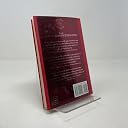

The Little Book of Common Sense Investing: The Only Way to Guarantee Your Fair Share of Stock Market Returns (Little Books. Big Profits)
Product ID: 49149325
⏳Timeless investing wisdom
💡Expert insights from legends
📈Proven index investing strategy
Desertcart purchases this item on your behalf and handles shipping, customs, and support to USA.
📚 Invest smart, live free: The only book you need to own the market with confidence!
The Little Book of Common Sense Investing by John C. Bogle is a definitive guide to index fund investing, emphasizing low-cost, diversified portfolios and long-term discipline. Endorsed by Warren Buffett, it reveals how to avoid costly investment pitfalls and harness the power of the entire stock market to build lasting wealth.
| Dimensions | 13.46 x 2.79 x 18.03 cm |
| Isbn 10 | 0470102101 |
| Isbn 13 | 978-0470102107 |
| Item Weight | 272 g |
| Language | English |
| Print Length | 240 pages |
| Publication Date | 20 Mar. 2007 |
| Publisher | John Wiley & Sons |
User
An essential book for an investor's library
Bogle is the inventor of the index-tracking fund, so it's no surprise that this is all about index investing. He gives all of the arguments for it, and supports it with many quotes from the big names. Here's Warren Buffett:"By periodically investing in an index fund, the know-nothing investor can actually out-perform most investment professionals. Paradoxically, when 'dumb' money acknowledges its limitations, it ceases to be dumb .... Those index funds that are very low cost .... are investor-friendly by definition and are the best selection for most of those who wish to own equities"So, read this book to get a solid understanding of index trackers. I'd couple it with my favourite book on investing: Millionaire Teacher: The Nine Rules of Wealth You Should Have Learned in School, where amongst other things you'll learn how to hold a portfolio of equities and bonds, rebalancing every year or so, which forces you to buy low and sell high.Be careful which index you choose to track though. I'm not convinced about the FTSE , as it has plenty of miners and stodgy companies. The S&P 500 has more of a tech bias, and is perhaps a better cross section of US industry than the FTSE is of UK industry. And it's not good to track an index that mostly goes nowhere. On the other hand, if you track the S&P or Nasdaq you'll have exposure to USD/GBP FX, which you probably don't want. You may not agree with me, and that's fine; I just believe that you should think very carefully about which equity index to track. Unlike US investors, this isn't such an easy question to answer.
User
Brilliant book
Good, book for those new to the stock market, it is a must read before diving into the world of funds, John bogle applies real facts that can't be ignored before investing in mutual funds, after all even warren buffet recommends the index fund strategy.
User
Uncle Jack delivers
On one level, I would concur with other reviewers of this book. It is just a tad repetitive - Bogle makes his key points fairly early on (minimise costs, don't try to second-guess the markets, avoid the poisoned-chalice of 'timing', buy the appropriate risk-graded market exposure using passives etc) and then keeps coming back to them later on.However...and it's a big however. In practice, I think the repetition is important. It is only superfluous for those who may have already learned the lessons, bought into the underlying logic. The fact is that the preponderance of investors (and, apparently, fund managers) still believe in an Alice-in-Wonderland world of investment which is all about special insights, market timing, leveraging and unfeasibly complex investment products or strategies. In the UK, many IFAs still attempt to 'pick the winners', akin to having a day at the races, except one's entire future wealth prospects depends upon the outcome. Bogle circles around, and comes back to his themes, but exploring them in different contexts, and with different examples.The author deals with all of this. He writes beautifully, and clearly. He is always forthright, and the text breathes commonsense and belief in every sentence. He also very usefully handles the issue of fads - for instance, chapter 15 supplies some much needed clarity on the pitfalls of ETFs, which often appear to be embraced somewhat indiscriminately by investors and advisers alike. There are eighteen chapters, which may seem a lot for "The Little Book of...", but they are short chapters, and they provide access to the subject-matter in bite-size chunks. This is eminently readable, even for busy people with little time for reading.Overall, this is a very useful book of practical guidance on the subject of investing. I would also recommend very strongly Jack's other seminal book, 'Enough': Enough True Measures of Money, Business, and Life by Bogle, John C. ( Author ) ON Jun-25-2010, Paperback
User
Genius from the founder of Vanguard
If you want to cut through all the financial pornographers in the investment management industry this is the book to buy
User
Worth Reading
Avoids the hype, the jargon, the wild promises of super wealth, just tells you how to make some decent money,
User
Nothing short of amazing.
It's a very smart book from a very smart man. Very clear concepts and examples. Oozes from brilliance.
User
Good, but short and a little bit lacking
I've been trying to learn more about investing for quite a while, but this is the first book I've bought on the topic."The Little Book of Common Sense Investing" is focused on the use of index-linked funds, which are described as the ideal investment tool for people who don't want to get too involved in stock-watching, but want an investment which has a good chance of soundly beating the returns offered by cash savings accounts over the long term.With the author John Bogle being one of the key players in the field of index funds (albeit now retired), one could easily anticipate a certain unfair bias in favour of these products. There does appear to be a certain element of this, as no mention is given of any potential disadvantages to index funds (other sources confirm that they do exist to some degree). That said, the book gives very clear examples of why an index fund can be generally expected to beat the alternatives, and provides an excellent argument for why this should be one of the main investment tools for everyone except die-hard gamblers.I wish the book was a little longer, with some discussion of the disadvantages of these index funds and a clearer display of how level-headedness and the Dunning–Kruger effect contribute to people being so determined that they can beat the market.
User
Essential reading
This book Completely changed my investing strategy and saved me a small fortune. Essential reading for anyone saving for the future.
User
Libro necesario para cualquier inversor
Te explica los conceptos básicos del value investing. Quizás algo denso para quien sea todavía iniciado en el mundo de la inversión.
User
Simples e efetivo
Escrito em linguagem de fácil entendimento, apesar da complexidade do tema, é leitura essencial para os interessados em investimentos em geral.
User
Learned a lot about index funds, mutual funds, ETFs, and bond fund. Good read for beginners and plus.
I am almost new to investing and just learning. It was a quick half a day read that I learned a lot about index funds, mutual funds, ETFs, and bond fund. Totally worth the time and money. I like that it is not a book of jargon but gives you vision. As far as I learned it is very important in investment to know what I'm doing.
User
"Saint Jack" should be required reading for every American high school student
Jack Bogle, the inventor of the index fund, revolutionized how Americans invest and drove down the outrageously over-priced mutual funds that were charging so much for underperforming an unmanaged index. We all owe him a debt of gratitude for his pioneering work.I have read just about everything Bogle has written and wished I had ONLY read what Bogle has written. As a long-time trader and investor, I keep coming back to KISS: Keep It Simple, Stupid. 99% of us would earn more and sleep better if we stopped trying to trade the markets and instead bought a diversified basket of low cost index funds or ETFs and NEVER SELL.Yes, Bogle has a tendency to repeat himself, but he is pounding into our collective heads some simple truths that are hard to hear over all the nonsense and noise of the financial press and for-profit financial advisory "services":On average, we cannot expect to earn more than market averages; one outstanding fund manager's performance must come at the expense of a below average one;Basic (brutal) arithmetic teaches that our returns on average will equal market (index) returns minus expenses, fees, marketing, commissions, trading costs, and taxes; compounded over time, even a 2% per year cost will grow to hundreds of thousands of dollars less in savings for the average investor; choosing low cost vanilla index funds and avoiding the temptation to trade them will eliminate virtually all of these expenses, putting you in an immediate competitive advantage over managed, high cost funds;Only in the stock (and bond) market are you likely to be above average - far above average over time - if you simply buy the average instead of trying to outguess it;Don't search for the needle in the haystack - buy the whole haystack!The longer one's holding period, the less likely you are to outperform a passive average; for our investing lifetimes of several decades, the probability of outperforming a naive indexing strategy approaches that of winning the lottery.The most difficult thing about Bogle's message is that it is at some level so obvious and at another level so hard to follow. I have spent my life - with various degrees of success - searching for the holy grail of market inefficiency, trading stocks, options, ETFs, sector funds - any instrument I could find - all in the name of out-sized, extraordinary returns. It is very difficult to admit that much of this activity was probably a "don't try this at home" massive waste of time, so I understand that Bogle's message is a very difficult one for many of us to internalize and - most importantly - put to work in our portfolios. Most of us who are drawn to the markets have succeeded in other fields. We consider ourselves smart and cannot accept that the markets do not work like any other field, if for no other reason the markets are nothing more than the net behavior of millions of other participants, all who consider themselves equally bright, all trying to hedge and second-guess each other's behavior. As in religion, we can't all be right, but we can all be wrong.Indexing is the perfect hedge against our own ignorance and compulsion to wade into the arena and spend years or decades looking for that alchemy of finance that never completely works itself out. Even successful trading systems I have developed have required a tremendous amount of work,tinkering, monitoring, and sweat.Bogle's way is not only easier but more likely over the very long run to be successful. Every American high school student should have to read this book and be tested on its contents. The mutual fund industry would shrink (as it should) but markets would be far more efficient.If you loved this book, may I also suggest Jeremy Siegel's Stocks for the Long Run, which gives the same message using hundreds of years of stock market data, or Fooled by Randomness by Taleb (both cited by Bogle).
User
Ottimo. Il buonsenso negli investimenti
Per l'investitore medio. Tramite prove supportate da dati numerici e principi di comune buonsenso, l'autore apre gli occhi al lettore sulla realtà legata ai fondi di investimento attivi solitamente proposti in banca. Realtà fatta di conflitti di interesse, alte commissioni e basse performance. Tali caratteristiche negative non sono presenti nei fondi indicizzati presentati dall'autore come il miglior mezzo di investimento per tutti.
Trustpilot
3 weeks ago
2 weeks ago