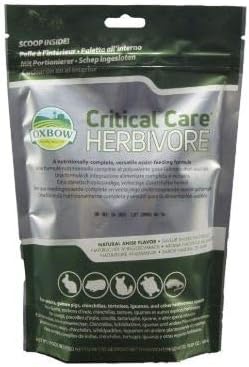

🌟 Save your pet’s appetite and vitality with every scoop!
Oxbow Critical Care is a specialized powdered recovery food tailored for herbivorous pets like guinea pigs. Designed to aid in poor nutrition, post-surgery recovery, and first aid, it features a balanced blend of fiber-rich ingredients and natural oils. Easy to mix with warm water for syringe feeding, it ensures optimal gut health and energy replenishment. Highly rated by pet owners, it offers a cost-effective, vet-recommended solution to support your pet’s comeback from illness or surgery.
| ASIN | B004W7511K |
| Batteries Included | No |
| Batteries required | No |
| Best Sellers Rank | 66,953 in Pet Supplies ( See Top 100 in Pet Supplies ) 707 in Small Animal Food |
| Breed Recommendation | guinea pigs |
| Customer Reviews | 4.7 4.7 out of 5 stars (627) |
| Date First Available | 20 Oct. 2008 |
| Flavor | anise oil |
| Item Form | Powder |
| Item Weight | 141 g |
| Item model number | OXBOW141 |
| Number of Items | 1 |
| Package Dimensions | 18.7 x 13.1 x 3.7 cm; 141 g |
| Pet Life Stage | All Life Stages |
| Pet Type | Fish |
| Quantity | 1 |
| Size | 141 g (Pack of 1) |
| Special features | Easy to use, Lockable |
| Specific Uses | Diseases, dental problems or surgery |
| Storage Information | Store in a cool, dry place. Close tightly after each use. Dispose of mixed food after 24 hours. Use open bags within 30 days. |
S**S
Good to keep some in for older or sickly guinea pigs
Fantastic stuff! I have used Critical Care before with a couple of poorly guinea pigs and it really helps to supplement the diet of a piggy who is off their food. This can be due to ongoing illness or post op period. I read the negative review and sympathise with the person who had struggled with it. You really can get it to work though - there's just a bit of a knack. Make it up fairly runny and ideally use a 2.5 ml syringe. It can seem to keep clogging - this is normal and you need to be patient. Keep mixing the C.Care and eject a bit then syringe a bit over and over until you draw up a complete syringe. Some piggies will eat a fair bit off a spoon so offer it this way first. Don't syringe in too fast as it'll flow out or cause inhalation. Four or so syringes should be plenty, less for a very small or sickly pig. It's more important to give some more than once a day really - to ensure gut motility and reduce bloat. This bag was fantastic value for money as a bag half this size had cost me over £9 at the vets (plus if you keep it sealed and dry it last a long time). Just make up a little at a time and add a bit more water if it goes thicker or dry. Don't know what I'd do without this at the moment. My oldest guinea pig has lots of medical problems and has a poor appetite. Thoroughly recommended.
J**L
Absolutely fantastic product
One of my guinea pigs fell poorly with an upper respiratory infection and was given antibiotics by the vet. He lost his appetite and lost weight and developed scurvy as he wasn't taking to the other foods we tried to syringe feed him. He was very poorly as he didn't take to the antibiotics very well either and fell iller very quickly, as a lot of small animals do. As a last ditch effort to save our boy, we got Critical Care to help him along. It was extremely easy to mix up and syringe feed him, and he took to it well. Within a few days, he was back to being able to eat unaided and was back to his usual self within a week. He has since put his weight back on too. I honestly believe this product helped pull him back from the brink as he was extremely poorly and completely unable to eat unaided due to the scurvy affecting his jaw. I can't recommend this enough for guinea pigs who are struggling with appetite issues and would recommend it to people for purchase on the first sight of something being amiss with their dietary intake. I wish I'd known about it before he fell as poorly as he did. While the product seems expensive at a glance, if you're sure that dietary intake is at fault for issues in your pet, it can save you costly vets bills - though I'd only suggest skipping those trips to the vet if you're sure that it's a dietary issue and not something more serious! All in all, this product is a lifesaver.
M**E
Good product when rabbit not eating.
I first used this product when I adopted a rescue rabbit. I paid five pounds from the vet for a tiny packet. My rabbit stopped eating, which can be fatal in rabbits, and I had to syringe feed him. He recovered well from the stress of a new home and has done well over the last few years until his mate died, and again he went on hunger strike. I once again gave him metaclopramide, from the vet and tried parsley, dandelion leaves and syringe feeding. This has taken three weeks to resolve, He's now eating well and himself. This is a really useful product particularly in winter when you cant tempt your rabbit with fresh leaves because everything dies down. .
A**D
A MUST HAVE for your Pet first Aid cupboard
Oxbow Critical Care for Herbivores - is superb quality critical care food. Our vets said this is the best one on the market. It's very easy to mix (you base the portion size on the weight of your animal) and mix that portion with water. And our vets told us to spread the days portion in to three separate doses. In our case with a medium sized rabbit weighing about 2.5kg [5 1/2 to 6 pounds] she has two and a half table spoons of critical care powder mixed with 5 table spoons of warm water three times a day. But this of course is bound to vary depending on your animal and what's wrong. So speak to your vet on how best to spread the doses out across the day if you need to. The manufacturers have made it taste nice for the animal - so once they are well enough to take it themselves (without the need for syringe feeding it) they lap it up. And it's certainly helped a great deal and still is helping with my rabbit who is very unwell at the moment. TIP FOR RABBIT OWNERS: 1) IF YOU ARE HAVING TO SYRINGE FEED THIS: Use a big syringe as a smaller one will get clogged up. Also even when syringing - just try and squirt a little in to a small bowl. When I did this - my rabbit started to take this of her own volition which meant I didn't need to syringe feed it to her after the first few days. Which is far nicer for both your pet and you as it's less distressing. I should also say and I'd guess most people know this anyway (I didn't) but you syringe feed always from the SIDE of the mouth for a rabbit. Never squirt it towards the back or they will choke. The vets told me this as I'd never syringe fed an animal before. 2) TO ENCOURAGE THEM TO EAT HAY AGAIN WHILE FEEDING THEM THE CRITICAL CARE: As your rabbit starts to want to / be able to eat a little hay or bits of food - I found that very finely chopping up hay so it's very small and mixing it in with the correct portion of critical care doses MASSIVELY encouraged her to start taking lots more hay. It's easiest to chop up the hay with scissors I've found rather than a knife. Doing this means it's less work for the rabbit to chew when they're unwell and more importantly keeps them used to the taste and smell of hay. It's certainly worked with our rabbit. We got both the smaller and the bigger sizes of this critical care. I'd say get the smaller size if it's just to store in your animal's first aid cupboard for emergencies. And get the bigger size if you are needing to use it for a current illness. Hope this is of use.
Trustpilot
2 weeks ago
4 days ago