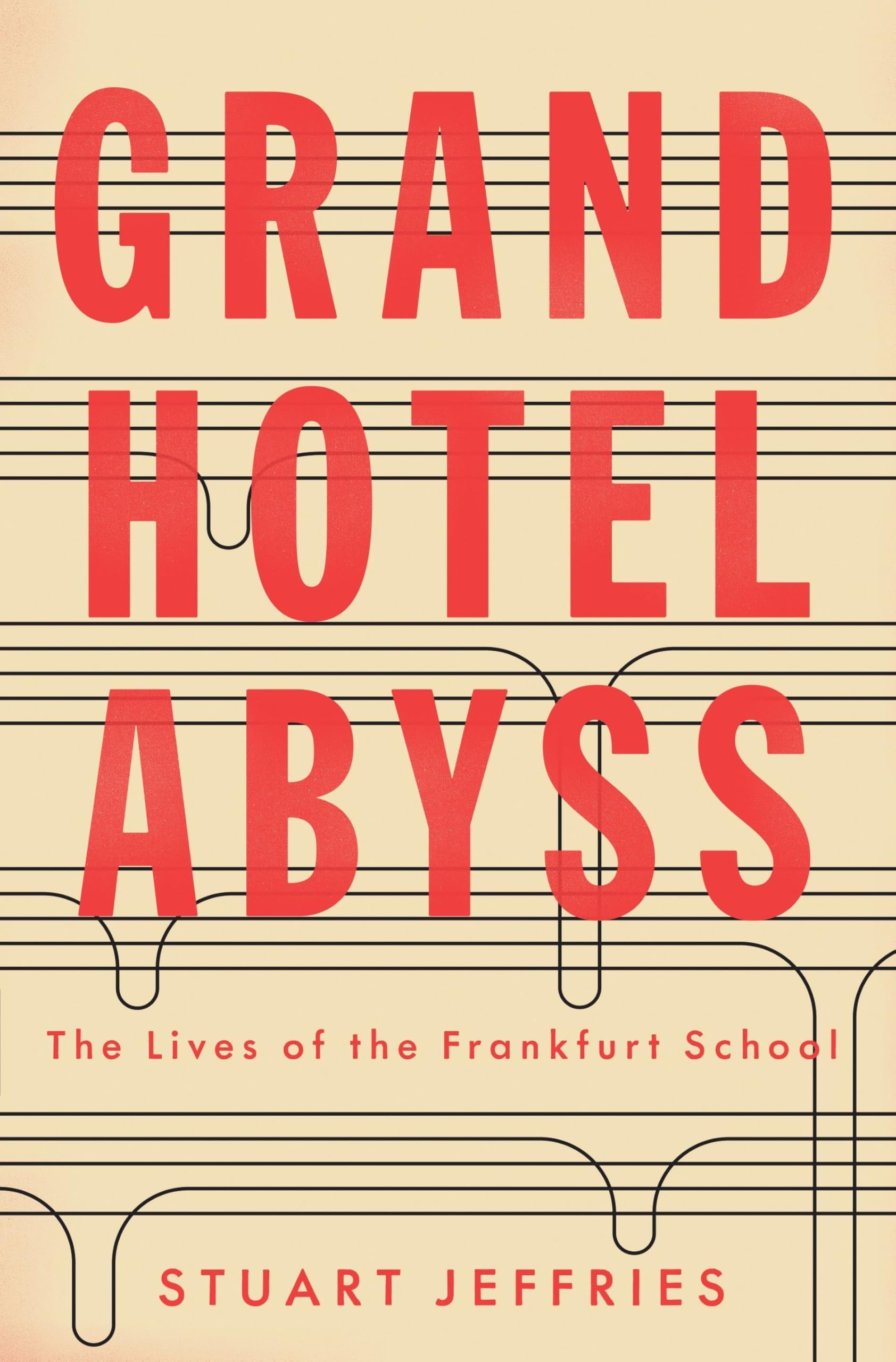
Grand Hotel Abyss: The Lives of the Frankfurt School
Product ID: 48127260
Desertcart purchases this item on your behalf and handles shipping, customs, and support to USA.
“Marvelously entertaining, exciting and informative.” — Guardian “An engaging and accessible history.” — New York Review of Books This group biography is “an exhilarating page-turner” and “outstanding critical introduction” to the work and legacy of the Frankfurt School, and the great 20th-century thinkers who created it ( Washington Post ). In 1923, a group of young radical German thinkers and intellectuals came together to at Victoria Alle 7, Frankfurt, determined to explain the workings of the modern world. Among the most prominent members of what became the Frankfurt School were the philosophers Walter Benjamin, Theodor Adorno, Max Horkheimer, and Herbert Marcuse. Not only would they change the way we think, but also the subjects we deem worthy of intellectual investigation. Their lives, like their ideas, profoundly, sometimes tragically, reflected and shaped the shattering events of the twentieth century. Grand Hotel Abyss combines biography, philosophy, and storytelling to reveal how the Frankfurt thinkers gathered in hopes of understanding the politics of culture during the rise of fascism. Some of them, forced to escape the horrors of Nazi Germany, later found exile in the United States. Benjamin, with his last great work—the incomplete Arcades Project —in his suitcase, was arrested in Spain and committed suicide when threatened with deportation to Nazi-occupied France. On the other side of the Atlantic, Adorno failed in his bid to become a Hollywood screenwriter, denounced jazz, and even met Charlie Chaplin in Malibu. After the war, there was a resurgence of interest in the School. From the relative comfort of sun-drenched California, Herbert Marcuse wrote the classic One Dimensional Man , which influenced the 1960s counterculture and thinkers such as Angela Davis; while in a tragic coda, Adorno died from a heart attack following confrontations with student radicals in Berlin. By taking popular culture seriously as an object of study—whether it was film, music, ideas, or consumerism—the Frankfurt School elaborated upon the nature and crisis of our mass-produced, mechanized society. Grand Hotel Abyss shows how much these ideas still tell us about our age of social media and runaway consumption. Review: Superb. - This is a superb book on a complex subject. The title comes from Lukacs, who suggested that the members of the Frankfurt School—Adorno, Horkheimer, Benjamin, Marcuse, et al. lived in a lovely hotel from whose windows they contemplated what, for them, was an abyss. The group consisted of social scientists who attempted to draw inspiration from Marx and find an alternative to capitalism. They did so during parlous times. The experiences of the ‘proletariat’ under Soviet communism and National Socialism were anything but encouraging. As we recovered from the second world war the successes of capitalism neutralized any desire for revolution; at the same time, the emoluments of capitalism helped to conceal the manner in which it could bring subtler forms of alienation. The book is organized historically and formally ends with the complex departures from Frankfurt School orthodoxy represented by the thought of Habermas. In a kind of coda the author ends with a very clever look at Jonathan Franzen’s The Corrections, in particular the scene in which Chip Lambert liquidates his library, selling off his collection of Frankfurt School books and more recent books of capital-T Theory. Chip needs some money to impress his new girlfriend and he has departed from the groves of academe to seek a career in screenwriting. Jeffries uses this passage as a springboard to an incisive discussion of Critical Theory in the 21st century. The reader should be wary of some of the book’s jacket blurbs and other reviews. They speak of the book as “an exhilarating page-turner,” and as “funny.” Jeffries has a great sense of the ironic and a full appreciation of the contradictions inherent in the Frankfurt School ‘project’, but this is not a leg-slapping beach book. This is serious and significant (but not ponderous or obscurantist) intellectual history. Similarly, his subtitle, “The Lives of the Frankfurt School” is spot-on but potentially misleading. It does indeed trace the various incarnations of the School and the writings of its members and it does provide trenchant anecdotes about the members’ personal lives, but this is not a Kitty Kelly exposé and it does not focus on the members’ lives to the exclusion of their work. I would say that it offers the perfect balance; every book on philosophy needs to balance out the personal experiences of a thinker with that individual’s thought. It is important to know that Hume was a genial and decent fellow who gave up professional opportunities in order to be faithful to his beliefs, just as it is important to know that Kant (like Jane Austen, e.g.) never travelled to a significant degree and whose favorite music (despite the Critique of Judgment’s vast influence on aesthetic theory) consisted of Prussian marches. The best feature of this book is the author’s balanced viewpoint. It is often said that great biography requires personal sympathy on the part of the author (though Robert Caro stands as a rather prominent exception), but that sympathy must be balanced with objectivity. Jeffries sees all of the foibles of the Frankfurt School, commenting on Benjamin in the following way: “If the Frankfurt School was the last hurrah of German romanticism, then Benjamin was its emblem, revealing the group in all its contradictions—Marxists without party, socialists dependent on capitalist money, beneficiaries of a society they sniffily disdained and without which they would have had nothing to write about” (p. 167). At the same time he concludes with a discussion of contemporary capitalism, saying that in “such a customized culture, one that abolishes serendipity, makes a mockery of dignity and turns human liberation into a terrifying prospect, the best writings of the Frankfurt School still have much to teach us—not least about the impossibility and the necessity of thinking differently” (p. 392). While Jeffries focuses on large, global corporations, I think of a phenomenon closer to home. As I write this, reports are circulating about the University of Virginia’s desire to cut their library’s shelf space by 40-70%. If one seeks an example of an assault on serendipity, one need look no farther than what the contemporary university is doing to itself. My only reservation concerning the book is the fact that it has no illustrations, except for a wonderful picture of Adorno on the book’s spine, extending his wrist and offering a ‘thumb’s down’. Highly recommended. Review: STIMULATING-DEPRESSING - For Rulers: Priming Political Leaders for Saving Humanity from Itself This is an outstanding presentation of the Frankfurt School and the evolution of the thinking of its main heroes, including Theodor W. Adorno, Walter Benjamin, Erich Fromm, Max Horkheimer, Herbert Marcuse, Franz Neumann, and – one generation later -- Jürger Habermas. Shorter comments on intellectual partners, such as Bertolt Brecht, complete the emerging picture. With minor exceptions, theses thinkers avoided personal activism, provoking György Lukács to charge the members of the Frankfurt School with “taking up residence in what he called ‘the Grand Hotel Abyss.’ This beautiful hotel was, he wrote, equipped with every comfort, on the edge of an abyss, of nothingness, of absurdity… musing on the suffering of the world from a safe distance. ‘The daily contemplation of the abyss between excellent meals or artistic entertainments’, Lukács wrote sarcastically, can only heighten the enjoyment of the subtle comforts offered.… For Lukács, the Frankfurt School had abandoned the necessary connection between theory and praxis, where the latter means the realisation in action of the former” (p. 2). But Lukács was wrong. Taking some distance from “praxis” was, I think, essential for the high-quality thinking of the Frankfurt School. As Adorno put it “now was not the time for the easy posturing of action, but for the hard work of thinking… theory was not reactionary retreat into a Grand Hotel Abyss, but principled withdrawal into a fortress of thought, a citadel from which, periodically, radical jeremiads were issued” (p. 4). The Frankfurt School thinkers have a paradoxical and then harsh personal history, starting with dependence on money which their parents made as capitalist and continuing with escaping from Nazi Germany as refugees. This background is interestingly explored in the book, as is its impact on their reasoning. But, much more significantly, the thinking by the founding generation of the Frankfurt School, in Germany and in US exile, was shaped by five shocks, which demolished classical Marxism and much more: (1) The ease with which the proletarian supported World War One and much of German society supported Nazism. (2) Successes of Capitalism in eroding the proletariat and, in effect, made it disappear in Western countries as a potentially revolutionary class. (3) Total failure of the enlightenment in preventing the horrors of genocide and in making “reason,” in the double meanings of Vernunft (critical reason) and Verstand (instrumental reason) into a reliable grounding of compelling norms (as attempted paradigmatically by Kant). (4) The Capitalist “commodification” of humans reinforced by the “culture industry. (5) Difficulties to overcome the pessimisms of Freud in his “Civilizations and Its Discontents” essay, including misgivings about the effects of “sexual liberation.” To these must be added the growing doubts of the second generation Frankfurt School superstar Habermas on the validity of his “public sphere” paradigm, based on his belief “that through rational communication we can overcome our biases, our egocentric and ethnocentric perspectives, come to a consensus or community of reason, and develop thereby what the American philosopher George Herbert Mead… called the ‘larger self’” (p. 358). But “(towards the end of his life) “what Habermas wanted to tell us about secular reason, which he had spent most of his career extolling, and indeed about the modern secular state, was that both lack what religious authority offers the faithful – not just salvation but, he argued, virtuous lives”) p. 379). I agree that “the Frankfurt School still have much to teach us – not least about the impossibility and the necessity of thinking differently” (p. 392). This is all the more a fateful necessity taking into account emerging science and technology, which are sure to make it quite easy to end the existence of Homo sapiens as a species. Till then we should take to heart the observation that “Anybody in this culture who watches the news and can be happy – there’s something wrong with them (p. 387). To learn to share this conclusion and struggle with its implications – pondering this book is strongly recommended. Professor Yehezkel Dror
| Best Sellers Rank | #246,159 in Books ( See Top 100 in Books ) #147 in Philosopher Biographies #990 in History & Theory of Politics #3,020 in Military Leader Biographies |
| Customer Reviews | 4.5 out of 5 stars 241 Reviews |
R**Z
Superb.
This is a superb book on a complex subject. The title comes from Lukacs, who suggested that the members of the Frankfurt School—Adorno, Horkheimer, Benjamin, Marcuse, et al. lived in a lovely hotel from whose windows they contemplated what, for them, was an abyss. The group consisted of social scientists who attempted to draw inspiration from Marx and find an alternative to capitalism. They did so during parlous times. The experiences of the ‘proletariat’ under Soviet communism and National Socialism were anything but encouraging. As we recovered from the second world war the successes of capitalism neutralized any desire for revolution; at the same time, the emoluments of capitalism helped to conceal the manner in which it could bring subtler forms of alienation. The book is organized historically and formally ends with the complex departures from Frankfurt School orthodoxy represented by the thought of Habermas. In a kind of coda the author ends with a very clever look at Jonathan Franzen’s The Corrections, in particular the scene in which Chip Lambert liquidates his library, selling off his collection of Frankfurt School books and more recent books of capital-T Theory. Chip needs some money to impress his new girlfriend and he has departed from the groves of academe to seek a career in screenwriting. Jeffries uses this passage as a springboard to an incisive discussion of Critical Theory in the 21st century. The reader should be wary of some of the book’s jacket blurbs and other reviews. They speak of the book as “an exhilarating page-turner,” and as “funny.” Jeffries has a great sense of the ironic and a full appreciation of the contradictions inherent in the Frankfurt School ‘project’, but this is not a leg-slapping beach book. This is serious and significant (but not ponderous or obscurantist) intellectual history. Similarly, his subtitle, “The Lives of the Frankfurt School” is spot-on but potentially misleading. It does indeed trace the various incarnations of the School and the writings of its members and it does provide trenchant anecdotes about the members’ personal lives, but this is not a Kitty Kelly exposé and it does not focus on the members’ lives to the exclusion of their work. I would say that it offers the perfect balance; every book on philosophy needs to balance out the personal experiences of a thinker with that individual’s thought. It is important to know that Hume was a genial and decent fellow who gave up professional opportunities in order to be faithful to his beliefs, just as it is important to know that Kant (like Jane Austen, e.g.) never travelled to a significant degree and whose favorite music (despite the Critique of Judgment’s vast influence on aesthetic theory) consisted of Prussian marches. The best feature of this book is the author’s balanced viewpoint. It is often said that great biography requires personal sympathy on the part of the author (though Robert Caro stands as a rather prominent exception), but that sympathy must be balanced with objectivity. Jeffries sees all of the foibles of the Frankfurt School, commenting on Benjamin in the following way: “If the Frankfurt School was the last hurrah of German romanticism, then Benjamin was its emblem, revealing the group in all its contradictions—Marxists without party, socialists dependent on capitalist money, beneficiaries of a society they sniffily disdained and without which they would have had nothing to write about” (p. 167). At the same time he concludes with a discussion of contemporary capitalism, saying that in “such a customized culture, one that abolishes serendipity, makes a mockery of dignity and turns human liberation into a terrifying prospect, the best writings of the Frankfurt School still have much to teach us—not least about the impossibility and the necessity of thinking differently” (p. 392). While Jeffries focuses on large, global corporations, I think of a phenomenon closer to home. As I write this, reports are circulating about the University of Virginia’s desire to cut their library’s shelf space by 40-70%. If one seeks an example of an assault on serendipity, one need look no farther than what the contemporary university is doing to itself. My only reservation concerning the book is the fact that it has no illustrations, except for a wonderful picture of Adorno on the book’s spine, extending his wrist and offering a ‘thumb’s down’. Highly recommended.
Y**R
STIMULATING-DEPRESSING
For Rulers: Priming Political Leaders for Saving Humanity from Itself This is an outstanding presentation of the Frankfurt School and the evolution of the thinking of its main heroes, including Theodor W. Adorno, Walter Benjamin, Erich Fromm, Max Horkheimer, Herbert Marcuse, Franz Neumann, and – one generation later -- Jürger Habermas. Shorter comments on intellectual partners, such as Bertolt Brecht, complete the emerging picture. With minor exceptions, theses thinkers avoided personal activism, provoking György Lukács to charge the members of the Frankfurt School with “taking up residence in what he called ‘the Grand Hotel Abyss.’ This beautiful hotel was, he wrote, equipped with every comfort, on the edge of an abyss, of nothingness, of absurdity… musing on the suffering of the world from a safe distance. ‘The daily contemplation of the abyss between excellent meals or artistic entertainments’, Lukács wrote sarcastically, can only heighten the enjoyment of the subtle comforts offered.… For Lukács, the Frankfurt School had abandoned the necessary connection between theory and praxis, where the latter means the realisation in action of the former” (p. 2). But Lukács was wrong. Taking some distance from “praxis” was, I think, essential for the high-quality thinking of the Frankfurt School. As Adorno put it “now was not the time for the easy posturing of action, but for the hard work of thinking… theory was not reactionary retreat into a Grand Hotel Abyss, but principled withdrawal into a fortress of thought, a citadel from which, periodically, radical jeremiads were issued” (p. 4). The Frankfurt School thinkers have a paradoxical and then harsh personal history, starting with dependence on money which their parents made as capitalist and continuing with escaping from Nazi Germany as refugees. This background is interestingly explored in the book, as is its impact on their reasoning. But, much more significantly, the thinking by the founding generation of the Frankfurt School, in Germany and in US exile, was shaped by five shocks, which demolished classical Marxism and much more: (1) The ease with which the proletarian supported World War One and much of German society supported Nazism. (2) Successes of Capitalism in eroding the proletariat and, in effect, made it disappear in Western countries as a potentially revolutionary class. (3) Total failure of the enlightenment in preventing the horrors of genocide and in making “reason,” in the double meanings of Vernunft (critical reason) and Verstand (instrumental reason) into a reliable grounding of compelling norms (as attempted paradigmatically by Kant). (4) The Capitalist “commodification” of humans reinforced by the “culture industry. (5) Difficulties to overcome the pessimisms of Freud in his “Civilizations and Its Discontents” essay, including misgivings about the effects of “sexual liberation.” To these must be added the growing doubts of the second generation Frankfurt School superstar Habermas on the validity of his “public sphere” paradigm, based on his belief “that through rational communication we can overcome our biases, our egocentric and ethnocentric perspectives, come to a consensus or community of reason, and develop thereby what the American philosopher George Herbert Mead… called the ‘larger self’” (p. 358). But “(towards the end of his life) “what Habermas wanted to tell us about secular reason, which he had spent most of his career extolling, and indeed about the modern secular state, was that both lack what religious authority offers the faithful – not just salvation but, he argued, virtuous lives”) p. 379). I agree that “the Frankfurt School still have much to teach us – not least about the impossibility and the necessity of thinking differently” (p. 392). This is all the more a fateful necessity taking into account emerging science and technology, which are sure to make it quite easy to end the existence of Homo sapiens as a species. Till then we should take to heart the observation that “Anybody in this culture who watches the news and can be happy – there’s something wrong with them (p. 387). To learn to share this conclusion and struggle with its implications – pondering this book is strongly recommended. Professor Yehezkel Dror
L**K
Excellent and timely study of the Frankfurt School and their studies of Germany before and after WWII.
Grand Hotel Abyss is an excellent book, well written and researched. It is probably not for a beginner in Critical Theory but if you know some of the work you will find this interesting. While it focuses on Adorno, Horkheimer and Benjamin it gives a useful discussion of Fromm and the others. I highly recommend this to anyone interested in our current political situation. As the author takes great pains to point out they wrestled with the dilemma of the German working class supporting Hitler. Much the same could be ask d about the 2016 election.
N**D
Best Introduction to it's Subject
I have been interested in the Frankfurt School for a long time. Adorno, Benjamin, and Marcuse are thinkers not just important to the left, but to anyone interested in the history of twentieth century thought. The Dialectical Imagination: A History of the Frankfurt School and the Institute of Social Research, 1923-1950 (Weimar and Now: German Cultural Criticism) has long been the best overview of the scholarship produced by these remarkable intellectuals. Jeffries has written an essential new overview of the Frankfurt School. First off the writing is excellent, and I don't believe the sophistication of the ideas is dumbed down at all through Jeffries' accessible and entertaining presentation. (However, I would have to defer to people smarter than me on that score). What I can definitely say is that if you have any interest the Frankfurt School thinkers I can't imagine you won't find this book incredibly stimulating and enlightening. Jeffries' presentation brought a great deal of clarity to issues that previously confused me, such as Adorno's conception of the "negative dialectic." This book has already helped me to better understand references to Frankfurt School debates in other books and articles. It is a first class synthesis of the work of some very provocative thinkers.
P**S
Great book!
Reads like a novel. I've read other books on critical theory and Frankfurt, but this was the most enjoyable, smooth and easy read. I heard it was good, but I was kind of dreading reading on the subject again, but once I got started I couldn't put it down. The Titan is never wrong on book recommendations. Get it. Read it.
P**E
Meh.
More of a philosophical tract than a historical or biographical analysis of the Frankfurt School, its intellectual heavyweights, or its scholarly impact.
J**E
Fascinating and important work
Brief concise run down on major theories of Frankfurt school alongisde related historical context and background on its major theorists, as well as how they contrasted with one another and with other important figures . Well-written and hard to put down.
J**B
I wish I had read this extremely well written and ...
I wish I had read this extremely well written and informative book when I was twenty five instead of seventy four. The very engaging and interesting treatment of complex issues holds my attention and certainly increases my grasp of the subject.
J**A
Humaniza a estos grandes filósofos con sus incoherencias vitales
Humaniza a estos grandes filósofos con sus incoherencias vitales, y los cambios que fueron teniendo a lo largo de sus vidas. Interesante análisis de la relación con sus padres. Buena descripción de la situación pre nazismo en Alemania. Pensamientos muy vigentes hoy sobre la sociedad capitalista y de consumo. Muy bien escrito. No es de lectura difícil, aunque a veces los debates ideológicos son difíciles de seguir.
C**L
this book is an excellent introduction for those unfamiliar with the work of the ...
A very readable amalgamation of the lives and works of members of the Frankfurt School, this book is an excellent introduction for those unfamiliar with the work of the School in detail. Its interpretation of who belongs and who does not, might be an example of matters of dispute among scholars, but the benefits for the general reader far outweigh any concerns that specialists might raise. It is an admirable wok of integration which offers the occasional unexpected insight as well.
A**S
Einfach genial!!
Ein wirklich großartiges Buch, manchmal nicht einfach zu lesen und manchmal als Arbeit empfunden, aber die Arbeit lohnt sich, denn ich wurde reich belohnt. Auf das Thema – die Frankfurter Schule -will ich nicht groß eingehen, denn das kann sich jeder aus dem Buchbeschreibung und der Buchvorschau selbst rauslesen. Ich möchte eher auf die Entdeckungen, Erfahrungen und Überraschungen eingehen, die beim Lesen empfunden habe. Zum Beispiel habe ich ein tiefes Verständnis über die 68er-Linke gewonnen, denn die Wurzeln von Lukács, Marcuse und Adorno werden auf vielfältige Art und Weise beleuchtet aber auch die zugehörigen Theorien dargestellt. Mit wenig Mühe konnte ich Parallelen zur heutigen Zeit erkennen und ableiten. In dem Buch kann man vieles entdecken; eine Überraschung zum Beispiel für mich war die Entdeckung von Walter Benjamin. Von ihm wusste ich bisher nicht viel. Die Darstellung seiner Person und seiner Ideen war inspirierend, sodass ich mir u.a. das Passagenwerk besorgt habe. Eine weitere Überraschung war das das Alabama Lied ( Show me the way tot he next whiskey bar) von den Doors, welches ich bestimmt etliche Male schon gehört habe, ursprünglich von Brecht stammt. Ich könnte noch weitere Erkenntnisse aufzählen - aber das muss jeder für sich selbst entdecken. So hat das Buch meinen Horizont an etlichen Stellen erweitert. Und wer sich für die Frankfurter Schule, die Historie der Linken oder Philosophie im Allgemeinen interessiert, dem kann ich dieses gut recherchierte, anregende Buch sehr empfehlen.
A**S
Gran libro!
Este libro es una biografía que repasa los grandes conceptos filosóficos de la Escuela de Frankfurt. Un ejercicio ágil y audaz. Escalofriante leerlo 100 años después de la vida de sus protagonistas y entender la pertinencia de sus ideas en este mundo que regresa una y otra vez al fascismo.
S**Y
Really enjoyed
Really enjoyed reading this over the summer. Jefferies has a really humorous style but he doesn't shy away from engaging with the theories and it is much much more accessible than much of the source material he is working from. For anyone who is sort of on the fence or perhaps, like me, not overly aware of much of Frankfurt school's work over the decades, I assure you by the end of the book you will have something to take away and at least a deeper appreciation of what these scholars were trying to do - whether or not you think they succeeded.
Trustpilot
1 month ago
1 month ago