
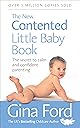
The New Contented Little Baby Book: The Bestselling Guide to Calm and Confident Parenting
Product ID: 48089461
⏰Proven structured routines for sleep & feeding
📈Over 1 million copies sold
📚Trusted expert advice from a former maternity nurse
Desertcart purchases this item on your behalf and handles shipping, customs, and support to USA.
📘 The ultimate blueprint for calm, confident parenting—because your baby deserves the best start!
The New Contented Little Baby Book by Gina Ford is a globally bestselling, expert-backed guide offering practical, structured routines for feeding and sleeping that help parents nurture calm, well-rested babies. With over one million copies sold and rave reviews, this revised edition combines trusted maternity nursing insights with updated advice to support your baby’s first year, reduce colic, and build parental confidence through consistent, natural schedules.
| Best Sellers Rank | 4,518 in Books ( See Top 100 in Books ) 16 in Child Discipline (Books) 18 in Baby Development 19 in Pregnancy & Childbirth |
| Customer Reviews | 4.2 out of 5 stars 3,082 Reviews |
C**.
The best method
Like any clueless first-time mother-to-be, I swallowed up on as much baby material as I could possibly get my hands on. However, there are only two user-friendly books which I constantly refer to and which I strongly urge first-time parents to read. They are Gina Ford's "The contented little baby book" and "Nanny Wisdom" (Justine Walsh and Kim Nicholson). They are packed with no-nonsense, straight-to-the-point information that will prove more useful than any other. Gina Ford's fifteen-minute-stint routine is a bit extreme, but combined with "Nanny Wisdom"'s more flexible ones, you should be able to work out the ideal routine which works for your own family. If you stick consistently to the basic feeding and sleeping schedules (and I underline "consistently" with the odd exception to allow for disruptions in your agenda), your can make a world of a difference in your parental experience. You must choose an approach which works both for you and your baby because neither will benefit from a woolly agenda, fizzled-out parents and babies who squeal hours on end because their basic needs are loosely seen to. Plotting out a schedule and following it with ruthless precision has kept us all sane through the mayhem of sleepless nights, jarring colicky spells, swelling breasts and a severe case of baby blues. Both books advocate that children thrive on routines and rituals because having an idea of what the day will be like makes them feel more secure. And routines are a godsend for parents too, because you can schedule your appointments and outings between feedings and napping times. You also know that after 7 or 7.30 P.M., once your little bundle of joy is punctually put to rest, you'll have the rest of the evening to wind down with your husband watching a film, catching up on each other's day or simply reading a book. The controlled-crying method which so many parents abhorr is not a torture you cruelly inflinge on your baby. You are bequeathing him the great gift of learning to sleep unaided by himself and get the so much needed rest that will help him cope with ever more active days. My now eleven-month-old boy has been sleeping through the night since week six and glided more or less uneventfully through teething, weaning, outings and holidays abroad. Like any other baby, he has his days, but in general he's not a fussy eater non sleeper and will eat virtually anywhere: on the stroller, in a crowded café, on a plane and in portable cribs in hotels or at friends'. People often compliment me on how well-behaved and charming Nicholas is. He's the most uncomplicated baby there is. A couple of friends who have chosen to feed on demand or give in to quick-fix solutions are still putting up with five-month-old babies or toddlers who can't sleep, can't be weaned and a general nuisance to their parents and to themselves. The schedules are really useful because not even my pediatrician was able to draft me a sensible schedule on what to feed my baby, how often, at what times, when to put him to sleep or for how long. The bottom line of these books is: a well-rested and properly fed baby is less prone to tantrums and blooms healthily to everyone's content. Arranging your new life as parent by a schedule is a win-win situation to all concerned. "The contented little baby book" and "Nanny Wisdom" combined will be the only books that will ease your way through the adventure of parenthood. Unlike other reviewers, I don't find Gina Ford's tone at all patronising. I guess some parents cannot humbly accept that we have a lot to learn and that special as our baby is to each of us, they're still babies with more or less predictable patterns.
C**B
It is not harsh but natural
Gina is famously very divisive with her methods. I believe that actually, in contradiction to common belief, it is not a harsh routine or draconian in its methods, but what a baby does naturally in many ways, certainly as the baby gets older and more settled, which is when it really comes into its own. The first few weeks are tough for every parent and I can understand why many fall by the wayside with the Gina routine during this period as quite often the baby does not do the routine and you can end up beating yourself up about it which I have done with two children. But hindsight taught me much and I think that in the first few weeks you should use this book as a guide, which is useful when, first-time around, you have no idea what is expected of you. Use it to get into good habits but absolutely don't deny your natural parenting instinct - I had to rock my son to sleep from 4 to 10 weeks, against advice. But I do believe that her advice is ultimately very wise. I do think every baby is different in the first few weeks (my daughter was a very sleepy baby and my son had colic). Both only vaguely did the routine, for different reasons, at first, despite my attempts. However, I think the turning point is really around three months, and certainly when they are going through the night as then the day starts at 7am and it is then you realise that what she suggests (their sleep times and feed times) are exactly right for them naturally). From this point my children fell into the routine very well and because their needs were being met they were very contented babies. She says in her book that the core of her method is having a good lunchtime sleep so that the baby can get through the afternoon until bedtime happily. I absolutely believe in this. The major difference between the people I know who did the routine and those who didn't was the lunchtime nap and its length. Having a good solid one was vital to my children, and also, vital to me. My son spent a long time waking up halfway through this and I think if I hadn't have known that he could go back to sleep again I would not have tried to make him do so. It was worth persevering with it. I also think she is very right with her sleep association theories. Although I rocked my colicky son to sleep for the first few weeks of his life, as soon as he could be distracted by something in his cot I stopped it and he has been, like my daughter was, very easy to put down ever since. I am afraid that I know people who for the past three years have still had to sit with their children to go to sleep because of bad sleep associations created when they were little. This in itself convinces me that these rules are not harsh, just sensible ways to get into a habit of and your children will only benefit from them. I would also say that her advice on colic was excellent and the only thing that actually worked for me despite putting up with hell for 6 weeks. I can't believe I didn't check what she had to say about it sooner. My son was cured in a night! My children are very content in the most part, but for me the real benefit has been the sleep. Everyone marvels at how easily they go to bed and I really believe that the core of this has been the Gina routine.
E**N
Very useful but not a bible
Bottom line: Are you a control freak? (be honest)If so, then this is the book for you. If not, then give it a miss. I did not read this book with my first, who was a nightmare baby sleepwise, but was eager to avoid that fate with my second so I did buy and read it then. I found her general baby care advice very sound and helpful and wished I had read at least that first section with my first. As for the much discussed routines, I think that she has based them on what has worked with lots of babies and therefore they will work fine for lots of babies. You have to take the book with a grain of salt and choose to use as much of the routine as works for you and your baby. I liked to dip into it every week or two and get an idea of how Gina thought things would be changing for my baby and then make up my own plan based on my baby's needs as well as the rest of the family's. I have to say that I would often put him to bed thinking he wasn't tired, but give it a try because Gina said to and then find him out cold in seconds, so I do think she knows a thing or two about typical baby rhythms. However all babies are not typical, her routines are virtually impossible if you have an older toddler to manage as well, and if you are a go with the flow kind of mum you may find you don'e enjoy being a slave to a routine. On the other hand, I think many new mums (especially type A ones) feel completely lost when they bring a new baby home. They have no experience with babies, and very high expectations of themselves. Finding themselves confronted with a whole new job, one which is far more important than anything they have done before and yet for which they are entirely unprepared, can bring on panic and depression (to say nothing of the effects of sleep deprivation and hormone upheaval.) This book can be a solid anchor for a new mum who feels out of control and overwhelmed. It tells you how to care for the baby, what to do with it all day, how to structure your new life, how to take care of yourself, and how to feel confident you are doing things more or less right. Once you feel like you have a grip on things, you can throw it away, or use whatever parts of it are working for you. It is important to realize with this book that it is for the MUM, not the baby. Most babies will be fine on this routine, on another routine, or on no routine at all as long as they are kept warm, dry, fed and loved. A happy mum (and dad) are a great plus for your baby, so if you think you are the type of person who will need some structure and guidance to keep you sane, then by all means buy this book and give it a try. If you think you want to use your instincts and be free to go with the flow, then this isn't for you.
H**S
Gina Fan - British mother isloated abroad with no access to anti natal /mothers group
There are many negative reviews and comments about all kinds of childcare all around the world. Parents are very sensitive to comments about their children. For me the Gina Ford books and routines have been amazingly successful. My mother brought me the book when I was pregnant and after she saw what happened after the first few weeks said '' I wish I had known this when you where born - would have made life much easier!!'' It provides a structure for the day which is simple to follow and easy to adapt. Basically it teaches you there is a pattern and how to read the signs of hunger,tiredness etc. It is so easy, my Egyptian mother in law can follow it and she sees it works - she is a mother of 4 and was sceptical but sees that it makes life easier. There is family time and time for parents. We live in Egypt where there is a very random approach to child care and routines, EVERY SINGLE PARENT who sees my child comments on his happy, healthy disposition and asks me how to'fix' their child. Many of the parents need parenting education - its not here. They are amazed when I said he slept thro the night since 7 weeks and I went back to work. The biggest concern I had having a baby outside of the UK #as I am British expat in Egypt# was being so isolated. There are very few mothers groups and no anti-natal classes # that I could find anyway# so you have to educate yourself. If I didnt have access to these books I am convinced I would have experienced PND. Being a parent for the first time is overwhelming but why make life difficult for yourself if there is a 'manual' full of guildelines to make it all easier? One of my friends had PND and was exhausted in the weeks after having her child and I suggested she read Gina - her midwife critisied Gina saying' how can you run your life by routine? it's ridiculus' I said that the midwife was ridiculus!! Most people go to school or work at the same times on the same days and get up at the same times on the same days - this means they eat their meals at approx the same times on the same days - so what is that then if it is not routine??? My boy has just had his first birthday, he is happy and contented and cries for less than 15mins a day sometimes not at all. He sleeps well and eats well, quite simply Gina Ford has been BRILLIANT for me, my child and my family. It has made all our lives easier and more manageable. There are so many challenges with parenting - why make life complicated??
L**M
Gina Ford v. Baby Whisperer
My baby is 3 months and, being a lawyer, I liked the idea that there was a text book out there that could tell me how to have a contented baby, or indeed how to whisper to her to get her to do what I wanted/needed her to do... I think both books have good points to them, but my views after having read both, and tried both approaches is as follows. There are some positive views at the end, but I want to start with the reality. If you buy Gina's book you are clearly a person who likes routine, perhaps who is even a little bit of a control freak. That's why I bought it, I admit it. However, this book goes to extremes in that it even tells you when to have breakfast! The routines are very helpful to get an idea about when things could happen, but unless you have a baby who is extremely passive and completely 'common baby problem' free (e.g. colic, reflux), feeds perfectly and has no mind of her own, then sticking to the routines is nigh on impossible. For example, if your baby sleeps in the car/pram this means you can only drive/walk places at the times the naps are meant to take place. So if your NCT friends are meeting at a time that clashes, you and your baby miss out. Also, if you have a baby who refuses a late feed at 10pm as they are sleeping (and who won't dream feed) then you have to get all of the calories in during the day so the feed times Gina suggests are also out. Furthermore, not being able to stick strictly to the routines when you are tired and emotional during the first few weeks can just add to your problems. You feel more like a failure. However, having said that, my baby is 13 weeks and has been in her own room from 7 weeks and has been sleeping around 10 - 11 hours at night from around 10 weeks. I really do attribute this to routine. Gina's book is useful if you follow it loosely and make the routine work within the parameters of your own baby's rhythms. For example, Gina's notion that a baby's day is from 7am - 7pm worked for us. I never get baby up before 7am and she goes to bed around 7pm. By sticking to this more or less all the time I know where I am, when my day begins, and when it ends. Baby feeds at different times to the times Gina suggests because she doesn't take a late feed. However, by having the 7am - 7pm frame within which to work, I know how much food she should take and at what hourly intervals. Sometimes baby's feeding is erratic during the day e.g. during growth spurt, but I always stick 7am - 7pm as Gina says and I think that has helped baby sleep well at night. The Baby Whisperer has some great tips in it, in particular how to interpret your baby's body language and crying which Gina's book lacks. It is also more compassionate and in tune with the emotional side of parenting e.g. Gina says at one point to think about who needs a cuddle you or your baby. If it's you, don't pick her up if she is crying. Now, I challenge any Mum not to pick up their crying baby if they want a cuddle! The routine suggested by the Baby Whisperer is also less rigid than Gina, focusing on what the baby does rather than the clock - the idea of Eat, Activity, Sleep, You Time - the "EASY" Routine. I try to work this into the framework of Gina's 7am - 7pm day so at least there is some timing structure so I know where I am. However, the Baby Whisperer book is generally full of stories about how the Baby Whisperer saved the day with many families (as is Gina's book to a certain extent), but if you strip that out, I think the Baby Whisperer has the edge over Gina for being more practical, flexible and helpful, with more useful insights to how to interpret your baby's needs. It certainly is less likely to stress you out! So, Gina's 7am to 7pm day + Baby Whisperer's flexible routine = a plan. Reading and having either or both books as a crutch for the first few weeks I think is a good if you're that sort of person (which I am). At least you have a point of reference if all else fails, and by reading the books you feel like you are doing something to prepare yourself for the arrival of your baby, or if the baby is here, doing something to help you fathom out what the heck you're meant to be doing! But take it all with a lot of salt, take from the books the info you want or need, and do what makes you and baby happy!
K**Y
Recommend to all expecting parents
My husband called me from the airport when I was pregnant with my first and told me he ‘found a book that was the answer to how we should parent.’ Now, I have to say that I was sceptical but also humble enough to think that there would be experts out there who definitely knew more about raising happy babies than me. We have since used Gina’s Contented Baby book for our two children (and her others, e.g. potty training and weaning and contented toddler) and we recommend it to all expectant parents we know. Gina’s book and methods are straight forward and highly logical. Her routines are very clear to follow and explained so the parents can learn and adapt them as necessary. There is also a lot of problem solving guidance that I’ve found really useful in fixing issues. I also have appreciated how the routines adapt to the child’s age to make sure that we stay on top of changes that are needed. I’d also like to stress that I’ve found the routines and methodology to be very compassionate to both the needs of the child and the parents, making sure both have what they need and are as well rested as possible. The routines do require a lot of dedication and should be followed as closely as possible. They require parents to prioritise the routine as much as they can but, after witnessing many friends suffer the downsides of not prioritising routines, this is something we were happy to do. We have had two babies that we have raised with the Gina Ford routines and we are often told how happy and contented they are. Due to the routines, if they are upset, I’ve nearly always been able to understand why and I’ve not had to guess. Both my exclusively breastfeed children have slept through the night (with a dream feed) from a young age and my husband and I have nearly always had evenings together due to predictable children bedtimes. I’d recommend these books to anyone who is expecting a child and who is open minded enough to appreciate that, whilst our little miracles seem unique to us, they will probably have all the same predicable challenges as other babies and Gina Ford more than likely has the solution.
L**A
Unscientific hearsay
Most of the reviews for this book centre around the "routine" or "no routine" topics. That in itself is very difficult for anybody to agree on as it depends on the parents, the baby, circumstances etc. I have read so far several baby books, talked to many of my friends and based on my own experience I have come to realise that some routine is good and one should have an idea to go with, especially when a first-time parent: for example, how many times to feed, when is it good to go to sleep in the evening, how long can you expect them to sleep etc. Apart from those general guidelines which one can get in this book (out of some 300 pages I have bookmarked 4 pages that could be useful), the rest is absolute hearsay without any scientific support in any way. The reasons why one should follow her routines (which are militant actually) is explained in these terms: "I believe", "I have seen", "In my opinion". Nothing is substantiated with references to real scientific research, because, well, it has really none. The entire book is based on whatever she ever saw and, most crucially, however SHE interpreted what she saw. Fair enough, she has worked with many babies, but that does not necessarily qualify somebody to write passages like: "In my first book I said that, having successfully spent many years teaching parents how to put their newborns into a routine that results in a happy, thriving, contented baby, I can only assume that the authors of these [other] books have not personally worked with enough babies to know this is possible" (p. 34-35). Obviously, the authors that do not agree with your suggestions do not have your experience - that is all very scientific and logical. Apart from this she commands (sorry, comments) and gives advice where I saw very little reason to trust her expertise: do not buy a microwave steriliser (it is a bother to take it in and out when you need the microwave for something else!), do not buy a DECT monitor as they are dangerous but get a wall-to-wall stain-treated carpet (completely opposite to what any allergy-conscious professional suggests). I personally cannot say I would take advice from a book where the author only gives self-serving claims and explanations - example: "Parents who contact me for help with their "colicky" baby describe how the baby screams, often for hours at a time, thrashes madly and keeps bringing his legs up in pain. These babies seem to have one thing in common: they are all being fed on demand." (p.276). Obviously, if the babies are not doing well it is because the parents are not doing what she suggests. So let us then ignore what any other paediatrician and other medical professional has written about colic, why it happens and what is the baby going through. There are also several parts of her advice that seem to be downright wrong: some pertaining to breastfeeding, others to sleeping. Doctors who work with sleep and study it actually suggest not to wake up a sleeping baby (see book Healthy Sleep Habits, Happy Child). I think that there are many more useful books out there and therefore cannot recommend this book at all.
M**W
Great book even if you just take snapshots
Great book , I've bought this often as a present for new parents . It's a tough regime to follow but give some great insight on psychology and babies philosophy
Y**A
So happy I stuck it through
I bought this book when my son was 2 months old. It took us a month but we are finally there - sleeping through the night. From 7 pm to 7 am with a 10 pm feeding and diaper change through which he does not even wake up. Everybody was telling us its too early for a routine/schedule. In our case, due to the amazing tips in this book, we have a set routine. I know when I can have people visiting, when I can go shopping, when I can meet up with a friend for a coffee. Due to this routine I get 9 hours of sleep myself (uninterrupted!!!), my house is clean and my laundry is done. The key to introducing this technique is to listen to your baby's cues while using the tools and the knowledge that this book provides. This is going to be my shower gift to all of my girlfriends.
R**E
Muy contenta
Un dinero muy bien invertido. Me compre otros libros de ella. Si sigues lo que dice y lo combinas con algunos ajustes dependiendo de tu hijo, saldrá todo perfecto!
T**R
No Need to Read Any Other Book! This is the BEST!
Not many American's are familiar with Gina Ford but she is renown in England. IF you follow her guidelines to a tee, you will enjoy hours of sleep, your child will be well rested and adjusted, you'll be able to plan because you are on a schedule and life will be bliss with a newborn. the key is following the somewhat rigorous schedule which many people can't figure out how to do. You will need to make adjustments but like anything the first week or 2 are tough but then it gets easier and then it's just the way of life. I hear so many parents speak of having to sleep with their child, oh my child is different, oh s/he just won't go to sleep, we could never have a schedule - we are too busy, etc. All excuses in my book. Look, it's simple, usually the problem lies with the parents - it's their issue, they need to go to this or that event, they like holding the baby all night long, they don't want to hear the crying, etc. Get over it! kids need boundaries. This book helps you set them early on and while you are helping your child you are really helping yourself. Gina does an amazing job of outlining a very sensible feeding and sleeping schedule, and most importantly the little things that are often over looked like black out blinds. it's an easy read, and your pages should be earmarked. By 10 weeks we had gotten rid of the baby monitor and our baby was sleeping from 7pm to 7am with no waking up. The benefits don't stop when they turn 1 - by teaching the child at an early age the lessons in this book, they carry through the rest of their life. Today, at 8, my child goes to sleep with no trouble at 8pm and sleeps until 7am. Date night at my house every night! I have given this book as gifts to 1st time mothers and the ones who thank me for it have babies who sleep through the nights and they too are well adjusted. The others, well they rattle off one or more of those excuses above. I've read all the other baby books out there because I'm a huge fan of research and not one of them stands a candle to Gina Ford. If you buy one thing to help a new mother or for yourself, this is it! Forget the baby clothes, toys, and other gifts, this book will keep giving all your life and through your child's.
P**J
THIS IS A PERFECT MANUAL
Saved our marriage and saved our sanity It’s a full manual to having a contented baby who sleeps through the night and saves your sanity and marriage.
S**A
Good
A very good book .should be read by all new parents.
Trustpilot
2 months ago
5 days ago