
Buy anything from 5,000+ international stores. One checkout price. No surprise fees. Join 2M+ shoppers on Desertcart.
Desertcart purchases this item on your behalf and handles shipping, customs, and support to USA.
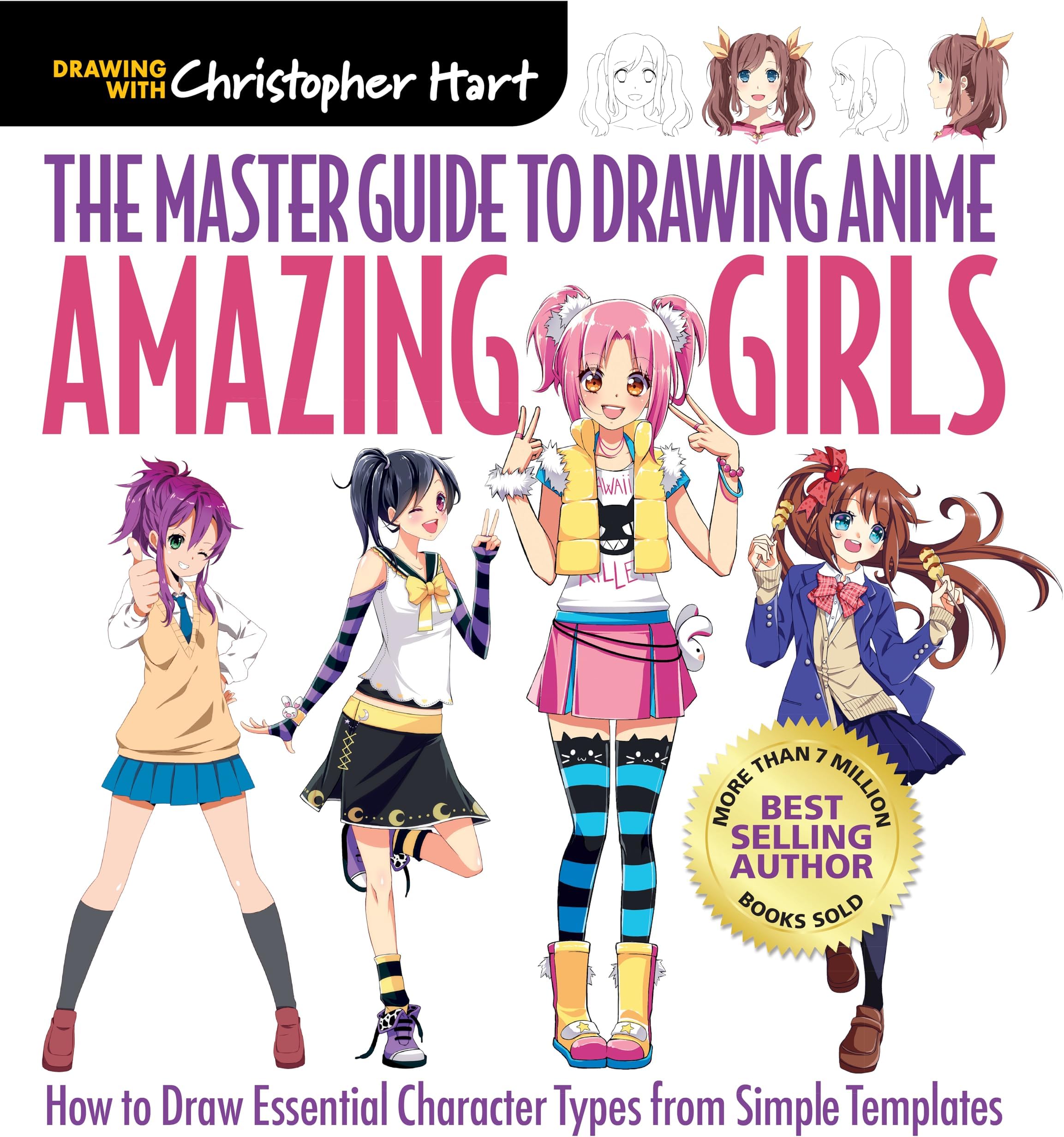
Learn how to draw unforgettable female characters doing awesome things and get your girl power on! Special features: The Complete Guide: Covers everything you want to know: how to draw faces, expressions, hairstyles, anime eyes, poses, attitudes, fashion, and more Makes Learning Easy: Packed with over 340 step-by-step illustrations, it’s perfect for the beginner; special sewn binding lets the pages lie flat as you follow along The Perfect Gift: Printed in beautiful full color throughout on quality paper, with a premium paperback binding with flaps, it’s a thoughtful present for the manga/anime lover in your life, all ages and skill levels Expert Author: Christopher Hart’s books on drawing and coloring anime and manga have sold more than a million copies In the world of anime and manga, girls have the most fun, and in The Master Guide to Drawing Anime: Amazing Girls , best-selling author Christopher Hart provides easy-to-follow templates for drawing classic female character types. From dere to genki girls to goddesses and angels, you’ll learn how to draw them all. In addition to mastering how to draw faces and figures, you’ll also get tons of inspiration for putting together fun outfits, scenes, and so much more to create original anime and manga girl characters in your own unique style, whether they are a schoolgirl, adventurer, hero, best friend, or celestial being. And to further up your skills, get the entire series— The Master Guide to Drawing Anime, Tips & Tricks , Romance , 5-Minute Characters , and Expressions & Poses —for a one-stop personal library on how to draw incredible anime and manga characters and stories. Review: Studio Ghibli and the portrayal of women in anime - We’ve all heard of Studio Ghibli, and many of us can list some of their intensely touching films, like Spirited Away (2001), Princess Mononoke (1997), and My Neighbor Totoro (1988). Hayao Miyazaki’s films have reached global popularity running over decades not only because of their fantastical visuals and unique storylines, but because they commonly have female leads while also being relevant to both children and adults of any gender. Student of MIT Professor Ian Condry and author of “Feminism and Studio Ghibli” (2015) claims that Studio Ghibli flaunts a generally feminist reputation, due to the use of female leads and the lack of stereotypes impinged upon said leads. One of the criteria first used in this paper to assess Ghibli’s feminism is the Bechdel test, which is acknowledged to be more or less insightful depending on the validity of the test itself. The Bechdel Test is a cinematic evaluation of which to be passed requires at least two women who conversate with one another about something other than a man. The author claims that the vast majority of the movies do pass this test, and although that doesn’t necessarily mean that every movie is in line with feminism, it’s safe to concur that the cinema studio itself is. To gain a deeper understanding, the author makes the point that both female and male characters are treated equally and repeatedly help one another without any obvious differences in ability, which is the main basis of which feminism is defined as in the sense of my explanation. Not only are female characters employed in nuanced ways within the unique storylines, opposed to simply tropes like hero or villain, but they employ positions of power. Nausicaa of The Valley of the Wind contains a female prophet and warrior, Howl’s Moving Castle showcases female royal advisors and a powerful female antagonist, and the town in Princess Mononoke is led by a confident woman whose independent character seeps out for the rest of the female villagers to draw inspiration from, as the women in this town take on traits that we’re used to seeing as more masculine. It is also a pattern in which the worlds that Ghibli creates are safe for the voices of women. Female characters respond to male assertion with assertion, without fear of being reprimanded. In turn, the men treat those voices with the respect that is demanded. This observation may go without saying, but as not to assume Ghibli’s popular influence, Studio Ghibli characters are never sexualized, whether it be in posture, in clothing, or in demeanor. The MIT student offers the notion that Ghibli is somewhat radical in its rejection of the Japanese norms surrounding young women. Whereas popular Japanese culture rewards girls who are cute, childlike, and docile, Ghibli creates its characters in such an opposing fashion. Sophie of Howl’s Moving Castle spends a majority of the movie being an old lady before being magically returned to her original youthful state (and not at the hands of true love’s kiss!). In this elderly mode, she learns the skills of self-assertion and finesse, traits that she carried on with her in life even after returning to her young body. Whereas popular anime series can’t help but sexualize the bodies of even relevant female characters, Ghibli has gone so far as to portray a truly entertaining story with the lead female character being in a drastically aged body, depending on zero allusions to her physical appearance or attraction. As not to conclude with naivety, the writer does acknowledge some of the studio’s downfalls in terms of cinematic stereotypes. Female characters are often portrayed cleaning, although it is always something of choice instead of force, and they are usually portrayed as closer to nature and the spiritual realm, if not a symbol of it. Crombie goes further in her critique of Studio Ghibli after the fact that she’s acknowledged similar strengths, and her assertion based on feminism is that the female characters in Ghibli films are usually depicted in value based on their usefulness to male characters and that the pattern of domesticity as mentioned previously by the MIT studying author is in part employed with the purpose to “romanticize and idealize these typically feminine processes, making ‘women’s work’ broadly appealing” (Crombie). An example given by Crombie is Sophie of Howl’s Moving Castle, the young woman turned elderly as mentioned earlier, and although the storyline follows her character and her development the most, it is the wizard Howl’s name who takes the title. I acknowledge this statement, but I must critique it, as the phrase “Howl’s moving castle” was a common saying in the film by villagers when the magical castle was spotted, in a way such as “that’s Howl’s moving castle!”. Also, it’s worth noting that many other female characters of Ghibli led the films etched with their names, such as Kiki’s Delivery Service, Princess Mononoke, Ponyo, The Secret World of Arriety, Nausicaa of the Valley of the Wind, et cetera. •••••••••••••••••••••••••••••••••••••••••••••••••••• It seems that the way people want to try to capture the essence and emotional truth in anime and manga is through the female appearance. I love studio Ghibli and the morals of the movies are very meaningful as anime is a form of art that offers more depth then what America is used to. But always the truth lies within the eyes of the beholder. This guide is quite helpful. Review: For the fashionista in your family - Grand daughter loved this. Drawing is her favorite pastime and this has it all. Great Ideas, templets and it teaches them how to draw!


| Best Sellers Rank | #62,652 in Books ( See Top 100 in Books ) #17 in How to Create Manga #20 in How to Create Anime & Cartoons #103 in Figure Drawing Guides |
| Customer Reviews | 4.8 out of 5 stars 3,325 Reviews |
L**N
Studio Ghibli and the portrayal of women in anime
We’ve all heard of Studio Ghibli, and many of us can list some of their intensely touching films, like Spirited Away (2001), Princess Mononoke (1997), and My Neighbor Totoro (1988). Hayao Miyazaki’s films have reached global popularity running over decades not only because of their fantastical visuals and unique storylines, but because they commonly have female leads while also being relevant to both children and adults of any gender. Student of MIT Professor Ian Condry and author of “Feminism and Studio Ghibli” (2015) claims that Studio Ghibli flaunts a generally feminist reputation, due to the use of female leads and the lack of stereotypes impinged upon said leads. One of the criteria first used in this paper to assess Ghibli’s feminism is the Bechdel test, which is acknowledged to be more or less insightful depending on the validity of the test itself. The Bechdel Test is a cinematic evaluation of which to be passed requires at least two women who conversate with one another about something other than a man. The author claims that the vast majority of the movies do pass this test, and although that doesn’t necessarily mean that every movie is in line with feminism, it’s safe to concur that the cinema studio itself is. To gain a deeper understanding, the author makes the point that both female and male characters are treated equally and repeatedly help one another without any obvious differences in ability, which is the main basis of which feminism is defined as in the sense of my explanation. Not only are female characters employed in nuanced ways within the unique storylines, opposed to simply tropes like hero or villain, but they employ positions of power. Nausicaa of The Valley of the Wind contains a female prophet and warrior, Howl’s Moving Castle showcases female royal advisors and a powerful female antagonist, and the town in Princess Mononoke is led by a confident woman whose independent character seeps out for the rest of the female villagers to draw inspiration from, as the women in this town take on traits that we’re used to seeing as more masculine. It is also a pattern in which the worlds that Ghibli creates are safe for the voices of women. Female characters respond to male assertion with assertion, without fear of being reprimanded. In turn, the men treat those voices with the respect that is demanded. This observation may go without saying, but as not to assume Ghibli’s popular influence, Studio Ghibli characters are never sexualized, whether it be in posture, in clothing, or in demeanor. The MIT student offers the notion that Ghibli is somewhat radical in its rejection of the Japanese norms surrounding young women. Whereas popular Japanese culture rewards girls who are cute, childlike, and docile, Ghibli creates its characters in such an opposing fashion. Sophie of Howl’s Moving Castle spends a majority of the movie being an old lady before being magically returned to her original youthful state (and not at the hands of true love’s kiss!). In this elderly mode, she learns the skills of self-assertion and finesse, traits that she carried on with her in life even after returning to her young body. Whereas popular anime series can’t help but sexualize the bodies of even relevant female characters, Ghibli has gone so far as to portray a truly entertaining story with the lead female character being in a drastically aged body, depending on zero allusions to her physical appearance or attraction. As not to conclude with naivety, the writer does acknowledge some of the studio’s downfalls in terms of cinematic stereotypes. Female characters are often portrayed cleaning, although it is always something of choice instead of force, and they are usually portrayed as closer to nature and the spiritual realm, if not a symbol of it. Crombie goes further in her critique of Studio Ghibli after the fact that she’s acknowledged similar strengths, and her assertion based on feminism is that the female characters in Ghibli films are usually depicted in value based on their usefulness to male characters and that the pattern of domesticity as mentioned previously by the MIT studying author is in part employed with the purpose to “romanticize and idealize these typically feminine processes, making ‘women’s work’ broadly appealing” (Crombie). An example given by Crombie is Sophie of Howl’s Moving Castle, the young woman turned elderly as mentioned earlier, and although the storyline follows her character and her development the most, it is the wizard Howl’s name who takes the title. I acknowledge this statement, but I must critique it, as the phrase “Howl’s moving castle” was a common saying in the film by villagers when the magical castle was spotted, in a way such as “that’s Howl’s moving castle!”. Also, it’s worth noting that many other female characters of Ghibli led the films etched with their names, such as Kiki’s Delivery Service, Princess Mononoke, Ponyo, The Secret World of Arriety, Nausicaa of the Valley of the Wind, et cetera. •••••••••••••••••••••••••••••••••••••••••••••••••••• It seems that the way people want to try to capture the essence and emotional truth in anime and manga is through the female appearance. I love studio Ghibli and the morals of the movies are very meaningful as anime is a form of art that offers more depth then what America is used to. But always the truth lies within the eyes of the beholder. This guide is quite helpful.
M**H
For the fashionista in your family
Grand daughter loved this. Drawing is her favorite pastime and this has it all. Great Ideas, templets and it teaches them how to draw!
S**P
⭐ 5 stars – Perfect gift for anime lovers!
⭐ 5 stars – Perfect gift for anime lovers! This book is amazing! I gave it as a birthday gift to a girl who absolutely loves anime — she literally jumped with joy and said it was the best present ever. I highly recommend it! Shipping was also fantastic — it arrived as a surprise within a day, straight to the hotel where she was staying on vacation. From every angle, this was a total success!
B**D
An excellent reference book.
Overall this book is great. However I personally consider it more of a reference book than a how to book. It doesn't really "teach" you anything. It just shows pictures of anime girls along with the construction shapes and then basically expects you to draw it yourself. Which is okay for Advanced-Beginners and intermediate artists but I wouldn't recommend it for absolute beginners. I find all the art to be top notch however I find the examples in the first part of the book(up until page 86) significantly better than the second part of the book. You can tell that the artists that Mr. Hart commissioned for this book are experts in drawing anime and know what they are doing - I am very impressed by their work. In fact out of all the american made how to draw anime/manga books This one and a few of Chris Harts other recent Anime books, feature Anime characters that are the closest to the type of you'd find in actual Japanese anime. Many other american made how to draw manga books(including some of Mr. Hart's older books) feature art that is Americanized and/or poorly drawn and doesn't compare well to authentic anime. The authors of these books often think all you need to be "Anime" is big eyes. It is refreshing to get a book that features anime character's that look very close to the ones you'd see on TV or Crunchyroll. Again this is in excellent book for references and for practice but to learn the basic techniques and skills of drawing for absolute beginner's I'd recommend Mark Crilley's "The Drawing Lesson". Overall I consider this to be an excellent book and earns my recommendation. The artists who did the art for this book did an amazing job and I commend them on their work.
A**E
Amazing guide to drawaing anime girls
I really like this book, it can be a good kick start to drawing anime. I used it to learn proportion. Im an intermediate artist, still learning. But this is a great book to learn how to draw anime girls, the instructions are easy to understand an follow. This photo I attach is something i drew, not from the book, but from what i learned from the book about facial proportions.
E**S
Wowsers. Another great find.
B**R
Very colorful and great for manga faces, eyes, and even bodies and outfit ideas!
This is an awesome book. Really high quality pages and examples, the pictures and colors are amazing! This is my first manga instructional book and it will not be my last. In fact, I received another Christopher Hart book just yesterday, even though I still have much more to learn from this book too. I went from not being able to draw manga, to using the tips provided, and now I am just starting to sketch out my own characters based on what I’ve learned. Which is why I bought the book in the first place.
Y**G
This book is great
Just look at how good my daughter’s skills have gotten, this book is great! Even for beginners
あ**あ
Very nice for my girl
Very good my girl likes it
M**L
Amazing!!
Bought for my anime fan’s daughter, and she loves this.. Thanks, seller and Amazon
L**L
Excellent si vous avez déjà de bonnes notions de dessin manga
J'ai lu à peu près tout et son contraire sur cette collection de livres. Sur Amazon, les avis sont généralement excellents mais sur les forums les avis sont beaucoup plus mitigés. Il faut savoir que l'auteur présente chacun de ses livres sur youtube, aussi on peut le feuilleter avec lui, ce qui est vraiment génial pour avoir un bon aperçu de ce que l'on s'apprête à acheter. Je suis un dessinateur adulte. Je maîtrise déjà les figures de bases et les proportions et je cherchais un livre qui pourrait me servir de références pour les poses, les coupes de cheveux, les vêtements.... Pour cet usage, cette série de livres et celui-ci en particulier dédié aux personnages féminins en particulier est excellent. Les modèles sont vraiment très beaux, inspirants, les poses sont variées. Les artistes contributeurs sont vraiment très doués. Là où je comprends les avis négatifs que j'ai pu lire, c'est sur le côté étape par étape. Si vous n'avez jamais dessiné un personnage de manga, appris les proportions, les rudiments de l'anatomie... vous aurez toutes les difficultés du monde à vous rapprocher de ces modèles car la première étape de chaque dessin est déjà très avancée et nécessite déjà de solides bases pour pouvoir les reproduire. Autre critique lu et que j'ai compris : ce livre vous présente des personnages dans des poses préétablies et ne vous explique pas vraiment comment créer ses propres poses ou variations d'anatomie ce qui aurait permis d'acquérir par la suite une autonomie et se détacher progressivement des modèles. Aussi, je pense que ce n'est pas un livre ou une série adaptée aux débutants complets, il faut d'abord acquérir de bonnes bases. Mais il est parfaitement adapté à un public qui les as déjà et qui souhaite progresser en s'inspirant de ces références qui je le redis, pour cet ouvrage, sont vraiment superbes. Pour ma part, je suis conquis et j'achèterai sans hésiter d'autres ouvrages de la série par la suite.
M**.
Great for beginners
I recently got this for my 11th birthday, and have been drawing from it ever since. I was a total beginner (and I still am) and getting this really helped me learn. I've been watching myself improve because of this book. The author has a very witty and entertaining style of explaining things, which makes the drawing a lot more fun. The drawing templates are very easy to understand as well. Overall, this is a brilliant book and I highly recommend it.
S**D
Excellent book for someone wants to learn how to draw anime
Trustpilot
1 week ago
2 weeks ago