
Desertcart purchases this item on your behalf and handles shipping, customs, and support to USA.
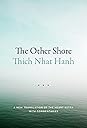
A radical new interpretation of one of the most important Buddhist sutras, the Heart Sutra—from the great Zen Master and author The Miracle of Mindfulness . Thich Nhat Hanh’s accessible reading of the Heart Sutra demystifies the foundational teachings of the Buddha, making this a perfect introduction to Buddhism for beginners. In September 2014, Thich Nhat Hanh completed a profound and beautiful new English translation of the Prajñaparamita Heart Sutra, one of the most important, well-known Buddhist sutras and part of the very foundation of Buddhist thought. The Heart Sutra is recited daily in Mahayana temples and practice centers throughout the world. This new translation came about because Thich Nhat Hanh believes that the patriarch who originally compiled the Heart Sutra was not sufficiently skillful with his use of language to capture the intention of the Buddha’s teachings—and has resulted in fundamental misunderstandings of the central tenets of Buddhism for almost 2,000 years. In The Other Shore , Thich Nhat Hanh provides the new translation with commentaries based on his interpretation. Revealing the Buddha’s original intention and insight makes clear what it means to transcend duality and pairs of opposites, such as birth and death, and to touch the ultimate reality and the wisdom of nondiscrimination. By helping to demystify the term “emptiness,” the Heart Sutra is made more accessible and understandable. Review: Great book, worth the money, brings peace of mind. - Great book. One of my favorite Thich Nhat Hanh books. I own 7, and this might be my number 1! Review: Accessible Reading of a Difficult Sutra - The Other Shore.... is one of the most important texts I have read on deciphering Buddhist sutras. It offers a revision of some words in the original text, which makes the sutra completely understandable to this Western Buddhist. It is concise, thoughtful, and beautiful. I will be keeping this text in my library.
| Best Sellers Rank | #106,196 in Books ( See Top 100 in Books ) #15 in Mahayana Buddhism #54 in Buddhist Sacred Writings (Books) #140 in Zen Philosophy (Books) |
| Customer Reviews | 4.8 out of 5 stars 956 Reviews |
J**N
Great book, worth the money, brings peace of mind.
Great book. One of my favorite Thich Nhat Hanh books. I own 7, and this might be my number 1!
T**R
Accessible Reading of a Difficult Sutra
The Other Shore.... is one of the most important texts I have read on deciphering Buddhist sutras. It offers a revision of some words in the original text, which makes the sutra completely understandable to this Western Buddhist. It is concise, thoughtful, and beautiful. I will be keeping this text in my library.
D**A
Very Insightful Update
I have previously read Thay’s previous commentary on the Heart Sutra, and find with this new translation and commentary, wonderful. Thay has managed to explain such as complex teaching in such a down to earth, easily graspable way, to benefit ppl on their path, gasho
W**L
"When the student is ready, the teacher arrives"
Over the last decade or so I've read Thich Nhat Hanh's translation & commentary of the Heart Sutra in "The Heart of Understanding" over a dozen times (if I were to guess). I usually give the book away when I'm done, so I've bought the book many times. When I went to get another copy I was shocked when it wasn't in print anymore! I was even more surprised to find a new version with a "new" translation and even a new title. The new translation gets rid of lots of liguistic baggage, and makes it more understandable to a western audience. The word "emptiness" used in buddhism is often lost in translation, and this translation mitigates that some. It's really crazy how different yet more clear the translation is, albeit it's still cryptic on many levels! For context, the original translation was 2 pages & book was 49 pages total. New version the translation is 3 pages & entire book is 133 pages. "The Other Shore" is quite a substantial update! Thich Nhat Hanh is definitely my most influential teacher (outside mt engineering professors 😉), and he's literally on his death bed, so this was a surprising book at a pivotal point in my life... In any case, this copy will definitely be given away! ⚡☸️⚡
D**A
The Other Shore, Thich Nhat Hanh
The book presents the most unintuitive aspects of Buddhism to a general audience, such as emptiness, no-self, and impermanence. Hanh is able to aptly explain the fine-tuned way in which Buddhists attempt to navigate between extremes of being and non-being, of emptiness and form, and even briefly comments on mind and body problems in modern scientific investigations. Overall the book presents Buddhism as offering a relief from the suffering of the modern individual, anxious about one’s own place in the world and what to do about the mental strain of enormous problems like climate change or world hunger while retaining a strong sense of compassion and even-temperateness. When I reflect on the book I wish I had come across it earlier (say 2016) and that I had had more exposure to the wisdom that Buddhism offers to the world community in the 21st century. I look forward to reading more from Thich Nhat Hanh.
S**D
My fave of his along with Cultivating the Mind of Love
There is a lot of repetition, which at times annoyed me when I had already gotten, but I appreciated when I didn't and needed further examples in hopes to understand one of them. To get a lot out of it you have to invest time to not only read but to think stop and reflect. You need some fundamentals first to better understand it, and similar to Old Path, White Clouds there can be some fluff between gems, but the gems are worth it. Unlike Old Path, the fluff here is repetition versus true fluff. An easier read is No Mud, No Lotus, but if you have some basics down and want more this is where to go. Cultivating The Mind of Love also pairs well with this, especially for him to admit he was in love with a nun.
S**A
A Floating Down Leaf
I have several comentarys to the Heart Sutra and I felt compelled to get this book too. Instead of a direct explanation of Emptiness Thay unfolds the Dependent Origination teaching and reasoning. He manages to touch my heart by using tender words and beautiful poetry, introducing progressively the students to the key points of the text that leads to the state of Wisdom (see the Life of a Leaf chapter). His approach is to point out again and again the interdependent and non-dual ground of reality like a finger pointing to the moon. Thay also explains that he felt the need to write this comentary in order to dispel the danger of missundertand the Sutra as a nihlistic view, and I believe he does it succesfully. Nevertheless Thay makes some odd and wrong ascertions like, "Buddha Nature is the nature of plants and minerals". From where he got this??? In any Sutra such claim is made, on the contrary it is explained that Sugathagarbha it is not present in such unanimated objects. I also disagree with his explanation of the Four Noble Truths in page 95, to me he misses a key word in his coment; what we call suffering is just a mere empty appearence that arises as such due to our ignorance and karma. Suffering has the the same quality of the suffering in a dream; it's totally Illusory. It's not Real. In page 119 - 120, Thay makes another strange claim associating tantrik practitioners of the Mantrayana in ancient India with "superstition and magical thinking". He doesn't explain from where he gets this idea, but who does explain it is Red Pine in his own book. Thay has tremendous and deep qualitys as a spiritual Master and leader, but I believe schoolastism was not one of them. Personally I see this comentary as a first step in a long journey to access the space of Prajña, and for those devotes students of Chan/Zen tradition I recommend you also to study the Red Pine's comentary, more detailed. From the bottom of my heart, Thank You Thay for have written this work that brings us closer to the freedom of Awakening.
J**N
A great translation that avoids ambiguity
I am not a fan of Thich Nhat Hanh or the cult of personality that has sprung up around him, however, this is the best english translation of the Prajnaparamita. Direct translations have always been a problem because we westerners lack the cultural context to intuitively understand the intended meanings and implications of the original author's word choices. Thich cuts through this with subtle rephrasing that makes the text much less ambiguous. He also goes on to not only justify these alterations, but to provide parables that go a long way to illustrate the ideas they convey. Afterwards it becomes quite obvious what the original authors intended to convey. I highly recommend it for anyone interested in deepening the understanding of buddhist philosophies.
A**I
無目的という生き方
般若心経に対しては、毎日毎日、一心に読誦することが大事、そうすることで悟りに近づけるというようなイメージを持っていたけれど、じつは般若心経の内容を深く、正しく理解することで、「悟る」ことができる。般若心経の内容にこんなに深くて力強いものがあり、それを理解することが直接悟りにつながるとは、知らなかった。
P**E
Book that brings Enlightenment
This book is truly GEM of the so many books written by Ven. Which Naht Hanh. The insights and the explanation of Buddha's most precious teachings are so given is so simple and easy to understand language. That's the mastery of Bhante. I strongly recommend everyone to have this book and read it. Peace and joy is guaranteed. For me bhante is Arihant. Namo Buddhay
C**N
Maravillosamente claro
Thitch Nah Hanh explica el corazón del budismo de forma sencilla, accesible, yendo al grano. Lo he encontrado tremendamente útil e inspirador.
D**1
Essenziell!
Danke, Thay! 🧘🏻♂️
S**E
Profound insight into the Buddhist doctrine of Śūnyatā 'Emptiness'.
Thich Nhat Hanh does a superb job translating one of the most important and yet subtle texts of the ancient Mahayana Buddhist canon, the Heart Sutra (Sanskrit: Prajñāpāramitāhṛdaya Sutra, Chinese: Xīnjīng). Translated into English variously as the 'Heart Sutra', 'The Perfection of Wisdom of the Heart Sutra' etc and by Nhat Hanh as 'The Insight That Brings Us To The Other Shore'. Thich Nhat Hanh, elucidates how the historical rendering of the Sutra into English as well as other languages further confounded its highly subtle meaning, which is a crystallisation of the Mahayana Buddhist doctine of Śūnyatā, often translated as 'Emptiness, Voidness, Nothingness'. Thich Nhat Hanh, tries to highlight the subtlety of the concept by highlighting the fact it can easily be misunderstood as an absolute nihilism, that nothing truly exists and everything is empty, but he reveals that it is in fact really a way to conceive of the ultimate interconnectedness of all things in existence and even non-existence. After Thich's translation of the short Heart Sutra the remainder of the book is the Zen Buddhist teacher's commentary and interpretation of the deeper meaning of the Heart Sutra, which is one which explores how nothing in reality exists independent of all other things, even the concept of Emptiness itself is Empty, as it is reliant on non Emptiness for it's existence. The subtle point being made is that nothing exists....intrinsically, nothing really exists independently of all other things, hence the idea of an abstraction or a distinction which language gives us is ultimately illusory. Nothing can be contained, nothing can be isolated, everything in reality is intimately interconnected. Thich Nhat Hanh gives the example of the very paper you hold in your hand as you are reading the book, it exists because the tree it was made from sucked nutrients from the soil, absorbed water from its roots coming from rain, it needed the sun's light to grow, hence even the book in your hands is ultimately contingent on all of those conditions, the earth, the rain, the sun, and in turn they are contingent on the big bang, hence everything is really a web of interconnection, there is no independently existent thing, everything is in a sense One, but in constant flux, nothing is created or destroyed, nothing begins or ends it just shifts into different states, but really it is all one thing. Hence distinct things, like 'I', 'tree', 'book', 'flower', 'sun' are 'Empty' of intrinsic independent existence, they are instead a web of interconnectedness pervading all of reality and existence. The Heart Sutra in fact says exactly this succinctly as Nhat Hanh translates it "Listen Śāriputra all phenomena bear the mark of Emptiness: their true is the nature of no Birth no Death, no Being no Non-Being, no Defilement no Purity, no Increasing no Decreasing" illustrating this universal relativity. Thich Nhat Hanh also illustrates how the deeper subtleties and meaning of the Heart Sutra have often been misunderstood in some traditional Buddhist contexts as the Sutra is often recited or chanted like a mantra, and commonly people do not truly grasp its meaning and see it as a sort of magical formula. Thich is opposed to such an approach which fails to comprehend the texts subtle and yet highly profound meaning, indeed the Sutra functions in some senses as the succinct exposition of the apotheosis or rather "enlightenment" of the Bodhisattva Avalokitesvara (Chinese: Guanyin, Japanese: Kannon). As he/she realises that all things are empty (of independent self existence, and are hence interrconnected, neither exists without the whole other). I appreciate Thich Nhat Hanh's take here, which highlights the ancient Heart Sutra's power and sacredness lies not necessarily in its status as a magical mantra but rather a profoundly deep and yet succinct summary of the Buddhist concept of 'Emptiness' one that can reap a profound shift in perception in a careful and reflective reader/listener. Overall I think Thich Nhat Hanh does a superb job of conveying what is a highly subtle and easily misunderstood concept in Buddhist philosophy through his simple yet elucidating translation of the Heart Sutra and his commentary. The Zen teacher renders accessible the oft misconstrued concept of 'Emptiness' by highlighting that instead of a nihilistic idea of 'nothingness' it is really about everything in reality being a web of interconnection and that fundamental divisions of this web are merely arbitary and non of those divisions have independent self-existence as they rely on their opposites or other conditions to arise. You cannot be You independently. You can only be You, because of your mum and dad, your experiences etc. They are all conditions, you cannot exist in a vaccuum, you are really part of a wider web of being. Nhat Hanh ends his book with a discussion on how this way of thinking can lead to genuine practical solutions or benefits for humanity as a whole, as seeing the interconnectedness of all things can further a more ecological attitude, as we see the world and all those in it as related, and hence we care for all things as if we are caring for ourselves, we cease to see things as separate, this idea I found to be particularly poignant and is to me a valuable benefit of a non-dualistic framework of understanding. So to conclude, I strongly recommend Thich Nhat Hanh's translation and commentary of the ancient Mahayana Buddhist Heart Sutra, a text that has been extremely influential in Mahayana thought especially East Asian Mahayana, where it is still regarded as one of the most sacred Sutras. A text that was translated from Sanskrit into Chinese, then Japanese and various other East Asian languages, is brought to life and made clearly comprehensible by an insightful Buddhist teacher, Thich Nhat Hanh.
Trustpilot
3 weeks ago
2 months ago