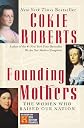
Founding Mothers: The Women Who Raised Our Nation ― Journalist Cokie Roberts' NYT Bestselling American History Book About Female Patriots
Product ID: 3652791
Desertcart purchases this item on your behalf and handles shipping, customs, and support to USA.
Legendary journalist Cokie Roberts' New York Times bestseller, Founding Mothers, is an intimate and illuminating look at the fervently patriotic and passionate women whose tireless pursuits on behalf of their families—and their country—proved just as crucial to the forging of a new nation as the rebellion that established it. While much has been written about the men who signed the Declaration of Independence, battled the British, and framed the Constitution, the wives, mothers, sisters and daughters they left behind have been little noticed by history. The late #1 New York Times bestselling author Cokie Roberts brings us the untold stories of women who fought the Revolution as valiantly as the men, often defending their very doorsteps. Drawing upon personal correspondence, private journals, and even favored recipes, Roberts reveals the often surprising stories of these fascinating women in the American Revolution, bringing to life the everyday trials and extraordinary triumphs of individuals like Abigail Adams, Mercy Otis Warren, Deborah Read Franklin, Eliza Pinckney, Catherine Littlefield Green, Esther DeBerdt Reed, and Martha Washington—proving that without our exemplary women, the new country might have never survived. This essential work of American history reveals the stories of the women who built a nation from the ground up: Women’s History: Go beyond the men who signed the Declaration and meet the wives, mothers, and sisters whose contributions were crucial to the forging of a new nation. Primary Source History: Drawn from private journals, personal letters, and even family recipes, this narrative brings the everyday trials and triumphs of colonial women to vivid life. Revolutionary War Heroines: Discover the patriotism of women like Abigail Adams, Mercy Otis Warren, and Martha Washington, who defended their homes and influenced policy while the men were at war. Colonial America: Explore the domestic sphere of the 18th century and see how women managed households, plantations, and businesses, proving essential to the survival of the new country. Review: A Wonderful Book! - I thoroughly enjoyed Founding Mothers: The Women Who raised Our Nation, by Cokie Roberts. The book was informative and while told with respect and reverence, there just enough of a sense of humor to convey that we are all the same in human nature, whether of the 18th or 21rst centuries. The timeline was such that the reader can see and to a large extent feel the unfolding of rebellion, war, independence, and a new, tentative, national government. In reading the notes and introduction I hadn't appreciated just how difficult it would be to navigate the longhand of the day and to "translate" its intent into enough modern day usage and spelling so we can easily understand what the women of the day were trying to say. Some museums I have been to have displayed large examples of such writing and I find myself going cross-eyed trying to read it. I thank Cokie Roberts and whoever assisted her in these endeavors. (I also find myself talking and writing in 18th century-ese.) I want to posthumously shake some of our female ancestors for having destroyed too much of their correspondence. Didn't they realize that I, much less Cokie Roberts, would want to read every word? Well maybe they did but I imagine they were thinking more of their contemporaries and how they might choose to use their letters. Still and all how I wish we could read more of the thoughts of Martha Jefferson, Martha Washington, Betsey Hamilton than we have. I have recently taken a huge interest in early American history and I have some thoughts, comments, and questions about the substance of the book. In Chapter Two the author asks if Abigail was being playful in regard to her "remember the ladies" letter. I think she was being playful in one sense and most deadly serious in another. The substance and intent of the letter was as serious as could be, don't leave the ladies out of all political consideration! But her line, "we are determined to foment a rebellion, and will not hold ourselves bound by any laws in which we have no voice or representation" shows she knew it would probably make her husband grin at the ironic references to his own similarly written grievances against the British Crown. The fact that John answered in a joking manner indicates to me that he knew at least in part she was trying to make him smile. The references were playful to soften the letter although the intent was serious. And one wonders just how seriously Abigail actually thought she and her contemporaries could foment a rebellion. Was she referring to posterity? I would like to think so. I believe many of the letters of the day were written with future generations of readers in mind and we can only assume that Abigail envisioned the women's movement that would begin--when, where? Here is where my reading fails me. With Emmeline Pankhurst in Britain in the 1870's? I don't know. As I have progressed with my other reading, various questions have occured to me which have not been answered to my satisfaction. One among them, Why did the British give up after Yorktown? I understand in general why they must have come to realize that to continue the effort at so great a distance and expense was ultimately useless. But which British official first thought, felt, wrote, it's time to change our thinking? I would like to know of any book that goes into the British thinking after Yorktown. The books I have read so far tell of Yorktown, then of peace negotiations and the peace treaty. But what took place in the confines of the British ministry between Yorktown and the beginning of serious peace negotiations? It is the details which fascinate. Just as many American women of the time encouraged their husbands to continue to resist, which English politician's wife whispered in her husband's ear, "Enough is enough!" Another question--When was the "U" in United States first capitalized? Jefferson, or someone, chose not to capitalize it in the Declaration of Independence which indicates to me that they didn't think of the united States as an official name yet. I assume everyone in America has an idea for a television series and so do I. Cokie Roberts has written so many stories of early American women, each one more fascinating than the next. Why not a series based on these stories? The woman who dressed as a man--Robert Shurcliff (Deborah Sampson), the spies and aids, Nancy Hart, Ann Gwinnett, the fundraisers, Esther DeBerdt, and more. I want to conclude by once more thanking Cokie Roberts for Founding Mothers. What a wonderful book that I look forward to rereading. Review: Founding Mothers - Nonfiction/History/Biography 384 pages / 490 KB Footnotes / Endnotes: Yes (not identified in text) Illustrations: No Suitable for eReaders: Yes 4 stars This was a fun read. It was obvious Cokie Roberts had a good time both researching and writing this book. She brought not only the women alive, but the men they were attached to. Her comments directly to the reader were wonderful, especially her comments about how Congress hasn't changed one bit from the first to now. Even if you don't particularly care for history, I think you will enjoy this book. The women are the centerpiece, with the men on the periphery. If you've ever wondered what Martha Washington thought and did for George, this is the book to tell you. I truly wish she had carried the bios out a bit further - what happened to Martha after George died? Sally Hemings is barely mentioned, and yet my understanding is, she had a large bearing on Jefferson after his wife died, she held the keys (literally) to his house, and ran it. As far as this book went, it was a great read, I just would have appreciated more on all these fascinating women. I read this on my Kindle Fire, and saw no wee tiny blue numbers indicated foot/endnotes. At about 60% of my way through the book, I came upon the Cast of Characters, then a couple recipes (the one for crown soap was how to cut the soap, not actually make it) and then (I'm guessing here, I didn't really check) about 35% of end notes. Most seemed to be bibliography, and though they were by chapter, it was too difficult to find where the original was, so I didn't bother to look. Normally, I read all the notes, but these just weren't worth the trouble to read. (Suggestion for Cokie: See how Laurence Bergreen does his end notes.) Do I recommend this book? Yes! (desertcart has a Note for Parents that the reading level of this book is Adult. I think any young person who reads beyond text messages or comics, can handle it. Personally, I think children should be encouraged to read above their grade level, but then, I was reading adult books when I was in the fifth grade;-)
| Best Sellers Rank | #28,419 in Books ( See Top 100 in Books ) #7 in Canadian Historical Biographies #28 in Historical Latin America Biographies #38 in Sociology of Social Theory |
| Customer Reviews | 4.3 out of 5 stars 1,339 Reviews |
B**N
A Wonderful Book!
I thoroughly enjoyed Founding Mothers: The Women Who raised Our Nation, by Cokie Roberts. The book was informative and while told with respect and reverence, there just enough of a sense of humor to convey that we are all the same in human nature, whether of the 18th or 21rst centuries. The timeline was such that the reader can see and to a large extent feel the unfolding of rebellion, war, independence, and a new, tentative, national government. In reading the notes and introduction I hadn't appreciated just how difficult it would be to navigate the longhand of the day and to "translate" its intent into enough modern day usage and spelling so we can easily understand what the women of the day were trying to say. Some museums I have been to have displayed large examples of such writing and I find myself going cross-eyed trying to read it. I thank Cokie Roberts and whoever assisted her in these endeavors. (I also find myself talking and writing in 18th century-ese.) I want to posthumously shake some of our female ancestors for having destroyed too much of their correspondence. Didn't they realize that I, much less Cokie Roberts, would want to read every word? Well maybe they did but I imagine they were thinking more of their contemporaries and how they might choose to use their letters. Still and all how I wish we could read more of the thoughts of Martha Jefferson, Martha Washington, Betsey Hamilton than we have. I have recently taken a huge interest in early American history and I have some thoughts, comments, and questions about the substance of the book. In Chapter Two the author asks if Abigail was being playful in regard to her "remember the ladies" letter. I think she was being playful in one sense and most deadly serious in another. The substance and intent of the letter was as serious as could be, don't leave the ladies out of all political consideration! But her line, "we are determined to foment a rebellion, and will not hold ourselves bound by any laws in which we have no voice or representation" shows she knew it would probably make her husband grin at the ironic references to his own similarly written grievances against the British Crown. The fact that John answered in a joking manner indicates to me that he knew at least in part she was trying to make him smile. The references were playful to soften the letter although the intent was serious. And one wonders just how seriously Abigail actually thought she and her contemporaries could foment a rebellion. Was she referring to posterity? I would like to think so. I believe many of the letters of the day were written with future generations of readers in mind and we can only assume that Abigail envisioned the women's movement that would begin--when, where? Here is where my reading fails me. With Emmeline Pankhurst in Britain in the 1870's? I don't know. As I have progressed with my other reading, various questions have occured to me which have not been answered to my satisfaction. One among them, Why did the British give up after Yorktown? I understand in general why they must have come to realize that to continue the effort at so great a distance and expense was ultimately useless. But which British official first thought, felt, wrote, it's time to change our thinking? I would like to know of any book that goes into the British thinking after Yorktown. The books I have read so far tell of Yorktown, then of peace negotiations and the peace treaty. But what took place in the confines of the British ministry between Yorktown and the beginning of serious peace negotiations? It is the details which fascinate. Just as many American women of the time encouraged their husbands to continue to resist, which English politician's wife whispered in her husband's ear, "Enough is enough!" Another question--When was the "U" in United States first capitalized? Jefferson, or someone, chose not to capitalize it in the Declaration of Independence which indicates to me that they didn't think of the united States as an official name yet. I assume everyone in America has an idea for a television series and so do I. Cokie Roberts has written so many stories of early American women, each one more fascinating than the next. Why not a series based on these stories? The woman who dressed as a man--Robert Shurcliff (Deborah Sampson), the spies and aids, Nancy Hart, Ann Gwinnett, the fundraisers, Esther DeBerdt, and more. I want to conclude by once more thanking Cokie Roberts for Founding Mothers. What a wonderful book that I look forward to rereading.
L**.
Founding Mothers
Nonfiction/History/Biography 384 pages / 490 KB Footnotes / Endnotes: Yes (not identified in text) Illustrations: No Suitable for eReaders: Yes 4 stars This was a fun read. It was obvious Cokie Roberts had a good time both researching and writing this book. She brought not only the women alive, but the men they were attached to. Her comments directly to the reader were wonderful, especially her comments about how Congress hasn't changed one bit from the first to now. Even if you don't particularly care for history, I think you will enjoy this book. The women are the centerpiece, with the men on the periphery. If you've ever wondered what Martha Washington thought and did for George, this is the book to tell you. I truly wish she had carried the bios out a bit further - what happened to Martha after George died? Sally Hemings is barely mentioned, and yet my understanding is, she had a large bearing on Jefferson after his wife died, she held the keys (literally) to his house, and ran it. As far as this book went, it was a great read, I just would have appreciated more on all these fascinating women. I read this on my Kindle Fire, and saw no wee tiny blue numbers indicated foot/endnotes. At about 60% of my way through the book, I came upon the Cast of Characters, then a couple recipes (the one for crown soap was how to cut the soap, not actually make it) and then (I'm guessing here, I didn't really check) about 35% of end notes. Most seemed to be bibliography, and though they were by chapter, it was too difficult to find where the original was, so I didn't bother to look. Normally, I read all the notes, but these just weren't worth the trouble to read. (Suggestion for Cokie: See how Laurence Bergreen does his end notes.) Do I recommend this book? Yes! (Amazon has a Note for Parents that the reading level of this book is Adult. I think any young person who reads beyond text messages or comics, can handle it. Personally, I think children should be encouraged to read above their grade level, but then, I was reading adult books when I was in the fifth grade;-)
A**R
Such important history that needs to be told.
Outstanding research was done for this book. These are just amazing stories. Loved it.
M**.
The Founding Mothers by Cokie Roberts would be a good book to read just before reading James D
The Founding Mothers by Cokie Roberts would be a good book to read just before reading James D. Best's Tempest at Dawn. Robert's book deals with the wives, sisters and mothers of the founding fathers. These women who supported the Revolution, who mostly stayed home raising their children and running their homes, took on the additional burden of running their husband's farms and business while their men served in the army or the Continental Congress. Perhaps the most famous of those on the home front was Abigale Adams who was so good at what she did that eventually her husband, John Adams gave her complete decision making so she could collect legal debts, buy land and unofficially have the responsibilities thought to be too burdensome and complex for women to handle. Mercy Otis Warren wrote pamphlets, poems and plays supporting the Revolution, and eventually wrote the first history of that war. Women like these had a complete grasp of the politics of their times though they were not allowed to vote. Many of them like the legendary Mollie Pitcher accompanied their enlisted husbands, stepping in and taking over duties of the fallen. Some disguised themselves as men and fought alongside them. At headquarters, Martha Washington, Kitty Greene and Lucy Knox formed a lasting friendship as they followed their husbands from Boston, Morristown, Vally Forge and finally to victory. The book follows the fortunes of these women as well as many other wives and mothers from all over the thirteen colonies as they managed the homefront and became spectacular at fund raising and other tasks once thought to be beyond their abilities. The book covers the years from the Stamp Act through John Adams' election as President of the new nation of free and equal men. Equality for women is still not complete. Ms Roberts has done a masterly job at researching the lives of the women of the Revolution. Another bonus is her ability to tell an exciting story which is hard to put down.
A**W
My thoughts of the book
As I look back on this book I have to say that the book was very informative by providing a very detailed account of the women who had an active role in shaping this country and its men into what it is today. There are very few books that are capable of giving such an account. However, while the book was very informative in certain areas I felt that it got caught up in the day to day activity of each woman and failed to look at the bigger picture of how their actions led to certain important circumstances. Also throughout the book I kept getting the feeling that I wasn't able to get the full scope of each woman's character. Part of this can be contributed to the lack of written word left by the women of the era and so I felt as this couldn't be help. While this would have been easy to overlook overall what I didn't like was that I felt that Cokie Roberts attempts to expand on the records and accounts and build them up as a beacon for the women of generations to come. Overall decent book, but lacking from its narrow focus.
C**Y
But it. Read it!
Love Cokie and her approach.
K**E
Great for our 250th Independence Day.
One of tops 4 about women whose husbands wrote our constitution. Shirt histories of the ladies, some great talking points and some pictures. Fast reading; interesting recipes at end.
V**N
Remembering "The Ladies"
Cokie Roberts thoroughly enjoyed writing this tribute to the wives of the men who signed the Declaration of Independence in 1776, and other prominent women of the era . The book begins in the early 1700's. It ends when the presidency of George Washington ends and John Adams is elected, in 1797. I appreciated the notes and the cast of characters including names of the signers of the Declaration of Independence, the signers of the Constitution, the players in the new government, women writers of the period, and famous soldiers and statesmen during the revolutionary war, which are included in the back of the book. Excerpts from many letters are included and are so beautifully written.Let your imagination wander as you read vivid accounts of the sacrifices made by families who wanted independence from England - the yellow fever and smallpox epidemics, the building of a military, the contributions made by exceptional women such as Abigail Adams and Martha Washington, as well as Phillis Wheatley, Mercy Otis Warren, Sarah Livingston Jay, and many others portrayed here. Cokie writes as if she is having fun telling us so many interesting facts about the "founding families", and I had fun learning more about them and relearning early American history. The true story of Benedict Arnold and his wife was enlightening as well as the character of Alexander Hamilton. You will enjoy learning about influential women in this book. Cokie has inserted some of her own remarks to lighten up the picture, and she carefully recounts the contributions of each state as they represented the new government at that time; the conflicts with the British,the alliance with the French, as well as inevitable partisan politics.
K**G
Five Stars
An excellent, enjoyable and informative read.
S**N
Souvent les femmes...
Je n'en suis qu'au début du livre, mais je suis déjà conquis. Non pas vaincu, mais séduit et touché par ces Grandes Dames qui, elles, devaient, ou plutôt se faisaient un devoir de participer aussi, de près ou moins, aux trames politiques de leur époque. Elles doivent faire deux fronts : l'implication civique ou plus, politique, et la tenue de leur Maison (enfants, souvent nombreux, réceptions, etc.). Bien sûr l'époque couvre encore la sombre période esclavagiste, mais ce ou ces derniers semblaient, sous la responsabilité de ces femmes, être un peu mieux considérés. Ceci n'enlève rien, et c'est mon opinion, au caractère insupportable de la notion même d'esclave à quelque degré que ce soit (d'ailleurs le 13 è amendement n'a pas tout réglé). On apprend ce qu'étaient les conditions de vie, dures, incertaines, mais aussi pleines d'espérances et de possibles, de ces décades cruciales pour l'Amérique, et donc pour le monde. Incontournable pour qui s'intéresse ne serait-ce qu'un peu à ce pays.
Trustpilot
1 month ago
1 month ago