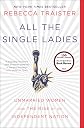
All the Single Ladies: Unmarried Women and the Rise of an Independent Nation
Product ID: 35087372
Desertcart purchases this item on your behalf and handles shipping, customs, and support to USA.
The New York Times bestselling investigation into the sexual, economic, and emotional lives of women is “an informative and thought-provoking book for anyone—not just the single ladies—who want to gain a greater understanding of this pivotal moment in the history of the United States” ( The New York Times Book Review ). In 2009, award-winning journalist Rebecca Traister started All the Single Ladies about the twenty-first century phenomenon of the American single woman. It was the year the proportion of American women who were married dropped below fifty percent; and the median age of first marriages, which had remained between twenty and twenty-two years old for nearly a century (1890–1980), had risen dramatically to twenty-seven. But over the course of her vast research and more than a hundred interviews with academics and social scientists and prominent single women, Traister discovered a startling truth: the phenomenon of the single woman in America is not a new one. And historically, when women were given options beyond early heterosexual marriage, the results were massive social change—temperance, abolition, secondary education, and more. Today, only twenty percent of Americans are married by age twenty-nine, compared to nearly sixty percent in 1960. “An informative and thought-provoking book for anyone—not just single ladies” ( The New York Times Book Review ), All the Single Ladies is a remarkable portrait of contemporary American life and how we got here, through the lens of the unmarried American woman. Covering class, race, sexual orientation, and filled with vivid anecdotes from fascinating contemporary and historical figures, “we’re better off reading Rebecca Traister on women, politics, and America than pretty much anyone else” ( The Boston Globe ). Review: Honest Look at a Growing Demographic - There is so much to love in this book. In many ways it serves as a validation of single life. There are stories of women with careers, friendships, hobbies, and children that fulfill them, all without a spouse. Unmarried women have helped to usher in major social change, including abolition and the labor movement. Traister illustrates that single women are multi-faceted and have full lives beyond trying to find a man. All women who spent some portion of their adult life single will see themselves in this book. Just to be clear, Traister doesn't disparage marriage. In fact, she is married with two children herself, although she was in her mid-30s before that happened. This book is about women who spend at least some portion of their adults lives unmarried. Most of the time that's due to marrying later, but there are divorced women and women who live with serious partners as well. The point is that this demographic has been growing steadily larger, and is becoming a political, social, and economic force. The best part of this book is the history, which focuses on the late 1800s to the present. It's always refreshing when someone acknowledges that the "traditional" 1950s model of a house in the suburbs with the husband working and the wife keeping the house was a historical anomaly and only applied to a relatively small section of society. Traister recognizes that poor, minority women usually had to have jobs outside the home. Feminism has frequently celebrated white, middle-class women for doing much the same thing that these women have always had to do. Traister not only acknowledges they exist, but fits them into the broader framework of society and how demographics and history have affected them. There is a practicality running through the book that I really appreciated. It's easy to condemn women for having children while single/poor/young, but Traister looks at the economic and social choices that lead women to it. She also looks at some of the more pragmatic downsides of being single. Who will take care of us when we're old? Who will help us haul furniture home from Ikea? What if we just get tired of both earning our own wages and keeping our own homes? The only quibbles I have are that Traister didn't acknowledge the dark side of female friendship. The chapter about the bonds of friendship between women was positively glowing, and there are many wonderful things to be said. However, mean girls and frenemies are a widely acknowledged phenomenon among young women, and it seemed odd to only cover the positive sides of female friendships. I would also have liked a little more depth on child-free women. It's mentioned briefly, but the emphasis is certainly on single mothers, women who have children later in life, and fertility treatments. The number of women who choose to forgo having children entirely is also growing, and should have gotten a little more coverage. Review: Great refresher on the history of (mostly) American feminism and ... - A solid, interesting read. Great refresher on the history of (mostly) American feminism and the trends around female singlehood (short version: more women are remaining uncoupled, or unmarried, or marrying later in life, and there is no cookie cutter prescription for what any of these scenarios should look like for any given woman. We have options! Yay!). Traister bit off a hell of a lot to chew and the book does drag in parts. It's chock full of studies and stats and historical tidbits and interviews. I've noticed that some reviewers are yawning at the recycled feminist history lessons and the not-so-new assertion that women don't have to rush down the aisle; others are calling it eye-opening and life-changing and their "new Bible." What you will likely take away from this book depends on your own experiences and familiarity with feminist history/theory. I will definitely be gifting this to my younger female relatives next holiday season (sorry to ruin the surprise, girls).
| Best Sellers Rank | #84,621 in Books ( See Top 100 in Books ) #191 in Feminist Theory (Books) #391 in Women in History #648 in Historical Study (Books) |
| Customer Reviews | 4.4 out of 5 stars 1,181 Reviews |
A**H
Honest Look at a Growing Demographic
There is so much to love in this book. In many ways it serves as a validation of single life. There are stories of women with careers, friendships, hobbies, and children that fulfill them, all without a spouse. Unmarried women have helped to usher in major social change, including abolition and the labor movement. Traister illustrates that single women are multi-faceted and have full lives beyond trying to find a man. All women who spent some portion of their adult life single will see themselves in this book. Just to be clear, Traister doesn't disparage marriage. In fact, she is married with two children herself, although she was in her mid-30s before that happened. This book is about women who spend at least some portion of their adults lives unmarried. Most of the time that's due to marrying later, but there are divorced women and women who live with serious partners as well. The point is that this demographic has been growing steadily larger, and is becoming a political, social, and economic force. The best part of this book is the history, which focuses on the late 1800s to the present. It's always refreshing when someone acknowledges that the "traditional" 1950s model of a house in the suburbs with the husband working and the wife keeping the house was a historical anomaly and only applied to a relatively small section of society. Traister recognizes that poor, minority women usually had to have jobs outside the home. Feminism has frequently celebrated white, middle-class women for doing much the same thing that these women have always had to do. Traister not only acknowledges they exist, but fits them into the broader framework of society and how demographics and history have affected them. There is a practicality running through the book that I really appreciated. It's easy to condemn women for having children while single/poor/young, but Traister looks at the economic and social choices that lead women to it. She also looks at some of the more pragmatic downsides of being single. Who will take care of us when we're old? Who will help us haul furniture home from Ikea? What if we just get tired of both earning our own wages and keeping our own homes? The only quibbles I have are that Traister didn't acknowledge the dark side of female friendship. The chapter about the bonds of friendship between women was positively glowing, and there are many wonderful things to be said. However, mean girls and frenemies are a widely acknowledged phenomenon among young women, and it seemed odd to only cover the positive sides of female friendships. I would also have liked a little more depth on child-free women. It's mentioned briefly, but the emphasis is certainly on single mothers, women who have children later in life, and fertility treatments. The number of women who choose to forgo having children entirely is also growing, and should have gotten a little more coverage.
M**N
Great refresher on the history of (mostly) American feminism and ...
A solid, interesting read. Great refresher on the history of (mostly) American feminism and the trends around female singlehood (short version: more women are remaining uncoupled, or unmarried, or marrying later in life, and there is no cookie cutter prescription for what any of these scenarios should look like for any given woman. We have options! Yay!). Traister bit off a hell of a lot to chew and the book does drag in parts. It's chock full of studies and stats and historical tidbits and interviews. I've noticed that some reviewers are yawning at the recycled feminist history lessons and the not-so-new assertion that women don't have to rush down the aisle; others are calling it eye-opening and life-changing and their "new Bible." What you will likely take away from this book depends on your own experiences and familiarity with feminist history/theory. I will definitely be gifting this to my younger female relatives next holiday season (sorry to ruin the surprise, girls).
K**R
Amazing Amazing Book
"In the most intelligent races . . . there are a large number of women whose brains are closer in size to the of gorillas than to the most developed male brain. This inferiority is so obvious that no one can protest it for a moment; only its degree is worth discussion." - Gustave Le Bon, 1879 This is NOT an anti-marriage book; it's a discussion of the stigmas (see quote above) and history surrounding single women in the U.S. Few of us realize the to actually have a job, a woman couldn't be married. A married woman legally did not exist, so few laws existed to protect women as individuals. So before feminism gave women basic rights, single women struggled to exist and support themselves without marrying. The need to marry often drove women to marry unsuitable men, resulting in miserable marriages of necessity. While this was not every case, we have seen examples in literature (i.e. Charlotte Lucas in Pride and Prejudice ) that illustrate this point. Traister argues that women's independence allows them to wait and marry the right man, if they desire to marry at all, rather than jumping into a marriage and settling for a less suitable man to gain economic stability. For women, adulthood no longer begins at marriage. The altar no longer represent the plunge into independence. Women can live on their own and support themselves. This shift in our culture has had some fascinating implications, which I will let you read for yourself. ;) Traister also points out that more and more marriages consist of partners who both have jobs and share childcare and household responsibilities. The change from women as subservient, legally non-existent servants to full-fledged partners has changed the way marriage works in modern society. I have read several books on a similar topic, but this book by far is the best--the research, style, and execution is so well done. For everyone, not just women, this books reminds us how hard women have had to work for every inch of liberty we have. Hurrah for egalitarianism.
A**G
More Universal Than the Title Suggests
"All the Single Ladies" is deeply rooted in the American experience, but as a single woman, I still found plenty here that felt relevant no matter where you're reading from. Traister blends solid research with personal anecdotes in a way that makes the history genuinely engaging rather than dry. It's the kind of book that makes you want your own physical copy just to underline every other page. Worth reading whether you're researching the topic or simply curious about how we got here.
J**Y
A Good Starting Point
I picked up this book based on the recommendations of a friend as well as the positive reviews below. After reading the introduction, I expected the book to be an intertwining of interviews with single women from various backgrounds along with a somewhat linear history of the author's own life. This wasn't quite accurate. The first fifth of the book is a whirlwind tour of the history of single women in America. While it is brisk and doesn't go into as much detail as I might have liked, this portion of the book was really interesting. The author makes the case that the groundwork for the phenomenon of a large demographic of single women in our society today (and their acceptance into the mainstream) was laid as early as the late 19th century, and gives examples of the contributions of various women. However, the book seemed to lose its focus after this point. Each chapter is based on a different aspect of the life of a single woman, but there isn't much structure beyond this. It is typical for the author to spend a paragraph or two discussing the experience of some particular woman she interviewed, then use a quote from a historian or historical figure (completely without context) in the next paragraph to imply that this situation is an old one, and then describe a somewhat relevant experience in her own life, before making some broad generalization about how this is a common phenomenon. Much of the content is interesting, but I can't help but wish she would have fleshed more of the material out instead of skimming the surface, generalizing, and moving on. It is dizzying. Overall, I think the book is worth a read, especially for young women, on the merits of its subject matter and the breadth of the topics and events it touches upon. All the single ladies is a good launching place for learning more about feminism and the evolving roll of women in our society.
B**S
If you love American history; you'll love reading this book!
What do women want? What have they always wanted? Freedom of choice in all the important areas of their lives and respect for their intelligence! If you love American history; you'll love reading this book. Rebecca Traister gives you the information about the critical role women have played in the formation of our nation as we know it today and their role in the reformation of what may be the beginning of a new kind of nation. If you are the mom of a super bright teenage daughter, buy this book. If you both read this book; your discussions with be more relevant and interesting to both of you . You will have the facts to help her focus on more options for her future in ways you could not have imagined. I love the research and insights Traister provides for the reader in this interesting and important book. You will find yourself sharing great factoids about this blooming new nation of option loving young women and men with your friends!
K**0
Four stars
I learned about this book from hearing an interview with the author on NPR. It sounded interesting, so I bought a copy of the book and started reading. From the start I was engaged by the author in her tales of the pressures brought upon women to marry and have children. Of course in the first half of the 20th century women didn't have much choice. There were few opportunities to work and support themselves other than in menial jobs. As the economy changed, and more women entered the work force, things gradually changed. Traister covers these changes and describes the situation today. The age of marriage has steadily increased, and more and more women are remaining single. For the first time, the number of households headed by a single woman are in the majority. An interesting and empowering look at single life.
B**S
Great history of women
I bought the book after listening as audio book. There are many statistics given and I was "rewinding" the audiobook often. Finally decided to get the book. She's interviewed I believe 150 women and mentions many historical women. I learned a lot. As I was listening I would think, so equality for women is going to be an ongoing process until we get many more women into the US Senate and US House of Representatives and as President. And, if all the women would vote we could make a tremendous difference. Many men in govenment will never willingly step up to bring about equality of all US citizens so let's vote them out!
E**A
Demasiado repetitiva
Repite has la saciedad cosas que todas las mujeres pensantes conocemos por lo que no me ha interesado en absoluto. No pude terminarlo.
A**R
Worth a look
This was a series of observations about demographics - but interesting!
V**R
An incredible feminist-ish modern book that speaks to single women like never before.
As a single 40 year old woman who spent the better part of her life NOT in relationships, this book spoke to me like nothing else. I connected with and enjoyed this book so much and love how current it is. Reading classic feminist books is always interesting and I won't stop but it was amazing to read about things which apply to right now. This book make me feel proud for the independent and adventurous life I have lead and I can't thank the author enough for this.
S**I
Interesting read!
It is a wonderful book, pertaining deeper insights on the social institutions of marriage and family from the point of view of unmarried Single women. However, it also maps the lived experiences of Single women in their daily lives while trying to address the areas of women agency and the evolving family dynamics.
C**N
MUST READ
This book is easy to read, and is eye opening. I forced my daughters to read it, and they were blown away as well
Trustpilot
4 days ago
2 days ago