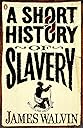
PENGUIN A Short History of Slavery
Product ID: 345595366
Desertcart purchases this item on your behalf and handles shipping, customs, and support to USA.
Buy PENGUIN A Short History of Slavery by Walvin, James online on desertcart.ae at best prices. ✓ Fast and free shipping ✓ free returns ✓ cash on delivery available on eligible purchase. Review: Around 12 million people were taken from their African homes and transported to the Americas. Around 1.5 million didn't survive the journey. The rest were subjected to the dehumanisation of slavery. As James Walvin points out: "From first to last, slavery was a system characterised by brutality". It also brought about the political and economic ascendency of "the West" and the corollary subjugation of Africa. This little book is "a short history" - an introduction or overview if you like - but it's an excellent one. It's clear, it's accessible, and it's comprehensive. And a list of "further reading" is helpfully included for those who wish to explore the subject in more depth. It's a chronological history, with each chapter containing relevant excerpts from texts (some more interesting than others but including some written by slaves) which illustrate the realities explored. It starts by looking at slavery in Greece, Rome, the Medieval world and in Islamic societies before moving on to Atlantic slavery. Walvin covers the hellish conditions on slave ships, documents the modus operandi of oppression and refers to slave resistance while also giving glimpses into the diverse possibilities of slave "community life". The driving force of slavery - profit - is everywhere apparent together with its precondition of the dehumanisation of the African. There is an excellent chapter on the abolition of the slave trade, and the roles of Clarkson, Wilberforce and the Quakers. The book concludes with a further fascinating chapter on the abolition of the institution of slavery itself. In these final two chapters, the role of mobilised public opinion in bringing about social change is interestingly portrayed and provides much food for thought. Obviously such a slim volume will have its limitations. It is very Anglocentric: there is little focus on the activities of the Spanish, Portuguese, French and Dutch. And no mention of the Swedes or Danes, the latter being the first Europeans to abolish the African slave trade. Nor do we hear anything of countries who didn't abolish slavery until the twentieth century, such as Sierra Leone (1927) or Saudi Arabia (1962). The book also might seem to give the impression that slavery is only a historical phenomenon, as there is no mention of the widespread contemporary slavery and trafficking. Nonetheless, it is difficult to imagine a more effective or comprehensive introduction to this subject. Review: As a student who's academic focus is highly centred around Maths and Sciences, I found this book very well written and accessible. James Walvin does a great job in giving a reader such as I, who has near to no knowledge of slavery or American history itself. Walvin starts you off at the beginning of slavery, earliest accounts being during the Ancient Greeks and how different forms of slavery existed within its culture. He then introduces slavery in the Islamic world, where it was actually highly active before the Europeans, how enslavement took place in Africa and slave trade took place regularly. The main focus of the book is around the Atlantic slave trade, dominated by the Europeans, where the Portuguese were the first and the largest slave producers in the beginnings of Atlantic slave trade. Later Britain would take the greater role in the business, and slaves would be shipped to the Caribbean to work in plantations to provide sugar, tobacco and later tea and cotton. I never knew that sugar in its pure form was only widely used when slavery and work in the plantations took place, this would lead to a high demand of sugar meaning a greater demand for new slaves to work in these plantations. Walvin also looks at the communities which slaves would create during, and how they were treated, punished, sold, raised, etc. He later takes us to uprisings that would take place, especially Haiti's slave uprising which would be the only nation to succeed before slavery being abolished. Britain would lead the slavery abolishment during the Enlightenment and Walvin takes you through the journey taken to make it happen. All of this I learnt from Walvin's book, so much more detail is provided, even letters and accounts of events, etc are analysed. He reminds us that slavery continues to happen today, even though it is in different forms and many countries continue to have such a system taking place, legally or illegally. The reason I give the book a 4 star is because it can get rather long-winded sometimes, where accounts over accounts are given which can slowly become boring for the reader (it did for me anyway). Also it focuses mainly, as I've said earlier, the Atlantic Slave Trade, and ignores the ongoings of serfdom in Russia, slavery in the middle and far east. I guess that is to be expected but it would of certainly been a lot more interesting if it included those areas. Again, this is just a introduction, I guess you could say it's diluted, but not to the point that an understanding of slavery and its history cannot be attained from it. The book was rather short, and I highly recommend it to anyone interested in the topic.
| Customer reviews | 4.6 4.6 out of 5 stars (55) |
| Dimensions | 13 x 2 x 19.7 cm |
| Edition | UK ed. |
| ISBN-10 | 0141027983 |
| ISBN-13 | 978-0141027982 |
| Item weight | 1.05 Kilograms |
| Language | English |
| Print length | 272 pages |
| Publication date | 1 March 2007 |
| Publisher | Penguin |
P**O
Around 12 million people were taken from their African homes and transported to the Americas. Around 1.5 million didn't survive the journey. The rest were subjected to the dehumanisation of slavery. As James Walvin points out: "From first to last, slavery was a system characterised by brutality". It also brought about the political and economic ascendency of "the West" and the corollary subjugation of Africa. This little book is "a short history" - an introduction or overview if you like - but it's an excellent one. It's clear, it's accessible, and it's comprehensive. And a list of "further reading" is helpfully included for those who wish to explore the subject in more depth. It's a chronological history, with each chapter containing relevant excerpts from texts (some more interesting than others but including some written by slaves) which illustrate the realities explored. It starts by looking at slavery in Greece, Rome, the Medieval world and in Islamic societies before moving on to Atlantic slavery. Walvin covers the hellish conditions on slave ships, documents the modus operandi of oppression and refers to slave resistance while also giving glimpses into the diverse possibilities of slave "community life". The driving force of slavery - profit - is everywhere apparent together with its precondition of the dehumanisation of the African. There is an excellent chapter on the abolition of the slave trade, and the roles of Clarkson, Wilberforce and the Quakers. The book concludes with a further fascinating chapter on the abolition of the institution of slavery itself. In these final two chapters, the role of mobilised public opinion in bringing about social change is interestingly portrayed and provides much food for thought. Obviously such a slim volume will have its limitations. It is very Anglocentric: there is little focus on the activities of the Spanish, Portuguese, French and Dutch. And no mention of the Swedes or Danes, the latter being the first Europeans to abolish the African slave trade. Nor do we hear anything of countries who didn't abolish slavery until the twentieth century, such as Sierra Leone (1927) or Saudi Arabia (1962). The book also might seem to give the impression that slavery is only a historical phenomenon, as there is no mention of the widespread contemporary slavery and trafficking. Nonetheless, it is difficult to imagine a more effective or comprehensive introduction to this subject.
A**M
As a student who's academic focus is highly centred around Maths and Sciences, I found this book very well written and accessible. James Walvin does a great job in giving a reader such as I, who has near to no knowledge of slavery or American history itself. Walvin starts you off at the beginning of slavery, earliest accounts being during the Ancient Greeks and how different forms of slavery existed within its culture. He then introduces slavery in the Islamic world, where it was actually highly active before the Europeans, how enslavement took place in Africa and slave trade took place regularly. The main focus of the book is around the Atlantic slave trade, dominated by the Europeans, where the Portuguese were the first and the largest slave producers in the beginnings of Atlantic slave trade. Later Britain would take the greater role in the business, and slaves would be shipped to the Caribbean to work in plantations to provide sugar, tobacco and later tea and cotton. I never knew that sugar in its pure form was only widely used when slavery and work in the plantations took place, this would lead to a high demand of sugar meaning a greater demand for new slaves to work in these plantations. Walvin also looks at the communities which slaves would create during, and how they were treated, punished, sold, raised, etc. He later takes us to uprisings that would take place, especially Haiti's slave uprising which would be the only nation to succeed before slavery being abolished. Britain would lead the slavery abolishment during the Enlightenment and Walvin takes you through the journey taken to make it happen. All of this I learnt from Walvin's book, so much more detail is provided, even letters and accounts of events, etc are analysed. He reminds us that slavery continues to happen today, even though it is in different forms and many countries continue to have such a system taking place, legally or illegally. The reason I give the book a 4 star is because it can get rather long-winded sometimes, where accounts over accounts are given which can slowly become boring for the reader (it did for me anyway). Also it focuses mainly, as I've said earlier, the Atlantic Slave Trade, and ignores the ongoings of serfdom in Russia, slavery in the middle and far east. I guess that is to be expected but it would of certainly been a lot more interesting if it included those areas. Again, this is just a introduction, I guess you could say it's diluted, but not to the point that an understanding of slavery and its history cannot be attained from it. The book was rather short, and I highly recommend it to anyone interested in the topic.
C**.
Well written and easy to read. It benefits from copious quotes from contemporary writings. A terrible, shameful story. The author does well to avoid its infinite complexity, keeping to the essentials.
M**S
a little skimpy on history and detail; almost half the book is taken up with contemporary quotations and author's remarks on them which somehow add to the historical content. a good introduction to slavery and its hideousness.
A**X
An excellent and concise account of the history of slavery and its evolution over time from the classical world through to its abolition in the nineteenth century. Walvin shows how slavery was accepted as a natural part of hierarchical premodern and early modern society before the era of the Enlightenment began to question and criticise the immoral and inhuman treatment of slaves by the imperial powers of Britain, France and Spain. There are many contradictions throughout the history of slavery. Although the atlantic slave trade was abolished in 1807, and in the British colonies in 1838, the British state supported the slaveholding Confederacy during the US civil war of 1861-65. This book goes into all the nuances and complexities of how slavery was perceived over time, using a wealth of historical archives and testimonies from slaveholders, abolitionists and slaves themselves. An excellent read which I recommend to everyone
Trustpilot
3 weeks ago
2 weeks ago