
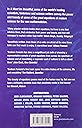

Granta Books It Must Be Beautiful: Great Equations Of Modern Science
Product ID: 313746692
Desertcart purchases this item on your behalf and handles shipping, customs, and support to USA.
Buy Granta Books It Must Be Beautiful: Great Equations Of Modern Science by Farmelo, Graham online on desertcart.ae at best prices. ✓ Fast and free shipping ✓ free returns ✓ cash on delivery available on eligible purchase. Review: Equations and their stories. Never thought that this could be a subject of such a beautiful book. Just read it and you will see it yourself Review: Great book; profound in places yet easy to read. Good spread of themes; makes you want to read more of the same.
| Customer reviews | 4.2 4.2 out of 5 stars (35) |
| Dimensions | 12.7 x 1.52 x 19.69 cm |
| Edition | 1st |
| ISBN-10 | 1862075557 |
| ISBN-13 | 978-1862075559 |
| Item weight | 1.05 Kilograms |
| Language | English |
| Print length | 304 pages |
| Publication date | 6 February 2003 |
| Publisher | Granta Books |
S**.
Equations and their stories. Never thought that this could be a subject of such a beautiful book. Just read it and you will see it yourself
P**E
Great book; profound in places yet easy to read. Good spread of themes; makes you want to read more of the same.
I**N
This is a good book; I am glad I acquired and read it. But I am not wholly enthusiastic, as, like many books of its kind, it is rather uneven, with some chapters far more valuable than others, some written far more engagingly and interestingly than others. I also probably expected a little more (not a lot) mathematical reasoning and - dare I say it - derivation of the great equations, than I got. I am an educated amateur, but still like to see how things get built and put together, so even though I knew I was not buying a heavy mathematical work, still expected a bit more than is here. For me the outstanding chapter was Aleksander's essay on Shannon'e equations. I know this work well, having used those very equations in my own research forays. It was very comforting to see a fellow traveller fan of Shannon, a culture hero, as it were. And, to see something I hadn't known before: that the great Shannon himself had heroes. The chapter is very well written, very engaging, and includes only the briefest modest mention of the author's own work - a trait far from shared by all chapters. I also benefited nicely from May's chapter on the development of chaos theory, as well as from Wilczek's paper on Dirac's equation. I am a big fan of Lord May's work, a fandom that began in second year Population Ecology and has lasted all these decades to today. I am also a fan of Dirac mainly for his approach to theoretical physics, even though I understand little of the great depths of that subject. My one very minor negative about the latter chapter is the amount of wading I had to do through QED and QCD and Wilzcek's own part in all that. Interesting history for physicists maybe, but I found it tough going. I have also had cause to delve into the Drake equation, so I found that chapter interesting indeed. It is more a history of development and of the scientists themselves, but that's OK, I enjoyed it. The Planck-Einstein equation, E=mc(squared), the chemistry of the ozone layer discoveries, all held my interest. As did the Schrodinger chapter and the Gravity paper. However, I have read Roger Penrose before on this topic, and while I respect his work hugely, I was a little annoyed at this particular essay, as it went on too long about special relativity and quantum theory developments, yet left the topic of the chapter, the equation for general relativity inadequately covered - from my point of view. For pedantic example, the development of the equation is partly explained, but then for a rank amateur like myself, the switch in last line from 4(pi) to 8(pi) left me gaping with need to know why. The Schrodinger chapter also caught me struggling with needs to know: how and why he chose that approach to his equation. Also, the chapter seems oddly far more about Heisenberg and his disgust with Schrodinger's approach, than it does about the topic itself. Or am I reading too much into it? The Yang-Mills paper left me underwhelmed. I still have little idea what that equation is about, but I guess that's my failing rather than much else. But it could have been much better, I feel. Finally those game-theoretic approaches to animal behaviour have always failed to grab my interest, so the Maynard-Smith chapter on his own career work left me as uninterested after as I was before. All up I seem to have been negative here, haven't I? Which makes me wonder why I rated it 4 stars. But I'm not feeling as negative as maybe I've sounded; I think it is deserving of a read, and the 4 stars I initially chose. I will certainly read the Dirac and Shannon papers again and again, so it's well worth it for those alone.
B**E
Great idea for physics student.
L**B
Getting these "specialist" books is vital and this was as I hoped. I will be using this again and again. Thanks
Trustpilot
1 month ago
3 days ago