Desertcart purchases this item on your behalf and handles shipping, customs, and support to USA.
🎶 Elevate your sound with the sleek, durable tenor that’s always ready to play!
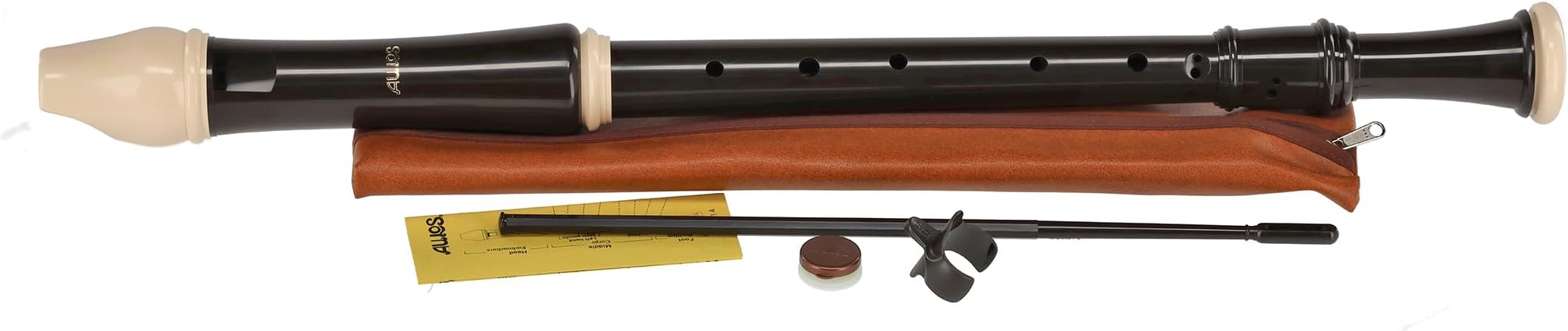
The Aulos 211A C-tenor recorder is a polished dark brown ABS plastic instrument designed for beginner to intermediate players, especially those with smaller hands. Featuring baroque fingering with double holes, it offers a rich tenor tone in the key of C, spanning two octaves. Lightweight and durable, it includes a leatherette carry bag, fingering chart, cleaning rod, and joint grease, making it a complete, low-maintenance package perfect for progressing musicians.
| ASIN | B00GQNRVKC |
| Best Sellers Rank | #11,080 in Musical Instruments ( See Top 100 in Musical Instruments ) #40 in Recorders (Musical Instruments) |
| Brand | Aulos |
| Brand Name | Aulos |
| Color | brown/ivory colored |
| Customer Reviews | 4.5 out of 5 stars 411 Reviews |
| Finish Type | Polished |
| Global Trade Identification Number | 02000074064807, 04582202750601, 04582202780608 |
| Included Components | Mouthpiece |
| Instrument Key | C |
| Item Dimensions | 24 x 1.75 x 1.75 inches |
| Item Type Name | Aulos C-tenor recorder Robin 211A (baroque fingering, complete with bag, wiper stick, grease box and fingering chart, synthetic resin), Dark Brown |
| Item Weight | 12.64 ounces |
| Manufacturer | Frederick Hyde Ltd- IMPORT FOB(Southampton) |
| Manufacturer Part Number | 211A |
| Material | Abs Plastic |
| Material Type | Abs Plastic |
| Model Name | Robin |
| Model Number | 211A |
| Set Name | Robin |
| Sound Profile | Balanced, mid to high frequency emphasis |
| Style | C tenor - baroque fingering - with double holes - Robin 211A |
| Unit Count | 1.0 Count |
| Warranty Description | 1 year limited warranty. |
M**.
Nice instrument.
I just started fooling around with recorders again after I haven't touched one for 53 years (the 4th grade). Irish whistles too. Wood ones from iVolga are really nice sounding. Anyway, I recently purchased a Yamaha YRN-302B II, a Yamaha 402 B Ecodear, and a Woodnote Garklein, which I think is total garbage, and probably a cheapo counterfeit somebody switched that I unfortunately ended up with. Anyway, the Yamaha recorders are legitimate and are quite nice, and I especially like the Ecodear alto, but this Aulos 211A tenor is really, I think, a bit nicer looking, simply because it has a unique design with subtle differences that make it stand out as far as looks go. It's not overly done with white (ivory colored) accents like most Yamaha recorders are. Very subtle, very classy looking. It also has a nice mellow tone, but I really could not judge against a Yamaha tenor, because I do not own one. Because of it's size, it's going to take a bit of time to get my breath control in order, but I am making progress fairly quickly. Just don't expect to come directly from another size and dive right in. It is a bit of a curve as far as breath control goes. It's much trickier transitioning between octaves and right now, I'm getting a bunch of squealing. That's totally on me. It just takes time, practice, and very, very subtle changes in breath. I'm sorted at how little breath this recorder requires as compared to the others I've been playing with in the last few weeks. I'm sure an intermediate player would have no problem whatsoever. As far as fingering goes, I'm 6'2" and have the necessary finger reach for such an instrument. This one seems no more difficult to transition from than going from a Soprano to an alto did for me. I rather like the fact that there are no moving parts on this one. I really hate moving parts like keys, because, guess what? Moving parts wear, they make a bit of noise, and moving parts can break! I'm not sure, but would imagine the keys on other recorders have some kind of felt sealing pad on them too that will need replacement. Without keys, this recorder will truly last a lifetime with no maintenance other than keeping it clean. I would highly recommend this recorder. As a novice to the tenor, I feel it's something you can easily grow into, provided you have the necessary finger reach. It seems to be very well made and is also very classy looking. It comes with a snap-on thumb rest should you require one, and also a cleaning rod and joint lube. The zipper pouch is quite nice too. One thing I wish it came with is a plug that holds the mouthpiece and the end bell together in the bag as Yamahas do, however it does have end caps for the main body tube. There is a felt divider for mouthpiece and the bell sewn into the pouch.
D**Y
Aulos A211 Tenor Recorder
I bought this recorder a month ago and I enjoy it very much! I have played a German-fingered Hohner wooden soprano (the cheap one) for over a year, and of course I like the sound of a wooden recorder better, but I had two problems with it: first, I could never really play C# and D# well enough because it doesn't have double-holes. I know that baroque sopranos do, but the holes may be too small for my fingers to close one hole easily. Anyway, I don't have this problem with Aulos A211A, I could take C# and D# almost from the first day of playing, which means I can play along with almost any melody! Also, remember that other tenor recorders have a C/C# key, which means (as I understand) that you won't be able to play both C and C# in one melody. With this one, you can play anything you like. Secondly, the wooden recorder (I have two-pieced one) falls apart if you don't play for two days because wood gets dryer. I call it 'recorder jealousy', maybe you don't have this with more expensive wooden recorders? If someone could tell me, I would be grateful. Anyway, the Aulos is always ready to play - it's plastic so it doesn't matter if you don't play for weeks. I always wanted to have a lower recorder, and tenor's just good for me. You don't have to learn much new fingering after having played a soprano recorder because it's in C too. After having played piano for a couple of years it wasn't so hard for me to reach the holes with the fingers, the only problem being the G (a bit hard for the fourth finger of the left hand to reach that hole fast). As you all know, the only problem is that it doesn't hold water at all, as all plastic recorders don't. But I'm very glad I bought this recorder at a great price and I really enjoy it! A pretty case it comes in is worth mentioning too, of course.
D**L
Happy with my purchase
This recorder is touted as being easier for smaller hands, and I think that's fair. I was considering buying a different brand but didn't want to struggle too much playing a regular sized tenor because I'm a beginner recorder player. I do have prior music education with piano. This Aulos recorder is very well made. You really can't go wrong with Aulos. The color is listed as brown, which I really didn't care for because I just prefer black and ivory. But it actually just looks black, but like a "creamy" black if that makes sense. I have a comparison photo with my Harmony alto which is true black. But alone, the Aulos does look just black. My hands are 6.5 inches long with a spread span of about 7 inches. At the moment I'm barely able to keep the bottom holes closed on this tenor but I suspect with time I'll get better. I can't reliably play low C YET but I'm sure it's in tune, it's Aulos and I trust the brand. I'm about 5ft 3in so it feels a bit awkward for my right hand holding it down that far. Overall I'm really glad i got this tenor and not the longer one I was gonna go with. Maybe later on I will when I advance. For now though, I'm quite satisfied with this one and may just stick with this one.
S**Z
Good recorder, depending upon your needs.
Decent plastic recorder for the price. It has a nice, weighty feel. Like any recorder, you're going to have to play it for a while to get to know its quirks and which notes need extra attention/coaxing; even mass-produced instruments like this will all have their own individual idiosyncrasies. I find the upper range to not come as easily as with my wooden tenor, but that's probably just due to me not quite being used to this instrument quite yet. The middle and lower ranges speak beautifully. So if I have a great wooden tenor already, why did I buy this? Two reasons: (i) my wooden recorder has a key for the bottom hole, which isn't too authentic to the Renaissance and yes, this bothered me, and (ii) I landed a gig for a madrigal feaste, and the person doing the arrangements for the pieces decided to arrange something in the key of A major (ugh, WHY?!) and I needed that half-hole option for a low C#. (Side note to anyone arranging anything for renaissance-style, non-keyed recorders - for the love of all that is good and holy, don't stray too far from C major/A minor, two sharps or two flats MAX. The tuning gets increasingly wonky because of how the instruments are made. This is why you see recorders used for Bach, Handel, etc. often have many keys.) This recorder is advertised as being made for smaller hands. I'm not sure about that. I have pretty average-sized woman hands, and my little finger on my right hand--THE most important reach on a tenor recorder with no key--has to stretch pretty far to get good coverage on that lowest hole. Again, I probably just need to spend more time with the instrument, but I do find the reach to be a bit challenging. Younger recorder students would almost certainly have reach issues; might be better for them to get an instrument with a split key for the bottom hole.
D**A
Experience after a year
I purchased this recorder in June 2014, so I've got a bit more than a year's experience with it as of this writing. My other records (SAB) are Yamaha 300 series. I got this Aulos because I wasn't very comfortable playing the Yamaha 300 series tenor. I'm an intermediate player; probably others with more experience do more with the instrument than I, but I think I can at least speak to what it does well and what requires more struggle. The good: Definitely the reach is easier than on the Yamaha 300 tenor that I used for a while. My middle three fingers can comfortably span 4", or can do 5" with a stretch. My first finger to pinky is 6" comfortably, 7" stretching. I could manage with the Yamaha, but this is less tiring during longer sessions. The one caveat is that I find the low C to be a little finicky. It probably depends somewhat on things like the humidity (and therefore the condition of my skin), but some days it seems I require either more force to get a good seal or a somewhat awkward twist on the right wrist and/or elbow. I like the sound in the middle part of the range; the instrument plays very easily there. Up through high G is no trouble. The price I paid was very reasonable. The bad: I don't like the low C. Even when it's not finicky to produce, it has a thin and somewhat weak tone. Perhaps that's a compromise from having such a short instrument. The Yamaha that I used had a key/lever for the low C/C# instead of the double hole that the Aulos features. I prefer the Aulos arrangement on purely ergonomic grounds, but I liked the Yamaha sound better. Low D is better, though still a bit weak. I think the sweet spot starts with the E. High A and above starts to require more care, though I can generally manage at least the A reliably. This is similar to my skill with the Yamaha though, so I don't have reason to think the instrument has a problem with higher notes. Fortunately I rarely encounter a need for the higher notes in the music that my consort plays. I have significantly more clogging issues with this recorder than I do with my Yamahas. The frequency of clogging is one aspect, but I find that the rate at which the recorder goes from sounding good to sounding weak and airy is worse. With the Yamahas, I feel like I have lots of time before there's any noticeable effect, plus plenty of time between when the tone is beginning to deteriorate and when it really sounds bad. That warning time is usually enough that I'll come to a spot where I can clear it before it gets to the bad stage. The Aulos seems to fall apart more rapidly, so I have to be very diligent about clearing every chance I get, and even then I sometimes run into issues with longer passages where there's no good spot to clear. Overall: a reasonable instrument for the money, pretty comfortable to play, but with a couple of compromises.
M**D
Exactly as advertised, functions perfectly.
It has a nice sound and good response. However, uneducated buyer beware. This is an entirely different animal from our elementary school recorders of old. It's the big brother of the instrument that those cheap things were imitating. The size difference makes it cumbersome with uncomfortable hand stretches. But that's just the nature of the instrument, which the player needs to accept. If you haven't picked up a recorder for decades and simply want to freshen up on Hot Cross Buns and other simple songs, just buy a $20 plastic soprano model from the Aulos or Yamaha. That's definitely what I should've done to begin with.
J**E
A Pleasant Surprise
I am very impressed with this tenor recorder. With this being listed as a "smaller reach" I was a little hesitant about just what that means. However I gave in and ordered one and boy am I glad I did! This recorder is no harder to play than any keyed tenor I own and I have 4. It is very comfortable to play, has a great tone and is well balanced. Intonation is great, i can hit low C right away with no hesitation and receive a clear tone and no problems sliding up and down the scale. I am very pleased with this recorder. Finally a tenor I can toss into my gym bag and take anywhere without worrying about that delicate low C key getting damaged. I was so impressed that I ordered the Alto and Soprano from this series so now I have a matching set. Those recorders were just as impressive as this tenor. Pricing is very fair for these as well. All 3 recorders came nicely packed in a leatherette zippered bag, tub of cream\lubricant, cleaning rod, tenon caps for storage, fingering chart and a snap on thumb rest. In my opinion it's the accessories that a manufacturer includes that helps indicate what kind of quality is behind an instrument and Aulos does not disappoint here. I highly recommend this recorder and it's siblings in the 200 series.
C**S
Goodbye, Yamaha Plastic Tenor Recorder. Hello, Aulos!
I started off playing the tenor recorder with the Yamaha plastic tenor model. The low C/C# could basically be amputated for all I know, because my right pinky can't reach it. With this model, though, it just feels like I'm playing a slightly larger alto recorder. Which is AWESOME! Even though the low end is a bit more sensitive, I realize that I am playing a Baroque instrument that has not been modified for modern music needs outside of electronic assistance. Which is exactly what I look for in a recorder regardless of the genre of music I'm playing! So yeah. It's way easier than that one even though the low C sounds a bit worse. But playability > sound when it comes to having fun learning music!!!
A**L
Very nice tone and comfortable for adult small hands
Very well presented. Very nice tone. Sounds very pleasant and in tune. It is indeed easier to play compared to other plastic tenors like the Aulos Symphony or the Yamaha. I have small hands and I can tell the difference quite clearly, it is a dream for me.
T**E
Exzellente Tenorflöte mit unschlagbarem Preis-Leistungs-Verhältnis
Ich besitze bereits eine Tenorholzflöte und habe mir diese sozusagen als "Backup fürs Grobe" gekauft. Außerdem sollte man eine Holzflöte ja wegen der Feuchtigkeit nicht stundenlang spielen, da lohnt sich ein Zweitinstrument auf jeden Fall. Von allen Kunststoffflöten, die ich habe, würde ich diese als (im Vergleich zum Holzpendant) beste bezeichnen. Die Flöte klingt warm und voll, nicht schrill in den Höhen und trotzdem definiert. Die Tiefen sind gut, vor allem da die kurzmensurigen Holz-Standard-Tenöre in den tiefen Lagen auch nicht viel besser klingen. Die Flöte ist weich genug, um im Ensemble mitzutragen, aber auch fürs Solospiel ausreichend geeignet. Ich würde den Klang irgendwo bei Palisander verordnen. Es ist ja nicht das Holz das schwingt, sondern die Rauheit des Flöteninneren, die durch Verwirbelnden den Klang beeinflusst (daher werden Kunststoffflöten eher unterschätzt, weil viele Laien analog zu einer Plastikgeige denken, die vom Schwingungsverhalten physikalisch nicht gut klingen kann, was bei Flöten aber gar keine Rolle spielt.) Durch den größeren Windkanal im Vergleich zu Alt und Sopran macht auch das Kondenswasser geringere Probleme, ein bisschen Spülwasser, und das Problem ist gelöst. Wie in einer anderen Rezension beschrieben, finden sich bei genauerem Hinsehen tatsächlich bei jedem Loch feine Nähte in der Kunststoffoberfläche. Es sind aber keine Risse, sondern kommt wohl vom Guss- bzw. Pressvorgang, wo der Kunststoff unterhalb des Loches wieder zusammenläuft. Vermutlich lässt sich das fertigungstechnisch nicht verhindern. Ich habe mich für eine Flöte ohne Klappen entschieden, weil hier überhaupt die meisten Probleme bei Kunststoffflöten auftreten. Einziger Kritikpunkt wäre die Nachhaltigkeit der Flöte. Während eine Birnenholzflöte nach ein paar Jahren verblasen ist und kompostiert werden kann, hält diese wahrscheinlich irgendwo eingegraben für 27000 Jahre ...
S**E
La meilleure tenor en plastique
Excellente flûte à bec Tenor. Elle m'a réconcilié avec les ténors du fait de sa facilité de jeu, de son et de souffle. L'écart des doigts est à peine (1cm en moyenne même pas) plus grand que celui d'une alto. C'est quand même exceptionelle de la part de Aulos d'avoir réussi ce coup de maître sans changer la tonalité de l'instrument.
C**N
Perfetto per cominciare se si hanno le orecchie delicate
Anche questo flauto l'ho comprato usato ed era in perfette condizioni. Del resto i flauti in resina ABS sono lavabili e non ci sono problemi di nessun genere. Direi che il rapporto qualità prezzo è comunque buono anche per il nuovo. Non penso che siano convenienti le alternative a basso costo. Che io sappia i tenore in plastica decenti sono i due Aulos e lo Yamaha. Questo è il modello meno costoso dei tre, l'unico senza le chiavi Do/Do#. Non penso sia una pecca: i tenore si fanno con le chiavi o senza. Vorrei tagliare la testa al toro: il tenore è suonabile per un adulto normodotato, semmai ci possono essere preferenze personali, ma a mio parere le chiavi rendono lo strumento più complesso. Se il flauto è economico lo sono anche le chiavi. Le chiavi si possono rompere. Chiudere un doppio foro è diverso da premere due chiavi. Io ho preferito la massima semplicità ed economia e lo strumento acquistato mi piace. Nella custodia in similpelle ho trovato la tavola delle diteggiature che comprende anche alcune diteggiature alternative che sono utili per eseguire i trilli. L'aggeggio per reggere lo strumento con il pollice destro è a incastro e può essere posizionato in maniera regolabile. Il suono mi sembra buono e dopo un po' di esercizio sono riuscito a completare la seconda ottava. Comunque si suona agevolmente in tutto il registro medio Sol-Sol, mentre i bassi sono, com'è naturale, più difficili. Sugli acuti ci vuole un po' di pazienza. L'estensione è molto bella per chi deve suonare lentamente perché o non è abbastanza agile da divertirsi con flauti più corti o non ama infastidire il prossimo con un registro alto troppo acuto.
R**D
Great quality for the price!
Loving this so far. Great voice and lovely tone, but it's a bit of a stretch for my right hand. I'm hoping this will correct itself with time, since I'm a beginner, but we'll see. The quality is excellent for the price, and it was cheap enough that I can put it away and buy a tenor with keys if I can't get the lower notes.
Trustpilot
3 weeks ago
1 month ago