๐ Elevate Your Cooking Game with Koji Power!
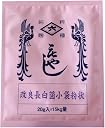
Hishiroku Koji Starter Spores are a premium, powdered koji kin (Aspergillus oryzae) sourced from a 300-year-old Kyoto shop. This versatile starter allows you to create a variety of traditional Japanese fermented foods, yielding an impressive 15kg of rice koji from just 20g. With high levels of amylase and protease, it's perfect for culinary enthusiasts looking to enhance their dishes. Store it in a cool place for maximum freshness and unleash the potential of your kitchen!
| ASIN | B08T16ZPHH |
| Age Range Description | Adults |
| Best Sellers Rank | #210,123 in Grocery & Gourmet Food ( See Top 100 in Grocery & Gourmet Food ) #147 in Packaged Miso Soups |
| Brand | ใใผใใฉใณใๅ |
| Brand Name | ใใผใใฉใณใๅ |
| Container Type | Pouch |
| Cuisine | Japanese cuisine |
| Customer Reviews | 4.6 out of 5 stars 55 Reviews |
| Item Package Weight | 0.03 Kilograms |
| Item Weight | 20 Grams |
| Manufacturer | Hishiroku |
| Number of Items | 1 |
| Package Information | Pouch |
| Package Weight | 0.03 Kilograms |
| Size | 0.71 Ounce (Pack of 1) |
A**S
Very Satisfied. Here's What I Did
I'm so satisfied with this that I wanted to review and share my experience. There are some light edits in the procedure for things I realized I needed to do next time, but it worked out regardless. I ordered "Hishiroku Koji Starter Spores - Powdered Kairyou Chouhaku-kin 20g" and my order arrived two days later and visibly matched what I had ordered. It weighed 26 grams in the little plastic bag, so I think I got a little more than ordered. I used ยฝ teaspoon to fully inoculate 1 lb or 2 ยผ c rice, so I suppose this includes enough spores to make perhaps 7 batches. Making Koji Utensils: 1 lb (2 ยผ c) white long grain rice (generic store brand), 2 metal cake pans, 1 glass cake/casserole pan, 1 pot with lid, 1 mixing bowl, ยฝ tsp measuring spoon, 1 small measuring cup (for transferring rice), 1 cheesecloth, 1 tea towel, 1 steamer tray, 1 corded probe thermometer (the kind used for BBQs, but a regular cooking thermometer could be used), 1 large plastic mixing spoon, small amount of aluminum foil. I had to be careful about temperature. I wanted to sterilize as many utensils as possible, but not everything could go in the oven. Also, I had to be mindful not to get any hot utensils touching the spores. 1) I placed the rice in cool water and alternated mixing and changing the water several times. I tried to get the water clear, but after about 10 changes it was still a little foggy. 2) I left the rice to sit for 12 hours. 3) While the rice was sitting, I placed all of the oven safe utensils in the oven at 250 for 10 minutes and placed all of the boil-safe utensils (including the cheesecloth and tea towel) in boiling water for 5 minutes. I allowed these to cool. Anything that couldn't be sterilized, I washed. When cool, I used one of the metal cake pans as a place to keep sterile utensils. 4) When the rice was done soaking, I placed a small amount of water at the bottom of the pot and placed the steamer tray above the water (with the water level below the bottom of the tray). Then I transferred the rice to the cheesecloth, twisted it into a loose bundle, and placed it on the steamer tray. I brought the water to a boil and steamed for 45 minutes. 5) I removed the steamer tray and rice bundle from the pot and allowed to cool to room temperature. 6) I spread the rice evenly in a 9x12 glass pan. I washed my hands carefully and broke apart lumps by hand. 7) I used a ยฝ teaspoon and sprinkled the Koji spore as slowly and evenly as I could across the entire surface of the rice in the pan. I didn't use flour, although I know others suggest this. 8) I mixed the rice carefully with a spoon and tried to distribute everything as evenly as possible without making a mess. At this point, I sterilized the spoon and left it to cool for the next mixing. 9) I folded the damp tea towel so that it covered the entire surface of the rice, making sure that it was close to room temperature. The rice and towel were initially not very wet, just moist and spongy/rubbery. 10) I placed the glass pan of rice in the cool oven, turned on the light, and left a thermometer to check the temperature. I found that my oven stayed at a perfect 90 F most of the time, but occasionally heated up to as high as 100 F, especially as the Koji cultured. I used some wadded aluminum foil in the door seal to keep it ajar and slightly cooler. 11) I checked the temperature and adjusted every few hours. Every 12 hours, I would use the clean, room temperature mixing spoon to mix the rice and then sterilize it and cool the spoon again, lifting the towel up carefully and replacing it again. As the process continued, I boiled some water, cooled it to room temperature, and gently added a little to the towel when it seemed like the rice was drying out. After 12 hours, I could see and smell some snowy fuzz on some of the rice. After 43 hours, my rice had a thick coating of white fuzz. I stopped at this point and didn't see any darker spores developing. 12) I allowed the rice to dry somewhat and froze in a freezer bag to use in recipes over the next few weeks.
B**T
Great
My husband loves, heโs obsessed! Great Koji.
R**T
Worked well. I was able to continue using spores from one batch to make another
I bought the Kairyou Chouhaku-kin, and my spores would stay white, and not turn green as some youtube videos explained. It's because this particular variety I bought makes only white spores. It's ideal for shio koji, sake, and white miso. So far, I've used it to make shio koji, and amazake. It's been amazing. I've been able to take some of my sporulated koji grains, and dried it, blended it with a little rice flour, and used that powered mixture in a sieve to sift it onto another batch of steamed rice. I've been able to continually make new batch after new batch without having to use more of these spores. So I only used about 1/3 of the packet, and still have 2/3 left. If you learn how to inoculate and incubate your koji rice, you will only have to buy this once. Great deal, and I'm happy to explore the koji world
C**S
Excellent White-spore Koji
I have not used this to make amazake yet. However, I did make a traditional white miso already and it was lovely. When the koji is fresh, it has easily identifiable white spores (versus the green spores you will find in some other products) so you can tell if there are any other growths and it creates a tight-nit mycelium that has lightly fruity flavor with a hint of yeast. When used in miso, the yeast flavors deepen and it holds up to iodized salt just fine in case you're worried about using standard home-made products.
M**E
Best quality Koji avilable
I make a lot of homemade soy sauces, miso, sake, amazake etc. This brand of Kojis are unmatched! They have never failed to produced a beautiful tasting product. I use this one in particular for Shoyu
S**U
Very good
It is very easy to make koji at home with this starter.
N**7
Koji starter, wonderful !!
It is very useful to make Rice Koji, Wheat koji, etc. I love it.
B**O
Came with corner cut open
The package came already cut open and all the Koji spilled out into the packaging.
Trustpilot
2 weeks ago
3 days ago