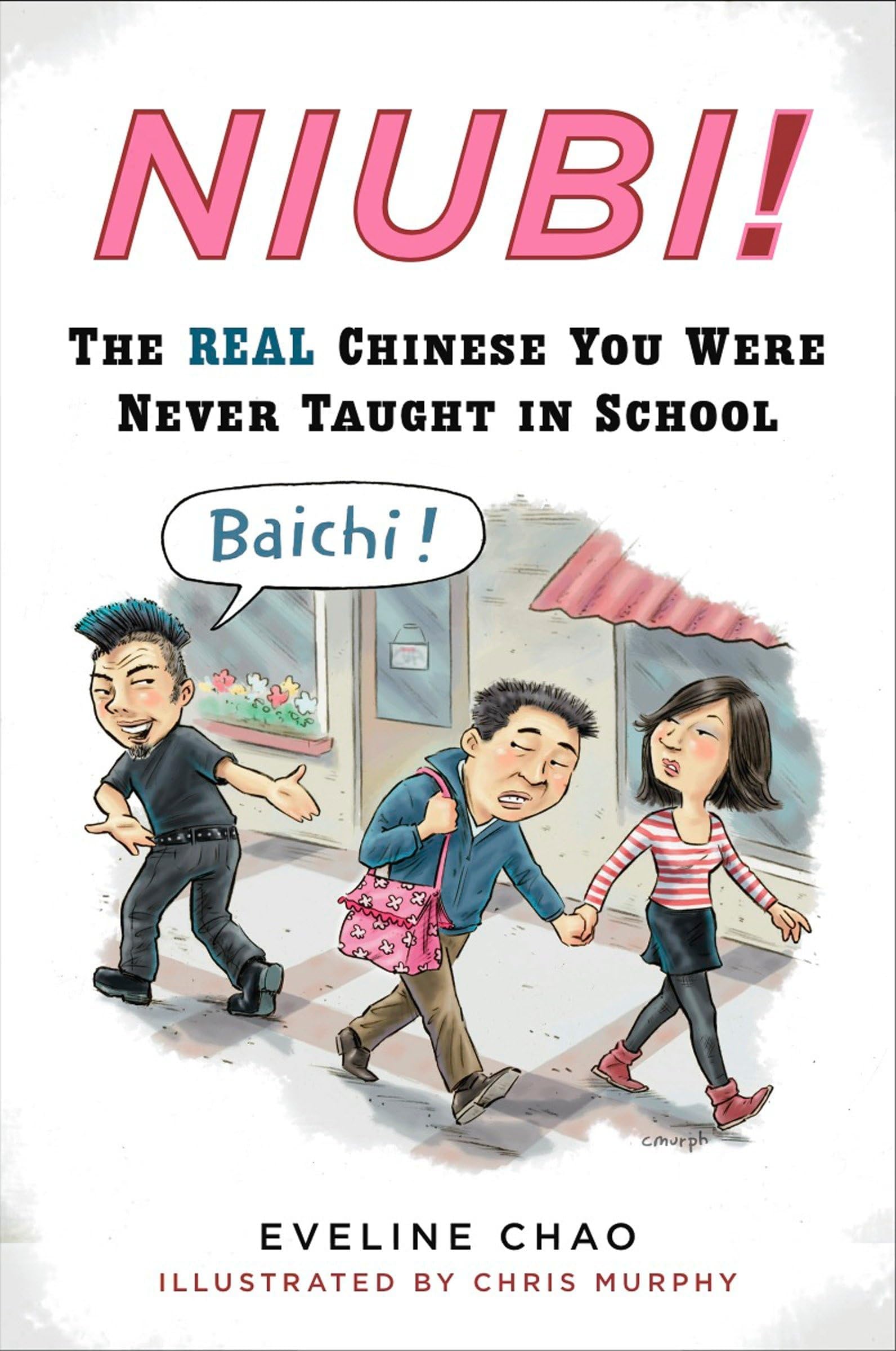
Niubi!: The Real Chinese You Were Never Taught in School
Product ID: 26232231
Desertcart purchases this item on your behalf and handles shipping, customs, and support to USA.
How to talk dirty and influence people - in Chinese! Are you looking to learn the Chinese only a native speaker knows? Niubi! will teach you the colorful vernacular phrases used by Chinese people of all ages in a wide variety of situations, including flirting and dating, fighting and partying, and all the swear words you'll ever need. Learn why many Chinese insults involve turtle eggs, how code words referring to Internet censorship have evolved, multiple names for body parts your textbook skipped, and how they've perfected the art of everyday abuse and insults. For complete novices ( Niubi! newbies), intermediate students of Mandarin Chinese, or just anyone who enjoys cursing in other languages, this hilariously illustrated guide is packed with irreverent anecdotes, mini cultural lessons, and contextual explanations. So whether you're planning a trip to Beijing, flirting with an online acquaintance from Shanghai, or just want to start a fight in Chinatown - Niubi! will ensure that nothing you say is lost in translation. Review: fascinating, educational, fun, and freaking NIUBI - As the title suggests, this is all the fun, colorful, and nuanced street vernacular Chinese you wish you knew but no teacher is ever going to teach you. So luckily Ms. Chao goes through all the trouble of collecting and editing all those terms for you. Not only do you learn all the cool words the cool kids are using, but Ms. Chao's well researched text gives insight into the historical and cultural context of many of these words. So you get to start rattling off like a street seasoned local with the added bonus of anthropological insight. The vignettes she uses to introduce each chapter are well-written and an amusing introduction to life in contemporary China. Highly recommend for anyone interested in contemporary Chinese culture, language learners, and those in search of a cool gift--but maybe not for Mother's Day. Review: so Niubi !! - such a fun book. awesome, deep insight into the different worlds and subcultures of modern China via a no-holds-barred (and at times lewd) description of the language unique to them. So much better than yet another 'China exposé' type book that regurgitates the same old crap ... Ms. Chao is as much an anthropologist publishing original findings about the modern Chinese views on sexuality and relationships as she is an (apparent) hipster who has made her way into the sex, drug, rock and roll, gay, and even mafia and prostitution scenes on the mean streets of China's megacities (and lived to tell the tale!!)! Ms. Chao ... you are the ultimate NiuBi!!! Thanks for this gem (and my first ebook purchase - right next to Ben Franklin's Poor Richard's Almanac which I had previously downloaded for free, Ben would surely be quite honored).
| Best Sellers Rank | #1,802,531 in Books ( See Top 100 in Books ) #399 in Slang & Idiom Reference Books #2,703 in Foreign Dictionaries & Thesauruses #2,838 in Love, Sex & Marriage Humor |
| Customer Reviews | 4.5 out of 5 stars 105 Reviews |
C**E
fascinating, educational, fun, and freaking NIUBI
As the title suggests, this is all the fun, colorful, and nuanced street vernacular Chinese you wish you knew but no teacher is ever going to teach you. So luckily Ms. Chao goes through all the trouble of collecting and editing all those terms for you. Not only do you learn all the cool words the cool kids are using, but Ms. Chao's well researched text gives insight into the historical and cultural context of many of these words. So you get to start rattling off like a street seasoned local with the added bonus of anthropological insight. The vignettes she uses to introduce each chapter are well-written and an amusing introduction to life in contemporary China. Highly recommend for anyone interested in contemporary Chinese culture, language learners, and those in search of a cool gift--but maybe not for Mother's Day.
A**L
so Niubi !!
such a fun book. awesome, deep insight into the different worlds and subcultures of modern China via a no-holds-barred (and at times lewd) description of the language unique to them. So much better than yet another 'China exposé' type book that regurgitates the same old crap ... Ms. Chao is as much an anthropologist publishing original findings about the modern Chinese views on sexuality and relationships as she is an (apparent) hipster who has made her way into the sex, drug, rock and roll, gay, and even mafia and prostitution scenes on the mean streets of China's megacities (and lived to tell the tale!!)! Ms. Chao ... you are the ultimate NiuBi!!! Thanks for this gem (and my first ebook purchase - right next to Ben Franklin's Poor Richard's Almanac which I had previously downloaded for free, Ben would surely be quite honored).
J**R
Fun
I speak Chinese pretty well and wanted to shore up my slang, plus it's just kind of fun to know how to cuss people out. This book was a help in that regard. It's a pretty exhaustive list, it's well categorized, and there's good notes explaining when each slang is used. I've learned a lot of new words, and more importantly, I found out that I was sometimes using an uncommon or scientific word, instead of the proper slang. So mostly I'm positive about this book, and I recommend it highly. But I'll concentrate on the negatives, just because it's difficult to judge a slang book, and to let other buyers know what they're getting into. My first complaint is that while the book is largely accurate, it isn't entirely. Maybe a couple percent of them are off. I don't think it's just the vagaries of slang or regional differences, because I asked several people here in Shanghai about them, and they all told me "no way." Anyway, it's worth double checking favorite terms. Secondly, this is (for the most part) Beijing slang. OK a lot of the vocabulary is universal, and that's particularly true to the (really excellent) Internet slang section. On the other hand, there's a lot of words that I don't think most people would say in Shanghai. For a non-native speaker to use many of these words would be bizarre. I wonder, do people in Beijing swear a lot more? Even though she addresses the issue in the introduction, I think the author drastically overestimates how often and how deeply people swear. And a whole lot of the insults would instantly lead to a fight. Oh yeah, and the book is missing common Mandarin slang words that are used in Shanghai. Third, it's CRAZY that this book has pronunciation guides for people who don't even know pinyin. If you don't speak Chinese pretty well already, don't try this book. You'll just get in trouble. Maybe it can be read for the cultural notes, but personally I found the cultural notes could sometimes get a little cartoony, particularly in the introduction, about the marijuana smoking pro-democracy rock singers... Finally, I wish the book had better notes or division about which slangs were common, and which ones weren't. The most common words are often pointed out, but not always. And there's a whole lot of pages given to slangs that are hopelessly obscure. There is a "top 25" list at the end of the book, it could have used a similar section at the end of every chapter.
A**D
What My Boyfriend Didn't Have the Guts to Teach Me
I fell in love with a Chinese man, who was much more modest than I am. For months, I grappled with finding the right Mandarin phrases to refer to our intimate life. Finally, after asking around, embarrassing many Chinese friends and making my foreign friends howl in pity, I stumbled across a phrase book that far surpassed the usual titles on the bookstore shelf. Niubi is practical and hilarious, well-styled and keen. It goes a bit overboard into high brow discussions of low brow topics at some point, but I guess that's a benefit for those who want to understand more about the origins of Chinese slang. Even though I left China two years ago, I still love to set out Niubi when I have guests coming over. Inevitably, someone picks up the book, starts browsing, and feels compelled to share a funny or shocking phrase. A great party hit! All in all, a must-buy for the young and hip foreigner trying to tackle Chinese.
J**E
Niubi si le
I saw Ms. Chao's interview with Danwei on youtube and I was excited to buy this book. "Niubi!" is split into 8 different categories of vocab ranging from charts and tables detailing the dirtiest of dirty language, to more authentic practical language that is not offensive in any way. While a main component of this book is dirty language, "Niubi!" goes beyond that. I studied Chinese out of textbooks for a good 4 years and feel that generally they aren't made to help you get out and have real conversations with real people, but instead focus on teaching you to read the paper or to have 'civilized' impersonal conversations. I really wish this book would have come out a couple years earlier so that I could have learned this type of vocabulary more efficiently. This book in the end is a really good book for any student of Chinese. Beginners will get a better sense of the authentic daily vocabulary that Chinese people actually use, and more advanced students can learn about the vocabulary used in certain sub-cultures within in China (internet culture, gay culture etc). The only way I think this book could have been better is if the author put more of the trickier words into sentences to help with usage and context. Overall very pleased and would recommend to anybody interested in Chinese.
A**A
Better than xing?
Nah, but this is an amusing and informative read for those not easily offended. Street Chinese in all it's glory. Even if you only remember a handful of these gems, you will be able to either impress or get arrested on the streets of Shanghai! I have slid one or two of these phrases past some culturally tolerant Chinese friends and a few of them are not in as common use as the author would have you believe. That said, it may be that my Chinese friends aren't street savvy enough to recognise hip Mandarin when they hear it!
T**.
INDISPENSABLE
Excellent; there's no other book or resource that touches on this subject. I hope the author will update the book in the future with new entries as language evolves with time. The younger generation will come up with new words/phrases and it would be helpful to understand what they are cursing at you whether in person, during internet communications or in mobile text messaging using PinYin. That's because many Chinese don't know how to write it in Han characters. You don't have to visit China to be cursed at in Mandarin/PinYin. There are numerous Chinese immigrants in the USA, and around the world due to Globalization, who won't hesitate to curse at you for whatever reason. I am not a native Mandarin speaker and was never taught or exposed to the profanities in Mandarin. I think the contents in this book would have shocked my Mandarin teacher. NIUBI has enlightened me on new vocabulary and I appreciate the effort the author put into researching the written form of such rarely published words. Even online/offline publishers have difficulty writing these words.
B**S
"Real world" Chinese!
I am a 50+ yo engineer/businessman who has been working about 6 years to learn conversational Chinese, to support myself in frequent business travel to China. My success with learning Chinese can best be described as "modest"! Most formal education on foreign languages teaches an artificial "classroom" version of the language. As a simple example, language lessons will teach one how to order tea and stop there. In the real world, however, even such a simple task will require real world vocabulary. I was stopped cold on the first attempt to order tea by questions such as, "Green tea or black tea?" In contrast, this book makes good on its title, teaching "Real Chinese", usable for real situations, including lots of slang terms, insults, etc. I would recommend this to anyone trying to learn Chinese for real everyday use in China. Further, I would note that many of the chapters would be especially valuable to students and other young people trying to prepare for social encounters. I have shown the book to several of my Chinese friends and they have generally endorsed the content as accurate and timely (representing real world usage in mainland Chinese cities in the 2012-2013 timeframe.
R**I
Interesting especially for English mother Language speakers
Interesting and well done even if applicable "as is" only to English mother Language speakers. A "must have" for at least intermediate Chinese speakers
A**O
Lives up to the title
As a very humble learner of this wonderul language, this little book is a nice addition to my collection of books on Mandarin Chinese. Standard text books for learning foreing languages tend to be bland, boring and full of silly texts, detached from everyday conversation, modes, idioms and colloquial language and expression, so this book is a must if you want to improve a little bit by learning street language, internet slang and other idioms which will, if you don't know them, put you at a loss to interpret them. It is nice that there is nothing held back in terms of language and obscenity or profanity, so delicate stomachs maybe should abstain. Otherwise it is sometimes a good laugh. A culture's own profanity and preferred insults is always also an insight of the culture itself, specially it reveals things about the culture's specific way of thinking, what things it values more, (and therefore are the subject of most hurting abuse), how it deals with censorship online, and so on. Not that I will be using all of this everyday, and some of it can get you GBH in a Beijing alley, but it is good to know, specially internet slang which you can easily find when browsing and dirty words which could be harder to find sources for.
A**A
中国語の初心者に最高!
ある日、中国の南京で勉強している私は書店に行って、この本を目にしたんだ。読んで見たら、色んなことが本当に面白く書かれてて、中国語の初心者にも読みやすくと思ってる。で、その翌日に、日本にいる1人の友達が中国語を勉強したいって言ってくれたことを思い出して、アマゾンから注文したの。本当に中国語の勉強にお勧めしております。
K**N
Chinesischer Slang lustig aufbereitet
Gut recherchiertes, witziges Taschenbuch für alle, die mehr über chinesischen Slang erfahren möchten. Nützlicherweise wird auch unterschieden, in welchen Regionen was gebraucht wird, sogar unter Berücksichtigung von Taiwan, bei den Beleidigungen werden zusätzlich die "Schweregrade" angegeben. Und manche Ausdrücke sollen tatsächlich mehrere Jahrhunderte auf dem Buckel haben ("since the Jin-Dinasty 1115-1234"), imponierend! Als Fremdsprachler wird man sich sicher hüten, das Zeug zu aktiv zu verwenden. Ich war dennoch etwas besorgt darüber, dass sich gewisse schmutzige Begriffe akustisch nur leicht von anständigen Wörtern unterscheiden, wenn da nur nicht was Falsches hängen bleibt... Amüsieren garantiert, sogar für Leute mit minimalen Vorkenntnissen geeignet bei akkuraten Erklärungen und durchgängigem Pinyin-Gebrauch.
L**Y
Indispensable guide to sweary Chinese
I have lived in China for a couple of years and discovered this book shortly after I arrived. It really is a fabulous guide to swearing, slang and genuine idiomatic Chinese as used on the streets. Not only did I find it interesting and amusing, but my first copy was leafed through avidly by my fluent Chinese-speaking assistants, both of whom then went out and bought their own copies. I have subsequently bought about 15 copies for friends and business contacts (provided that they are reasonably open-minded and have a sense of humour). Many of them are fascinated by the Chinese characters - although they use the words fairly casually in speech, they have never seen them written down and a typical comment is "ahhh - THAT's how you write that one!" It is also an interesting insight into Chinese culture and the concepts that people here do or don't find offensive. A must for any student of the Chinese language!
Trustpilot
2 months ago
1 week ago