
Buy anything from 5,000+ international stores. One checkout price. No surprise fees. Join 2M+ shoppers on Desertcart.
Desertcart purchases this item on your behalf and handles shipping, customs, and support to USA.
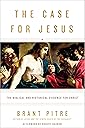
โThis book will prove to be a most effective weaponโฆ against the debunking and skeptical attitudes toward the Gospels that are so prevalent, not only in academe, but also on the street, among young people who, sadly, are leaving the Churches in droves.โโRobert Barron, author of Catholicism For well over a hundred years now, many scholars have questioned the historical truth of the Gospels, claiming that they were originally anonymous. Others have even argued that Jesus of Nazareth did not think he was God and never claimed to be divine. In The Case for Jesus , Dr. Brant Pitre, the bestselling author of Jesus and the Jewish Roots of the Eucharist , goes back to the sourcesโthe biblical and historical evidence for Christโin order to answer several key questions, including: โข Were the four Gospels really anonymous? โข Are the Gospels folklore? Or are they biographies? โข Were the four Gospels written too late to be reliable? โข What about the so-called โLost Gospels,โ such as โQโ and the Gospel of Thomas? โข Did Jesus claim to be God? โข Is Jesus divine in all four Gospels? Or only in John? โข Did Jesus fulfill the Jewish prophecies of the Messiah? โข Why was Jesus crucified? โข What is the evidence for the Resurrection? As The Case for Jesus will show, recent discoveries in New Testament scholarship, as well as neglected evidence from ancient manuscripts and the early church fathers, together have the potential to pull the rug out from under a century of skepticism toward the traditional Gospels. Above all, Pitre shows how the divine claims of Jesus of Nazareth can only be understood by putting them in their ancient Jewish context. Review: Well researched, solidly faithful; undoes the harm of decades of scholars' attempts to debunk the Gospels - Lots of reviewers have written great reviews, so this one will be fairly brief. Brant Pitre's books, this one included, are an example of what is best in the new scriptural studies emerging today. His research is solid and meticulous - no sloppiness here! - and he writes with a refreshingly strong Catholic faith. This book carefully and effectively undoes the harm of decades of scholars' attempts to debunk the Gospels. He very effectively rebuts 20th century scholars' claims that we don't know who wrote the Gospels, and that they were written so long time after Jesus' time on earth that they lack credibility as eyewitness, historical accounts. Step by step, with each chapter building on the next, Pitre shows the opposite to be true. Christians who have been disturbed by the debunkers will be strengthened, confirmed, and given much joy by this book. I've just purchased three more copies to give to friends - one of them a Catholic high school teacher and two, Catholic priests. But I think Christians of any denomination will welcome this book. Pitre's writing style is a joy to read: lucid, clear, and very easy to understand (even when I'm tired at the end of the day), without being annoyingly clever (as some popularizers can be) or pushy (as some apologists are). (I see Pitre as neither a popularizer nor an apologist; he is a scripture scholar who also is a fantastic communicator.) Without any attempt on his part to be "entertaining," Pitre has written a cliff-hanger - I couldn't put the book down! His insights - and now I'm speaking of the insights in all three of his books that I've read so far - Jesus and the Jewish Roots of the Eucharist, Jesus the Bridegroom, and this book, The Case for Jesus - are profound and deeply enriching spiritually. Although I've questioned a few of his insights, most of them have moved me profoundly, with a sense of wonder, and deep love and gratitude to Our Lord. Reading his books is, for me, a real form of prayer. I am looking forward to reading Jesus and the Last Supper (borrowed from the library to see whether I'll want to buy my own copy); this last book, per its reviewers, is aimed at a scholarly audience and different in tone from the three very accessible books I named above, but I'm expecting this book to be a treasure, too. In all of his books, Brant Pitre's lucid writing style, coupled with his solid scholarship, deep faith, and beautiful love for Our Lord, makes for a very special reading experience. I appreciate his respect for and great knowledge of Judaism, and the way he helps us to see the rich continuity between the Jewish and Christian faiths. Brant Pitreโs books are a real gift to us all. Review: Who is Jesus: A Case for Jesusโ Divinity - I thoroughly enjoyed reading Brant Pitreโs โThe Case for Jesus.โ The New Testament scholarโs contribution to Catholic popular literature on the identity of Jesus stands well above much of the plethora of material available to Christian readers today. Pitre (mostly) convincingly builds his case through careful, fact-based argumentation--even if one could draw different conclusions from the same evidence. What case is Pitre trying to make? In effect, he makes several cases leading up to his central point of who Jesus was and is. In the first part of this slim volume, he treats the authorship of the Gospels. In this matter, as in most of the book, his principle foil seems to be Bart Ehrman, a former Fundamentalist Christian-turned-apostate scholar whose popular works attempt to undermine the validity of the Gospels as meaningful historical documents and specifically the claim that Jesus is the Son of God. Contrary to Ehrman, Pitre argues for the traditional authorship of the Gospels. As two significant pieces of evidence, Pitre points out that even the earliest Gospel manuscripts and secondary references to the Gospels include the writersโ names by which we know them. The Gospels, then, were never really โanonymous.โ This leads Pitre to challenge the scholarly consensus on the dating of the Gospels, and the more controversial hypothesis that Matthew and Luke were based in part on a hypothetical, now lost (and, as Pitre points out, never referenced) book of Jesus sayings denoted by scholars as the โQโ source. As for the so-called lost or apocryphal gospels, Pitre shows that they were never really lost, that most of them were known by early Christian writers, who regarded them as forgeries. In the case of the apocryphal gospels, then, even though the internal evidence suggests that they were written by the apostles to whom they were ascribed, the attributions were never accepted. Ehrman has argued that the apocryphal gospels were not accepted by mainstream or orthodox Christianity, but were embraced by the communities, such as the Gnostics, for whom they were written. In a way, Pitre and Ehrman arenโt in contradiction here, but they just interpret the data differently. In other words, if you accept that the Church Fathers are espousing the correct version of Christianity, then Pitreโs point stands; if you hold on to the view that the Church Fathers represented one view of Christianity among many, all to be regarded equally, then the criticism of the (orthodox) Church Fathers matters less. Pitre, while not dismissing the validity of literary criticism, argues for the historical value of the Gospels. He wants to treat the Gospels as biographies of Jesus. Their inconsistencies and apparent contradictions stem not, as Ehrman would have it, from a โtelephone gameโ-like process of accretions and alterations over time, or even so much from the requirements of the communities for which they were written, as from the different perspectives and life experiences of their writers. Pitre notes the similarities between the Gospels and ancient Greco-Roman biographies in countering the ideas of Ehrman and before him, Rudolf Bultmann, in thinking of the Gospels as akin to folktales, fairy stories, and myths. Pitre stands for the literal truth of the Gospels as far as they will allow in part because two of the four Gospels tell us that they are true (Lk 1:1-4; Jn 19:35, 21:24-25). Thereโs a bit of circularity in that argument. The main case for Jesus that Pitre wants to make is for His divinity. The Gospels, as Luke Timothy Johnson and other scholars have explained, try to answer, however obliquely, the question Jesus himself poses to Peter: โBut who do you say that I am?โ (Mk 8:29). Pitre makes the case that the Gospels--even the synoptic Gospels--speak to Jesusโ being God. Pitre makes a lively, even entertaining, argument, using some passages, e.g., the reference to the sign of Jonah, in ways I certainly hadnโt thought of before. Even though as a Catholic I accept Jesusโ divinity, I am willing to allow that others may look at Pitreโs argument and reasonably come to different conclusions. One train of thinking might be this: Pitre notes that Jesus speaks in parables and riddles, and so His claims to divinity are indirect. Moreover, an outright and indeed blasphemous claim to His divinity might have put an even earlier end to Jesusโ three years of ministry. But the Gospel writers should not have been constrained by either Jesusโ particular application of rhetoric or his need to be circumspect; why did the Gospel writers not forthrightly declare that Jesus was God? I think the proper response to this is that Matthew, Mark, Luke and John wanted the person encountering the Gospels to answer for themselves who Jesus was and is. In other words, by transmitting the way Jesus conveyed who He was to His disciples perhaps they, too, would draw in and win over later followers of Christ. Itโs much more efficacious to engage the potential convert that way than simply to assert that Jesus is God. Brad Pitre has written a wonderful and engaging book. Even if you donโt agree with all of his conclusions, you will appreciate his logical and engaging discussion. This book is meant for the general reader, although it does have a scholarly apparatus by way of careful notes. An index would have been nice but this is a short book of a couple hundred pages. If youโre on a long flight, this book would be the perfect company.


| Best Sellers Rank | #14,184 in Books ( See Top 100 in Books ) #8 in Jesus, the Gospels & Acts (Books) #23 in Christology (Books) #35 in Christian Apologetics (Books) |
| Customer Reviews | 4.8 out of 5 stars 1,941 Reviews |
R**Y
Well researched, solidly faithful; undoes the harm of decades of scholars' attempts to debunk the Gospels
Lots of reviewers have written great reviews, so this one will be fairly brief. Brant Pitre's books, this one included, are an example of what is best in the new scriptural studies emerging today. His research is solid and meticulous - no sloppiness here! - and he writes with a refreshingly strong Catholic faith. This book carefully and effectively undoes the harm of decades of scholars' attempts to debunk the Gospels. He very effectively rebuts 20th century scholars' claims that we don't know who wrote the Gospels, and that they were written so long time after Jesus' time on earth that they lack credibility as eyewitness, historical accounts. Step by step, with each chapter building on the next, Pitre shows the opposite to be true. Christians who have been disturbed by the debunkers will be strengthened, confirmed, and given much joy by this book. I've just purchased three more copies to give to friends - one of them a Catholic high school teacher and two, Catholic priests. But I think Christians of any denomination will welcome this book. Pitre's writing style is a joy to read: lucid, clear, and very easy to understand (even when I'm tired at the end of the day), without being annoyingly clever (as some popularizers can be) or pushy (as some apologists are). (I see Pitre as neither a popularizer nor an apologist; he is a scripture scholar who also is a fantastic communicator.) Without any attempt on his part to be "entertaining," Pitre has written a cliff-hanger - I couldn't put the book down! His insights - and now I'm speaking of the insights in all three of his books that I've read so far - Jesus and the Jewish Roots of the Eucharist, Jesus the Bridegroom, and this book, The Case for Jesus - are profound and deeply enriching spiritually. Although I've questioned a few of his insights, most of them have moved me profoundly, with a sense of wonder, and deep love and gratitude to Our Lord. Reading his books is, for me, a real form of prayer. I am looking forward to reading Jesus and the Last Supper (borrowed from the library to see whether I'll want to buy my own copy); this last book, per its reviewers, is aimed at a scholarly audience and different in tone from the three very accessible books I named above, but I'm expecting this book to be a treasure, too. In all of his books, Brant Pitre's lucid writing style, coupled with his solid scholarship, deep faith, and beautiful love for Our Lord, makes for a very special reading experience. I appreciate his respect for and great knowledge of Judaism, and the way he helps us to see the rich continuity between the Jewish and Christian faiths. Brant Pitreโs books are a real gift to us all.
M**N
Who is Jesus: A Case for Jesusโ Divinity
I thoroughly enjoyed reading Brant Pitreโs โThe Case for Jesus.โ The New Testament scholarโs contribution to Catholic popular literature on the identity of Jesus stands well above much of the plethora of material available to Christian readers today. Pitre (mostly) convincingly builds his case through careful, fact-based argumentation--even if one could draw different conclusions from the same evidence. What case is Pitre trying to make? In effect, he makes several cases leading up to his central point of who Jesus was and is. In the first part of this slim volume, he treats the authorship of the Gospels. In this matter, as in most of the book, his principle foil seems to be Bart Ehrman, a former Fundamentalist Christian-turned-apostate scholar whose popular works attempt to undermine the validity of the Gospels as meaningful historical documents and specifically the claim that Jesus is the Son of God. Contrary to Ehrman, Pitre argues for the traditional authorship of the Gospels. As two significant pieces of evidence, Pitre points out that even the earliest Gospel manuscripts and secondary references to the Gospels include the writersโ names by which we know them. The Gospels, then, were never really โanonymous.โ This leads Pitre to challenge the scholarly consensus on the dating of the Gospels, and the more controversial hypothesis that Matthew and Luke were based in part on a hypothetical, now lost (and, as Pitre points out, never referenced) book of Jesus sayings denoted by scholars as the โQโ source. As for the so-called lost or apocryphal gospels, Pitre shows that they were never really lost, that most of them were known by early Christian writers, who regarded them as forgeries. In the case of the apocryphal gospels, then, even though the internal evidence suggests that they were written by the apostles to whom they were ascribed, the attributions were never accepted. Ehrman has argued that the apocryphal gospels were not accepted by mainstream or orthodox Christianity, but were embraced by the communities, such as the Gnostics, for whom they were written. In a way, Pitre and Ehrman arenโt in contradiction here, but they just interpret the data differently. In other words, if you accept that the Church Fathers are espousing the correct version of Christianity, then Pitreโs point stands; if you hold on to the view that the Church Fathers represented one view of Christianity among many, all to be regarded equally, then the criticism of the (orthodox) Church Fathers matters less. Pitre, while not dismissing the validity of literary criticism, argues for the historical value of the Gospels. He wants to treat the Gospels as biographies of Jesus. Their inconsistencies and apparent contradictions stem not, as Ehrman would have it, from a โtelephone gameโ-like process of accretions and alterations over time, or even so much from the requirements of the communities for which they were written, as from the different perspectives and life experiences of their writers. Pitre notes the similarities between the Gospels and ancient Greco-Roman biographies in countering the ideas of Ehrman and before him, Rudolf Bultmann, in thinking of the Gospels as akin to folktales, fairy stories, and myths. Pitre stands for the literal truth of the Gospels as far as they will allow in part because two of the four Gospels tell us that they are true (Lk 1:1-4; Jn 19:35, 21:24-25). Thereโs a bit of circularity in that argument. The main case for Jesus that Pitre wants to make is for His divinity. The Gospels, as Luke Timothy Johnson and other scholars have explained, try to answer, however obliquely, the question Jesus himself poses to Peter: โBut who do you say that I am?โ (Mk 8:29). Pitre makes the case that the Gospels--even the synoptic Gospels--speak to Jesusโ being God. Pitre makes a lively, even entertaining, argument, using some passages, e.g., the reference to the sign of Jonah, in ways I certainly hadnโt thought of before. Even though as a Catholic I accept Jesusโ divinity, I am willing to allow that others may look at Pitreโs argument and reasonably come to different conclusions. One train of thinking might be this: Pitre notes that Jesus speaks in parables and riddles, and so His claims to divinity are indirect. Moreover, an outright and indeed blasphemous claim to His divinity might have put an even earlier end to Jesusโ three years of ministry. But the Gospel writers should not have been constrained by either Jesusโ particular application of rhetoric or his need to be circumspect; why did the Gospel writers not forthrightly declare that Jesus was God? I think the proper response to this is that Matthew, Mark, Luke and John wanted the person encountering the Gospels to answer for themselves who Jesus was and is. In other words, by transmitting the way Jesus conveyed who He was to His disciples perhaps they, too, would draw in and win over later followers of Christ. Itโs much more efficacious to engage the potential convert that way than simply to assert that Jesus is God. Brad Pitre has written a wonderful and engaging book. Even if you donโt agree with all of his conclusions, you will appreciate his logical and engaging discussion. This book is meant for the general reader, although it does have a scholarly apparatus by way of careful notes. An index would have been nice but this is a short book of a couple hundred pages. If youโre on a long flight, this book would be the perfect company.
C**D
A wonderful book for all Christians who wish to defend the credibility of our bible
Brant Petrie is a wonderful Catholic Bible Scholar, having both a deep love and understcanding of his own faith and the faith of Jesus of Nazareth, Judaism. Everyone of his books and videos provide deeper insight who is Jesus, the ancient faith He handed on and even why it grew as swiftly as it did...always using the Old Testament to enlighten our understanding of the New. He couldn't do this if he wasn't completely convinced himself of Who Jesus is and the credibility of the Scriptures that reveal Him to us. That is what this book is about. Petrie takes you point by point through the arguments that modern scripture scholars and atheists put forth about the New Testament, that we have no idea who wrote the Gospels, they were written anonymously, they are myth or folktale etc. The most stunning reality is that these people literally ignore the facts; they ignore common sense The second topic he tackles is the assertion that Jesus wasn't divine because He never claimed to be God. They dismiss John's gospel, saying the idea that Jesus was God, was a later development and clearly not believed from the beginning as witness by the fact that no where in the Synoptic Gospels does Jesus claim divinity. Petrie, again using his understanding of Judaism and how ideas are expressed in the culture, clearly demonstrates that while, Jesus never stands up pounding his chest saying, "I am God", He very distinctly, even explicitly makes His divinity known. If He hadn't, the high priest would not have rend his garments and there would never have been a crucifixion. The case is made simply and in a straight forward manner. Arguments that all of us can use, with love, when the credibility of scripture is questioned. He also has a pleasant writing style. He has a wonderful sense of humor in his videos and while it is less obvious in the book, his gentle strength is quite evident. If you love scripture and the Christian faith, this is a book you will want to read.
L**N
The best "Jesus book" outside the Bible
If you are looking for a dry academic tome that spends page after page delving into the minutiae of little known biblical passages, you need to look someplace else. If, however you are looking for a fresh, dynamic and eye opening book tackling the big questions about who Jesus claimed to be, the reliability and authorship of the Gospels, and other questions surrounding the life and ministry of Jesus, then this is the book for you. Written by a well respected academic but for a non-specialist readership, Dr. Pitre's writing is engaging while not being breezy. He uses footnotes to back up his assertions but not so many as to overwhelm the reader. Don't get me wrong, I like a weighty academic tome as well as the next nerd. I would strongly recommend one of Dr. Joshua R. Brotherton's books. But nerds aren't Dr. Pitre's only intended audience. It's all of us who have been bombarded with claims that the gospels are unreliable and anonymous, written well after the lifetime of the Apostles. That Jesus never claimed to be divine or that the resurrection is nothing more than myth. It addresses these and other issues in a way that makes you resolve to buy copies of his book for family and friends even before you're halfway through the book. I know I did and I bet you will to.
R**.
An Excellent Summary Defending The Synoptic Gospels and Jesus Christ's Claims of Divinity
This book is an excellent summary that refutes the arguments made by modern theologians and scholars of the Bible that claim that the Gospels were of anonymous authorship, written late in the 1st Century AD, and Jesus of Nazareth never claimed to be divine. Bart Ehrman's (an avowed atheist that seems motivated to denigrate Christianity) shoddy scholarship is frequently given as an example to be refuted. The author cites the Apostolic Fathers and more recent scholars to show that the claims made by the revisionists are incorrect. There are several detailed 5 Star reviews, so I won't duplicate their praises for Dr. Pitre's book. The book is a quick read and there are numerous end notes. A minor criticism is that the book lacks a bibliography, but the sources are fully identified within the end notes. The author makes a couple of very interesting observations concerning the Transfiguration of Jesus and how Jesus fulfilled Scripture (namely, the Book of Jonah) that I had not considered before. One of the negative reviews cites the notes in the New American Bible as evidence that Dr. Pitre's book is incorrect. While it is true that the Catholic Church in the U.S. uses the NAB translation in its liturgy, other Biblical scholars dispute the notes included in that edition of the Bible. A similar problem exists with the notes included with Oxford's Catholic Study Bible. The notes were written by modern revisionists. I suppose you have to decide whether to accept the words of the Apostolic Fathers (i.e., men that either were or knew the Apostles) and Jesus Christ, or if -- 2000 years later -- you're too sophisticated to accept the word of some ancient guys. The author is Catholic, and the book has been granted an Imprimatur. However, since this book does not get into the weeds concerning doctrinal differences, it should be of value to any Christian.
R**S
BEST BOOK IN 20 YEARS
BEST BOOK that I have read in 20 years. This should be required reading in Christian schools. Every Christian who has graduated from high school should read this book. As one who has studied Church History, Hebrew, Aramaic and Greek myself, I had become very disappointed in what passes as scholarship, even among Ivy Leage graduates, in the 21st century. HOWEVER, Dr. Pitre's book is a great encouragement that there really are people "out-there" that display genuine scholarship. With Appreciation, Russ Hills, Ph.D.
F**E
Faith
I am a person of faith with absolute belief, trust and loyalty to Jesus, without empirical evidence. This book was in depth, well researched, interesting, educational, but changed nothing for me other than clarifying some of the faulty beliefs about the authors of and timeline of the Gospels. Putting Jesus, and his divinity, in ancient Jewish context, was a lesson in culture and semantics. The premise of this book seems to have one weak point, in my opinion. It assumes the reader believes in God. Proving that Jesus is the Son of God is groundless if the reader does not believe in God. Write a book proving there is a God. Go from there.
A**A
A Case for Jesus' Divine Self-Conception
This is a very meticulously reasoned argument attempting to show that Jesus had a Divine self-conception. That is, Jesus believed, and claimed, that he was God. Pitre begins by posing C.S. Lewisโ famous โtrilemmaโ to the reader. If Jesus claimed to be God, we have three ways to respond โ he was either a Liar, Lunatic, or Lord. Pitreโs work in this book strives to bring us back, face to face, with this trilemma. To accomplish this, Pitre needs to defeat another popular notion in the modern mind โ that Jesus, or at least much of the Gospel material about him, was a โLegend.โ If Pitre can show that Jesus did, in fact, historically claim Divinity, we will be forced to respond to his claim and answer Jesusโ own question for ourselves โ โWho do you say that I am?โ To accomplish this Pitre first attempts to show that the Gospels are historically reliable. He believes that, contrary to modern scholarly opinion, the Gospels were indeed written by the authors they have been attributed to (Matthew, Mark, Luke, and John), that they were intended to portray historically accurate biographical pictures of Jesus, and that they were written much more closely to the time of Jesus than liberal scholars assume (Pitre tentatively dates the synoptic Gospels all before the destruction of the Temple in AD 70). These three pieces of evidence โ authorship, intent, and dating โ all lead Pitre to the conclusion that the Gospels give us historically accurate information about Jesus. After setting the stage by arguing for the accuracy of our sources, Pitre delves into the synoptic Gospels (Matthew, Mark, and Luke) and tries to show that although it is not always explicit (i.e. Jesus doesnโt say โI am God, worship Me.โ) even the synoptics portray Jesus as claiming Divinity. Using evidence such as Jesusโ use of the titles โSon of Manโ and โI Am,โ prophesy from the book of Daniel, Jesusโ โstilling of the storm,โ the transfiguration, the pronouncement of the forgiveness of the parlyticโs sins, the riddle about the Son of David being Davidโs โLord,โ, the crucifixion, and the resurrection, Pitre makes his case. In the end, he believes that not only do the Gospel authors portray Jesus as Divine, but that these claims came from Jesus himself. Thus we are led, full circle, back to the trilemma. We can call Jesus Liar, Lunatic, or Lord, but not, according to Pitre, a Legend. This was a really interesting read from a conservative scholar. His exegesis of many Gospel passages illuminate how the Hebrew Scriptures provide a much needed backdrop for understanding each story. The Gospels are much more nuanced than we might first think and oftentimes one saying or image may evoke whole passages or concepts from the Old Testament that would have been apparent to early Jewish readers. As Pitre argues, understanding the Jewish context of the synoptic authors helps in understanding their Christology. In the end, I agree with Pitre that the Gospels are generally more historically accurate than โmainstreamโ scholars give them credit for. I think itโs plausible that the Gospel titles reveal their true authors and that they were written fairly early after Jesusโ death (before the fall of Jerusalem). I also agree that the Synoptics may implicitly ascribe Divinity to Jesus โ although I donโt think that is an open and shut case. If there were more explicit cases in the synoptic Gospels where Jesus claimed Divinity, it would help his case. It still seems to me the only explicit sayings we have come from the Gospel of John, which even Pitre doesnโt seem to argue is historically reliable (at least he doesnโt focus on this in the book). Itโs probably outside the scope of this book, but I would have loved to see Pitre address the idea of Jesus as Apocalyptic Prophet. He interacts with several scholars who accept this notion (EP Sanders, Dale Allison, Bart Ehrman, John Meier) and itโs a viable option in the world of Historical Jesus scholarship. I think itโs a relevant topic in all discussions surrounding a Historical Jesus and can be a large factor in how one answers the question of Jesusโ identity. This study is worth reading regardless of your theological persuasion, and Pitreโs arguments deserve serious consideration.
C**N
Me encanto
Excelente libro, los catรณlicos de a pie no tenemos acceso a mucha informacion historica, o por estar en las lenguas originales, estos recursos lo ponen al alcance de nuestra mano
M**S
Like other reviewers I could hardly wait to finish it
Dr Brant Pitre is a Roman Catholic. I am a Baptist Protestant Christian and remain of the opinion that the Reformation was not a mistake or something to be repented of. I hope anyone reading my comments will take this into account when they read this review. This is a truly fabulous book. Like some of the other reviewers I could hardly wait to finish it and managed to complete within a week: a major achievement for me. What do I like about it? Firstly, the pace of the book: Brant Pitre keeps up brisk pace. The author pushes the reader forward with considerable energy. In nearly 200 pages I don't believe any of it could be removed; there is no padding here. The book is a challenge to sceptics such as Bart Ehrman. Brant seeks to establish that, even in the Gospels of Matthew, Mark and Luke, Jesus made it very clear that he knew exactly who he was and that he was drawing his people to faith in him as God made flesh. Brant starts with C.S. Lewis statement that Jesus claimed to be God, and thus Jesus was either a Liar, a Lunatic, or the Lord. To these three possibilities Brant points out that a growing fourth option over the last 50 years has been "Legend" - the Gospels, especially the first three Synoptic Gospels, were the result of a huge game of Telephone (USA or "Chinese Whispers" UK equivalent) and were written long after the events they to describe. The book is in two main sections: in the first section Brant answers the sceptics with arguments that the Synoptic Gospels were written much earlier than sceptics wish us to believe, and are reliable eyewitness accounts. Many arguments are presented and I believe this section is the more valuable section of the book. The second section seeks to answer the question Did Jesus really claim to be God or did this myth develop and grow over the years until the Gospel of John was written late first century or later? This section is also good, but I would have preferred it to be anything up to twice as long. It is a little disconcerting to read a few times throughout the book "as Pope (so and so) says in his book....". But, nevertheless, I strongly recommend this book. It is a fairly easy read and would make a good present for all sorts of people. I concur with another Amazon reviewer that in view of the fact that Jesus of Nazareth fulfils so much of the prophecies of the coming Messiah in the book of Daniel it is very surprising that Jews today are still so resistant to Jesus's claims.
F**A
Wonderful book
A must read for whoever wishes to clarify the origins of our faith. Very clear written, I found it wonderful and helped me in my spiritual journey.
C**E
Perfect
The autor makes powerful arguments about the consistency of the gospel and the Jesusโ claim of being God. For any Christian is a great way to grow in knowledge to support our faith
A**L
A personal crusade of Bart Ehrman & company against the Gospels.
I Have to say, that this book really deals with the issue of the anonymity of gospels. Simple language, easy to read. Packed with both internal and external evidences. This book suggests that Bart Ehrman is fully not honest when it comes to showing all the evidences. Dr Pitre did an amazing job in putting all necessary information that a general reader needs to see for himself and conclude about the claims of Dr Ehrman about the gospels. ๐ Go for it.
Trustpilot
1 month ago
1 month ago