The Memory Police: An enthralling Japanese dystopia you’ll never forget
Desertcart purchases this item on your behalf and handles shipping, customs, and support to USA.
Description
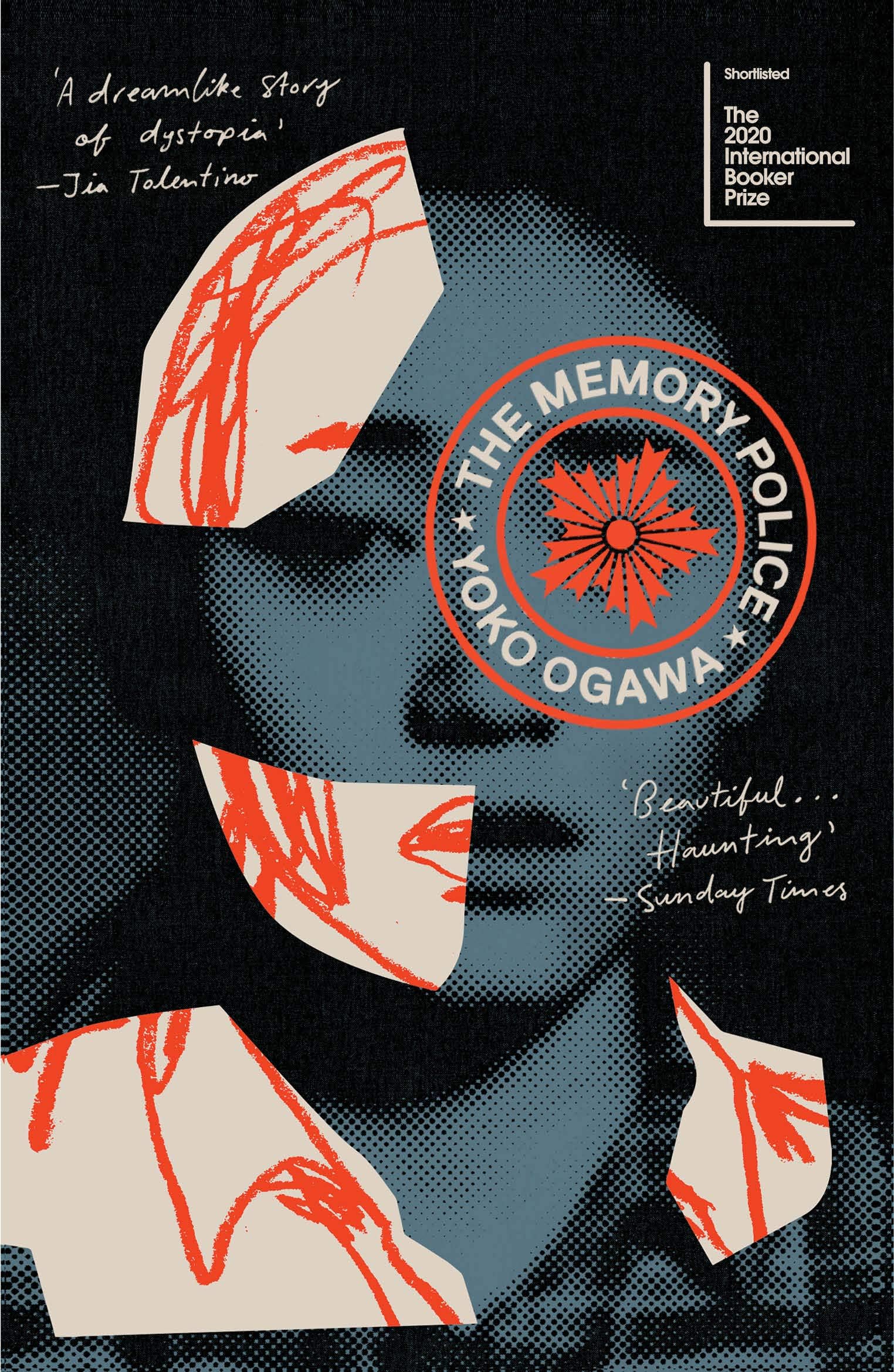
On an unnamed island, objects are disappearing: first hats, then ribbons, birds, roses. . . Most of the inhabitants are oblivious to these changes, while those who remember live in fear of the Memory Police. To the people on the island, a disappeared thing no longer has any meaning. It can be burned in the garden, thrown in the river, or handed over to the Memory Police. Soon enough, the island forgets it ever existed. When a young novelist discovers that her editor is in danger of being taken away by the Memory Police, she desperately wants to save him. For some reason, he doesn't forget, and it's becoming increasingly difficult for him to hide his memories. Who knows what will vanish next? 'Beautiful... Haunting' Sunday Times 'This timeless fable of control and loss feels more timely than ever' Guardian 'A dreamlike story of dystopia' Jia Tolentino WHAT READERS ARE SAYING ‘I cried. . . cracking ending’ 5* reader review ‘I loved it!’ 5* reader review ‘A must read’ 5* reader review ‘Worth 6 stars… what a novel!’ 5* reader review ‘Dark and unsettling - a fantastic read’ 5* reader review *SHORTLISTED FOR THE INTERNATIONAL BOOKER PRIZE*


Specifications
| Dimensions | 12.9 x 1.8 x 19.7 cm |
| Edition | 1st |
| Isbn 10 | 1784700444 |
| Isbn 13 | 978-1784700447 |
| Item Weight | 205 g |
| Language | English |
| Print Length | 288 pages |
| Publication Date | 6 Aug. 2020 |
| Publisher | Vintage |
Reviews
User
Terrifying dystopian novel...
I'm travelling to Japan in a few weeks and have been trying to read a few popular Japanese novels to try to find some of the cultural references. This book appears in many of the recommendation lists so I thought I would try it.274 pages split into 28 chapters, this book was published in Japan during 1994 then as an English translation in 2019.The unusual concept if the first thing I noticed. Gradually objects were being "disappeared" in some sort of thought control exercise reminiscent of 1984. This is a definite dystopian idea with the level of control being physical and psychological.Secondly the language stands out as being beautifully descriptive - even more impressive than normal as this is a translation. I had to read this slowly to appreciate the wonderful writing - e.g. "eyes as still as a lovely swamp deep in the woods" - very atmospheric.....I found myself quickly fascinated by the idea of items being removed permanently from the world and memories of them being taken at the same time. The mechanics of the removals are curious - sometimes a natural process yet some disappearances are much more forced.The story considers how different people deal with their memories - some clinging on and others happy to get rid of them.The novel encourages the reader to think and I found some very modern issues to consider. Physical photographs are uncommon in our modern society but digital photos are at almost epidemic levels - how does this effect the memory of the actual event? This is something that is explored in the novel.The main character is a writer and her novels are a reflection of her world, thinking about the relationship between imagination and memory - which feeds which? Her novel seems to allow her to voice feelings that she is unable to articulate in her "real world".As well as comparisons to George Orwell novels, I also thought about Margaret Attwood books - particularly thinking about the Memory Police with their long coats and big boots.So many elements of the plot are scary, with one of the most terrifying seeing how easily people accept what they are told to think. Again, parallels to our society today.Spooky that this book will sit next to 1984 in my bookshelf (obviously I store books alphabetically by author......).
User
Not the story I expected
I'll admit to being sucked in by the appearance in the daily deals and the synopsis which suggested something altogether more "thrilling". This is a strange, slowly paced story with an intriguing concept that leaves a lot of work to the reader.The pretext is that for - most - inhabitants on an unnamed island, objects can "disappear", both physically and mentally. Those who do not forget, are seemingly disappeared by the titular "Memory Policy". The central character is an author who takes it upon herself to secret away a friend who is able to retain memories and the story follows the outcome of this through to the end.This is not a conventional mystery/thriller novel but more of a fable, parable or allegory for all sorts of issues, that seemingly centre around resistance of tyranny, significance of memory and quite frankly the nature of reality and experience.An important quote for me was "The meaning isn't important. What matters is the story hidden deep in the words. You're at the point now where you're trying to extract that story. Your soul is trying to bring back the things it lost in the disappearances."Do not read this if you want fast-paced narrative with explanatory backstory context and a neat and tidy ending that answers all your questions. But, if you're happy with something fuzzier and thought provoking (although I remain ever confused) this is for you.
User
Good writer, terrible storyline
This book was like someone constantly promising you something amazing but never following through. Really just... a wasted opportunity. Like she couldn't actually think of where to go with it. Something akin to ending on "and then she woke up and it was all a dream" every time you think something interesting is about to happen. Just utter disappointment.I will, however, give the writer kudos on her good writing. She has a way of making even boring dialogue interesting, but by half way through even her writing could not salvage the burning wreckage that was this book. It was like she read 1984 by Orwell and attempted to make the most boring version of it possible. There is zero political intrigue - and the only moment there was she ruined it - there was no intrigue at all in fact. It was just a boring book with an absurd ending that had no point or reason and failed to explain any of the ridiculous points she made. I would give it 1 or 2 stars for storyline but her obvious writing abilities knocked it up to 3.
User
Confusing.
I found this a rather confusing book. It’s beautifully written and the translation is really good, and it’s a strange idea, but, I’m not sure about the disappearing of things. I understand that if something disappears, it goes and you can’t find it, but in this book, people get rid of the things that have ‘disappeared’ so that’s really the wrong word. It is an intriguing book, but confusing…..for me, anyway. Been thinking about this book long and hard and I think my only problem with it is the use of the word ‘disappeared’ when I think it should be ‘destroyed.’ I wonder what you will think.
User
A really good book
This book is an unusual take on dystopian novels. It is part dystopian, part commentary on loss of free will, part commentary on friendship, and the importance of memory.The novel within a novel works really well here, as it brings together the subconscious feelings of our main character.The writing here is really good, making the characters so very believable and heck, even the premise seems almost possible. Their is a feel of dread throughout and despite the lack of hope the characters love and friendship keeps them going.This is unusual but really well written book and I found it both thought provoking and readable.
User
Disappointing - too clever for its own good, lucky to avoid two stars
This fell rather badly short of the hype. It's not remotely Orwellian (I'm a big Orwell fan) because it's so airy-fairy, unthreatening - becoming utterly absurd in places - and the narrator in both stories are rather pathetic and helpless. I'm sure there are plenty of people out there who will tell me it's all so very terribly clever and highbrow. But it's not. It's a bit of a thought experiment, but like a lot of thought experiments it holds together like a paper bag full of water. There are some redeeming moments, but it's a hell of a trudge to get to the them, and I'm not sure whether my delight was because they came close to the end, and I couldn't wait to finish. I've also yet to meet an adult who doesn't know what a Tsunami is, and to think there's a Japanese person of any age who doesn't simply doesn't ring true.Is it an allegory? If so, what do I think it's an allegory about? Probably about personal relationships.
User
Baffling
There were some interesting ideas and clearly this is about loss and memory. And yes, it is sometimes beautiful. On the other hand it's interminable and is it about anything other than loss and memory? Anything at all else? Because, unless I've missed something, it's relentlessly low key and depressing - in spite of the beautiful bits and the quite clever bits and the dramas of destruction and removal. Also, the main idea driving the book is the gradual loss of real things and their memories from the island. But clearly the people are remembering those things since they talk about them. The main protagonist returns to various places where things have disappeared and then mentions them. She hasn't forgotten them at all. But she makes a big deal about how she doesn't remember how they felt to her. Not the same thing. And then there's the odd and rather claustrophobic relationship with her ex-teacher. Who does remember things.In the end I felt that this was a very long book which set up a situation which could have been interesting but never went anywhere. Perhaps I'm just wedded to narrative and structure and plot.On yet a third hand, another reviewer mentioned the current climate of gradual erosion of rights and beliefs - I didn't miss this element but I wanted more of it. If that was what the book is really about.Do read it though, it will make you think?
User
It leaves thoughts...
... so it’s a good read.I’ve got so much to think about once I close the book after reaching the last page, the final sentence. Why do we need memory? If the things were not there in the first place, how could we know the things? And the next question is: why do we need to remember “things”, “stuffs”?Then, alas, what will be that intangible emotion I attach to some things, people, places that have a special place in my heart? That every time I remember, I’ll go “ahhhh”.That is the special bonus you’ll get after reading the book - reflect.Like any dystopian story, but wait, I rather think this is utopian, it’s not the lost of the memories, but to the treasure the protagonist felt for one old man and R.This is a story that’ll make you sit up and think about things, people and places you would cherish, not own.
User
Love it
It is actually great ,twisted storyline
User
very original
a haunting dystopian tale from the nineties, by an interesting japanese writer
User
A Japanese take on totalitarian erasure
I enjoy dystopian novels, and I also love discovering Japanese authors, so for those two reasons, I picked up The Memory Police by Yōko Ogawa.The story intrigued me right away — it’s set on an unnamed island where objects begin to “disappear.” But these aren’t just physical disappearances; they vanish from memory too. Birds, perfume, photographs, hats — once something is declared gone, it becomes meaningless. The island’s residents forget what the object even was. The Memory Police enforce this forgetting, ensuring all remaining traces are destroyed, and punishing those who resist or remember.The unnamed narrator is a young novelist who continues to write even as the world around her slowly erodes. When she discovers that her editor, R, still remembers the disappeared things, she hides him in a secret room in her home to protect him. I won’t say much more about the plot — I think it’s better experienced than explained.I noticed that around 70% of reviews give it four stars or higher, while about 30% rate it lower. I can understand both sides.As for me, I appreciated the themes: the slow erosion of freedom and identity, the effects of individual and collective amnesia, the systematic erasure of culture and society and how memory preserves meaning and love. It’s a quiet kind of dystopia, more emotional than action-driven.Some say the pacing is slow — and it is — but I think it works. Totalitarianism doesn’t always arrive with a bang; it creeps in quietly, and that’s the kind of tension this story captures. The translation reads well, and the writing builds the necessary atmosphere that draws us into the world that the narrator lives in.Overall, I found it enjoyable and also unsettling too — if enjoyed is the right word for something so dystopian. 5/5 for me
User
prescient and contemporary
It took me almost 2 years to appreciate the insight and prescience of Ogawa Yoko in this story.My first impression was, 'Oh, another version of 1984, Fahrenheit 451, and etc. in a setting of Anne Frank's Diary'.Then, the extraordinarily coercive measures enforced by a number of governments during the pandemic and the subsequent conflicts on a global scale made this seemingly an out-of-touch dystopian story more imminent one to which I can heartily relate.It is a surprise that young Ogawa created this poignant story almost three decades ago when the western world was immersed in a state of euphoria celebrating an open and free society, audaciously declaring 'the End of History' and before the arrival of such words as algorithm, digital ID, disinformation, and virtual reality to average citizens minds.What would happen to your own existence, if your cognitive world is forcibly infiltrated and manipulated by uncontrollable forces? We are now witnessing the answers unfolding in digital sphere when quite a few dissident voices are being banned/cancelled from the platforms for, among other reasons, challenging official narratives. They simply cease to exist in the matrix. With their archives too being taken down, there remains no trace of the very existence in digital world and thereby in minds of other people as well. What else could be more an appropriate title than 'Memory Police' in this age of online censorship?A touch of forlornness of 'Never Let Me Go' by Kazuo Ishiguro and helplessness of 'Snow' by Orhan Pamuk. To me, however, this Ogawa's work reflects more philosophical and insightful than those of two Nobel laureates.A monotonous style and slow development of the story may deter non-Japanese readers. I recommend prospective readers to read patiently to the last page.
User
"¡Un acierto total de principio a fin!"
"Superó por completo mis expectativas. La calidad de los materiales es notable desde el primer momento. Es un producto muy intuitivo, cumple perfectamente con lo que promete y la relación calidad-precio es insuperable. ¡Un acierto total!"
Common Questions
Trustpilot