
Desertcart purchases this item on your behalf and handles shipping, customs, and support to USA.
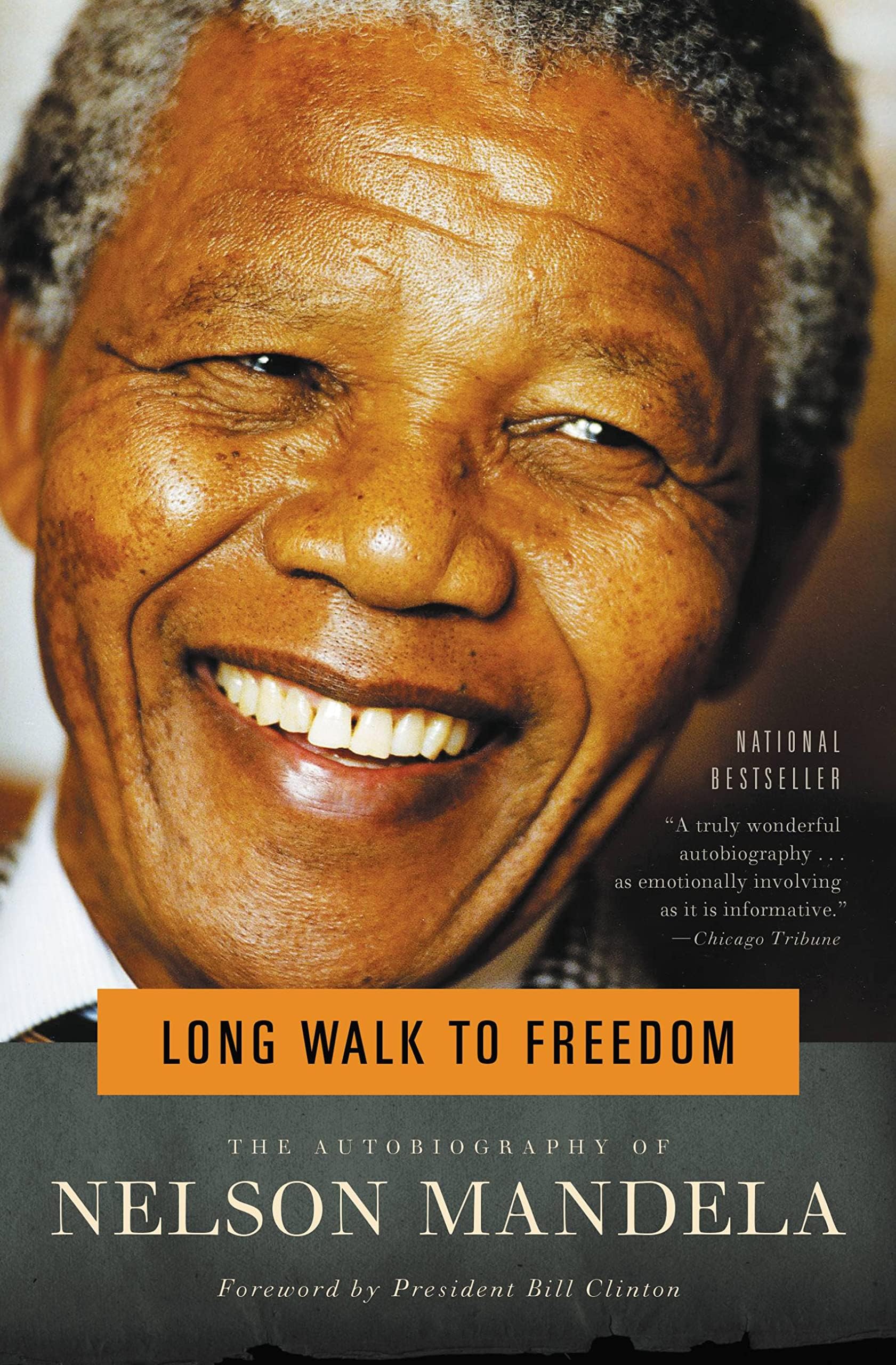
"Essential reading for anyone who wants to understand history โ and then go out and change it." โPresident Barack Obama Nelson Mandela was one of the great moral and political leaders of his time: an international hero whose lifelong dedication to the fight against racial oppression in South Africa won him the Nobel Peace Prize and the presidency of his country. After his triumphant release in 1990 from more than a quarter-century of imprisonment, Mandela was at the center of the most compelling and inspiring political drama in the world. As president of the African National Congress and head of South Africa's antiapartheid movement, he was instrumental in moving the nation toward multiracial government and majority rule. He is still revered everywhere as a vital force in the fight for human rights and racial equality. Long Walk to Freedom is his moving and exhilarating autobiography, destined to take its place among the finest memoirs of history's greatest figures. Here for the first time, Nelson Rolihlahla Mandela told the extraordinary story of his life -- an epic of struggle, setback, renewed hope, and ultimate triumph. The book that inspired the major motion picture Mandela: Long Walk to Freedom. Review: Happy Reading! - This is one of the best Autobiography ever written. Nelson Mandela, one of the most iconic figures in my life time, if not the Only One. Mandela's early years in rural South Africa, his experiences with the unjust world of apartheid, his time in prison all describe how character is made, nurtured, and ultimately revered. Only a strong character can embrace humility in spite of the injustice he and his family, and his race have suffered. this book is a a genuine reflection of Madiba's remarkable personal journey; a chronicle of the struggle against systemic racism, and the fight for human dignity. I am not from South Africa but I like to call him Madiba - his African name. Despite the injustice Mandela, his family, and the black of South Africa suffered, Mandela emerges as an icon... a man who despite being surrounded by injustice remained fundamentally committed to peace, humanity and justice for all -- and that includes his former perpetrators - The all white National Party It is an essential read for anyone seeking to understand the depths of personal sacrifice, political activism, and the unshakable resolve required to overcome oppression - whether at home, in the world, and in politics. Warning: This book is really long and yet, so so worth it. It is well written and it will captivate you! Every leader will benefit in reading the character of a man like Mandela. Hate never serve anyone including the haters. Mandela is a rare bread. Give yourself a year to read it, if you're not an avid reader. Read 10 pages each night if you don't read long. It may take you 2 years, but it's OK. I have the Audio on Audible and I like to read the paper book while I listen to the audiobook. Using 2 sensories guarantees that I won't miss a bit. Review: A great look into a class act of a human being, - I've always been partial to books that open ones eyes to the injustices and wrongs being committed in the world that get swept under the rug unless close attention is paid to them or any attention period. With that being said, when I ordered Mandela's autobiography it was a bit of a departure for me as a few of my books this summer have been. The only book that touched me in the way this one did was Kite Runner. Long Walk to Freedom encapsulates Mandela's childhood, struggles as a freedom fighter, political activist, long imprisonment and ends with his election as the president of South Africa. What struck me about this autobiography is that it wasn't boring and was actually informative. About the only thing I knew about Nelson Mandela before I read this book was that he was a political activist from South Africa that was imprisoned for a very long time. I had no idea what he went through to change South Africa into what it is today. I had no idea just how much patience and just how often Mandela was tried with seemingly no light at the end of the tunnel. I don't know that there is much to review from the book itself that hasn't already been discussed. Some have mentioned a lack of Mandela's childhood, but I didn't really think it was that necessary to put much about his childhood into the book. What really matters was the decision to become active against the apartheid of South Africa in his teenage years. I love books like this. For me, they help me to become less ignorant of the world and what is going on in it. I'll openly admit I do have some prejudice against members of certain races sometimes for either a) myths that popular culture has created or b) just my own damn stubbornness. I had had an inkling that the history of South Africa wasn't all roses but I had never known the extend until I read this book. As a person, Nelson Mandela is absolutely one of the greatest human beings I've had the pleasure of reading about. For those of us that suffer from depression and anxiety as I do, stories like Mandela's seemingly boundless determination and willingless to rise up again and again in the face of adversity is absolutely remarkable and incredibly inspirational. How Mandela can say that prison never broke his spirit even after 27 years is just unbelievable. Granted, Mandela didn't have much of a choice all of those years but to make the best of it and to keep his spirits up. It definitely puts things in perspective for me when I complain sometimes about being bored at various events or when I negatively think about an event I'm going to before I even give it a chance to see if I like it. In a sense, Mandela's book gives you hope that we can make a difference and one person does indeed matter in the grand scheme of things. The only mild gripe I had was within the first few pages where Mandela is describing all the tribes with names and it almost seems like made-up code names, but then again for us Westerners anything with a few more consonants in it sounds funny at times I suppose. Overall, Mandela's autobiography is a very smooth and enjoyable read. It's just fascinating learning about a man that's been an inspiration for so many and lost so much along the way to becoming who he is today. -Travis Stein.
| Best Sellers Rank | #15,194 in Books ( See Top 100 in Books ) #1 in South African History #4 in Historical African Biographies (Books) #8 in Social Activist Biographies |
| Customer Reviews | 4.7 out of 5 stars 11,366 Reviews |
Z**N
Happy Reading!
This is one of the best Autobiography ever written. Nelson Mandela, one of the most iconic figures in my life time, if not the Only One. Mandela's early years in rural South Africa, his experiences with the unjust world of apartheid, his time in prison all describe how character is made, nurtured, and ultimately revered. Only a strong character can embrace humility in spite of the injustice he and his family, and his race have suffered. this book is a a genuine reflection of Madiba's remarkable personal journey; a chronicle of the struggle against systemic racism, and the fight for human dignity. I am not from South Africa but I like to call him Madiba - his African name. Despite the injustice Mandela, his family, and the black of South Africa suffered, Mandela emerges as an icon... a man who despite being surrounded by injustice remained fundamentally committed to peace, humanity and justice for all -- and that includes his former perpetrators - The all white National Party It is an essential read for anyone seeking to understand the depths of personal sacrifice, political activism, and the unshakable resolve required to overcome oppression - whether at home, in the world, and in politics. Warning: This book is really long and yet, so so worth it. It is well written and it will captivate you! Every leader will benefit in reading the character of a man like Mandela. Hate never serve anyone including the haters. Mandela is a rare bread. Give yourself a year to read it, if you're not an avid reader. Read 10 pages each night if you don't read long. It may take you 2 years, but it's OK. I have the Audio on Audible and I like to read the paper book while I listen to the audiobook. Using 2 sensories guarantees that I won't miss a bit.
T**S
A great look into a class act of a human being,
I've always been partial to books that open ones eyes to the injustices and wrongs being committed in the world that get swept under the rug unless close attention is paid to them or any attention period. With that being said, when I ordered Mandela's autobiography it was a bit of a departure for me as a few of my books this summer have been. The only book that touched me in the way this one did was Kite Runner. Long Walk to Freedom encapsulates Mandela's childhood, struggles as a freedom fighter, political activist, long imprisonment and ends with his election as the president of South Africa. What struck me about this autobiography is that it wasn't boring and was actually informative. About the only thing I knew about Nelson Mandela before I read this book was that he was a political activist from South Africa that was imprisoned for a very long time. I had no idea what he went through to change South Africa into what it is today. I had no idea just how much patience and just how often Mandela was tried with seemingly no light at the end of the tunnel. I don't know that there is much to review from the book itself that hasn't already been discussed. Some have mentioned a lack of Mandela's childhood, but I didn't really think it was that necessary to put much about his childhood into the book. What really matters was the decision to become active against the apartheid of South Africa in his teenage years. I love books like this. For me, they help me to become less ignorant of the world and what is going on in it. I'll openly admit I do have some prejudice against members of certain races sometimes for either a) myths that popular culture has created or b) just my own damn stubbornness. I had had an inkling that the history of South Africa wasn't all roses but I had never known the extend until I read this book. As a person, Nelson Mandela is absolutely one of the greatest human beings I've had the pleasure of reading about. For those of us that suffer from depression and anxiety as I do, stories like Mandela's seemingly boundless determination and willingless to rise up again and again in the face of adversity is absolutely remarkable and incredibly inspirational. How Mandela can say that prison never broke his spirit even after 27 years is just unbelievable. Granted, Mandela didn't have much of a choice all of those years but to make the best of it and to keep his spirits up. It definitely puts things in perspective for me when I complain sometimes about being bored at various events or when I negatively think about an event I'm going to before I even give it a chance to see if I like it. In a sense, Mandela's book gives you hope that we can make a difference and one person does indeed matter in the grand scheme of things. The only mild gripe I had was within the first few pages where Mandela is describing all the tribes with names and it almost seems like made-up code names, but then again for us Westerners anything with a few more consonants in it sounds funny at times I suppose. Overall, Mandela's autobiography is a very smooth and enjoyable read. It's just fascinating learning about a man that's been an inspiration for so many and lost so much along the way to becoming who he is today. -Travis Stein.
A**M
Great life story
It was very fascinating to read about the life of a great personality. He was born in a small village in rural South Africa, his father passed away when he was a small child,and he was brought up by his uncle-who was a tribal chief. As a child he went to the best schools a black man could go to. He valued educations, but mentions how society and the education system were wrought with white supremacy. He runs away from home along with his cousin to avoid getting married to someone he didn't like, he carries a gun along with him and is apprehended by the police but manages to convince them to release him. In the city he takes up small jobs to make ends meet and pursues his law studies through correspondence. While working as a clerk in a law firm he is introduced to the ideals and principles of the ANC-African National Congress. He gets increasingly involved with the ANC and becomes an important member of it. He writes how oppressive apartheid was-black people lived in ghettos and needed passes to commute any where. But he also mentions his own mistakes- how he used to get carried away when he used to give speeches and argue cases. In the freedom struggle when they try everything and nothing works against the white government they decide to start a militant organisation. Mandela acknowledges that he was part of the decision making process;he expresses surprise when he is conferred the Nobel Prize because he had started a militant organisation. He goes on a world tour collecting funds. He comes back and is in hiding when he is caught by the police.He is sentenced to life imprisonment. In the prison also there is discrimination between indian prisoners and black prisoners. In jail he is offered shorts to wear-because blacks were considered boys-but refuses to wear them, so the prison guards give him a choice to wear shorts or undergo solitary confinement for a few days. He chooses solitary confinement but after a few days he pleads with the security guards to let him out. It is fascinating how even in prison there are liberal jailers too. He develops an interest in gardening and pursues his education from prison.He mentions how while he was severely tested he too questioned his own choice of joining the freedom struggle. There are certain thinks in his life you can relate to-like the mistakes he has made or the challenges he has faced-and can take solace and confidence from the fact that everybody faces them in life. But there are qualities in him-like the fact that he had the confidence to disagrees with Gandhi regarding the form of freedom struggle and choose to start a militant organisation, even when he hadn't been acknowledged as a great leader and could have been branded a terrorist; having the will power to believe in a cause for so long; having the courage to be honest about his life-which I can't relate to. I think this is what makes him great in my eyes and he is an inspiration to me.
G**R
Interesting Autobiography
I find it difficult to rate autobiographies, as it feels a bit like you're determining a life's worth, so I'll try to stick with what I felt did and didn't work in the writing. Most people are familiar with Mandela and how he went from political prisoner to president of South Africa, but here is the story in his own words. I felt that while overall the narrative followed an A-to-B path, there were places where it seemed to drag. The beginning was dry as it dealt with histories of different tribes and Mandela's own inauspicious early childhood. There were times he described meeting people for the first time, and went into in-depth descriptions of where they attended school and what degrees they had. I can only assume he did this to show that the other men involved in the struggle against apartheid were educated men, not "commoners," but it felt forced and inauthentic. Imagine writing your own autobiography and including a passage like this: "It was the 17th of April, 2006 at a party in the house of Jim Jennings whose parents were out of town on a diplomatic trip. Jim, a political science major introduced me to Ernie Bale, who held a B.A. in Russian history and was into artisan goat cheese. Ernie, in turn, introduced me to Calvin Winters and George Galvez. Calvin was a neurosurgeon who also held a masters in journalism and spoke 12 languages, and George was a college professor who taught art history and collected the toenail clippings of 15th century Indian princesses." It just doesn't flow. What did work, and was thoroughly chilling considering the current political climate in the USA, was the description of how the government of middle-aged white men sought to retain positions of power by enforcing segregation of and sowing discord among non-white families. Mandela's sense of injustice and his fight for freedom and equality for people of all skin hues was inspiring. Frankly, I don't know if I would have the same rigid sense of ideals if keeping them kept me away from wife and family for a quarter century. For all that it contained, also notable was the lack of inclusion of some of Winnie's involvement in less-than-savory activities. I was looking forward to reading about this, but Mandela glossed it over without detailed description, and attributed it to her basically "falling in with a bad crowd." It is possible to love someone while acknowledging their faults, but here they seem to be ignored in favor of, "She was my wife and stood by me while I was imprisoned, so how can I not support her in turn?" Overall, it was a good read, and I'm not sorry I read it, but it could have benefited by better editing and having fewer information dumps. 4 out of 5 stars
G**Y
Astounding
I am planning on studying abroad in South Africa this summer and have spent the past few months doing research about the complicated ethnic history of the country. Long Walk to Freedom was the first book that I bought, and yet it was the last one that I actually started. I have read a number of biographies and autobiographies about famous political or social figures and often find them to be nothing more than a chore (Steve Jobs anyone?), and as much as I was curious about Nelson Mandela's life I was reluctant to open the book. The last thing that I would have expected is that I would be completely captivated by a story that reads more like a political thriller or the script for an Oscar-winning biopic (which should seriously be made by the way). You hear a lot about the kind of sacrifice that is required by political leaders, but for some reason all to often I feel disconnected from what that really entails from a distinctly human perspective. What a lot of people don't realize is that the policy of Apartheid was not instituted until after World War II, following the election of the Nationalist Party in South Africa. It is not to say that there was any kind of equality between races before that time, but it is truly heartbreaking to read an African's perspective of the rise of a modern party rooted in a policy of separation, hate and inequality. The idea that Mandela witnessed all this and continued to escalate his devotion to the cause of freedom on deeper and deeper levels to counteract the aggressive behavior of the government. It costs him his family, his law practice and in many cases very nearly his life. He freely admits over and over again throughout the text that there were moments of terror, moments when he was sure the cause was lost, and yet his response to aggression never varied from passionate, aggressive response. Before reading Long Walk to Freedom I would have told you that there are virtually no excuses for armed terrorism or civil war. In America we hear the stories of Martin Luther King Jr and Gandhi and their firm commitment to nonviolent resistance. Mandela initially points to these tactics as the best way to achieve freedom, but over and over again the government of South Africa attempts to crush resistance with a heavier hand than the United States or India and Mandela carefully outlines how this requires a response of equal strength. Suddenly I realized the "line" that must be crossed to the point when military action is the only necessary action. I embraced a struggle completely beyond the scope of my own life thanks to this masterfully delivered text, and it left a firm impression on me. I came back to this page on Amazon to buy two more copies of this book to give to each of my divorced parents, one for Mother's Day and one for Father's Day. I don't really expect them to read it, but I believe that the message of strength that Mandela writes about can be universally beneficial. I absolutely recommend this text.
A**A
Liberation of ones mind and soul!
It took me several weeks to read 'Long Walk to Freedom' and I winded my book on December 4, while receiving news of Mr Mandela's demise on the following day. The autobiography of Nelson Mandela (aka Madiba) is one of the finest work I've ever read. The journey from a political prisoner to the President is the most inspiring story of the struggle that filled me with unimaginable zeal and strength. His early years of life when he transcended from a runaway village boy into a determined, visionary leader is phenomenal. As a reader one can actually visualize the those 27 years of imprisonment, the portraying of anti-apartheid movement, drawing of each character and its supportive role in prison, the emotions and feelings are so evident that I almost have had tears in my eyes when he mentions his walk through the gate and he decided to free himself from the imprisonment of the hatred for those who literally made his life a living hell. While going through his book, I loved that part "I learned that courage was not the absence of fear, but the triumph over it. I felt myself more times than I can remember, but I hid it behind a mask of boldness. The brave man is not he who does not feel afraid, but he who conquers that fear". These words left me speechless and impacted my own thinking process in the most powerful and positive way. It is not easy to choose your country over your family. Surely, Nelson Mandela lost much more than anyone has for the freedom of its people. The book beautifully captures the ideology behind the freedom movement in South Africa, while it also mentions in bits the contemporaries like Gandhi or Nehru. The best take away from the book was the believe that one can be robbed with everything except ones heart and mind! I highly recommend this book for young readers who can train and treat themselves with words of wisdom, fearless leadership demonstration, intellectual growth, and insight into the historical anti-apartheid revolutionary movement in South Africa. The story of Nelson Mandela will always be the most cherished book for me. Thank you Nelson Mandela for your story, R.I.P.
R**N
An honest and humane account of inhumane times
Mandalaโs account is as compelling as the man. Simply and beautifully written. Definitely a twentieth century legend for the as ages.
C**N
The chains on one are the chains on all
The European global expansion that started in the 15th century brought a destructive and oppressive centuries-long tide of colonization to the rest of the world. From Africa to India to North and South America, the white European travelers saw land and people that were different from themselves, and, in a stunning move of incomprehensible hubris, declared these things their own. Similar to many freedom fighters around the world, Nelson Mandela dedicated his life to breaking these chains of oppression in his home country of South Africa. From a young age, Mandela was raised to be an advisor to the local African chief in his native Transkei region of South Africa. Because of this, he was allowed the privilege of education. He began studying law at the age of 25 at the University of Witwatersrand and was the only black student. That same year, he joined the African National Congress, a group that would be the centerpiece of the political drama of his life. The ANC was the main political organization opposed to the governmentโs policies of apartheid, which literally translates to โapartness,โ and โrepresented the codifications in one oppressive system of all the laws and regulations that had kept Africans in an inferior position to whites for centuries.โ The ANCโs stated goal was a racially desegregated country with equal voting rights for all citizens. They called for an end to the governmentโs racist and oppressive laws and practices. Along with his longtime colleague Oliver Tambo, Mandela opened the first black owned and operated law firm in the capital city of Johannesburg. The two men were swamped with clients from the start, being the main choice for politically oppressed black people looking to challenge the white governmentโs unfair treatment of them in open court. His years spent arguing cases on behalf of his clients proved to him the realities of the system within which he was operating. โAs a student, I had been taught that South Africa was a place where the rule of law was paramount and applied to all persons, regardless of their social status or official position. I sincerely believed this and planned my life based on that assumption.โ Sadly, his career as a lawyer showed him a truth he was not prepared forโthat there was a wide difference between what was taught in the lecture room and what occurred in the courtroom. โI went from having an idealistic view of the law as a sword of justice to a perception of the law as a tool used by the ruling class to shape society in a way favorable to itself. I never expected justice in court, however much I fought for it, and though I sometimes received it.โ In 1960, the government declared the ANC (and various other defiant organizations) illegal, and Mandela was forced to live underground as an outlaw in his own country. He was eventually caught and arrested in 1963 and sentenced to life in prison. Famously, he served only 27 of those years, 18 of them in a small cell on Robben Island (located a couple miles off the coast of Cape Town.) โI could walk the length of my cell in three pacesโ he remembers, and โwhen I lay down, I could feel the wall with my feet and my head grazed the concrete at the other side.โ Still, even within the confines of prison walls, the struggle continued. Mandela fought for and slowly received better prison conditions while continuing to advise the freedom fighters on the outside. During the decades of his imprisonment, the world slowly began to take notice of the South African struggle. Sanctions by the U.N. and other political pressures mounted, and in February of 1990, Mandela was set free. Within a few years of his release, the ANC (along with several other prominent organizations) successfully campaigned the current government for a new constitution and system of democracy for the people. Huge numbers of blacks, Indians, and other minorities voted for very first time in their lives, and in 1994 Nelson Mandela became the first democratically elected president in South Africaโs history. His election officially ended three and a half centuries of European colonialism and oppression. The United States fought a bloody and violent war for their independence from Europe in the late 1700โs. Mahatma Gandhi fought a spiritual war of non-violence and gained Indiaโs independence in 1947. These centuries saw many countries achieve independence from their oppressors, from Angola gaining independence from Portugal in 1975 to Venezuela declaring independence from Spain in 1811. While Mandelaโs struggle for freedom is a truly inspiring one, it is sadly not a unique one. โFreedom is indivisible,โ he wrote towards the end of his autobiography, โthe chains on any one of my people were the chains on all of them, the chains on all of my people were the chains on me.โ
E**O
A very good book
Came in a good condition
D**T
Love it.
Nice book to read. My hubby likes it
E**L
Certaines pages sans encre
Certaines pages sont sans encre
C**N
Best book ever
This is the best book i ever read !!! OMG a life changing after reading this book. I am in love with this man !! He is so strong, so humble... OMG a must read
N**I
5/5
A simple yet inspiring read , great book!
Trustpilot
1 month ago
1 week ago