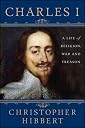
Charles I: A Life of Religion, War and Treason: A Life of Religion, War and Treason
Product ID: 196882401
Desertcart purchases this item on your behalf and handles shipping, customs, and support to USA.
When Charles Stuart was a young child, it seemed unlikely that he would survive, let alone become ruler of England and Scotland. Once shy and retiring, an awkward stutterer, he grew in stature and confidence under the guidance of the Duke of Buckingham; his marriage to Henrietta of Spain, originally planned to end the conflict between the two nations, became, after rocky beginnings, a true love match. Charles I is best remembered for having started the English Civil War in 1642 which led to his execution for treason, the end of the monarchy, and the establishment of a commonwealth until monarchy was restored in 1660. Hibbert's masterful biography re-creates the world of Charles I, his court, artistic patronage, and family life, while tracing the course of events that led to his execution for treason in 1649. Review: TRAGIC LIFE AND REIGN - His life could have been much better had his older brother Henry lived. That way England could have had its King Henry IX and Charles, the Duke of York, could have been a great art director. Instead death took his brother's life and sent Charles to a position in which he was so over his head that he lost it. During the course of this book I wondered how a monarchy so powerful in the days of the Tudors could become so weak and feeble. Part of King Charles' problem was he was the son of King James. King James I had often boasted of his absolute power and wondered why his ancestors allowed an institution such as Parliament to come into existence. If King James had only done a tad bit of research he may have discovered that Edward Longshanks stole the idea from Simon De Montfort. King Edward I thought it would be best to have a meeting where the various interests of the kingdom could discuss any problems the kingdom was facing, raise money, and if anyone had any grievances to be able to air them. This allowed the King to govern more effectively and for most of its history Parliament was just a state of being as opposed to an institution with its own interests. For many effective monarchs, Parliament was just a method used by the King to strengthen his own power. One could imagine that Edward I, Edward III, Edward IV, Henry VII, Henry VIII, or Elizabeth I could have handled the problems the King Charles had to deal with far more effectively than he did. For King Charles I was brought up listening to his father's theories and believed every one of them. Charles was clearly the wrong man for the job. He was so stubborn in his position that he would never negotiate until it was too late, and then, when willing, he wanted the previous terms offered to him. He had almost no sense of his situation. Despite being absolutely sure in his position he was slow to action. Everything he tried from his attempts to arrest Pym and other members of the Commons to his battle strategies he was too slow and unimaginative. "Underlying melancholy there was a certain lack of sympathy in the King's responses, a defensive rejection of an intimacy that might reveal him as a less assured man than he tried to be. Few men ever felt that Charles really liked them. Few servants ever felt that their services were truly appreciated: if they did not do their duty they were politely dismissed, if they did do their duty they were doing what was expected of them, they were treated well but rarely with a hint of warmth or affection." (p.136) After his defeat and imprisonment he remained as stubborn as ever, he made several attempts to escape and he tried to hold out hoping things might turn his way again. His moment of glory and greatness came, ironically, at his lowest moments. An American statesman, Senator Al Gore Sr., once observed that in defeat one could often let their glory out. Charles could and did at his trial and execution. He directly challenged the court questioning its legitimacy. His bravery and dignity at his own execution turned him into a martyr. The one drawback of this book is there is no real discussion on the legitimacy of King Charles' trial. When Louis XVI is tried by his people it is done with the monarchy abolished and the former King reduced to just plain citizen Louis Capet. When King Charles is tired he is tired as the King of England. That the King could be tried under existing laws is something absurd when one thinks of it. Yet this is never brought up, the only thing about the legal irregularities brought about was the mention that most of the nation's top attorneys refused to participate. In the end I found this to be a great an informative book. King Charles I was probably the second worst King of England, with only King Edward II being worse. Was Charles a tyrant like Richard II? I do not think so. Yes, he could be brutal, but no more than the Tudors or many other great kings and monarchs of this time period. I do feel what replaced him was, in the end, far worse. Review: Good Overview; Missing Some Depth - The author covers the highlights in the life of Charles I, and his writing style kept me interested throughout the book. For those looking for a general biography but don't want to delve too deeply into the English Civil Wars, this book will satisfy. The book has many period illustrations throughout. The background of the English Civil Wars, and the wars themselves, are covered, but only thinly. As a biography, the book does focus mainly on the perspective of Charles I and most events that occur outside of his vantage are not covered, or only mentioned. I was disappointed that the book does not mention any of the events following the king's execution: his head is chopped off, and all we know about the aftermath are some details of his lying-in-state and burial (and that his wife was upset). It ended very suddenly. A brief epilogue would have satisfied. Overall: a nice introduction. (Not related to the book itself, this book was just dropped into a too-large box that was not taped or glued, just clumsily folded together. The book was not damaged while it slid around in its box, but it could have easily fallen out or had its corners/pages bent. Very shoddy packing.)
| Best Sellers Rank | #635,087 in Books ( See Top 100 in Books ) #819 in Royalty Biographies #908 in England History #981 in Historical British Biographies |
| Customer Reviews | 4.4 out of 5 stars 133 Reviews |
J**N
TRAGIC LIFE AND REIGN
His life could have been much better had his older brother Henry lived. That way England could have had its King Henry IX and Charles, the Duke of York, could have been a great art director. Instead death took his brother's life and sent Charles to a position in which he was so over his head that he lost it. During the course of this book I wondered how a monarchy so powerful in the days of the Tudors could become so weak and feeble. Part of King Charles' problem was he was the son of King James. King James I had often boasted of his absolute power and wondered why his ancestors allowed an institution such as Parliament to come into existence. If King James had only done a tad bit of research he may have discovered that Edward Longshanks stole the idea from Simon De Montfort. King Edward I thought it would be best to have a meeting where the various interests of the kingdom could discuss any problems the kingdom was facing, raise money, and if anyone had any grievances to be able to air them. This allowed the King to govern more effectively and for most of its history Parliament was just a state of being as opposed to an institution with its own interests. For many effective monarchs, Parliament was just a method used by the King to strengthen his own power. One could imagine that Edward I, Edward III, Edward IV, Henry VII, Henry VIII, or Elizabeth I could have handled the problems the King Charles had to deal with far more effectively than he did. For King Charles I was brought up listening to his father's theories and believed every one of them. Charles was clearly the wrong man for the job. He was so stubborn in his position that he would never negotiate until it was too late, and then, when willing, he wanted the previous terms offered to him. He had almost no sense of his situation. Despite being absolutely sure in his position he was slow to action. Everything he tried from his attempts to arrest Pym and other members of the Commons to his battle strategies he was too slow and unimaginative. "Underlying melancholy there was a certain lack of sympathy in the King's responses, a defensive rejection of an intimacy that might reveal him as a less assured man than he tried to be. Few men ever felt that Charles really liked them. Few servants ever felt that their services were truly appreciated: if they did not do their duty they were politely dismissed, if they did do their duty they were doing what was expected of them, they were treated well but rarely with a hint of warmth or affection." (p.136) After his defeat and imprisonment he remained as stubborn as ever, he made several attempts to escape and he tried to hold out hoping things might turn his way again. His moment of glory and greatness came, ironically, at his lowest moments. An American statesman, Senator Al Gore Sr., once observed that in defeat one could often let their glory out. Charles could and did at his trial and execution. He directly challenged the court questioning its legitimacy. His bravery and dignity at his own execution turned him into a martyr. The one drawback of this book is there is no real discussion on the legitimacy of King Charles' trial. When Louis XVI is tried by his people it is done with the monarchy abolished and the former King reduced to just plain citizen Louis Capet. When King Charles is tired he is tired as the King of England. That the King could be tried under existing laws is something absurd when one thinks of it. Yet this is never brought up, the only thing about the legal irregularities brought about was the mention that most of the nation's top attorneys refused to participate. In the end I found this to be a great an informative book. King Charles I was probably the second worst King of England, with only King Edward II being worse. Was Charles a tyrant like Richard II? I do not think so. Yes, he could be brutal, but no more than the Tudors or many other great kings and monarchs of this time period. I do feel what replaced him was, in the end, far worse.
C**R
Good Overview; Missing Some Depth
The author covers the highlights in the life of Charles I, and his writing style kept me interested throughout the book. For those looking for a general biography but don't want to delve too deeply into the English Civil Wars, this book will satisfy. The book has many period illustrations throughout. The background of the English Civil Wars, and the wars themselves, are covered, but only thinly. As a biography, the book does focus mainly on the perspective of Charles I and most events that occur outside of his vantage are not covered, or only mentioned. I was disappointed that the book does not mention any of the events following the king's execution: his head is chopped off, and all we know about the aftermath are some details of his lying-in-state and burial (and that his wife was upset). It ended very suddenly. A brief epilogue would have satisfied. Overall: a nice introduction. (Not related to the book itself, this book was just dropped into a too-large box that was not taped or glued, just clumsily folded together. The book was not damaged while it slid around in its box, but it could have easily fallen out or had its corners/pages bent. Very shoddy packing.)
L**Z
Not a likeable king
Charles I married a Catholic woman. Readers should know given English history, that his reign was doomed from the start for this very action. He believed in the "Divine Rights of Kings", which means Kings are God's chosen people and what they say matters above all else. This didn't settle well with parliament and ended in the English Civil War from 1642-1651. Once captured, he was tried and executed by beheading.
S**™
Moderately interesting
Unsure how accurate this data is, though it seems some of Charles' personality may have been accurately described at times in some chapters. I wonder whether his alleged temper flared as it is described by the author. Does not seem this was his nature. Historic texts tend to portray Charles I as a gentle soul, generally. Interesting spots in the text. Not substantive enough to win the Booker Prize.
J**I
Good short biography of Charles I
I enjoyed this book a lot. The amount of good research that went into it is considerable. The book also has quite a number of good illustrations relating to the life of Charles and other notable people in the story and the times in which they lived. This is a good study of what happens when a person who does not have the personal strengths and special qualities needed for high position has high position thrust upon him. Though he was quite a fine gentleman and much more moral in his personal behavior than most other monarchs, he was not really king material. Unfortunately, he never suspected that of himself. Once placed in tumultuous times, Charles became doomed. Hibbert does an excellent job of showing how Charles' personality became his fate, or as the saying goes: "Character is destiny." This book is well worth the attention of anyone intersted in Charles I, the English Civil War, the Reformation, the 17th century, monarchy or the psychology of power.
S**N
Great read
Wonderfully written, very readable as this was my first Bio on C1
A**E
Great book
Amazingly well told story of Charles I. The author researched his life very thoroughly! Easy to read and very entertaining!
T**W
Great!
Very interesting. It was great to learn what happened to cause his death. Times were changing and he was caught in between.
S**R
A page turning biography
Firstly, don't be mistaken, as I was, that this book has been written by David Starkey. Dr Starkey has written a forward but the author is Christopher Hibbert. I bought this book because I wanted to learn more about Charles I. What sort of person would steadfastly refuse to compromise and negotiate and willingly pay the ultimate price? Having read this book I have the beginnings of an answer to my question. Dr Starkey says in his forward that you will not find much by way of the causes of the English Civil War. I beg to disagree. I think the reasons are set out if somewhat covertly. I do agree with Starkey that you will come to understand Charles I and that when this book is completed you will wish to read other books of Hibbert. The reason why is because the facts are set out clearly without pomposity or bias. They are made both accessible and interesting: Hibbert has created a page turning biography, which I commend to you.
S**M
Great read!
Even for non-history buffs this is a very readable biography of the british monarch with enough back story given that the reader doesn't get confused but not so much that one feels patronised. I am kind of annoyed that I read it after having returned from GB not before, because I am sure I missed some insights due to lack of Knowledge
A**B
good read
well written
C**E
Well written & good for exam preparation
I read this book to prepare for my History A level exam, and i found that it helped me a great deal to remember topics in class that i hadn't before. A good book to quote from in the actual exam as well. Good value for money.
J**L
Compelling work but poor ilustrations
Reasonable and factual account of the life and times of Charles I. Makes an easy and compelling reading. The ilustrations are poorly reproduced due to lack of paper quality (paperback edition).
Trustpilot
3 weeks ago
2 weeks ago