
Desertcart purchases this item on your behalf and handles shipping, customs, and support to USA.
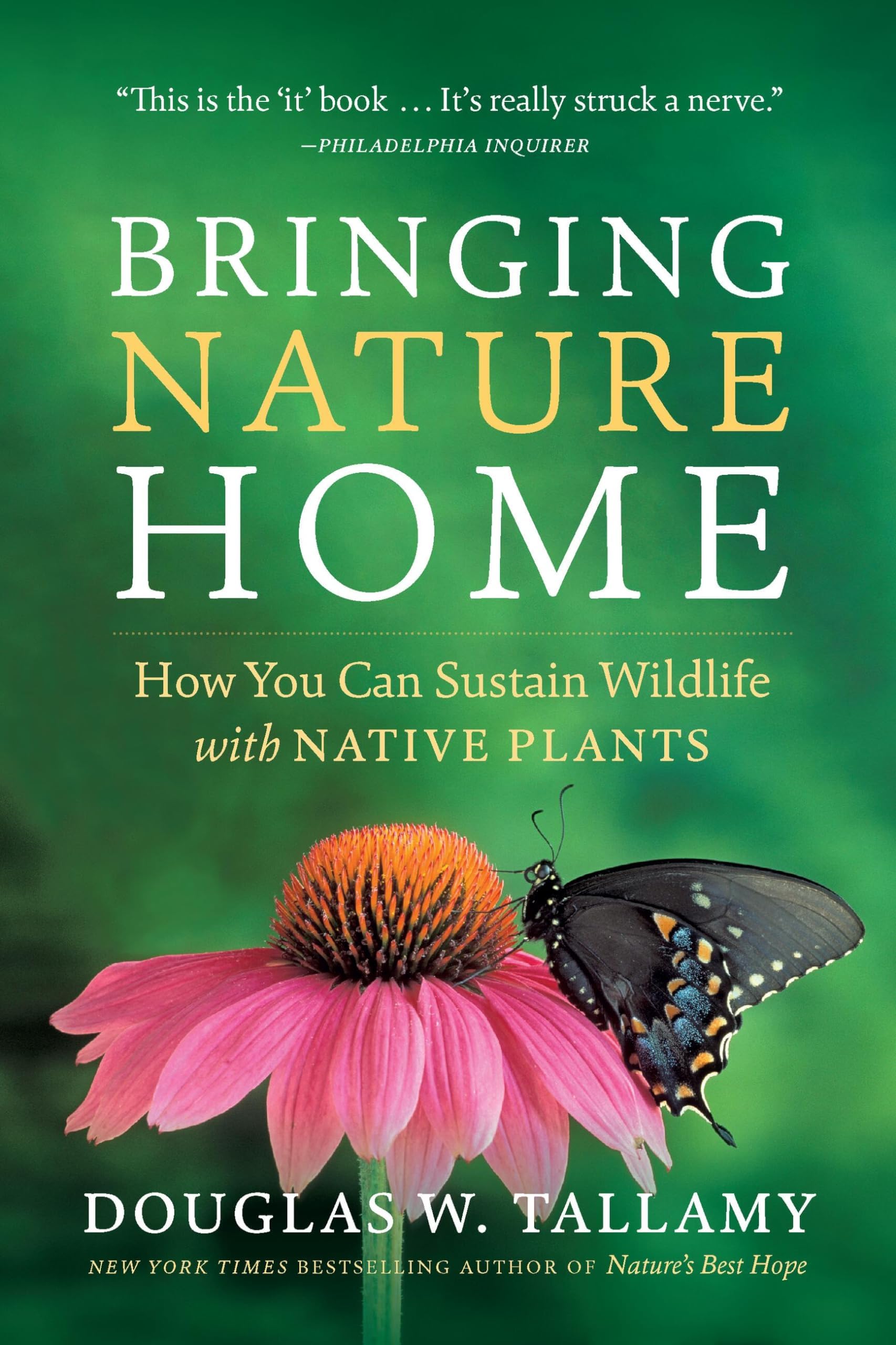
This "miracle" of a guide book shows readers how to maintain harmony within their environment (Margaret Renkl, The Washington Post ). In his groundbreaking book Bringing Nature Home , Douglas W. Tallamy reveals the unbreakable link between native plant species and native wildlife—native insects cannot, or will not, eat alien plants. When native plants disappear, the insects disappear, impoverishing the food source for birds and other animals. As development and habitat destruction accelerate, there are increasing pressures on wildlife populations. Luckily, there is an important and simple step we can all take to help reverse this alarming trend: everyone with access to a patch of earth can make a significant contribution toward sustaining biodiversity by simply choosing native plants. By acting on Douglas Tallamy's practical and achievable recommendations, we can all make a difference. Review: A Real Treasure, an Indispensable Resource, and a Terrific Gift - This book is terrific. I had checked it out of the library, and then wanted to have a copy of my own. I have gardened and farmed for many years, on a small suburban plot of land. I have seen all the farmland around me be developed into large suburban subdivisions, and seen yards that used to be natural and graceful become more and more sculpted, with lawns that are more like carpets, and a formality more like a living room than a beautiful outdoor space. Lawn services have replaced individual homeowner mowing, and now instead of just mowing, there is edging and blowing and removal of any natural leaf debris that is so important for the many species that a complex ecosystem supports. Many developments have Homeowner Associations that require that it be done this way. Many of them also require the right to approve the planting of anything beyond 3 feet of the house, resulting in a loss of diversity there as well. Even in neighborhoods without HOA's, the trend has been toward sculpted yards and the planting of ornamentals that are often non-native. As a result, there are fewer and fewer songbirds, butterflies, and more and more "pests" that the birds and other wildlife would have managed. I was contributing to this without realizing it, by planting non-native trees or shrubs based only on "beauty," but not with an eye to the species they support or the healthy ecosystem they make possible. Dr. Tallamy explains all of this so easily and clearly, and the many charts and lists provide accessible and quick information. This book can guide you to better choices when you're adding a new tree or shrub or flower to your yard, it can guide you to simple steps that add a very important diversity to your yards plants, and the species they support. It's like, without realizing it, you can offer so many beneficial species food to support a healthy complex web, or inadvertently be part of the starving and loss of beneficial species we want and need, just by choosing a different plant or tree, or doing things a little differently. He shows you how to do this within what you already have. And you notice the difference in even a short period of time. The word seems to go out, and the species arrive! In the past two days I have seen two different species of butterfly I never saw here before. Even things as simple as leaving a "weed" I would have otherwise removed - milkweed - we were actually able to watch monarchs go from egg to larvae to chysalis to butterfly, in our own yard, from plants in my ditch I would have just mowed down. There are so many things we can't do as we see the loss of farmland and wild places around us. This book shows how much we can do, even on a little yard, or even balcony. My yard is more beautiful, and the birds and wildlife is a joy every single day. I even appreciate and notice beneficial insects I never would have noticed, and possibly would not have had. It also helps us pass on the information so our friends and neighbors - and HOA boards - don't inadvertently contribute to the problem, and help them see how easily they can make a positive difference. The book is well written, clear, positive, approachable. It is not a "just for scientist" kind of book, and he does not lecture. It's delightful to read. I love this book and recommend it highly, for yourself, and as a gift for every gardener/homeowner that you know. It is not a book your gardening/homeowner friends might have known about or thought of, but they will appreciate it, and use it, and pass the information on to their children. And in the best kind of way - it doesn't preach, it's like taking a walk outside with a favorite uncle who knows all about the beauty and wonder around you, and is generous and fun enough so you can too. Review: Super Practical - Tallamy makes a great case for gardening with native plants to restore the base of the food web – arthropods – which will in turn support populations of other wildlife, like birds. The book includes a great breakdown of productive insect host plants, information about various arthropod families, and a great index of native plants by region (broken down by how they might be used in the garden).


| Best Sellers Rank | #14,486 in Books ( See Top 100 in Books ) #1 in Landscape #4 in Regional Gardening & Horticulture #19 in Ecology (Books) |
| Customer Reviews | 4.8 out of 5 stars 1,450 Reviews |
F**S
A Real Treasure, an Indispensable Resource, and a Terrific Gift
This book is terrific. I had checked it out of the library, and then wanted to have a copy of my own. I have gardened and farmed for many years, on a small suburban plot of land. I have seen all the farmland around me be developed into large suburban subdivisions, and seen yards that used to be natural and graceful become more and more sculpted, with lawns that are more like carpets, and a formality more like a living room than a beautiful outdoor space. Lawn services have replaced individual homeowner mowing, and now instead of just mowing, there is edging and blowing and removal of any natural leaf debris that is so important for the many species that a complex ecosystem supports. Many developments have Homeowner Associations that require that it be done this way. Many of them also require the right to approve the planting of anything beyond 3 feet of the house, resulting in a loss of diversity there as well. Even in neighborhoods without HOA's, the trend has been toward sculpted yards and the planting of ornamentals that are often non-native. As a result, there are fewer and fewer songbirds, butterflies, and more and more "pests" that the birds and other wildlife would have managed. I was contributing to this without realizing it, by planting non-native trees or shrubs based only on "beauty," but not with an eye to the species they support or the healthy ecosystem they make possible. Dr. Tallamy explains all of this so easily and clearly, and the many charts and lists provide accessible and quick information. This book can guide you to better choices when you're adding a new tree or shrub or flower to your yard, it can guide you to simple steps that add a very important diversity to your yards plants, and the species they support. It's like, without realizing it, you can offer so many beneficial species food to support a healthy complex web, or inadvertently be part of the starving and loss of beneficial species we want and need, just by choosing a different plant or tree, or doing things a little differently. He shows you how to do this within what you already have. And you notice the difference in even a short period of time. The word seems to go out, and the species arrive! In the past two days I have seen two different species of butterfly I never saw here before. Even things as simple as leaving a "weed" I would have otherwise removed - milkweed - we were actually able to watch monarchs go from egg to larvae to chysalis to butterfly, in our own yard, from plants in my ditch I would have just mowed down. There are so many things we can't do as we see the loss of farmland and wild places around us. This book shows how much we can do, even on a little yard, or even balcony. My yard is more beautiful, and the birds and wildlife is a joy every single day. I even appreciate and notice beneficial insects I never would have noticed, and possibly would not have had. It also helps us pass on the information so our friends and neighbors - and HOA boards - don't inadvertently contribute to the problem, and help them see how easily they can make a positive difference. The book is well written, clear, positive, approachable. It is not a "just for scientist" kind of book, and he does not lecture. It's delightful to read. I love this book and recommend it highly, for yourself, and as a gift for every gardener/homeowner that you know. It is not a book your gardening/homeowner friends might have known about or thought of, but they will appreciate it, and use it, and pass the information on to their children. And in the best kind of way - it doesn't preach, it's like taking a walk outside with a favorite uncle who knows all about the beauty and wonder around you, and is generous and fun enough so you can too.
A**N
Super Practical
Tallamy makes a great case for gardening with native plants to restore the base of the food web – arthropods – which will in turn support populations of other wildlife, like birds. The book includes a great breakdown of productive insect host plants, information about various arthropod families, and a great index of native plants by region (broken down by how they might be used in the garden).
T**I
A must-read for anyone who cares about birds and the environment
This book has fundamentally changed the way I look at gardening. I've always thought of myself as an environmentalist, but before this book, I never really GOT the fundamental connection between humans and the natural world. What was missing? The insects. Insects can't eat ornamentals. Birds don't have food if there aren't insects! Oh my gosh. Does Tallamy drive home the importance of a diversity of insects to support the populations we care about. Usually, gardeners prefer a more bug-free environment, sterile even, because bugs eat plants, and we want plants to be beautiful. Tallamy turns that on its head and shows us just how terrible it is to keep only these ornamental species that feed nobody. Sure, birds might eat some ornamental berries -- after they've raised their young. But when they are raising their young? They rely on the species that ornamental gardeners detest -- the caterpillars and other creatures that might eat a leaf or two of native plants. I have been working with native plants in my area for a couple of years, but this book has really given me the impetus to ramp up the outreach that I do. I am already planting at least half native species in my front yard (while my neighbor works to perfect his sterile lawn). My work allows me to advocate for all gardeners to consider adding native species to their properties and supporting the species that help birds and other creatures survive. This book backs me up with solid studies about what planting natives really does -- and the harm that out-of-control ornamentals (like Japanese honeysuckle) really are doing. Yikes. Tallamy reminds us that the future of our planet may depend on small, individual efforts like these. That is the one ray of hope in this book, that we may be able to make a difference in this rampaging Anthropocene era. This is a heck of a book and full of very useful information. If it doesn't light a fire under your butt and get you considering putting in at least a little patch of species native to your area to help the birds and other wildlife, then you've got some soul searching to do, my friend.
J**E
Anew paradigm for our yards and gardens
The book club of the Southeast Gateway Group chose this book for our March meeting, and it was everything that I could have hoped for. Dr Tallamy presents the problem of non-native species in our yards and gardens in a new light -- that of feeding the insects that are necessary for feeding the birds and other higher animals. I write an environmental stewardship column for a number of churches in our area, and I cited him in my latest. I think it is worth reprinting here: Several years ago two little girls with newly gifted butterfly nets came up to me while I was working in the yard and plaintively asked where had all the butterflies gone. I showed them the little signs in a neighbor's yard saying the lawn had been sprayed with herbicide and insecticide and then pointed to all the other little signs in the neighborhood. I then led them to our back yard and my wife's "natural area" where we saw a couple of butterflies that were too quick to be caught. My little "teaching moment" was mostly on insecticides. Butterflies and their wild looking, hairy or horned larva (caterpillars) are insects and were being killed by those sprays. If you were fortunate enough to attend Douglas Tallamy's program at the Golden Rondelle a few weeks ago or to read his book "Bringing Nature Home", then you know that herbicides, killing off most everything other than our alien ornamentals, alien grasses in our monoculture lawns and possibly our imported trees, are at least as much a danger to the natural ecosystem as insecticides. Modern commercial agriculture and suburban developments have combined to destroy most of the natural ecosystems that used to be here. These ecosystems supported the great diversity that the European explorers and immigrants found here. Agriculture is not going to resurrect this diversity or we won't be fed, so it is up to suburbanites and rural dwellers to do our best. A few simple reminders: All the energy for every animal (except a few species near the thermal vents on the bottom of the ocean) is captured from the sun by plants. All the oxygen we breathe is produced by plants. Thirty-five percent of all the energy going from plants to higher animals goes through insects. Many insects eat only one species or family of plants with which they co-evolved. That is why it is so important to have native plants in our yards and gardens. Without native plants those insects will die off and the birds and other animals depending upon them for food may also be extirpated (local) or become extinct (global and final). We are already losing too many species. We can resist this trend by greater use of native trees, shrubs, grasses, sedges and other herbaceous plants. It need not be a totally native garden, but give diversity a chance. Let's not lose the butterflies!
K**S
Very good information
I bought this book after hearing Mr. Tallamy give a shorter version of the same in a Continuing Education seminar. As a Landscape Architect and outdoorsman, I felt a great appreciation for what Mr. Tallamy was trying to explain. The idea that most of the insects and caterpillars that support our native wildlife cannot and will not eat many of the things that we plant is a concept that most people just don't think about. I'm certainly not a "greenie weenie" activist type, but I find myself rethinking the plants that I specify and the existing plants around me in a new light. They're not just aesthetic, they serve a purpose in the food web that supports the ecosystems in which we live. If the bugs can't eat them, then the bugs will leave... and the things that eat those bugs won't be there either. If you like song birds, butterfiles and other wildlife; this is a good book to read. If you are a landscape architect, avid gardener or just plain weekend warrior this book has information that you can understand and appreciate. I highly recommend it, especially for professionals.
C**S
Lots to Learn
I love Tallamy’s books. He is a professor of entomology and ecology. He uses his home site as his laboratory, as well as direct students on environmental projects. I have learned a great deal from his writings, and will automatically buy any new title. I have also heard him speak on two occasions. I feel many people have lost their connection to nature or do not understand how we humans are intrinsically linked. This book helps explain how we can use our homesite to support nature and the critters that share our space. There is so much research that supports how humans need to spend time in nature to keep oneself balanced. I think much of the anxiety we hear about and the need for drug use is directly due to our lack of understanding that we are part of the natural world, and need to foster our connections to it. If you want to bring nature home to create a more healthy habitat for you and your family, this book is the place to start. There is a great deal of practical information, as well as basic ecological concepts. Read it!
N**Y
book: Bringing Nature Home
This is (so far, at least) the magnum opus of the godfather of eco-system restoration. In the first 10 chapters, Tallamy lays out the massive insult that European colonizers have inflicted on the ecological system they found in America. In the remainder of the book, he prescribes measures that even the small property owner (or manager) can take to undo the damage. He frames the goal as achievable and supremely desirable. He lives on 20-acre restored farm, where he practices what he preaches, and thus adds immeasurable value to his thesis. I had a restorative program going in my own woods, and have refined it under Tallamy's guidance.
D**O
Gardeners companion
Good book for gardeners
V**A
An amazing book and guide to native nature gardens
I have already a copy of this book at my working place, author of this book has done tremendous job for conserving natives and natural habitats. Bringing Nature Home is an excellent work.
S**S
Excelente visión del paisaje
El libro me ayudo con la materia de Ecología del Paisaje, los alumnos de arquitectura tenían la visión de cementar cualquier espacio y colocar pasto únicamente, ahora saben los inmensos beneficios que trae consigo un buen diseño de paisaje y jardinado usando plantas nativas.
M**2
Great, great book
This is such a great book that explores why gardening with native plants (to your region) matters. So much attention in the (limited) public discourse on invasive species, gardening and native plants is just focused on planting native plants. This gives readers the larger why as it relates to overall biodiversity.
D**E
Oh, I wish it was written about the UK
But the concept of native planting carries over, its just the plants are different.
S**G
It has changed the way I garden and how I see the beauty in it
An important book - it has changed the way I think of gardens and and I how I judge their beauty. Ornamentals that I once prized now fall short of the mark - they look pretty but have no depth. They don't "do" anything. The formerly "unattractive" swamp milkweed that was relegated to the far corner of the yard has now captured my imagination - it played host to a half-dozen monarch caterpillars this past summer. It was the first time I'd seen a Monarch in three years! The "boring" wild cherry tree is now my favourite because of its super-role as a host in my yard - not least of which is the swarm of swallowtail butterflies that sip from the lilac tree. The "so-so" echinops were crawling with bumblebees, including a rare yellow-banded bumblebee. I now tolerate imperfection because it means there's life in my garden and food for the beneficial insects that keep the pests in check. When I see my neighbours rake up leaves and put them on the curb I help myself to the bounty and shake my head at their foolishness for putting so much work into discarding garden gold. I planted several new natives and nativars this past summer and can't wait to see what they bring. I have snakes and toads and even the odd turtle up from the stream, countless birds that I've never seen before. I'm now a gardener of all the life that inhabits my yard, and my garden is glorious. Buy this book. It will change the way you garden and how you perceive the beauty in it.
Trustpilot
2 weeks ago
2 weeks ago