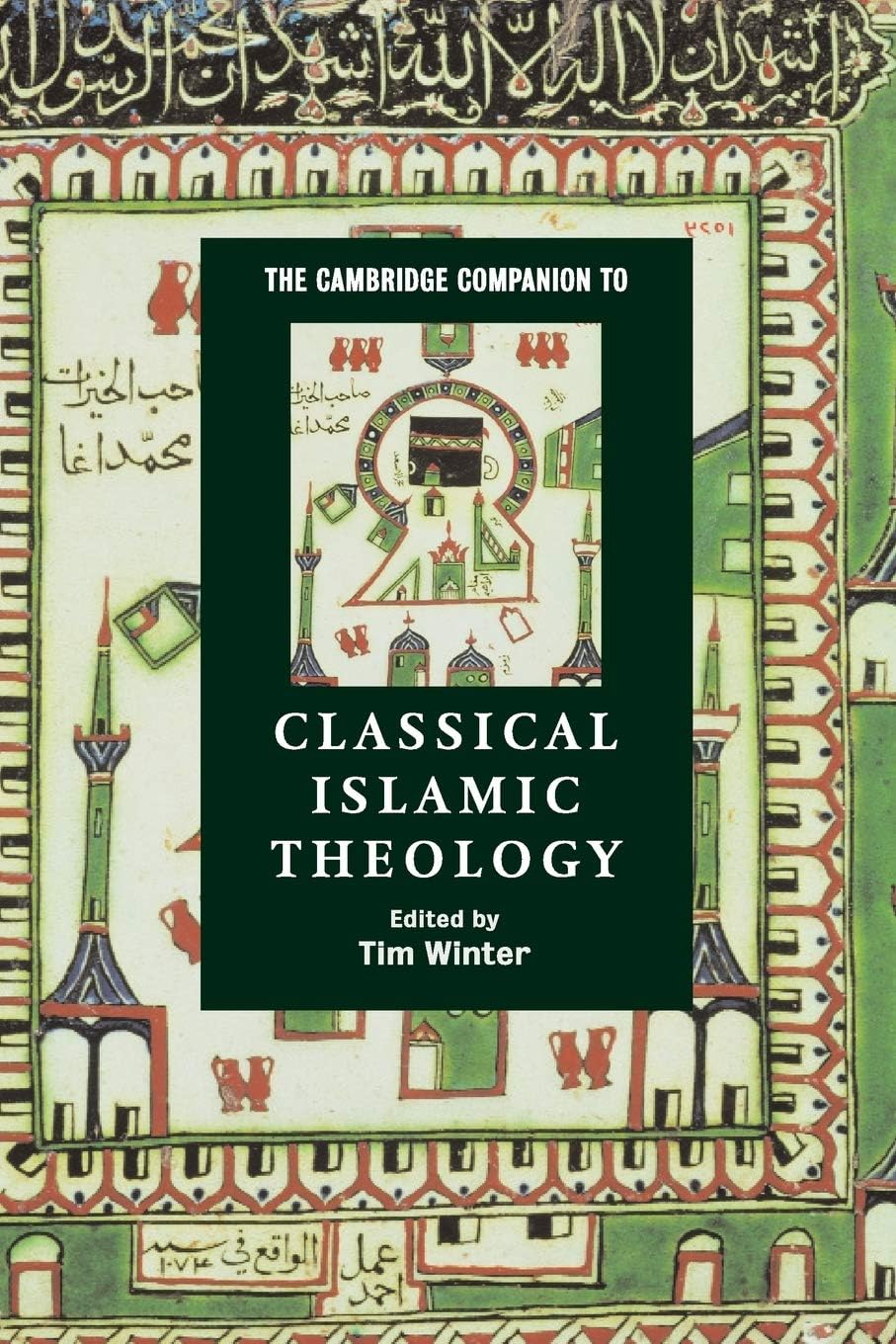
The Cambridge Companion to Classical Islamic Theology (Cambridge Companions to Religion)
Product ID: 168034461
Desertcart purchases this item on your behalf and handles shipping, customs, and support to USA.
This series of critical reflections on the evolution and major themes of pre-modern Muslim theology begins with the revelation of the Koran, and extends to the beginnings of modernity in the eighteenth century. The significance of Islamic theology reflects the immense importance of Islam in the history of monotheism, to which it has brought a unique approach and style, and a range of solutions which are of abiding interest. Devoting especial attention to questions of rationality, scriptural fidelity, and the construction of 'orthodoxy', this volume introduces key Muslim theories of revelation, creation, ethics, scriptural interpretation, law, mysticism, and eschatology. Throughout the treatment is firmly set in the historical, social and political context in which Islam's distinctive understanding of God evolved. Despite its importance, Islamic theology has been neglected in recent scholarship, and this book provides a unique, scholarly but accessible introduction. Review: ... compilation by Tim Winter and it gives a very good introduction to Classical Islamic theology - This is a major work by compilation by Tim Winter and it gives a very good introduction to Classical Islamic theology. This is a recommended book for every home bookshelf. Review: Five Stars - this is an excellent book for those wanting to understand Kalaam and it's origins
| Best Sellers Rank | 243,060 in Books ( See Top 100 in Books ) 409 in Religious History of Islam 526 in Historical Study & Teaching |
| Customer Reviews | 4.9 out of 5 stars 51 Reviews |
A**R
... compilation by Tim Winter and it gives a very good introduction to Classical Islamic theology
This is a major work by compilation by Tim Winter and it gives a very good introduction to Classical Islamic theology. This is a recommended book for every home bookshelf.
G**R
Five Stars
this is an excellent book for those wanting to understand Kalaam and it's origins
A**1
Good overview to theology
I am currently reading this book and have found it interesting. Some chapters are more interesting than others, together with some chapters being a lot more difficult to comprehend. Each chapter contains a reference list, which is useful if you want to explore a particular topic further.
A**R
more than a decent read
The Editor, T J Winter is a believing Muslim, a convert to Islam indeed! However, he does not allow that to interfere with his job as a scholar and manages to bring together a good collection of insightful, neatly written essays. Mr. Winter's introductory essay is outstanding, it serves as a good starting point to figure out what "theology" means in an Islamic context. The term rightly arouses the fury of the hardcore dogma police, they say Allah (swt), in his majesty and prescience, set out all knowledge in the Holy Qur'an. Therefore idle conjecture of fallible men have no place as part of the religious discourse of the pious. Ignaz Goldziher (the godfather of Western Islamology) once said that Prophets are not theologians, their utterings are sourced from the sudden feverish sparks of spiritual yearning. Accordingly, Prophets do not need an army of theologians and intellectuals to come along afterwards and clean up, clarifying concepts, creating dogmas and reconciling seeming 'contradictions' that Muhammad would have had no qualms with. Theologians often serve as somewhat pathetic apologists who would earn the contempt of the strident no-nonsense founders of religions, especially those in 7th Century Arabia; no-nonsense warriors with a surprisingly candid love of captured booty and slave girls. Muhammad hated theology, the tafsir to Surah Ikhlas aptly shows his sheer contempt for specualative reasoning about God which he felt had lead the Christians astray. Muhammad opted for the simple formula of God's unspeakable transendence. Allowing the above, human beings are rational in the end, they want their religion to make sense, at least on a basic level. Poeple hate the cacophonous clutter of ad-hoc 'inspiration.' They want neat conceptual boundaries. This need is no different in Islam, as demonstrated by the essay by Khalid Blankmanship (chapter 1 of this book). Mr. Blankmanship shows how the early sects struggled with stuff like free-will and pre-determination, whether an evil act renders one a 'kafir' or whether ultimate judgments are deferred until the hearafter. These topics beging to form cleavages that slowly emerge through the centuries. In the end there is a hotch-potch of sects, groups and sub-groups, which to this day are often at each other's throats. I have to say, some of the essays in this book are just pious rubbish written by starry-eyed believers, but the majority are very good, eminently readable stuff. I would highly recommend this to non-religious people interested in a serious book about Islam.
D**I
Everything OK.
Good as declared.
E**Y
Excellent livre
Très bon livre, excellente introduction à l'histoire de l'islam. Je Recommande vivement ce livre. plus plus plus plus plus plus
H**D
Good informative book on Islamic theology
Great book for a beginner in Islamic theology. Good refresher for the seasoned student as well.
A**R
Excellent
Scholarly synopsis of islam in a fair way. This is not for beginners or average readers. Both Muslims and non Muslims theolgians and thinkers will benefit from this book Khan
S**I
Satisfied
Arrived as expected Good condition
Trustpilot
4 days ago
5 days ago