Aberration in the Heartland of the Real: The Secret Lives of Timothy McVeigh
Product ID: 152773488
Desertcart purchases this item on your behalf and handles shipping, customs, and support to USA.
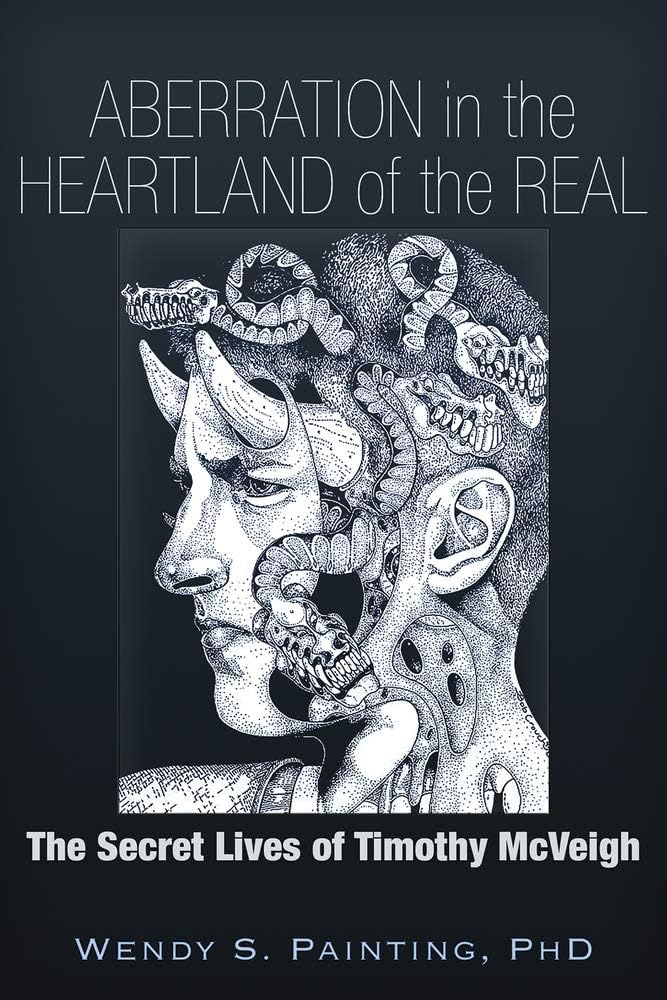
A deep dive into the life of Timothy McVeigh and the Oklahoma City bombing. Wendy S. Painting's Aberration in the Heartland of the Real presents startling new biographical details about Timothy McVeigh and exposes stark contradictions and errors contained in previous depictions of the "All-American Terrorist." This book traces McVeigh's life from childhood to the Army, throughout the plot to bomb the Alfred P. Murrah Federal Building and the period after his 1995 arrest until his 2001 execution. McVeigh’s life, as Dr. Wendy Painting describes it, offers a backdrop for her discussion of not only several intimate and previously unknown details about him, but a number of episodes and circumstances in American History as well. In Aberration in the Heartland , Painting explores Cold War popular culture, all-American apocalyptic fervor, organized racism, contentious politics, militarism, warfare, conspiracy theories, bioethical controversies, mind control, the media’s construction of villains and demons, and institutional secrecy and cover-ups. All these stories are examined, compared, and tested in Aberration in the Heartland of the Real , making this book a much closer examination into the personality and life of Timothy McVeigh than has been provided by any other biographical work about him. Target Audience: Readers interested in American history, true crime, and conspiracy theories. Review: I've read it twice now - Impeccably researched, well-written, and deeply insightful, Wendy Painting's Aberration in the Heartland of the Real: The Secret Lives of Timothy McVeigh is a tour de force on its subject matter and one of the 2010s best books on parapolitics. The most commonly known story on McVeigh comes from American Terrorist, a 2001 book by Lou Michael and Dan Herbeck that came out a month before his execution. As is the case with most pieces of "access" journalism, the book allows McVeigh to present a very specific narrative on the bombing that makes him look like the true mastermind behind the plot. It's also a narrative that just so happens to coalesce around the government and media's version of events. It doesn't present any alternative theories or meaningfully challenge the Lone Wolf angle that McVeigh and many others so eagerly want to canonize. The problem with that story is that it's not the only one McVeigh told. That's where Aberration comes in. Despite being a book that explores every inch of McVeigh's life that Painting could get her hands on, it does not absolve him for his crimes. It doesn't let him off the hook or try to make him a sympathetic character. It is an exhaustive accounting of the life of Tim McVeigh, one that is far more accurate and thorough than American Terrorist or any other piece of media on the subject. There is a spectrum of different stories on McVeigh, all of them coming from the man himself. They range from the popular Lone Wolf version of events to narratives that are almost too wild to believe. But that's the thing about this book: even the most conspiratorial McVeigh narratives start to feel deeply unsettling as Painting meticulously works her way through the fragmented pieces of Tim McVeigh's life. She doesn't make any final conclusions on which story is the most accurate interpretation of events, and frankly, doing that would have been a cop out. There are truths across the entire spectrum of stories, and settling on one of them would be dishonest. Was Tim McVeigh a Manchurian Candidate who was the byproduct of MKUltra-style mental and physical manipulation that stripped him of agency? We will likely never know that answer, but Aberration gives that idea a fair and impartial analysis, and in the process leaves you with more questions than you came in with. While this is a book about McVeigh, it also takes you on various detours that not only tie back to its main character, but stand alone as incredible writing on their respective topics. Whether it's UFOs, Gulf War Syndrome, Cold War America, far-right subcultures, covert intelligence operations or human tracking implants, Painting leaves no stone unturned. When you deal with parapolitics and conspiracy theories (however you want to define that phrase), you not only face scrutiny from institutions and people eager to debunk your analysis, but you traffic in uncertainty. You go out seeking clarity and answers in a harsh world that doesn't want to offer any. This was a college thesis for the author that grew into a 550+ page magnum opus. Decades of research, interviews, and field work, all to not have a neatly packaged answer. There is something powerful about that, about the willingness to dedicate so much time and energy to a pursuit that may never yield a true conclusion. It shows a deep commitment to the process, a refusal to accept easy explanations or rhetorically convenient frameworks, and a desire to understand the world in all its complexity. Yes, this is a book about Tim McVeigh, but it's an almost spiritual journey to the farthest and darkest corners of a reality we're not supposed to explore and emerges from it with something profound and meaningful. Review: A Significant Book - ABERRATION IN THE HEARTLAND OF THE REAL, by Wendy Painting, is probably the deepest deep dive into the Timothy McVeigh story currently available (and perhaps that ever will be). Painting examines many competing narratives about McVeigh, ones which exist in both public and private spheres, including both the conventional/government narrative (McVeigh as a lone wolf terrorist) and the many strange or 'conspiracy' aspects of the story that emerge from any deeper examination of the facts. McVeigh is revealed through endless interviews, letters, and other records to have been a profoundly unreliable narrator, and Painting points out that every competing version of McVeigh's story can be found in McVeigh's own endlessly contradictory descriptions of himself to one friend/reporter/investigator/laywer or another while he was still alive. Painting's writing is always clear and cogent. The book's "Epilogue", focused especially on Jesse Trentadue's heroic investigative and legal efforts, is by far the best part of the book and I would recommend it to everyone. It's my impression that this book was originally a PhD project, and a lot of the book's preoccupation with narrative in the abstract seems to be in service of some kind of academic sensibility or requirements. I would have preferred a "Just the facts Ma'am!" style, and didn't find the musings about narrative to be helpful. The "Epilogue" is notably more concrete in both style and content. Nevertheless, Painting invested a reported 10 years of research into this book, and it is filled with facts and insights many of which don't seem to have been previoiusly publicly revealed. Please note that ABERRATION IN THE HEARTLAND OF THE REAL was published in 2016 and more facts and evidence about McVeigh and the OKC bombing have come out in intervening years, all of which is damning to the federal government and the official McVeigh narrative. I find the book's cover art to be excellent but disturbing, and put a book cover over this while I was reading it so that I would not have to look at the cover art several times a day. This same intense cover art is also featured on the book's spine. In the back, ABERRATION features an extensive section of footnotes and possibly the most comprehensive 'bibliography' that I have ever seen published, including not only books and articles but an outline of the many legal and investigative archival records Painting used. This is a must for researchers into McVeigh or related subjects. The book's index, unfortunately, seems to have been auto-generated. The listing for Jolyon West, for example, returns every page number with the word 'west' in it (in any context), rendering it nearly unusable. Overall, while it has its flaws, ABERRATION IN THE HEARTLAND OF THE REAL is a significant and courageous work of research, extremely readable, and easily merits five stars.
| Best Sellers Rank | #67,859 in Books ( See Top 100 in Books ) #81 in Terrorism (Books) #85 in Sociology of Social Theory #175 in Communication & Media Studies |
| Customer Reviews | 4.7 out of 5 stars 219 Reviews |
K**A
I've read it twice now
Impeccably researched, well-written, and deeply insightful, Wendy Painting's Aberration in the Heartland of the Real: The Secret Lives of Timothy McVeigh is a tour de force on its subject matter and one of the 2010s best books on parapolitics. The most commonly known story on McVeigh comes from American Terrorist, a 2001 book by Lou Michael and Dan Herbeck that came out a month before his execution. As is the case with most pieces of "access" journalism, the book allows McVeigh to present a very specific narrative on the bombing that makes him look like the true mastermind behind the plot. It's also a narrative that just so happens to coalesce around the government and media's version of events. It doesn't present any alternative theories or meaningfully challenge the Lone Wolf angle that McVeigh and many others so eagerly want to canonize. The problem with that story is that it's not the only one McVeigh told. That's where Aberration comes in. Despite being a book that explores every inch of McVeigh's life that Painting could get her hands on, it does not absolve him for his crimes. It doesn't let him off the hook or try to make him a sympathetic character. It is an exhaustive accounting of the life of Tim McVeigh, one that is far more accurate and thorough than American Terrorist or any other piece of media on the subject. There is a spectrum of different stories on McVeigh, all of them coming from the man himself. They range from the popular Lone Wolf version of events to narratives that are almost too wild to believe. But that's the thing about this book: even the most conspiratorial McVeigh narratives start to feel deeply unsettling as Painting meticulously works her way through the fragmented pieces of Tim McVeigh's life. She doesn't make any final conclusions on which story is the most accurate interpretation of events, and frankly, doing that would have been a cop out. There are truths across the entire spectrum of stories, and settling on one of them would be dishonest. Was Tim McVeigh a Manchurian Candidate who was the byproduct of MKUltra-style mental and physical manipulation that stripped him of agency? We will likely never know that answer, but Aberration gives that idea a fair and impartial analysis, and in the process leaves you with more questions than you came in with. While this is a book about McVeigh, it also takes you on various detours that not only tie back to its main character, but stand alone as incredible writing on their respective topics. Whether it's UFOs, Gulf War Syndrome, Cold War America, far-right subcultures, covert intelligence operations or human tracking implants, Painting leaves no stone unturned. When you deal with parapolitics and conspiracy theories (however you want to define that phrase), you not only face scrutiny from institutions and people eager to debunk your analysis, but you traffic in uncertainty. You go out seeking clarity and answers in a harsh world that doesn't want to offer any. This was a college thesis for the author that grew into a 550+ page magnum opus. Decades of research, interviews, and field work, all to not have a neatly packaged answer. There is something powerful about that, about the willingness to dedicate so much time and energy to a pursuit that may never yield a true conclusion. It shows a deep commitment to the process, a refusal to accept easy explanations or rhetorically convenient frameworks, and a desire to understand the world in all its complexity. Yes, this is a book about Tim McVeigh, but it's an almost spiritual journey to the farthest and darkest corners of a reality we're not supposed to explore and emerges from it with something profound and meaningful.
J**K
A Significant Book
ABERRATION IN THE HEARTLAND OF THE REAL, by Wendy Painting, is probably the deepest deep dive into the Timothy McVeigh story currently available (and perhaps that ever will be). Painting examines many competing narratives about McVeigh, ones which exist in both public and private spheres, including both the conventional/government narrative (McVeigh as a lone wolf terrorist) and the many strange or 'conspiracy' aspects of the story that emerge from any deeper examination of the facts. McVeigh is revealed through endless interviews, letters, and other records to have been a profoundly unreliable narrator, and Painting points out that every competing version of McVeigh's story can be found in McVeigh's own endlessly contradictory descriptions of himself to one friend/reporter/investigator/laywer or another while he was still alive. Painting's writing is always clear and cogent. The book's "Epilogue", focused especially on Jesse Trentadue's heroic investigative and legal efforts, is by far the best part of the book and I would recommend it to everyone. It's my impression that this book was originally a PhD project, and a lot of the book's preoccupation with narrative in the abstract seems to be in service of some kind of academic sensibility or requirements. I would have preferred a "Just the facts Ma'am!" style, and didn't find the musings about narrative to be helpful. The "Epilogue" is notably more concrete in both style and content. Nevertheless, Painting invested a reported 10 years of research into this book, and it is filled with facts and insights many of which don't seem to have been previoiusly publicly revealed. Please note that ABERRATION IN THE HEARTLAND OF THE REAL was published in 2016 and more facts and evidence about McVeigh and the OKC bombing have come out in intervening years, all of which is damning to the federal government and the official McVeigh narrative. I find the book's cover art to be excellent but disturbing, and put a book cover over this while I was reading it so that I would not have to look at the cover art several times a day. This same intense cover art is also featured on the book's spine. In the back, ABERRATION features an extensive section of footnotes and possibly the most comprehensive 'bibliography' that I have ever seen published, including not only books and articles but an outline of the many legal and investigative archival records Painting used. This is a must for researchers into McVeigh or related subjects. The book's index, unfortunately, seems to have been auto-generated. The listing for Jolyon West, for example, returns every page number with the word 'west' in it (in any context), rendering it nearly unusable. Overall, while it has its flaws, ABERRATION IN THE HEARTLAND OF THE REAL is a significant and courageous work of research, extremely readable, and easily merits five stars.
P**O
The Most Complete Map of the Terra Cognita of OKBomb and Its Designated Demon
I find the author quite modest in her disclaimer, “this book is neither complete nor definitive.” It is a meticulous crawl over every square centimeter of the OKBomb aquarium. Further, it is exceptional in that it is entirely devoid of speculation, idle, informed, or otherwise. We who watched the drama of Waco develop, the winds of demonization whipped up to a crescendo of flaming retribution, found the echo in the Greek chorus of wailing and gnashing of teeth and the gotcha beartrap of Cotton Mather v. Timothy McVeigh. The kimono suffered initial wardrobe malfunction with Ambrose Evans-Pritchard, The Secret Life of Bill Clinton: The Unreported Stories. Twenty years on, Painting has expanded the canvas in every direction and increased the resolution. The reader will find the greatest clarity possible of the major anomalies which give the lie to the official version, McVeigh was the sole witch duly burned, case closed. McVeigh seemed to move in a world of informants. The premier federal agency of investigation investigated very little, spending its efforts in witness intimidation—or elimination—evidence tampering, suppression, destruction, distortion. Louis Jolyon West the core figure of post-Gottlieb manipulation permeates the Timothy tapestry in person and surrogate. The prosecution concealed so much throughout, and obtained judicial sanction of restriction of investigation, as to provoke the reader to wonder why the lady doth protest too much. Eyewitness accounts of others unkown—often directing the action—were systematically sanitized. Videotapes were confiscated, fed into the memory hole, never to have existed. Andreas Karl Strassmeir of German military intelligence, another of the too obvious agents provocateur, is allowed to do the Saudi exit after the deluge. The author considers all the available templates thus far applied, favoring none. Glimpses, the flashcards of a parallax view of yet another terror event, include a witness to possible preplacement of charges. Bomb squad personnel on-scene prior to the event. The sighting of a second Ryder truck, a second John Doe Number Two, a possible Nichols-Youssef meeting. The persistent habit of witnesses to a wider web dying. And throughout the author soldiers on, gathering data, checking sources, adding documents, interviewing more witnesses and peripherals— --and steadfastly refusing to speculate. This work is invaluable—fearlessly providing every possible pixel; volunteering none. In the view of this reviewer: The thrust of the event is as a counterstroke to Waco. The Waco-OKBomb twin star is a special form of the strategy of tension, what Eric Wilson describes as “the spectacle of the false flag”. Not discussed is the improbability that the alleged explosive device caused the damage presented, nor the bizarre haste in sealing the site and destroying the evidence. In Richard Cottrell, Gladio: NATO’s Dagger at the Heart of Europe, former UK foreign secretary the late Robin Cook deems terror events the work of intelligence agencies. Surely OKBomb, which as Evans-Pritchard pointed out, got Clinton eleven points and re-election, inspired Putin’s false flag bombing of Moscow apartments which vaulted him to permanent power, a cynical gambit stipulated by Alexander Litvinenko and Yuri Felshstinsky, Blowing Up Russia. Waco-OKBomb demonized opposition to imperial government, the recidivist monarchism of the Beltway Borg, allowed irreversible inroads into the protection of the Fourth Amendment, began the characterization of freedom activists as domestic terrorists. The context of the official fable of one troubled individual’s solo act is familiar to students of the assassinations in which impossible ballistics are accomplished by the deus ex machina of a demon. While the academic’s seven-hundred-page panoply of the event in context is devoid of any j’accuse, it will be as placidly received as Ravel’s Bolero. For even in the highly-detailed travel brochure written in objective voice, the chain-linked ruins in the Heartland are one more rest stop on the highway to Hell. I wholeheartedly recommend Aberration as the most complete extant map of the terra cognita of Oklahoma City and its designated demon.
A**N
Excellent Accounting of 1990s era Terror and Conspiracy Narratives
Aberration in the Heartland of the Real is an excellent book. Even without considering my own tastes and preferences, this book delivers everything that makes for a memorable reading experience. Wendy Painting must have spent years writing, researching, compiling, organizing, and then going back through the process over and over again, in order to put together a book that addresses many levels of interest and interpretation. She tells stories of the OKC Bombing, Timothy McVeigh, anti-government outlaws at the fringes of bank robbery, militia groups, and governmental agencies. And her narrative builds to eventually describe what appears a twisted mixture of not clearly or simply good guys and bad guys, but grotesques playing both sides that relegate traditional ideas of right and wrong to the lowest drawers of their concerns. Along with all this, she persistently reminds us of the magical, yet so often painfully realistic power stories have in shaping our shared world, the fears we grow accustomed to, the conniving, suspicion, hatred, and blaming grown prominent in a world so quick to remind us how protected we are from terror, wackos, violence, and whatever threats pop up minute to minute. And just when you think she might take this all too far, Painting stops, leaving her readers to finally decide which truths they grab hold of, which truths are dead ends or diversions and let go of, and which final conclusions they will wake up tomorrow operating with, all because she lets them decide. All too often authors let their egos take too much control and end up preaching at their readers, telling them what they should think, forcing conclusions onto them as if they were half-wits unable to draw their own conclusions. Painting does not do this, and that alone makes her book stand as one that should be widely read. One warning with this review: Aberration in the Heartland of the Real is a long book, 545 pages long. It also comes with a mountain of sourcing information, pushing it out to 703 pages. I’ve often given up finishing books this long because of my own readerly weakness, laziness, or an author’s refusal or laziness to take the time to organize the narrative effectively. It seems that the longer the book is, the higher the risks of losing readers. Painting does not shy away from this challenge, and she obviously put in the effort required to maintain its energy all the way to the final page. I did have to step away occasionally to let information settle and process, but that results from my failings as a reader, my wanting to push on without making sense of what I was reading. And if nothing I’ve said has convinced you of this books many merits, let me close by saying one thing that always convinces me I’ve read a definite gem is the feelings of dread I experience as I approach the end, and the sense of loss once I realize my reading’s finished. For me, that’s a convincing sign I’ve read something well written, very important, and highly valuable.
J**N
The amazing book that will never make it to Mars !
A real bushwhacker's practical guide to the bloody and bramble-packed thicket of modern American culture that just won’t fit in your back pocket, this indispensable, articulate, & utterly spellbinding book is not your ordinary day hiker’s companion. As if inspired by a physicist’s conviction that careful investigation of a certain particle will surely lead to better knowledge of the entire universe, the author uses the 1995 O.K.C. bombing as a kind of prose lens which she expertly uses to zoom in on the mysterious life of the enigmatic, apparent bomber, Tim McVeigh, one-time almost regular kid-next -door, soon -to-be decorated military hero , and now dead criminal terrorist. Was he the sole ‘mastermind’ of this atrocity or part of a still concealed ‘team’. Who did he work for... anybody or anything ? Who knew what ? And when ? Hang on tight , because as you eagerly devour the pages in search of answers … Dr. Painting’s panoramic perspective takes in the whole doom-laden landscape & more, the 'depth of field’ becomes all inclusive, and we are staring at a decades spanning & coast-to-coast astonishing array of shady and other characters including: experts & investigators, government agents , professors & prison guards, scholars, soldiers, liars, judges, informers, operatives, lawyers, family members, assassins, politicians, double agents, wardens, citizens, crooks, torturers, war criminals , thugs, cops, crazed shrinks , really mad scientists, a few heroes , and a bunch of innocent bystanders ( maybe) . We’re basically looking at a society , here… or better put… uh… THE society. The shebang entire. If you were kinda’ hoping to discover what evil but mercifully limited network could possibly have spawned Tim McVeigh et al, brace yourself … maybe think: ‘ Huge, grotesquely formed ecosystem ’ , instead (?). Anthropogenic Culture Disruption comes close to describing the enormous implications of what Ms. Painting’s herculean work reveals. And you can probably toss the consolation of ‘’ 7-Degrees of Separation ” while you’re at it . ( No such luck ). Not that we’re all guilty … but Mr. McVeigh’s star-crossed cradle was rocked by a mighty big village, indeed. This essential & shocking opus was wrestled out of the banshee shrieking squall of ambient historical noise obscuring these events and hewn into a remarkable benchmark of enlightenment by dint of Painting's sheer sweat & doggedly applied brainpower. A literary effort unlike anything you may have read before. - JJ ( @ Detroit near Canada )
R**S
Reaffirming that the World we live in is not what we pretend it to be.
As a reader of many alternative history books, or books that go behind the scenes of reported and documented events and expose the reality behind the make believe, this book further reassures me that the world is much stranger than many of us know. This book is essentially about the truth and strange coincidences surrounding the Oklahoma City Bombing, and provides further context by connecting it to other strange events, such as the Ruby Ridge incident or that strange situation in Waco. For us who read these types of books regularly, this book reassures you that you are not crazy because there are just too many people reporting on the high weirdness of our world. Too the uninitiated this book can be an eye opening and harrowing experience, and be warned this book is strange and sometimes seems like a real live David Lynch Movie.
I**N
Worth a read
An absolutely fascinating book that raises a lot of questions that the government has yet to answer. One of the few people involved in this case that I’d love to interview.
C**Z
if you're reading this review, you're obviously interested in the book. Get it, it's mind-blowing
Well researched and comprehensive. Instead of praising every aspect of this book right away, I'll focus on the negatives. First, there's a large amount of this book that jumps in and out of the main topic of McVeigh and goes into setting up context. For example you're reading about McVeigh and then the book goes into a detailed backstory of Ruby Ridge or Waco for 8-10 pages, without a very graceful segue in or out of it. This makes reading through the book a bit harder, because it goes from an immersive story about McVeigh and then into broader less personal contextual bits. For anyone that's not already familiar with all the context, these parts are important -- but for others the rehashed info makes the book longer than it needs to be. Next, the book is extremely opinionated if that's not obvious from other reviews and synopses. However it seems to be done from as objective of a standpoint as possible, and very well cited. Each chapter has a full section in the back for references and further detail. Bottom line, if you find yourself reading this review, you're obviously semi-interested in the book. If so, just get it. It's an extremely interesting read that blew my mind, which isn't as easy as it used to be now that I'm in my 50s and have heard it all.
A**R
Incredible research, writing, and storytelling
Dr. Wendy Painting has written an incredible book that I couldn’t put down. I could not recommend this book enough to anyone with an interest in parapolitics. From her exploration of the tangled web of Dr. West, painstaking excavation of the first gulf war, and incredible deconstruction of PatCon and its bastards there is so much juice in this book with so many reverberations in the world we inhabit now in 2023, the book has an almost oracular quality. Can’t wait for the follow up!!
A**E
it read more like a thesis
I found this a very hard read. The narrative developed many various themes and theories. I was looking for a more coherent discussion leading to a solid conclusion. It my humble opinion, it read more like a thesis.
Trustpilot
3 weeks ago
1 week ago