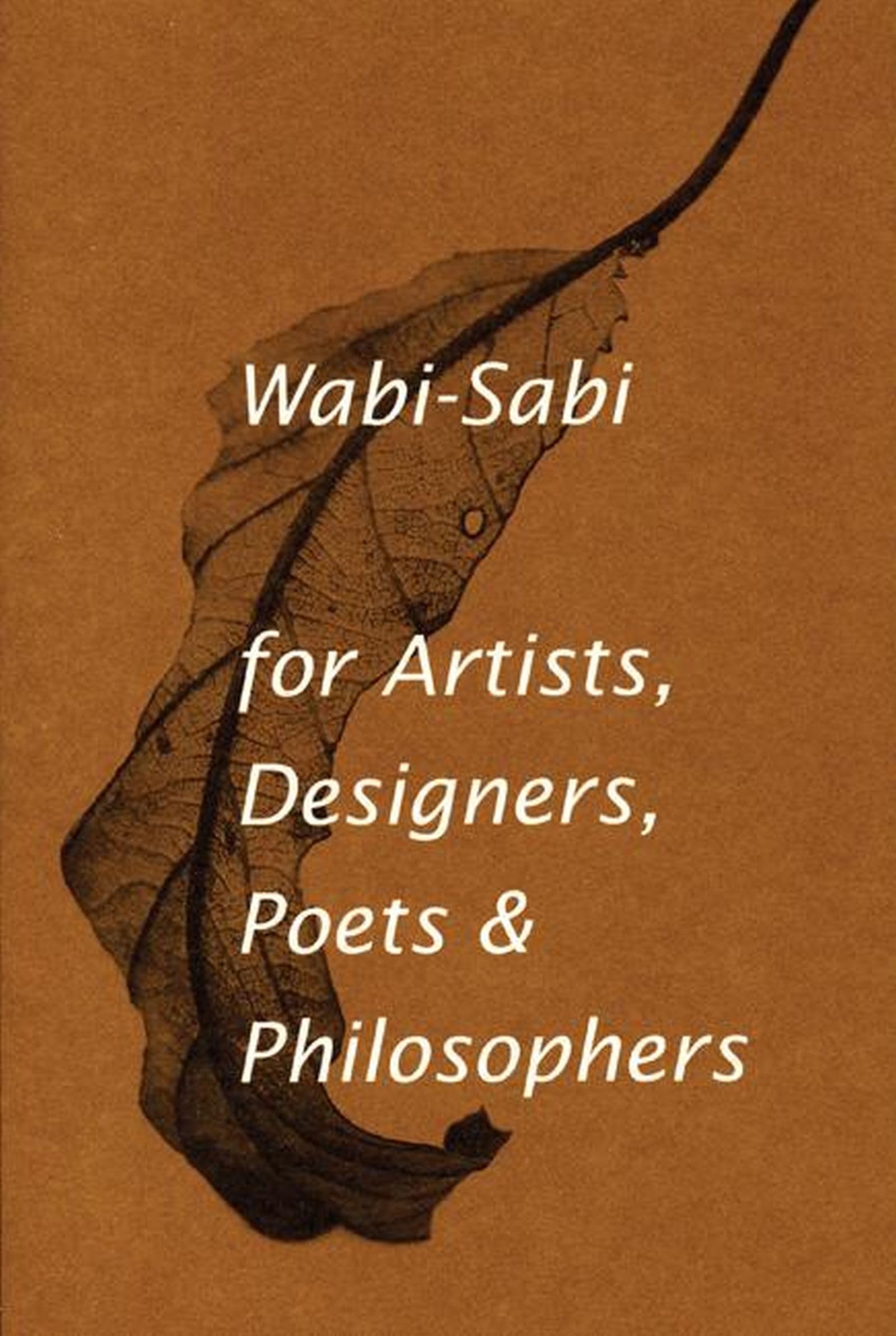
Wabi-Sabi for Artists, Designers, Poets & Philosophers
Desertcart purchases this item on your behalf and handles shipping, customs, and support to USA.
Description
An updated version of the seminal 1994 classic volume on the beauty of things imperfect, impermanent, and incomplete. Every book with "wabi" or "wabi sabi" in the title is based on the concepts first elucidated in this book.
Specifications
| Dimensions | 5.59 x 0.39 x 8.5 inches |
| Edition | Illustrated |
| Isbn 10 | 0981484603 |
| Isbn 13 | 978-0981484600 |
| Item Weight | 7 ounces |
| Language | English |
| Print Length | 96 pages |
| Publication Date | November 1, 2008 |
| Publisher | Imperfect Publishing |
Reviews
User
Deep and Interesting
After a first quick read through, I realized this is a book I will go back and read again and again. I purchased it to read in relation to the artwork I produce; to see if there was the spirit of Wabi-Sabi in my work.While it is an easy read, the philosophy is a bit harder to grasp, as I feel there is such a cultural difference between East and West that there is only so much a Westerner can truly understand.On the other hand, it is a text that is exceptional in explaining as well as possible a phrase that, even among the native population that gave birth to it, finds difficult to put into words. It is a concept, a part of the spirit, a unique state of being.I highly recommend this book for the provoking thought it will produce both at a work level and at a spiritual level.
User
Wabi sabi tells us to stop our preoccupation with success and enjoy the unencumbered life.
I love short books that are meaningful. This book I read in a couple hours and the message is so peaceful and life giving.Wabi Sabi is a term that comes from two Japanese words mashed together and it is rarely defined, indeed it kind of avoids being defined. The author says Japanese people know the feeling but not the definition. This was indeed my experience in Tokyo as I asked my friend to guide me to things that connected with Wabi Sabi culture.There are black and white photos on almost every other page of this book, of various things that convey the Wabi Sabi idea. The book spends a few pages on conveying the definition or more accurately, the feeling of Wabi Sabi, it gives a bit of history, then outlines the "Wabi Sabi Universe" which includes the following headings:Metaphysical BasisSpiritual ValuesState of mindMoral PreceptsMaterial QualitiesWabi Sabi is the opposite of the Rat Race. It reminds me of Jesus' Sermon on the Mount or the struggle against nature. It values simplicity and perhaps above all the process of nature. Thoreau and Emerson would approve.Some quotes:"Get rid of all that is unnecessary""Wabi sabi tells us to stop our preoccupation with success--wealth, status, power, and luxury--and enjoy the unencumbered life.""Things wabi sabi have no need for the reassurance of status or the validation of market culture."
User
Artist trying to look for expression of Wabi-Sabi values
I was not looking for spiritual guidance in this book. I have that well under control.I'm a long time photographer. I realized there was a strong parallel between the Wabi-Sabi philosophy and many things I had come to understand about my own vision and values. Any statement of the philosophy seems to be very difficult to pin down and translate to American culture. I purchased this to try to understand it better. It helped - a lot. The book is simple and does a pretty good job of explaining things. True Wabi-Sabi seems to be an encompassing life philosophy, and it is difficult sometimes to wade through that in this book, but I still found it very valuable. It gave me a deeper understanding of why I'm drawn to well executed pictures of common things and why I appreciate some old worn out, rusty things as valuable art and reject others as just junk.
User
is like poetry. It's quite beautiful
A moving book, very serious. Gives one an understanding of Wabi-Sabi, which is difficult to describe, let alone grasp on a deep level. I found this in a book store so was able to read it before buying a copy for a friend. The design of the book, its pages and the layout of the copy, is like poetry. It's quite beautiful. A great gift for that friend who likes to drag home from the beach, pieces of wet, sandy wood or who picks up old, rusty things found in abandoned, over-grown lots... you know the type, they find beauty in unusual, dark-ish, imperfect things.
User
great
Great Read
User
Explanation of Imperfectly Perfect
Wabi Sabi is a book I discovered in Marfa, Texas. It explains the Japanese concept of the imperfectly perfect. Because it articulates the concept of beauty in imperfection, this book helped me to understand a bit more clearly why I find dilapidated or abandoned buildings so intriguing. If you are an artist I highly suggest this short, enlightening read! It will add dimension to your art.
User
I am wabi sabi
I play music, write songs, play fiddle, guitar, slide guitar, flute and tenor sax. My style could be called rustic. I walk in the woods and am practically religious about nature. It is my fortress of sanity. I make rustic furniture. I make walking sticks, from saplings and found wood. I include the nature of the materials, be they hickory, ash or old-timey fiddle drones, saxophone voice, breathy blues flute or twangy slide. I am messy. Life is messy. I like it simple. I like it plain. I like honesty with song lyrics. Oh, I was a potter at one time, pressing found objects into slabs of clay and finding very odd bottles in the process. This is all wabi sabi. The minimal, the natural, the accidental, even. The Haiku, as art. The real, the unadorned, my uncombed hair, the sawdust in the cuffs of my jeans. This review even. Wabi sabi.
User
Wabi-Sabi: Not just a Japanese condiment that is great on sashimi
I happened upon this book because of those Amazon suggestions that were displayed when I was ordering another book...a copy of The Book of Tea for a friend. Perhaps I should stop harping about the Big Brother aspect of such practices. LOL. I had a sort of epiphany in realizing there was a name for the aesthetic that I love and strive to create. And I suppose it influenced me, since I seem to have embarked on a new path, or perhaps just returned to one and continued on the journey.I was intrigued by comments made in one of the popular reviews here concerning a disappointment that the book did not address techniques for creating Wabi-Sabi. It made me think of the notion that you can teach knowledge, and skills, but you can't teach talent. And my first impression is that Wabi-Sabi has much more to do with the latter. And perhaps it has a much stronger link with the subconscious. I mean, isn't a fundamental aspect of the aesthetic that it looks like there was no human involvement in the creation? In any case, this is one of the few books that will be on my shelf permanently.
User
Delivery
Excellent read.
User
A wonderful reading experience
There was nothing I didn't like about this book, it captivated me from the first page to the last. Easy to read and also very informative, it presents clear notions of what Wabi-Sabi is and what it is not. It goes down to the roots of the concept and follows its evolution through time and space. The comparisons with our Western art principles are also very clear and helpful. I'd recommend this book to almost anyone who likes reading and very specially to some Western authors who publish their own books on Wabi-Sabi techniques using colours and textures in great excess, that are exactly the contrary to the Wabi-Sabi approach.
User
nice try
Das Büchlein versucht eine grundlegende ganzheitliche Darstellung des Themas. Dies ist nicht ganz einfach, weil wabi sabi dem rationalen Denken nicht ganz zugänglich ist, es ist aber in diesem Fall überaus gut gelungen. Es vermittelt kurz gefasst das Konzept und die Geschichte auf der intellektuellen Ebene, angereichert um schwarzweiße Photographien die auf der intuitiven Ebene funktionieren. Sehr gelungen und absolut empfehlenswert.
User
Joia rara.
Um dos melhores livros que li na vida, uma poesia em forma de ensaio sobre a estética, a arte e o olhar oriental sobre os objetos, a natureza, o espaço geográfico... em muitos momentos temos a sensação de estar lendo um texto de cunho espiritual, porque de fato essa leitura tem a proeza de levantar o espírito, tamanha a sua leveza e sensibilidade. Recomendadíssimo.
User
Saggezza. Tanta .
Piaciuto tutto.
Common Questions
Trustpilot