
Buy anything from 5,000+ international stores. One checkout price. No surprise fees. Join 2M+ shoppers on Desertcart.
Desertcart purchases this item on your behalf and handles shipping, customs, and support to USA.
🍚 Elevate your rice game with Japan’s smartest washing bowl—because perfect rice waits for no one!
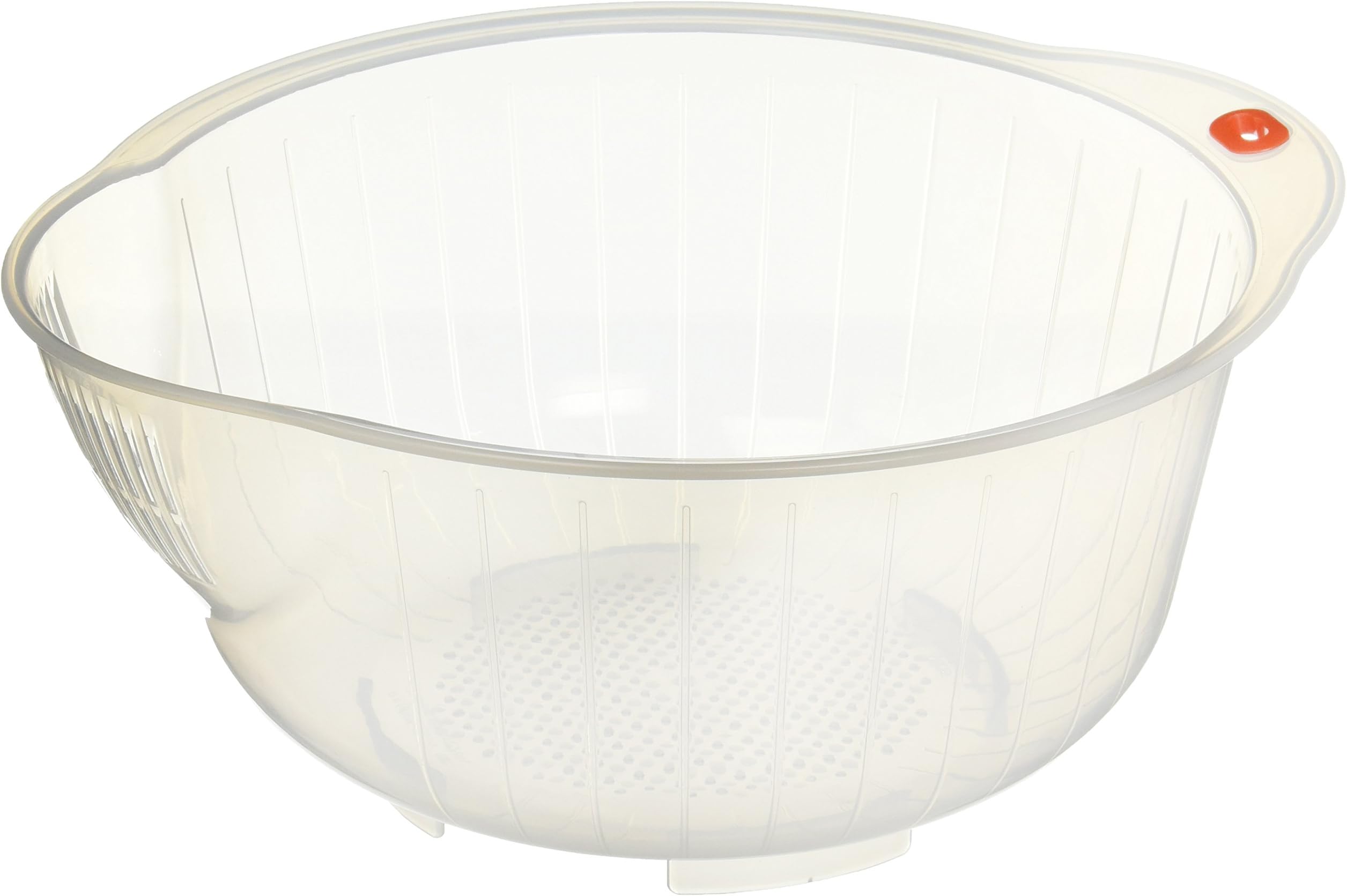
The Inomata Japanese Rice Washing Bowl with Strainer is a 2.5-quart, BPA-free, food-grade plastic bowl designed in Japan featuring dual side and bottom drains. It efficiently rinses rice by removing starch, toxins, and debris, while also doubling as a versatile strainer for fruits, vegetables, and grains. Dishwasher safe and built for durability, it’s a must-have for anyone serious about flawless rice preparation and streamlined kitchen routines.
| ASIN | B004K6SAOS |
| Best Sellers Rank | #6,548 in Kitchen & Dining ( See Top 100 in Kitchen & Dining ) #3 in Rice Bowls |
| Customer Reviews | 4.6 4.6 out of 5 stars (5,812) |
| Date First Available | June 6, 2017 |
| Is Discontinued By Manufacturer | No |
| Item Weight | 4.2 ounces |
| Item model number | 80800 |
| Manufacturer | Inomata |
| Product Dimensions | 10 x 4.5 x 9 inches |
M**S
Excellent for it's intended purpose.
There are two versions of the Inomata Japanese Rice washing Bowl with Strainer, and I purchased them both. Below I’ll describe them and outline the differences: PURPOSE: These bowls were designed for rinsing rice before cooking, and they do so quite well. Rinsing rice is one of those challenging activities where you can’t use a traditional colander because the holes may be too big and the rice will pass through, and a standard bowl is tricky to get all the water out without pouring some rice out along with it. You could use these bowls for rinsing other things as well, like beans, faro, fruits or vegetables. You may or may not have good results with smaller grains like quinoa for example, as quinoa is quite small. Both bowls are made in Japan of Polypropylene and are stamped “PP” on the underside. They indicate a minimum temperature of -20 °C (-4 °F) degrees and a max temperature of 120 °C or 248 °F. Polypropylene, according to Wikipedia, will melt at 171 °C, or 340 °F. Since water boils at 100 °C or 212 °F, you should theoretically be able to use this as a strainer for pasta (as many shoppers have asked) but it drains so slowly that you wouldn’t want to. I have also heard that Polypropylene can be damaged (cosmetically) by prolonged contact with boiling water, so I did not want to test this out. The small bowl nests inside the large bowl, although not completely perfect. Both bowls have a reinforced hole in the handle (if you can call it that, it’s really just a small tab) which you can use for hanging if you have a small hook. Note the measurements for each bowl described in the listing, where the small bowl is listed as 2 qt or 8 cups, and the large bowl is listed as 2.5 quarts or 10 cups. Note that a customary “cup” for measurement in the United States is 8 fluid ounces, or about 236.6 milliliters. Most rice cookers come with their own measuring cups which are designed to measure out a portion of rice, which is usually less than a standard customary “cup” in US measurement. My Zojirushi, for example, came with two cups, one for white rice (which actually holds 180ml, or just over 6 fluid ounces, or a generous ¾ cup) and one for brown rice (which actually holds 171 ml, or about 5.7 fluid ounces, or slightly less than ¾ of a cup). I measured the capacity of each bowl in customary fluid ounces by lining each bowl with plastic wrap and then filling with water. More on that test below. SMALL BOWL (2 qt): This bowl is 8 inches in diameter, 6 inches tall, and the diameter of the base is 6 inches. The small bowl does not have holes in the bottom, only drainage holes on the spout. If this bowl were solid, and filled completely to the top, it would hold 8.5 cups of water. To use it for it’s intended purpose, you wouldn’t want to fill it that high since you’d spill rice out trying to rinse it. You can rinse a maximum of about 8 (customary US cups) cups of rice in this bowl, 5-7 would be more comfortable (7-9 “rice cooker” measuring cups!). Because this bowl doesn’t have holes on the bottom, you could leave about some water standing if you had any reason to soak something in the bowl. For this, you can fill the bowl with 4 cups before it starts spilling out the spout. LARGE BOWL (2.5 qt): This bowl is 8.5 inches in diameter, 6 inches tall, and the diameter of the base is 6 inches. This bowl has small holes in the bottom in addition to the drainage holes on the spout. These holes are about the diameter of a large paperclip, unfolded. The base is raised slightly higher than the small bowl to allow for drainage. If this bowl were solid, and filled completely to the top, it would hold 10.5 cups of water. To use it for it’s intended purpose, you wouldn’t want to fill it that high since you’d spill rice out trying to rinse it. You can rinse a maximum of about 9-10 (customary US) cups of rice in this bowl, 6-8 cups comfortably (10-12 “rice cooker” measuring cups!). Because this bowl has holes on the bottom, all the water would eventually drain out so you can’t soak anything in it. I would like to point out though, that the holes on the bottom are very small, and will drain slowly, so you don’t need a constant, heavy stream of water for rinsing. They are so small in fact, that the bowl will retain a shallow pool of water because the weight of about ½ inch of water wouldn’t create enough pressure to completely drain through the holes. The holes are about the diameter of a large paperclip, unfolded. I hope this review helps anyone interested in purchasing these bowls. I couldn’t make up my mind, and since they were a good price, I bought both, but if I had to do it again and buy only one, I’d choose the larger one with holes in the bottom since it’s more functional (and holds a little bit more, without taking up much more room).
L**N
A Must-Have for Rice Lovers—Perfect for Repeated Washing
I recently bought a professional rice cooker, and the Inomata Japanese Rice Washing Bowls have been a fantastic addition to my kitchen. If you’re someone who likes to wash rice repeatedly to get it just right, these bowls make the process so much easier. The design is simple but effective, with a built-in strainer that allows you to drain the rice effortlessly after each wash. The size is perfect for handling even larger batches, and the quality of the material feels durable and well-made. These bowls have become an essential part of my rice-cooking routine, and I highly recommend them to anyone who’s serious about making perfect rice. They save time and make the process a lot more convenient.
A**R
How did I live without this before?
Absolutely perfect rice washing bowl. I used to use a regular bowl and draining was so difficult without a ton of rice falling into the sink. I use this all the time now and it works so well.
K**E
Really handy rice washing bowl — makes prep so much easier
This rice washing bowl is seriously one of those “why didn’t I buy this sooner?” kitchen things. The built-in strainer is super handy — you can rinse rice really well and drain the water without losing grains down the sink or having to juggle a separate colander. It makes the whole rinse-and-repeat process faster and way less messy.
B**L
Great bowl for washing rice.
Oh, do I like this rice washing bowl. It makes the job of washing the rice very easy. Worth every dollar it cost. I think that this design without the drain holes on bottom is the best choice. I had been undecided, but after using this washing bowl I think it was the proper choice.
A**.
Use 3 - 4 times per week
I love this rice washer - it's light weight, easy to use and clean. I'm glad I got this one instead of a more expensive metal one.
B**M
Rice strainer
Works well!
J**E
Great for rinsing rice
Very handy much needed.
E**H
Colador práctico, útil y a buen precio !!
S**I
Siebschüssel aus hochwertigem, transparenten Kunststoff. Zum spülen und wässern von Reis ausgezeichnet. Flache Noppen auf der Innenseite helfen beim entfernen der Stärke. Auch das entnehmen der gereinigten Körner klappt besser als mit dem Küchensieb, welches ich vorher benutzte. Japaner wissen halt, worauf es bei ihrem Grundnahrungsmittel ankommt. Nicht ganz günstig, aber das Geld wert.
D**L
El bol con colador INOMATA combina funcionalidad y diseño compacto para simplificar tus tareas en la cocina. Fabricado en plástico de alta calidad, este utensilio japonés de 2 litros es perfecto para lavar, escurrir y preparar alimentos con facilidad. Ideal para frutas, verduras, arroz o pasta, su diseño ergonómico y duradero lo convierte en un aliado esencial para el día a día.
U**O
Questo fantastico gadget originale nipponico è un lava riso: qualunque consumatore abituale di riso sa che va lavato per bene prima di essere consumato e questo a volte può creare delle difficoltà perchè molte tipologie di riso passano dagli scolapasta. Questo lava-riso è una ciotola dentro la quale si può lavare comodamente il riso, in quanto non è bucata sul fondo come uno scolapasta; però su di un lato, in alto, ha delle fessure per fare uscire l'acqua, per cui basta inclinarlo per fare andare via il liquido. Le fessure sono abbastanza strette per fare scorrere via tutta l'acqua ma non il riso, che rimane nel contenitore. Ho provato anche con riso Basmati e Jasmine, che sono più sottili di quelli occidentali e posso confermare che non passano. Non passa persino il riso Jasmine spezzato che ha chicchi piccolissimi. Il contenitore è trasparente e di una plastica resistente ma non troppo rigida. Nel complesso forse è un po' leggerino non pare robustissimo, ma credo che durerà a lungo. Considerando la solidità costruttiva mi sarei aspettato che costasse qualche euro meno; però l'idea è ottima e lo strumento funziona benissimo.
F**.
The Japanese Rice Washing Bowl works well for all kinds of rice and handles boiling water without any issues. When rinsing vegetables, water sometimes collects at the bottom, so it doesn’t rinse quite as effectively. I wouldn’t recommend using it for straining pasta, as starch can clog the holes in the bottom. Overall, a solid tool for rice, with some limitations for other uses.
Trustpilot
1 month ago
2 months ago